


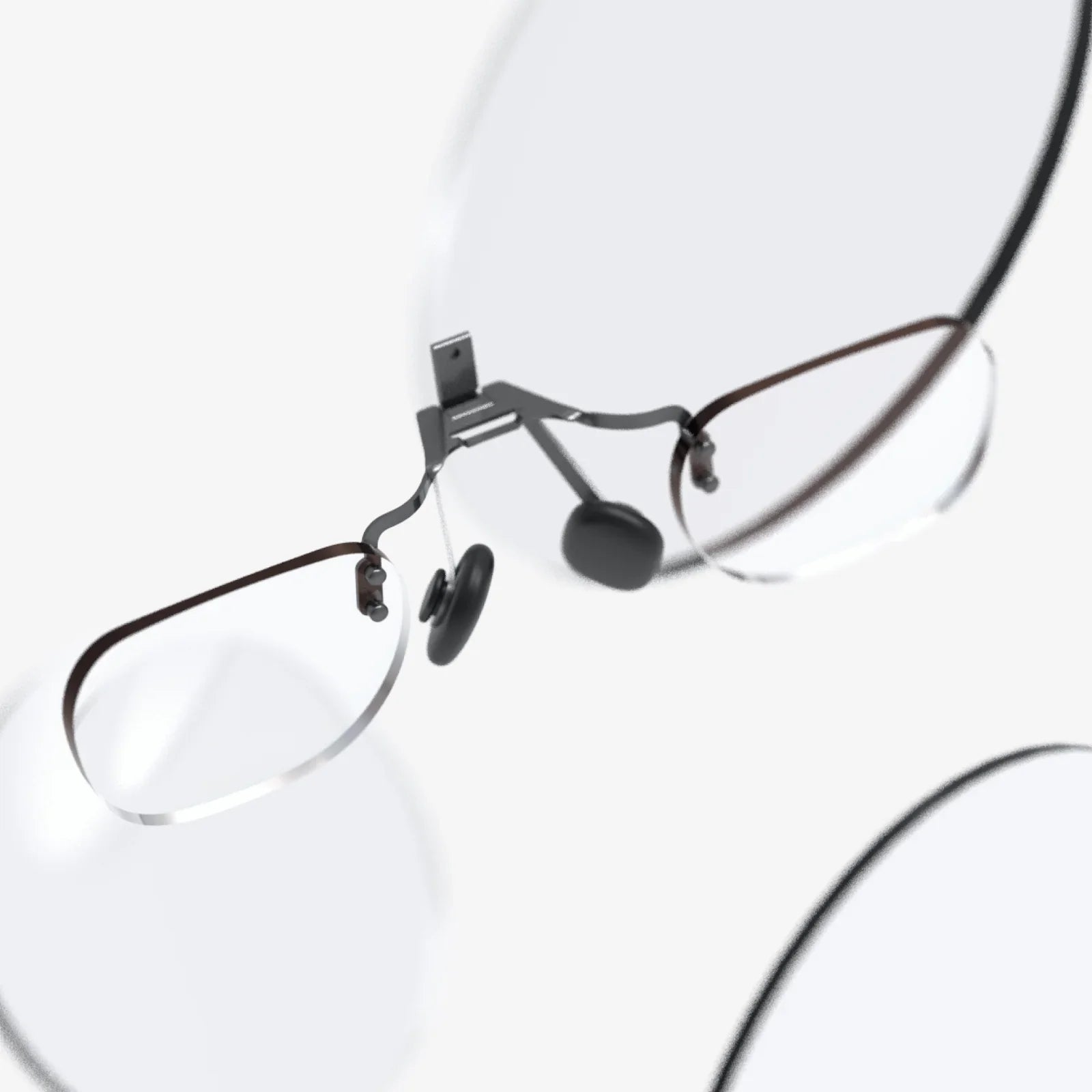
Imagine a world where your environment doesn't just respond to your commands but anticipates your needs, where the boundary between the digital and physical realms dissolves into a seamless tapestry of intelligent interaction. This isn't a distant sci-fi fantasy; it's the palpable reality being woven by the latest smart devices technology. We are witnessing a profound evolution, moving beyond simple voice-activated assistants and remotely controlled lights into an era of ambient computing, context-aware intelligence, and hyper-connectivity that promises to redefine the very fabric of daily life. The next generation of gadgets is not just smarter; it's more intuitive, more integrated, and more indispensable than ever before.
The Dawn of Ambient Intelligence and Invisible Computing
The most significant trend in the latest smart devices technology is the shift away from screens and explicit commands towards what is known as "ambient intelligence." The goal is no longer to create another device you must actively engage with, but to develop technology that fades into the background, enhancing your life without demanding your constant attention. This philosophy champions subtlety and seamlessness.
This is powered by a massive proliferation of sophisticated, yet miniaturized, sensors. Modern devices are equipped with arrays that go far beyond simple motion detection. They can monitor air quality, precise temperature gradients, ambient light levels, sound patterns, and even the presence of specific compounds. These sensors feed a constant stream of data to a local or cloud-based brain.
Crucially, this is where Artificial Intelligence and Machine Learning become the true heroes. Raw sensor data is meaningless without interpretation. AI algorithms process this information in real-time, learning from patterns and building a sophisticated model of your preferences, habits, and routines. The device is no longer a simple tool; it becomes a context-aware partner. It knows you wake up at 7:03 AM on weekdays, that you prefer the bedroom slightly cooler for sleep, and that the living room lights should dim to a specific warmth for movie nights. It adjusts your environment not because you told it to, but because it understands it's the right time and the right thing to do.
The ultimate expression of this is the concept of the "smart home as a computer." Individual devices—the lights, the thermostat, the speakers, the blinds—cease to be isolated islands. Instead, they act as interconnected peripherals to a single, whole-home operating system. This system manages resources, prioritizes tasks, and creates cohesive experiences across all endpoints, making technology feel less like a collection of gadgets and more like an intelligent, responsive atmosphere.
Revolutionizing Personal Health and Wellness from the Inside Out
Perhaps no other sector demonstrates the power of the latest smart devices technology more vividly than health and wellness. We are moving from reactive healthcare to continuous, proactive, and personalized wellness management.
Wearables have evolved from basic step-counters into sophisticated health guardians. Advanced photoplethysmography (PPG) sensors can now measure blood oxygen saturation (SpO2), track electrodermal activity for stress monitoring, and perform on-demand electrocardiograms (ECG). The latest sensors use multiple wavelengths of light to gather more accurate data on heart rate, respiration, and even core body temperature during sleep. This allows for the detection of potential atrial fibrillation, signs of respiratory illness, or the onset of a fever.
The real revolution, however, lies in the move towards non-invasive biometric monitoring. Researchers and developers are pushing the boundaries with devices that can analyze sweat for biomarkers indicating dehydration or fatigue, use radar technology to detect subtle heart rhythms from a distance, and employ advanced computer vision to assess vital signs simply by looking at a person's face via a camera. This shift from "on-the-skin" to "contactless" sensing is a monumental leap, making continuous health monitoring effortless and integrated into daily objects like mirrors and car seats.
All this data is synthesized by AI to provide genuinely meaningful insights. Instead of just presenting raw numbers, these systems can identify trends, offer actionable suggestions, and provide early warnings. They can notify you of a resting heart rate that's trending upwards, suggest you might be pushing too hard based on your heart rate variability, or remind you to hydrate after a poor night's sleep. This creates a powerful feedback loop, empowering individuals with deep knowledge about their own bodies and fostering long-term preventative health strategies.
The Hyper-Connected Ecosystem: From 5G to Matter and Beyond
For ambient intelligence to truly flourish, a robust and universal connective tissue is required. The latest smart devices technology is being built upon two foundational pillars that promise to finally solve the interoperability challenges that have long plagued the industry: next-generation wireless protocols and universal standards.
The rollout of 5G and, looking ahead, research into 6G, provides the high-bandwidth, low-latency backbone necessary for a truly responsive world. This enables devices to communicate with each other and with cloud servers almost instantaneously. It's what allows a smart security camera to perform real-time facial recognition locally or in the cloud without lag, or for an autonomous vehicle to communicate with smart city infrastructure. This level of connectivity is the highway upon which the data of a million intelligent devices will travel.
Even more critical for the average consumer is the advent of the Matter standard. For years, the smart home was a fractured kingdom of walled gardens, where devices from different ecosystems often refused to speak to one another. Matter, a royalty-free connectivity standard, is poised to end this tribalism. Built on Internet Protocol (IP), it allows smart devices from different manufacturers to communicate locally, reliably, and securely, without mandatory reliance on a cloud connection. This means you can buy a device with confidence, knowing it will work seamlessly with your existing setup, whether you control it through one voice assistant or another. This universality is the key to mass adoption and the creation of truly complex and reliable automated routines.
Blurring the Lines: Augmented Reality and the Spatial Computing Frontier
The latest smart devices technology is beginning to challenge our perception of reality itself through the advancement of Augmented Reality (AR) and Spatial Computing. This represents a move from interacting with technology on a screen to overlaying digital information and objects onto the physical world around us.
While dedicated AR headsets are at the forefront, the technology is already permeating more common devices. Smartphones and tablets use LiDAR scanners to create detailed 3D maps of rooms, allowing for incredibly accurate furniture placement apps or immersive gaming experiences that understand the geometry of your environment. This capability is a stepping stone to more advanced applications.
The future lies in wearable AR glasses that are socially acceptable, lightweight, and powerful. These devices will project contextual information onto your field of view: navigation arrows painted onto the street, the name of a colleague you last met years ago, recipe instructions hovering over your mixing bowl, or a virtual television screen on your blank living room wall. This seamless integration of the digital and physical is the logical endpoint of ambient computing, making information available instantly and contextually without ever needing to look down at a phone.
This "Spatial Web" will require an unprecedented level of environmental understanding. Devices will need to know not just where they are, but what objects are around them, their properties, and their relationship to the user and to each other. This is driving innovation in simultaneous localization and mapping (SLAM), object recognition, and gesture control, creating a new paradigm for human-computer interaction that is intuitive, immersive, and profoundly powerful.
Addressing the Elephant in the Room: Security, Privacy, and Ethical Design
With great power comes great responsibility, and the capabilities of the latest smart devices technology raise significant and valid concerns. A device that listens constantly to hear its wake word, a camera that watches your home, and sensors that track your most intimate health metrics create a staggering amount of personal data. This treasure trove of information is a prime target for malicious actors and a point of contention regarding its use by the companies that collect it.
Therefore, security is no longer a feature; it is a fundamental design requirement. The industry is responding with stronger encryption protocols both for data in transit and at rest, the implementation of secure hardware enclaves that isolate sensitive data like biometrics, and regular, automated security patch updates. The principle of "Zero Trust," where devices verify anything trying to connect to them, is becoming more commonplace.
Privacy is a parallel challenge. There is a growing demand for transparency and user control. This includes clear, understandable data policies, on-device processing where possible to avoid sending data to the cloud (a key feature of many new AI chips), and physical hardware switches to disable microphones and cameras. Ethical design means building devices that protect the user by default, giving them unambiguous control over their data and its uses, and ensuring that this incredible technology serves humanity as a tool for empowerment, not exploitation.
The journey of the latest smart devices technology is a testament to human ingenuity, transforming clunky novelties into elegant, integrated systems that are reshaping our existence. From the invisible comfort of an anticipatory home to the life-saving potential of continuous health monitoring, and the mind-bending possibilities of augmented reality, this evolution is creating a world that is safer, healthier, more efficient, and more intuitively connected. The future is not just smart; it's perceptive, adaptive, and astonishingly seamless.
The line between user and used is blurring, creating a partnership with technology that feels less like giving commands and more like engaging in a silent, symbiotic dance. This isn't about having the shininewst gadget; it's about unlocking a new layer of human potential, where technology handles the mundane, leaving us free to focus on creativity, connection, and simply being human. The next click, tap, or glance could be your gateway into this new, intelligently woven reality.
Share:
How to Connect Two AR Speakers Together: A Complete Guide to Immersive Audio
Why Design AR Interaction Is Hard: The Invisible Challenge of Blending Realities