


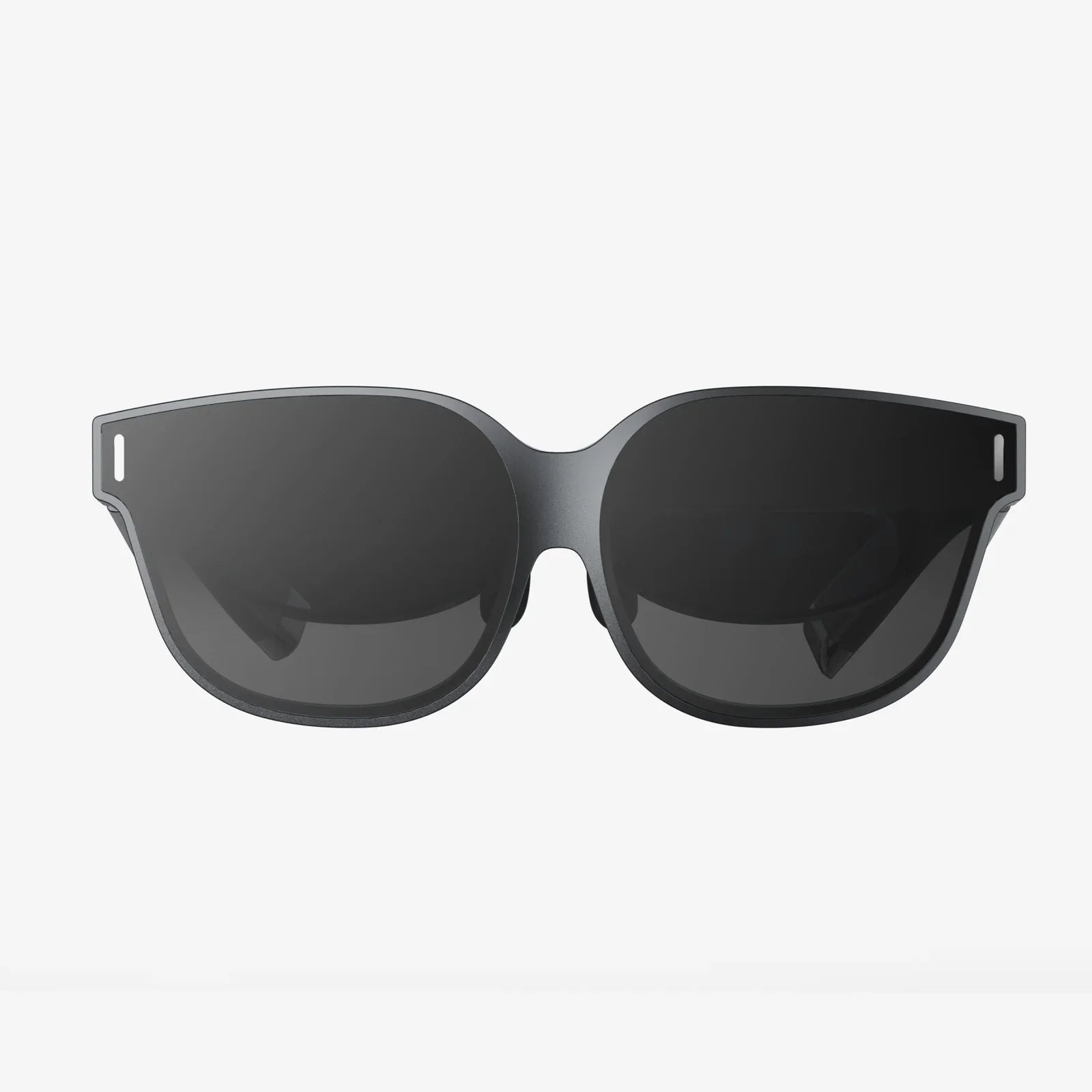
Imagine a world where your most vital information floats effortlessly in your periphery, where digital assistants see what you see, and the line between the physical and virtual worlds becomes beautifully, seamlessly blurred. This is no longer the realm of science fiction; it is the promise delivered by the latest smart glasses available in 2025. This new generation of wearable technology has finally transcended clunky prototypes and niche applications, offering a sleek, powerful, and genuinely useful gateway to a new kind of reality. The devices launching this year are not just incremental upgrades; they represent a fundamental leap forward in design, capability, and user experience, poised to revolutionize how we work, play, and connect.
The Evolution of a Vision: From Novelty to Necessity
The journey to the sophisticated smart glasses of 2025 has been a long one, marked by ambitious promises and sobering realities. Early iterations were often criticized for their limited battery life, socially awkward designs, and applications that failed to justify their existence. However, relentless innovation in micro-optics, battery chemistry, artificial intelligence, and materials science has converged to create a perfect storm of possibility. The latest models are the culmination of this progress, addressing the core challenges that once held the technology back. They are lighter, more powerful, and, crucially, designed to be worn all day without drawing undue attention or discomfort.
The defining shift in 2025 is the move from a companion device to a primary computing interface. No longer are these glasses merely a second screen for a smartphone; they are increasingly standalone platforms capable of handling complex computational tasks on their own. This autonomy is powered by specialized low-energy processors that rival the power of yesterday's laptops, all while being small enough to fit discreetly within the frame of the glasses. This independence is the key that unlocks their true potential, freeing users from the need to constantly tether to another device.
Architecting the Invisible: Breakthroughs in Display Technology
At the heart of any smart glasses experience is the display system, and the advancements here are nothing short of revolutionary. The latest smart glasses available in 2025 predominantly utilize two cutting-edge technologies: advanced waveguide optics and revolutionary Laser Beam Scanning (LBS) micro-displays.
Waveguide technology has matured significantly. Using nano-scale gratings etched into incredibly thin pieces of glass, these systems can pipe light from a micro-projector hidden in the temple of the glasses directly onto the retina. The result is a bright, high-resolution, full-color image that appears to float in space several feet away, all while remaining completely transparent when not in use. The field of view (FOV) has expanded dramatically, now encompassing a much larger portion of the user's natural vision, making it ideal for viewing complex data visualizations, watching immersive videos, or interacting with large virtual screens.
Meanwhile, LBS technology represents an even more radical miniaturization. Instead of a traditional display, it uses tiny lasers to scan images directly onto the retina. This method is incredibly power-efficient and allows for an always-on display experience that is simply not possible with other technologies. The image remains perfectly in focus regardless of the user's eyesight, a feature that has profound implications for accessibility.
A World Perceived: The Sensory Suite
For smart glasses to understand and interact with the world, they must be able to see and hear it. The sensor arrays on the 2025 models are incredibly sophisticated, turning the glasses into a powerful perceptual engine.
- High-Fidelity Spatial Audio: Multi-directional microphones not only enable crystal-clear voice calls but also perform advanced audio beamforming. This allows the glasses to isolate a single speaker's voice in a noisy room, making them exceptional for communication and transcription. Similarly, miniature speakers built into the temples deliver immersive spatial audio that feels like it's coming from the environment around you, not from the device itself.
- Advanced Computer Vision: A suite of high-resolution cameras, depth sensors, and LiDAR scanners continuously maps the environment in real-time. This enables precise positional tracking, object recognition, and spatial understanding. Your glasses can identify a product on a shelf, measure the dimensions of a room just by looking at it, or provide contextual information about a landmark you're viewing.
- Biometric Monitoring: Subtle photoplethysmography (PPG) sensors on the inside of the frames can track heart rate and even blood oxygen levels. An electrooculography (EOG) sensor can track eye movement and blink patterns, providing insights into focus and fatigue, and enabling new, effortless control mechanisms.
The Intelligent Interface: Control and Interaction Reimagined
Interacting with these powerful devices has moved far beyond simple touchpads or voice commands. The latest smart glasses available in 2025 offer a multimodal interface that feels intuitive and magical.
Voice control, powered by on-device AI that understands natural language and context, remains a cornerstone. However, it's now complemented by precise and responsive gesture control. Using the inward-facing cameras, the glasses can track subtle finger movements, allowing you to swipe through menus, select items, or manipulate virtual objects with a flick of the wrist, all without ever removing your hands from your side.
The most significant development is the refinement of neural input interfaces. While not reading thoughts, these systems use the EOG sensors and AI models to interpret intentional eye movements and facial micro-expressions. A deliberate double-blink can act as a selection button, a glance to the corner of the display can open a notification panel, and a subtle eyebrow raise can scroll a page. This creates a profoundly personal and hands-free interaction paradigm that feels like a direct extension of your will.
Transforming Daily Life: Applications Across the Spectrum
The true measure of this technology lies in its practical applications, which have exploded in diversity and depth.
Professional and Productivity Powerhouse
For professionals, these glasses are a game-changer. Architects and engineers can walk through full-scale 3D holograms of their designs. Field technicians can have schematics, manuals, and remote expert guidance overlaid directly onto the machinery they are repairing. Surgeons can have vital patient statistics and imaging data visible during procedures without looking away from the operating table. For the knowledge worker, the ability to float multiple large, virtual screens in any environment transforms a coffee shop or airport lounge into a highly productive workstation.
Accessibility and Augmented Reality
The impact on accessibility is profound. Real-time captioning for the hearing impaired is displayed directly in the user's view during conversations. AI-powered object recognition and auditory description can narrate the world for the visually impaired, identifying obstacles and reading text aloud from signs and documents. Language translation is now seamless; look at a menu in a foreign language, and the translated text appears overlaid in real-time.
Social Connection and Content Creation
Socially, these devices are reshaping connection. Sharing a first-person perspective of a concert or a child's first steps with a loved one far away creates a new depth of shared experience. Content creators can capture their point of view with cinematic quality, hands-free, enabling entirely new forms of storytelling and vlogging. The persistent, ambient recording also serves as a perfect memory aid, allowing users to recall specific details of conversations or events with perfect clarity.
Navigating the New Frontier: Privacy, Security, and Social Etiquette
With great power comes great responsibility, and the capabilities of the latest smart glasses available in 2025 raise critical questions. The always-present cameras and microphones understandably generate privacy concerns. Manufacturers have addressed this with robust hardware solutions: a prominent physical shutter that blocks the cameras and a dedicated LED privacy light that cannot be disabled by software, ensuring others are always aware when recording is active.
Data security is paramount. A significant shift towards on-device processing means that sensitive data—from your biometrics to your visual recordings—is processed locally and never needs to leave the device unless you explicitly choose to share it. Advanced encryption and secure enclaves protect this data from unauthorized access. Furthermore, the industry is rapidly developing a new social etiquette, with clear visual and auditory signals to indicate when the device is active, helping to integrate this powerful technology into society respectfully.
The Road Ahead: What Lies Beyond the Horizon
The smart glasses of 2025 are not the end point but a new beginning. Research is already underway on even more immersive technologies like holographic displays that can project light fields into the real world, creating digital objects with true depth and volume that are indistinguishable from physical ones. Brain-computer interfaces, while still in early stages, promise a future where control is truly neural, moving beyond even eye-tracking. Battery technology continues to evolve, with explorations into solar-charging coatings and kinetic energy harvesting from movement, aiming for the goal of perpetual, untethered use.
These devices are steadily evolving towards a future where the digital and physical are not just connected but fused. They are becoming the lens through which we will increasingly experience, manipulate, and understand our world, augmenting our human capabilities in ways we are only beginning to imagine.
The future is not something we will look at on a screen; it is something we will see through. The latest smart glasses available in 2025 have finally cracked the code, moving from a promising concept to an indispensable tool that is as stylish as it is powerful. They offer a glimpse into a world where information is contextual, assistance is ambient, and our potential is limited only by our imagination. This isn't just a new product category; it's the dawn of a new way of being human, and it's waiting for you to put it on.
Share:
AR Test Search: The Ultimate Guide to Accelerated Reader Quizzes and Book Levels
How Much Is a VR Headset Under $200: The Ultimate Buyer's Guide