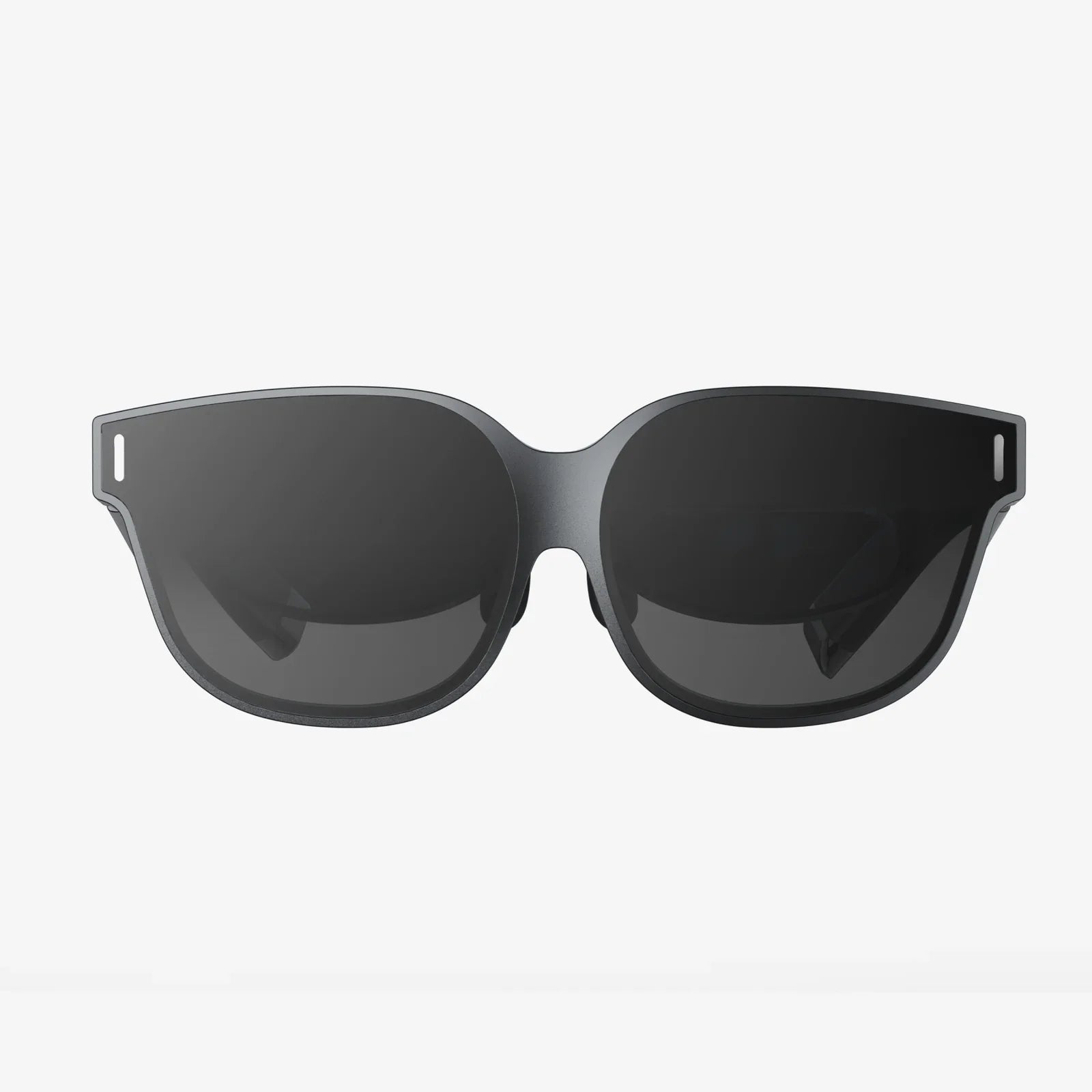
Remember the clunky headsets, the grainy visuals, and the wave of nausea that was once synonymous with virtual reality? Wipe that memory clean. The latest virtual reality technology is not an incremental update; it's a quantum leap, a fundamental reimagining of what it means to step into a digital world. We are standing at the precipice of a new era, where the line between our physical reality and boundless digital frontiers is becoming so beautifully blurred that it promises to reshape everything from how we work and learn to how we connect and heal. This isn't just about better games; it's about building new worlds, and the tools to construct them are now more powerful and immersive than ever before.
The Pillars of a New Reality: Key Technological Breakthroughs
The dramatic evolution of VR is built upon several foundational technological pillars, each advancing in lockstep to create a cohesive and convincing experience.
Visual Fidelity: The Pursuit of Photorealism
The most immediate and noticeable improvement is in display technology. Modern VR headsets have decisively moved past the dreaded "screen door effect"—that distracting grid of lines between pixels that constantly reminded users they were looking at a screen.
-
High-Resolution Micro-OLED Displays: These panels offer pixel densities so high that the human eye can no longer distinguish individual pixels at a normal viewing distance. Combined with incredibly fast response times, they eliminate motion blur and deliver rich, vibrant colors with true blacks, dramatically boosting contrast and realism.
-
Wider Field of View (FoV): Early VR often felt like looking through a pair of binoculars. New optical stacks, featuring complex pancake lenses, allow for a much wider field of view, expanding the immersive panorama and making the virtual world feel vast and endless rather than confined and claustrophobic.
-
High Dynamic Range (HDR): The integration of HDR means virtual worlds now have the same luminosity and color depth as a high-end television. The glint of sunlight on water, the deep shadows of a cavern, or the blinding flash of an explosion are rendered with breathtaking intensity, mimicking the dynamic range of human vision.
Intuitive Interaction: Your Hands Are the Controller
While gamepad-style controllers served a purpose, they were a constant reminder of the intermediary device between the user and the experience. The latest virtual reality technology is erasing that barrier through advanced input systems.
-
Inside-Out Tracking: Gone are the external sensors and lighthouses that required meticulous room setup. Advanced computer vision algorithms, powered by onboard cameras, now track the headset's position and the controllers' movements in real-time with millimetric precision, all without any external hardware. This makes VR truly untethered and accessible.
-
Eye-Tracking and Foveated Rendering: This is a game-changer for both performance and immersion. Tiny sensors map your pupil movement, allowing the system to understand exactly where you are looking. This enables foveated rendering, a technique that renders the area of the screen you are directly looking at in ultra-high detail while subtly reducing the detail in your peripheral vision. This massively reduces the computational load without any perceptible loss in quality, allowing for more complex and beautiful worlds.
-
Natural Hand Tracking: Why use a tool to simulate a hand when you can use your actual hand? Advanced machine learning models can now track all 26 degrees of freedom of your hands and fingers, allowing you to reach out, grab, push, poke, and gesture naturally. This enables incredibly nuanced interactions, from playing a virtual piano to manipulating complex 3D models with delicate precision.
Comfort and Accessibility: Making VR a Daily Habit
For VR to move beyond a niche hobby, it had to become something people would want to use for extended periods. Significant engineering efforts have focused on ergonomics and user comfort.
-
Wireless and Standalone Design: The tether, a cable connecting the headset to a powerful computer, was a major immersion-breaker and safety hazard. Today's leading devices are either fully standalone, with all computing power built-in, or support high-fidelity wireless streaming, granting users complete freedom of movement.
-
Ergonomic and Balanced Form Factors: Through better material science and design, headsets are becoming lighter, better balanced, and more comfortable to wear for hours. The weight is distributed more evenly, reducing pressure on the face and making the technology feel less intrusive.
-
Mitigating Simulator Sickness: A combination of higher refresh rates (now often 90Hz, 120Hz, or even higher), reduced motion-to-photon latency (the delay between your head moving and the display updating), and sharper visuals has drastically reduced the instances of VR-induced nausea, opening the medium to a much wider audience.
Beyond Entertainment: The Real-World Impact of Immersive Tech
While gaming remains a powerful driver of adoption, the most profound applications of the latest virtual reality technology are emerging in enterprise, education, and healthcare.
Revolutionizing Education and Training
VR transforms learning from a passive activity into an active, experiential journey.
-
Immersive Learning: Instead of reading about ancient Rome, students can walk through a digitally reconstructed Forum. Medical students can practice complex surgical procedures on virtual patients, making mistakes without consequence. Mechanics can learn to repair a jet engine by taking apart a perfect digital replica.
-
Soft Skills Training: Professionals can practice public speaking in front of a virtual audience, or customer service reps can navigate difficult conversations with AI-powered avatars, receiving instant feedback on their tone and body language.
-
Remote Collaboration: With photorealistic avatars, teams spread across the globe can meet in a shared virtual boardroom, interact with 3D models of a new product design, and collaborate as if they were in the same physical space.
Transforming Healthcare and Therapy
The therapeutic potential of VR is vast and is already delivering tangible results.
-
Exposure Therapy: Therapists are using controlled VR environments to safely treat patients with phobias (like fear of heights or flying) or PTSD, allowing them to confront and process their triggers in a manageable way.
-
Pain Management: Immersive VR experiences have been proven to be a powerful non-pharmacological tool for pain distraction, especially for burn victims during wound care or for patients undergoing painful medical procedures.
-
Physical Rehabilitation: Patients recovering from strokes or injuries can engage in gamified physical therapy exercises within VR, making repetitive motions more engaging and allowing therapists to precisely track progress through motion data.
Redefining Remote Work and Design
The concept of the "virtual office" is moving beyond video calls into a fully 3D space.
-
Architecture and Engineering: Architects can walk clients through unbuilt designs at a 1:1 scale, making changes to the virtual structure in real-time. Engineers can identify potential design flaws and interference issues long before physical prototypes are built, saving immense time and resources.
-
Virtual Prototyping: Manufacturing companies can create and test virtual prototypes of everything from cars to consumer electronics, experimenting with different materials and ergonomics without the cost of physical materials.
The Road Ahead: The Future is Already Here
The pace of innovation shows no signs of slowing. On the horizon, we see technologies that will dissolve the remaining barriers between realities.
-
Hyper-Realistic Avatars and Social Presence: The future of social VR lies in avatars that are not cartoonish representations but photorealistic, emotionally expressive digital twins, captured in real-time, making remote interaction feel genuinely face-to-face.
-
Haptic Feedback and Full-Body Immersion: Advanced haptic gloves and suits will allow users to feel the texture of a virtual object, the resistance of a virtual spring, or the impact of a virtual raindrop, completing the sensory loop of immersion.
-
Brain-Computer Interfaces (BCIs): Though further out, research into BCIs points to a future where we may be able to navigate virtual spaces or manipulate objects with our thoughts alone, making the technology even more seamless and intuitive.
Navigating the New Frontier: Considerations and Challenges
As with any powerful technology, its adoption comes with important questions that society must address. Issues of data privacy, as headsets with eye-tracking and room-scanning capabilities collect unprecedented amounts of personal biometric and environmental data, are paramount. The potential for psychological effects, from addiction to the blurring of reality, requires careful study and the development of ethical guidelines. Furthermore, ensuring equitable access and preventing the creation of a new digital divide is a critical challenge. The technology is a tool, and its impact will be shaped by the wisdom with which we choose to wield it.
The dream of virtual reality has been decades in the making, but it's only now that the technology has finally caught up to the ambition. We are no longer just putting on a headset; we are stepping through a portal. The latest virtual reality technology offers a canvas limited only by our imagination, inviting us to build, explore, learn, and connect in ways we are only beginning to understand. The door to countless new realities is now open, and it's an invitation to an adventure that is just getting started.