


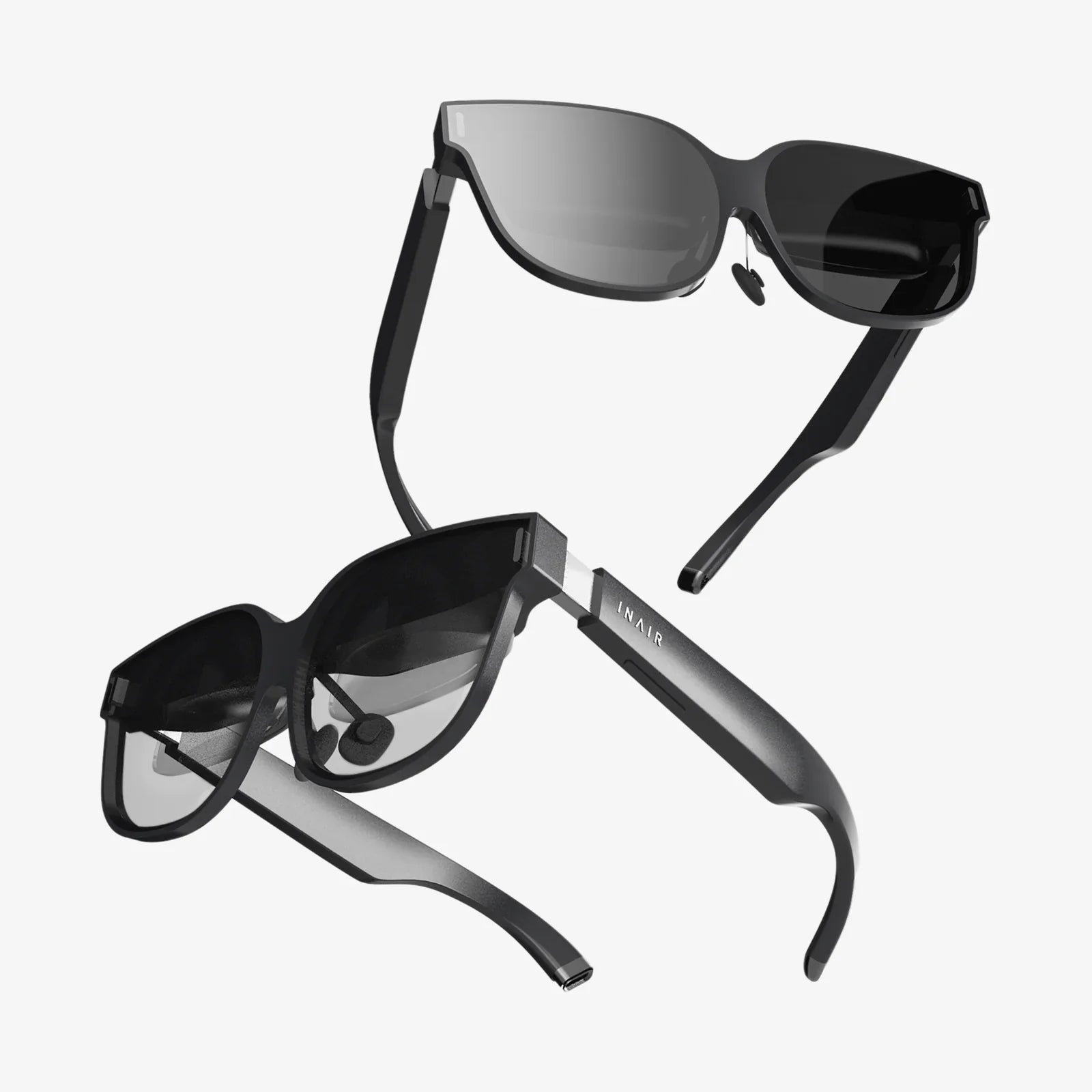
Imagine a world where your vision is not limited by biology, where your devices don't just capture light but understand it, and where the very lens through which you perceive reality is a dynamic, intelligent partner. This is not a distant sci-fi fantasy; it is the emerging reality forged by the rapid advancement of Lense Smart technology, a silent revolution that is fundamentally altering the relationship between humanity and the visual world.
The Genesis of Intelligence: From Glass to Genius
The humble lens, a carefully ground piece of glass or polymer, has been a cornerstone of technological progress for centuries. It enabled us to gaze at distant stars, peer into the microscopic fabric of life, and forever capture moments in time. For most of its history, a lens was a static, passive component—its properties fixed at the moment of manufacture. The concept of a 'smart' lens shatters this centuries-old paradigm. Lense Smart technology represents the convergence of optics, micro-electronics, sophisticated software, and often, artificial intelligence. It is the transformation of the lens from a window into an eye; from a tool into a system.
This evolution is driven by a simple, powerful idea: what if the lens could adapt? What if it could analyze the scene it is viewing and optimize itself in real-time to achieve a specific goal, whether that goal is perfect focus, enhanced clarity in low light, identifying a subject, or even translating text on the fly? This capability moves us beyond mere automation into the realm of genuine intelligence, where the optical system is an active participant in the process of seeing.
The Core Technologies Powering the Smart Lens Revolution
The magic of Lense Smart is not a single invention but a sophisticated symphony of several cutting-edge technologies working in perfect harmony.
Adaptive and Liquid Crystal Optics
At the physical heart of many smart lens systems lies adaptive optics. Borrowing principles from astronomy, where they are used to correct atmospheric distortion in telescopes, these systems use elements that can change their shape or refractive properties. Micro-actuators can minutely deform a flexible lens membrane, altering its focal length without any moving parts in the traditional sense. Alternatively, lenses employing liquid crystal technology can electrically control the passage of light, creating tunable filters, focus controls, and apertures. This provides the foundational physical layer of adaptability.
Integrated Computational Photography
This is where the 'smart' truly manifests. Computational photography is the use of digital software to enhance or extend the capabilities of digital photography. A smart lens system deeply integrates with an image signal processor (ISP). Instead of just rendering a raw image, the ISP works with data from the lens and sensor to perform complex tasks like real-time High Dynamic Range (HDR) merging, computational bokeh (portrait mode), night mode image stacking, and super-resolution zoom. The lens is no longer a separate entity; it is a data-gathering input for a powerful computational engine.
On-Device Artificial Intelligence and Machine Learning
AI is the brain that directs the adaptive body. Machine learning models, often running directly on the device for instant response (edge computing), analyze the visual data stream. They can identify scenes (e.g., recognizing a face, a pet, a sunset, a document), detect motion, track subjects, and predict action. Based on this analysis, the AI can instruct the adaptive optics to refocus, adjust the exposure, or switch to a specific optimization mode—all before the user even presses a shutter button. This predictive capability is what makes modern smart lenses feel intuitive and magical.
Advanced Sensor Fusion
A truly smart lens system does not operate in a vacuum. It constantly cross-references data from other sensors. A depth sensor (LiDAR or time-of-flight) provides precise distance mapping, allowing for instant and accurate focus and background separation. Gyroscopes and accelerometers detect camera shake and enable powerful image stabilization by physically shifting the lens or sensor element to counteract motion. This fusion creates a holistic understanding of the environment that far surpasses what vision alone can provide.
Transforming Everyday Experiences: The Consumer Sphere
The most visible impact of Lense Smart technology is in the devices we use daily. It has quietly become the defining feature of modern visual capture.
In mobile devices, it has rendered the megapixel race largely obsolete. The quality of a photograph is no longer determined by sensor size alone but by the power of the computational engine behind the lens. Everyone now carries a capable camera that can achieve results that would have required professional gear and expertise just a decade ago. Features like portrait mode, night photography, and cinematic video stabilization are direct products of smart lens systems. The lens intelligently assists the user, ensuring they rarely take a blurry or poorly exposed photo.
In the automotive industry, smart lenses are a critical safety technology. Advanced Driver-Assistance Systems (ADAS) and the push towards autonomous vehicles rely on a suite of cameras with intelligent optics. These lenses must maintain flawless clarity in blinding rain, glaring sun, or pitch-black darkness. They constantly clean themselves, adjust exposure to see into shadows and highlights simultaneously, and use AI to identify and track pedestrians, vehicles, and road signs, providing crucial data to the vehicle's computer.
Beyond the Consumer: Specialized and Medical Applications
While consumer electronics are a major driver, the implications of Lense Smart technology in specialized fields are profound and often life-changing.
Healthcare and medicine are experiencing a revolution. Endoscopes and laparoscopes used in minimally invasive surgery are incorporating smart lens technology to provide surgeons with enhanced visualization, auto-focusing on critical tissue, highlighting blood vessels, or even overlaying diagnostic data directly into their field of view. In diagnostics, compact devices with smart microscopes can be deployed in field clinics to automatically analyze blood samples for pathogens, making advanced diagnostics accessible in remote areas.
Industrial manufacturing and robotics leverage smart lenses for precision and quality control. A robot equipped with a vision system using adaptive optics can instantly scan objects on a fast-moving conveyor belt, identifying microscopic defects with superhuman accuracy. These systems can adapt their focus and lighting analysis on the fly to inspect everything from microchips to automobile paint jobs, ensuring consistency and reducing waste.
Gazing into the Future: The Next Frontier of Visual Intelligence
The trajectory of Lense Smart technology points towards even deeper integration and more ambient forms of interaction. We are moving towards a world of contextual and anticipatory visual systems. Imagine smart glasses whose lenses continuously adapt to your environment, automatically dimming in bright sun, translating street signs in a foreign language, highlighting the route to your gate in an airport, or providing real-time information about a landmark you are viewing—all without you ever needing to look down at a screen.
Furthermore, the line between biological and technological vision will continue to blur. Research into smart intraocular lenses (IOLs) promises not just to restore vision after cataracts but to enhance it, potentially offering built-in zoom, macro capabilities, or display overlays for augmented reality directly within the human eye. While this raises significant ethical questions, it illustrates the transformative potential of the technology.
This progress will be powered by the next generation of AI, moving from recognition to understanding. Future smart lenses won't just see a person; they may be able to interpret subtle emotional cues or predict intent. They will move from reactive systems to proactive partners, seamlessly integrating visual intelligence into the fabric of our daily lives in ways we are only beginning to imagine.
Navigating the Challenges: Privacy, Ethics, and Dependency
With great power comes great responsibility, and the power of an intelligent, always-watching eye is immense. The proliferation of Lense Smart technology forces a critical societal conversation.
Privacy concerns are paramount. A device that sees and understands the world can also surveil it. The ability to automatically identify individuals, track movements, and analyze behavior presents a clear risk if left unregulated. Robust legal frameworks and ethical guidelines are urgently needed to distinguish between helpful visual assistance and intrusive surveillance. Transparency about data collection, processing, and storage is non-negotiable for consumer trust.
There is also a risk of over-dependency and skill erosion. As lenses become smarter, the need for human photographic skill—understanding composition, lighting, and focus—diminishes. While this democratizes high-quality imagery, it could also impoverish our artistic and technical understanding of photography. The technology should be a tool that enhances human creativity, not replaces it.
Finally, the environmental and societal cost of these complex electronic systems must be considered. Their manufacture relies on rare earth elements and complex supply chains, and their short lifecycles contribute to e-waste. A sustainable approach to designing, producing, and recycling these advanced components is crucial for the long-term health of the revolution they are creating.
The lens has shed its passive identity, evolving into a dynamic gateway of intelligent perception. This journey from simple glass to cognitive partner is redefining every industry it touches, empowering professionals, connecting us creatively, and promising to augment human experience itself. The challenge ahead is not just to make these lenses smarter, but to ensure the wisdom guiding their development is even greater.
Share:
How Do AR Glasses Compare to Smart Glasses: A Detailed Breakdown
WiFi Sunglasses Are the Pinnacle of Wearable Tech and Digital Freedom