


- by wangfred
Lenses for VR: The Unsung Heroes of Immersive Digital Realities
- by wangfred
Imagine stepping into another world, a digital frontier where the rules of physics are rewritten and the only limit is the imagination of the creator. This is the promise of virtual reality, a promise that hinges not on powerful processors or intricate code alone, but on a piece of precision-ground glass or plastic placed mere centimeters from your eyes. The gateway to these immersive experiences, the very component that translates binary data into a believable universe, is a set of meticulously engineered lenses. Without them, VR is just a screen. With them, it’s magic. The journey of light from a tiny display to the convincing, expansive world you perceive is a story of optical innovation, human physiology, and relentless engineering. This is the untold story of the most critical hardware in the headset, the unsung heroes of the virtual realm: lenses for VR.
At its core, every VR headset is a stereoscopic display system. Two small, high-resolution screens project a slightly different image to each eye, tricking the brain into perceiving depth and volume. However, if you were to simply place these screens directly in front of your eyes, the experience would be disastrous. The image would be uncomfortably close, impossible to focus on, and confined to a tiny, narrow window. This is where the lenses come in. Their primary job is to act as an intermediary, performing a series of complex optical feats to make the experience both viewable and comfortable.
The first and most fundamental task is refocusing and collimating the light. The displays are too close for the human eye to accommodate, a phenomenon known as the vergence-accommodation conflict. Our eyes are accustomed to focusing (accommodating) on the same point they are converging on (pointing towards). In the real world, if you look at a nearby object, your eyes cross slightly and your lenses flex to bring it into focus. For a distant object, your eyes become parallel and your lenses relax. In early VR, the displays were fixed at a single focal distance, often around two meters, while your eyes might be converging on a virtual object that appeared just inches away. This mismatch causes eye strain, headaches, and a subconscious feeling that the world isn't quite real.
VR lenses solve this by making the light from each pixel on the screen appear as if it is coming from a distant point, effectively placing the virtual image at optical infinity. This allows the user's eyes to relax their accommodation, as if looking into the distance, while still allowing them to converge on nearby virtual objects without strain. It’s a clever trick that forms the bedrock of comfortable VR viewing.
The second critical function is to widen the field of view (FoV). A human’s natural horizontal field of view is approximately 200 degrees when including peripheral vision. A narrow FoV in a headset feels like looking through binoculars or a scuba mask, instantly shattering immersion. Lenses are designed to take the small, rectangular image from the display and magnify it, spreading it across a much wider angular area. The goal is to maximize this FoV to fill the user’s vision without introducing unacceptable levels of distortion or requiring impractically large and heavy hardware. The design and placement of the lenses are paramount in achieving a wide, seamless window into the virtual world.
Not all VR lenses are created equal. Over the years, several optical designs have emerged, each with its own set of advantages, trade-offs, and applications. The evolution from one type to another represents the industry's ongoing quest for visual perfection.
These were common in the earliest consumer VR devices. Unlike simple spherical lenses, which have a constant curvature leading to distortions like spherical aberration (where light rays focus at different points), aspheric lenses feature a progressively changing curvature. This allows them to better correct for these aberrations, providing a sharper image, particularly towards the edges of the view. However, they still struggle with other types of distortion and chromatic aberration (where different colors of light focus at different points, creating color fringing). While a step up, they were quickly surpassed by more advanced designs for high-end applications.
For a long time, the most prevalent lens type in mainstream VR headsets has been the Fresnel lens. Inspired by lighthouse lenses designed by French physicist Augustin-Jean Fresnel, these lenses utilize a clever design hack. Instead of being a solid, thick, and heavy piece of glass with a continuous curved surface, a Fresnel lens is thin and flat on one side, with a series of concentric grooves or rings carved into the other. Each ring acts as a small portion of a conventional curved lens.
The benefit is immense: dramatically reduced weight and thickness. This makes headsets lighter, more comfortable to wear for extended periods, and cheaper to manufacture. However, the design comes with significant optical compromises. The ringed structure causes two main issues:
Despite these flaws, the trade-off was deemed acceptable to bring VR to the masses, making Fresnel lenses the standard for a generation of hardware.
The latest revolution in VR optics is the adoption of pancake lenses. This is a folded optics design that relies on polarization to bounce light back and forth between lens elements before it reaches the eye. This folding process allows the total distance between the display and the eye (the tracking length) to be drastically reduced.
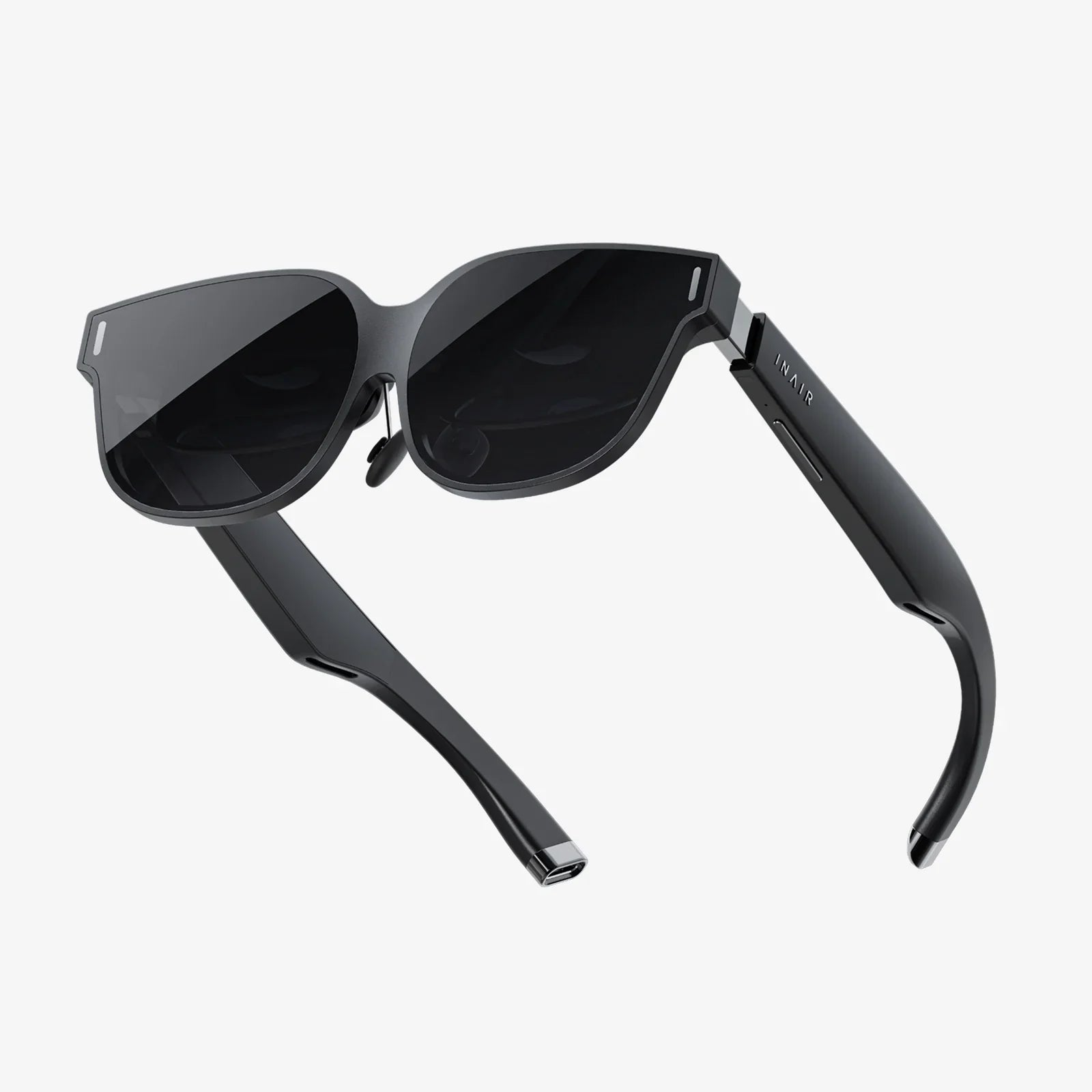
The advantages are transformative. Headsets utilizing pancake lenses can be remarkably slimmer and lighter, moving from a front-heavy box to a form factor closer to sunglasses. They also largely eliminate the god rays and glare associated with Fresnel lenses, offering superior contrast and black levels. Furthermore, they typically provide a much larger and more forgiving sweet spot, making the image consistently clear even with minor movements of the headset.
The trade-off? Light efficiency. With each reflection inside the lens assembly, a significant amount of light is lost. This means displays must be much brighter to compensate, which can present its own engineering challenges around power and heat. Nonetheless, the massive gains in form factor and visual quality make pancake lenses the new gold standard for high-end VR and augmented reality devices.
The next frontier lies in making lenses dynamic. Current lenses, whether Fresnel or pancake, have a fixed focal plane. As discussed, this creates the vergence-accommodation conflict. The ultimate solution is varifocal lenses—lenses that can physically or electronically change their focal length in real time.
Prototype systems use eye-tracking to precisely measure where a user is looking in the virtual scene. The lenses then automatically adjust their focus to match the calculated distance of that virtual object. If you look at a nearby virtual coffee cup, the lenses adjust to a near focus; if you then gaze out a virtual window at a mountain, they shift to a far focus. This perfectly matches our natural ocular behavior, potentially eliminating eye strain entirely and adding a profound new layer of realism and comfort.
Another emerging technology involves liquid crystal lenses. By applying an electric field to a layer of liquid crystals, researchers can alter its optical properties, effectively creating a lens whose power can be changed electronically without any moving parts. This could lead to incredibly compact and reliable varifocal systems, seamlessly integrating dynamic focus into the slim form factors enabled by pancake optics.
Designing a lens for VR is an exercise in managing compromises. Pushing one performance metric to its limit often negatively impacts another. Engineers are constantly balancing a complex set of variables:
The lens does not work in isolation. Its performance is inextricably linked to sophisticated software. The process begins with a precise characterization of the lens's optical properties. Engineers map its distortions, color shifts, and light fall-off across the entire field of view. This map is then used to create a shader—a small program that runs on the headset's graphics processor.
This shader performs a crucial task: pre-distortion. Before the final image is sent to the display, the software warps it with the inverse of the lens's distortion pattern. As this pre-warped image passes through the physical lens, the lens's inherent distortions cancel out the software's, resulting in a perfectly rectilinear image from the perspective of the user. This software-hardware symbiosis is absolutely essential for delivering a usable image. Any miscalibration results in a world that appears bent, warped, or unreal.
Finally, the ultimate judge of any lens system is the human using it. Human anatomical variation adds another layer of complexity. The Interpupillary Distance (IPD)—the distance between a person's pupils—varies significantly across the population. If the lenses are not aligned with the user's pupils, the image will be blurry, and experiencing stereoscopic depth becomes difficult. Most modern headsets address this with mechanical IPD adjustment, physically moving the lenses and displays to match the user's measurement.
Furthermore, a large portion of the population requires vision correction. While many users wear their contact lenses or glasses inside a headset, this is often uncomfortable and can scratch the headset's lenses. The industry is responding with solutions like magnetic prescription lens inserts. These custom-ground lenses slot neatly inside the headset, providing a seamless, comfortable, and optically correct experience for users with myopia, hyperopia, or astigmatism, ensuring VR is accessible to all.
From the raw physics of light to the nuances of human vision, the journey of a photon from a micro-display to a neuron firing in the visual cortex is a marvel of modern engineering. Those small, often overlooked pieces of glass or plastic are the linchpin of the entire virtual reality experience. They are the difference between observing a simulation and feeling present within it. As research pushes into dynamic varifocal systems, holographic optics, and even light-field displays that may one day render traditional lenses obsolete, their core mission remains unchanged: to perfectly deceive our most precious sense and unlock realities beyond our own. The next time you lose yourself in a virtual world, take a moment to consider the intricate optical marvels that made it possible—because the future you see through them is only getting brighter, sharper, and more real.