


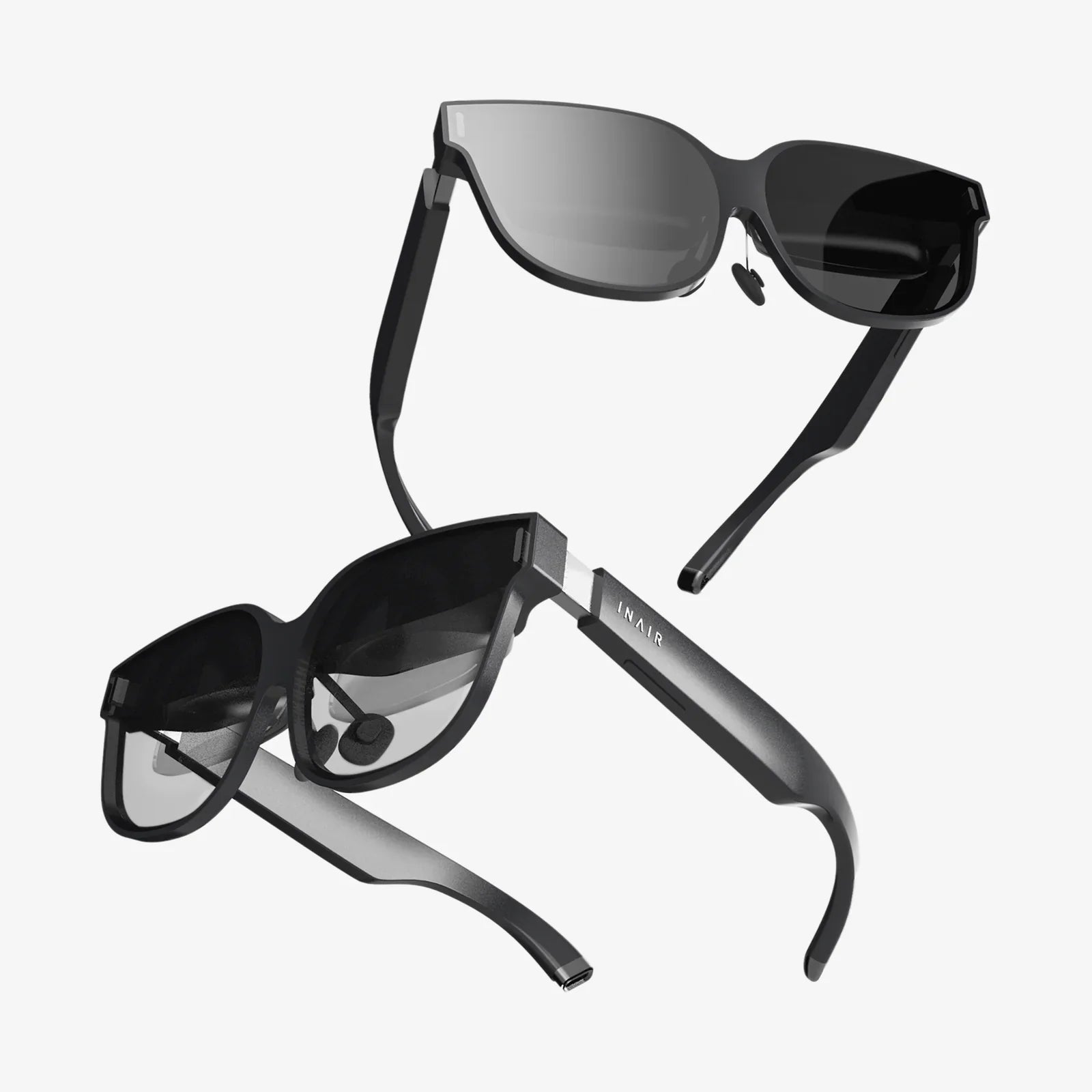
Imagine reaching out in a virtual world and your hand doesn't judder or clip through a digital object. Imagine leaning in to examine a historical artifact in augmented reality, and your eyes naturally refocus on its intricate details without a hint of strain. Imagine a world where the line between the physical and the digital isn't just blurred—it's completely erased. This isn't a distant sci-fi fantasy; it's the imminent future being unlocked by one of the most profound advancements in visual computing: light field rendering and streaming for VR and AR. This technological leap promises to solve the fundamental problems that have plagued immersive experiences since their inception, catapulting us into an era of true visual fidelity and effortless comfort.
The Fundamental Flaw of Traditional 3D Rendering
To understand why light fields are revolutionary, we must first grasp the limitations of the current paradigm. Traditional computer graphics, which powers most of today's VR and AR, relies on a geometric pipeline. A 3D model is created, textures are applied, and lighting is simulated. This scene is then rendered from a single, fixed point of view—the perspective of a virtual camera, which corresponds to the estimated position of your headset.
The critical shortcoming of this method is its inherent two-dimensionality. It produces a flat image, a single slice of visual information, pretending to be a 3D world. Our visual system, however, is exquisitely designed to perceive depth and volume by interpreting a multitude of visual cues that a flat image cannot provide natively. This discrepancy is the root cause of the infamous "VR fatigue" and the often unconvincing nature of AR overlays.
- The Vergence-Accommodation Conflict (VAC): This is the granddaddy of VR discomfort. In the real world, our eyes perform two actions in perfect harmony to focus on an object: vergence (the eyes crossing or uncrossing) and accommodation (the lenses inside our eyes changing shape). In a VR headset, the screen is at a fixed focal distance (usually around 2 meters). Your eyes must verge to perceive the 3D location of a virtual object that appears closer or farther, but they must still accommodate to the fixed screen. This neurological mismatch causes eye strain, headaches, and long-term discomfort, preventing prolonged use.
- Lack of Motion Parallax: In reality, when you move your head, your perspective on the world changes continuously and correctly. Objects closer to you move more across your field of view than objects farther away. While modern headsets track head movement and update the image accordingly, it's still just a series of single-perspective images. The subtle, continuous shifts of light and perspective are missing, making the world feel static and "cardboardy" upon close inspection.
- Incorrect Occlusions and Reflections: A traditional render has no information about what is behind or between objects from a different viewpoint. If you lean to look around a virtual corner, the software must re-render the entire scene. This often leads to pop-in, incorrect shadows, and reflections that don't behave as light truly would.
These are not mere inconveniences; they are fundamental flaws in how we simulate reality. We've been trying to solve them with increasingly complex geometric tricks and higher-resolution displays, but we are merely polishing a flawed core concept. Light field technology offers a paradigm shift, moving from simulating geometry to capturing and reproducing light itself.
What is a Light Field? Seeing the World as Light Rays
The concept of a light field is not new; it was theorized by Michael Faraday in the 19th century and formalized by Alexander Gershun in 1936. The core idea is simple yet profound: instead of describing a scene by the objects within it (polygons, textures), describe it by the totality of light rays moving through every point in space, in every direction.
Think of it this way: if you could freeze time inside a room, you could theoretically measure the intensity, color, and direction of every single photon. This complete dataset would represent the light field of that room. Anyone who could access this dataset could, in principle, reconstruct exactly what the scene looked like from any vantage point, at any angle, with perfect visual fidelity. Your eyes wouldn't be looking at a "render" of the room; they would be receiving the same light rays they would if you were physically present.
In practical terms, a light field is often represented as a 4D function—it captures light rays defined by their position in 2D space (where they are) and their direction in 2D space (where they are going). This is often visualized as a "plenoptic" function. Capturing or generating this 4D dataset is the first step toward light field technology.
Light Field Rendering: Synthesizing Reality
Light field rendering flips the traditional graphics pipeline on its head. Instead of building a scene from polygons and calculating what it looks like from one viewpoint, the renderer works with a pre-computed or captured 4D light field dataset.
There are two primary approaches to creating this dataset:
- Light Field Capture: Using a specialized array of dozens or even hundreds of cameras, a real-world scene or object is photographed simultaneously from slightly different positions. By computationally combining all these 2D images, a complex 4D model of the scene's light field is reconstructed. This is a form of ultra-advanced photogrammetry.
- Light Field Synthesis: Using traditional rendering techniques, a scene is not rendered just once, but hundreds or thousands of times from a dense grid of virtual camera positions. The results are compiled into a single, unified light field dataset. This is computationally monstrous but only needs to be done once as a pre-processing step.
Once the light field dataset exists, the magic happens. When a user in a VR headset moves their head, the display system is no longer frantically trying to re-render a complex 3D scene in milliseconds. Instead, it acts like a window. It queries the massive 4D dataset, selecting and blending the precise light rays that would pass through that virtual window (the headset lenses) to reach the user's eyes at their exact head position and pupil orientation.
The Revolutionary Benefits of Light Field Rendering
- Elimination of VAC: This is the killer app. Because a light field contains all the visual information for every possible focal depth, the display can accurately simulate the light rays coming from both near and far objects. Your eyes can now accommodate naturally, just as they do in the real world. The vergence-accommodation conflict is solved, paving the way for all-day comfortable VR and AR.
- Perfect Motion Parallax: Since the light field contains the view from every possible position, even the most subtle head movement results in a perfectly correct and continuous change in perspective. There is no clipping, no pop-in, and no disconnect. The world feels solid and real because the visual information is inherently continuous.
- Photorealism: Light fields capture and reproduce real-world light transport, including subtle effects like subsurface scattering, specular highlights, and diffuse inter-reflections that are incredibly difficult to simulate accurately with traditional shaders. The result is an image that is often indistinguishable from a photograph.
- Six Degrees of Freedom (6DoF): While current VR offers 6DoF for head tracking, light fields provide true 6DoF for the visual content itself. You can lean in, walk around, and inspect objects from any angle with flawless visual consistency.
The Daunting Challenge: The Data Tsunami
If light fields are so perfect, why aren't they everywhere? The answer is data. A single, high-resolution, high-quality light field representation of even a small room can be orders of magnitude larger than a traditional 3D model of the same space. We are talking about terabytes or even petabytes of information for a complex, explorable environment. This creates two monumental bottlenecks: storage and transmission.
Storing these datasets on a local device is impractical. Streaming them over the internet, even with fiber-optic connections, seems impossible. The raw data requirements would bring any network to its knees and require impossible amounts of local storage. This is where the second part of the technological revolution comes in: intelligent compression and adaptive streaming.
Light Field Streaming: The Bridge to the Cloud
The future of light field technology is inextricably linked to the cloud. The vision is to store these massive light field datasets in powerful data centers and stream only the necessary fragments to the user's device in real-time, exactly when and where they are needed.
This is not like streaming a 4K video. It's far more sophisticated. The core technologies enabling this include:
- Advanced Compression Codecs: Researchers are developing specialized codecs that exploit the immense redundancy within a 4D light field. Similar rays of light appear across many different viewpoints. New compression algorithms, often based on wavelets or other transforms, can reduce file sizes by over 99% without perceptible loss of quality.
- Foveated Rendering and Streaming: This technique, which tracks the user's eye gaze, is perfectly suited for light fields. The system can stream and decode the light rays in full, ultra-high resolution only for the tiny central area of the retina (the fovea) where our vision is sharpest. The peripheral vision, which is much less discerning, receives a heavily compressed or lower-resolution version of the light field. This can reduce the required bandwidth by up to 95%.
- Predictive Streaming: Using machine learning and sophisticated prediction algorithms, the system can anticipate the user's next head movement and gaze direction. It pre-fetches and pre-loads the specific chunks of the light field dataset that the user is likely to need in the next few milliseconds, hiding the network latency.
- Edge Computing: By processing and compressing light field data in data centers physically closer to the user (at the "edge" of the network), latency can be minimized, ensuring a seamless and responsive experience.
This combination of technologies forms a cohesive pipeline: immense computational power in the cloud handles the storage and heavy processing of light fields, while sophisticated algorithms ensure only a tiny, crucial fraction of that data is ever sent over the network to the user's lightweight, untethered headset.
The Future Transformed: Applications Across Industries
The implications of solving the visual challenges of VR and AR are staggering. Once the experience becomes comfortable and photorealistic, it ceases to be a novelty and becomes a utility.
- Telepresence and Social Connection: Imagine attending a family gathering, a business meeting, or a concert not as a floating avatar on a flat screen, but as a full-light-field hologram of yourself, able to make genuine eye contact and share a physical space with others, all from across the globe. The sense of "being there" would be absolute.
- Design and Engineering: Architects and car designers could walk clients through full-scale, photorealistic prototypes of unbuilt structures and vehicles. Engineers could examine and collaborate on complex 3D models as if they were physical objects on the table in front of them.
- Education and Cultural Heritage: Students could not just read about the Renaissance; they could stand in a perfectly reconstructed light field capture of the Sistine Chapel, leaning in to see the brushstrokes on the ceiling. Museums could offer global access to their most fragile artifacts, allowing for closer inspection than would ever be possible in person.
- Retail and E-Commerce: You could "try on" a new sofa in your actual living room via AR, seeing exactly how the light from your window reflects off its fabric at different times of day, with perfect accuracy, before you buy.
- Healthcare: Surgeons could practice complex procedures on light field captures of patient-specific anatomy, experiencing true depth and tissue behavior before making a single incision.
The journey to perfect immersion has been long and fraught with technical hurdles, but the path forward is now illuminated. Light field rendering and streaming represent more than just an incremental upgrade; they are the key to unlocking the true, world-changing potential of virtual and augmented reality. The barriers of discomfort and unreality are finally beginning to crumble, not through brute force, but through a fundamental, elegant understanding of the very nature of light and sight. The next time you put on a headset, the world you see may not be a render—it may simply be light, perfectly captured and faithfully delivered, waiting for you to step inside.
Share:
How Is AI Used Today: The Invisible Force Reshaping Our World
SWOT Analysis of the AR VR Industry: Navigating the Next Digital Frontier