


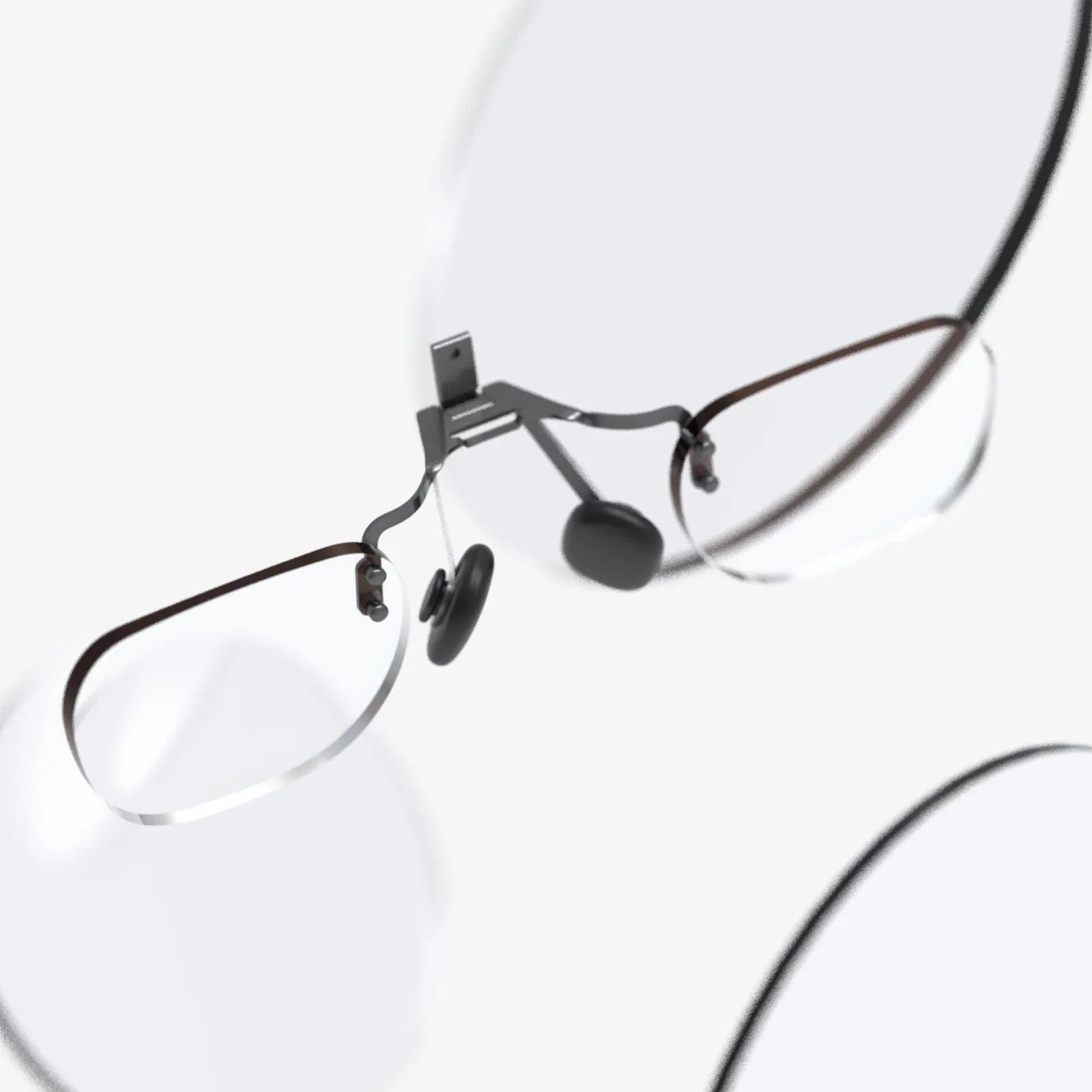
- by wangfred
Lightweight AR Project: The Future of Accessible Augmented Reality
- by wangfred
Imagine a world where digital information doesn't feel locked inside a clunky headset or a draining app, but flows seamlessly into your immediate reality, accessible with nothing more than the device already in your pocket or a simple pair of sleek glasses. This isn't a distant sci-fi fantasy; it's the imminent future being built today through the rapid evolution of lightweight AR projects. This movement represents a fundamental paradigm shift, moving augmented reality from a niche, hardware-intensive novelty to a ubiquitous, practical tool for the masses.
The term "lightweight" in this context is a multifaceted philosophy, encompassing hardware, software, and user experience. It’s a deliberate move away from the cumbersome, power-hungry, and often isolating prototypes of the past.
For years, high-fidelity AR was synonymous with heavy, tethered headsets requiring connection to powerful external computers. Lightweight AR projects have shattered this model. The focus is now on:
Lightweight software is just as critical as lightweight hardware. The goal is to eliminate friction.
This shift isn't just about desire; it's enabled by a convergence of technological advancements.
Modern mobile processors come with dedicated neural processing units (NPUs) and chips optimized for on-device machine learning. This allows for incredibly fast and accurate:
By pairing with the cloud, lightweight devices achieve a form of superpower. A simple pair of glasses can send sensor data to a powerful remote server, which performs lightning-fast calculations and sends back only the necessary display instructions. 5G’s ultra-low latency is crucial here, making this exchange feel instantaneous and preventing nausea-inducing lag.
The development of robust spatial computing platforms provides the underlying operating system for AR. These platforms handle the complex tasks of environmental understanding, persistence (remembering where digital content was placed), and multi-user sharing, allowing developers to build lightweight experiences without starting from scratch every time.
The practical applications of this technology are already transforming fields from the factory floor to the retail store.
A technician arrives at a complex piece of malfunctioning equipment. Instead of lugging around a heavy manual or a tablet, they don lightweight AR glasses. Using a WebAR interface, they scan a QR code on the machine. Instantly, digital arrows point to specific components, animated overlays show the correct disassembly procedure, and vital signs and sensor data are displayed floating next to the relevant gauges. Their hands remain free, and the information is contextual, reducing errors and drastically cutting downtime.
A customer shopping for a new sofa opens a retailer's website on their phone. They see an option to "View in your room." Clicking it activates their camera and uses SLAM to map their living room. They can then place a true-to-scale 3D model of the sofa in their space, walk around it, and even see how different fabric colors look under their lighting—all without leaving the browser or downloading an app. This radically enhances consumer confidence and reduces return rates.
A history teacher points a tablet at a textbook diagram of the Roman Colosseum. Through a lightweight AR experience, the diagram erupts into a full 3D model that students can orbit and explore. They can tap on different sections to get more information or even witness a historical reenactment play out on their desk. This brings abstract concepts to life in an engaging, memorable way.
Inside a sprawling airport or hospital complex, users can simply raise their phone and see directional arrows and labels superimposed onto the live view of the hallway, guiding them effortlessly to their gate or clinic. This is far more intuitive than staring at a 2D map, trying to orient oneself.
Despite the progress, significant hurdles remain before lightweight AR becomes truly seamless.
The trajectory is clear: AR is slimming down to become a pervasive layer on our reality. We are moving towards a future where intelligent glasses are as socially acceptable and functionally essential as a smartphone is today. These devices will be the primary portal to the spatial web, allowing us to leave screens behind and interact with digital information as naturally as we interact with physical objects.
The ultimate success of the lightweight AR project will be its own invisibility. The technology will fade into the background, and the experiences—the knowledge gained, the tasks simplified, the worlds explored—will move to the forefront. It promises a future not of being lost in a virtual world, but of being profoundly and effectively connected to our own.
This isn't just about seeing a digital dinosaur in your living room; it's about never getting lost again, about learning complex skills through intuitive visual guidance, about connecting with global data as naturally as looking at the world around you. The lightweight AR project is quietly building the lens through which we will all soon see a smarter, more connected, and astonishingly augmented world, and it’s inviting you to simply look up and click a link to join.
Share:
Increase in Smart Devices Reshapes Society, Security, and Human Interaction
Most Profitable Digital Product Types 2025: The Ultimate Guide to High-Margin Online Income