


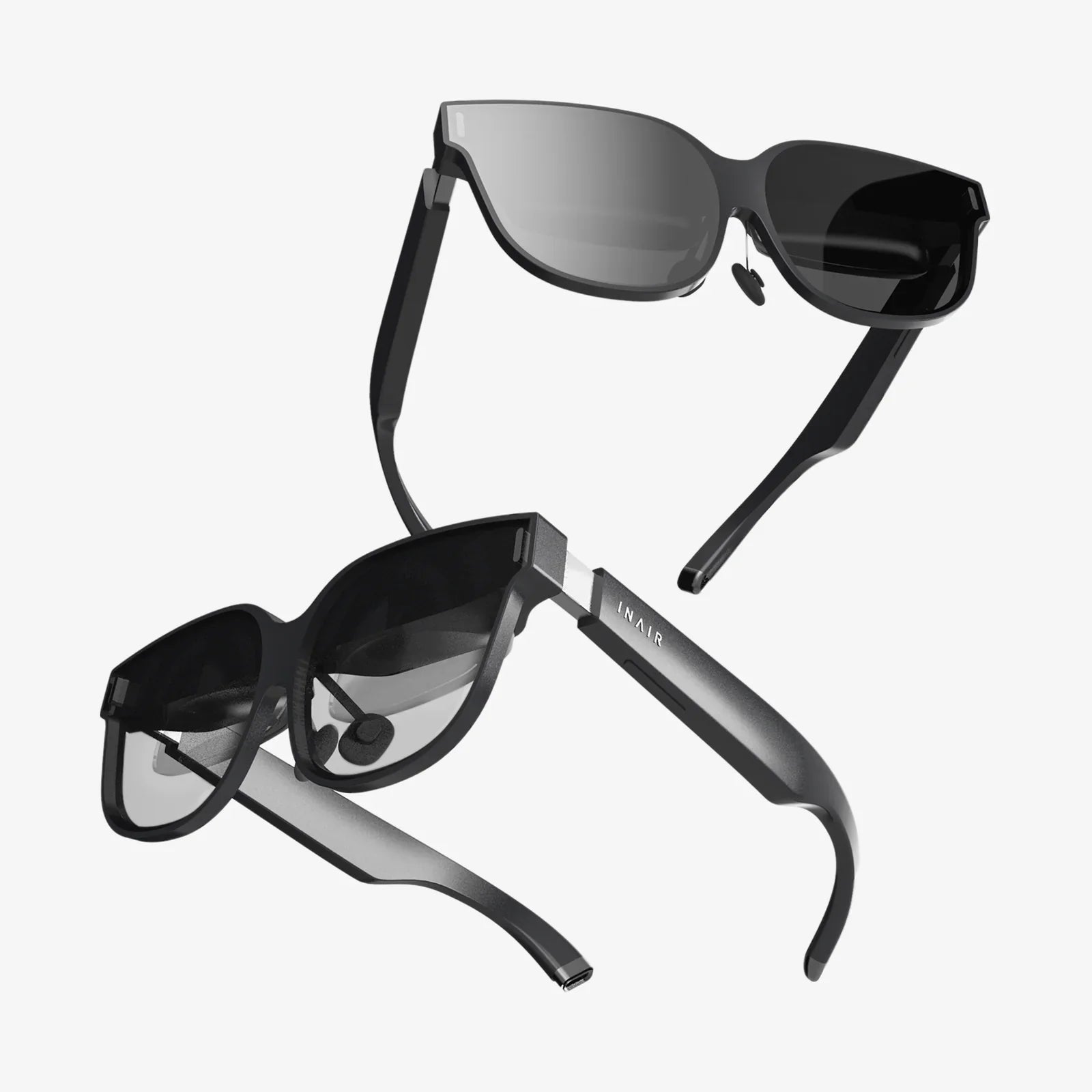
Imagine a world where digital information doesn’t live on a screen in your hand but is seamlessly woven into the very fabric of your reality. This is the promise of Augmented Reality (AR), and the gateway to this experience is a rapidly evolving piece of technology: AR glasses. From science fiction fantasy to tangible consumer gadgets, the journey of AR glasses has been nothing short of remarkable. This comprehensive guide delves deep into the current landscape, not by naming names, but by exploring the categories, technologies, and revolutionary applications that define this exciting frontier. Whether you're a curious enthusiast, a developer, or a business leader looking toward the future, understanding the types of devices available is the first step into a larger world.
The Core Technology: How AR Glasses Create Magic
Before we explore the list of device categories, it's crucial to understand the technological wizardry that makes AR possible. At its heart, AR overlays computer-generated imagery (CGI), data, and interfaces onto the user's view of the real world. This is achieved through a combination of sophisticated hardware and software.
Display Systems: The Window to a Digital Layer
The most critical component is the display technology that projects images onto the user's retina. There are several primary methods:
- Waveguide Displays: Often considered the gold standard for sleek, consumer-ready designs, waveguides use microscopic gratings to bend light from a projector on the temple of the glasses into the user's eye. This allows for a thin, transparent lens that acts as a combiner, merging digital light with natural light.
- Birdbath Optics: This design uses a partially reflective mirror (the "birdbath") placed between a micro-display and the user's eye. It's a effective solution that can offer bright, colorful images, though it often results in a slightly bulkier form factor compared to advanced waveguides.
- Retinal Projection: A more experimental approach, this method scans low-power lasers directly onto the retina. The promise is an incredibly large field of view and high contrast, but it presents significant engineering and safety challenges.
Sensors and Cameras: The Eyes of the Glasses
To understand and interact with the world, AR glasses are equipped with a suite of sensors. These almost always include:
- High-Resolution Cameras: For capturing the environment for video passthrough AR or for recording.
- Depth Sensors (LiDAR/ToF): These emit infrared light to measure the distance to objects, creating a precise 3D map of the surroundings. This is essential for placing digital objects convincingly in space.
- Inertial Measurement Units (IMUs): Comprising accelerometers and gyroscopes, these track the precise movement and rotation of the user's head.
- Eye-Tracking Cameras: These monitor where the user is looking, enabling intuitive gaze-based controls, dynamic focus rendering, and social avatars that make eye contact.
Processing Power: The Brain Behind the Operation
The data from these sensors must be processed in real-time. This immense computational load is handled in one of three ways:
- Tethered Processing: The glasses are connected via a cable to a powerful external computer or console, which handles the heavy lifting. This allows for incredibly high-fidelity experiences but sacrifices mobility.
- Smartphone-Powered: The glasses act as a display, leveraging the processing power, connectivity, and battery of a paired smartphone. This is a common approach for more accessible devices.
- Standalone (All-in-One): The processing unit, battery, and all components are built into the glasses themselves. This offers the greatest freedom of movement but involves trade-offs in weight, heat, and battery life.
A Functional Taxonomy: Categorizing the List of AR Glasses
The market is not a monolith. AR glasses serve vastly different purposes, and their designs reflect their intended use. We can classify them into several distinct categories.
1. Consumer-Focused Smart Glasses
These devices prioritize style, comfort, and everyday functionality. Their goal is to subtly augment daily life without looking like obvious tech gear.
- Form Factor: Designed to resemble traditional eyewear as closely as possible. They are often lightweight and come with options for prescription lenses.
- Primary Use Case: Notifications, navigation prompts, hands-free calls, music playback, and quick photo/video capture. The AR is often limited to simple heads-up display (HUD) elements like text and basic graphics.
- Technology: Typically use simpler optical systems and rely on smartphone pairing for functionality.
2. Enterprise and Industrial AR Glasses
This category is where AR has found its strongest foothold so far. Ruggedness, functionality, and power take precedence over fashion.
- Form Factor: Durable, often with a safety-glass design. They are bulkier to accommodate larger batteries, more powerful processors, and robust cooling systems.
- Primary Use Case: Remote expert assistance (allowing a specialist to see a worker's view and provide guidance), digital work instructions overlaid on machinery, warehouse picking and logistics, and complex equipment maintenance.
- Technology: Often feature high-resolution displays, advanced depth sensing, and are either standalone or tethered to a ruggedized hip-worn computer.
3. Dedicated Gaming and Entertainment AR Glasses
Focused on delivering immersive experiences, these devices are built for play and media consumption.
- Form Factor: Can range from headbands to glasses-like designs. Comfort for extended wear is key.
- Primary Use Case: Playing AR games that transform your living room into a digital playground, watching movies on a virtual giant screen, and social experiences in shared virtual spaces.
- Technology: Often prioritize a wide field of view and high refresh rates for smooth gameplay. They may be tethered to a gaming console or PC for maximum performance.
4. Research and Development Prototypes
This is the bleeding edge. Often seen in labs and at tech conferences, these devices push the boundaries of what's possible.
- Form Factor: Highly variable, from complex head-mounted systems to experimental designs testing new materials and optics.
- Primary Use Case: Exploring new interaction paradigms, testing advanced display technologies like full-color retinal projection, and developing the next generation of AR capabilities.
- Technology: Represents the future—concepts like photonic chips, holographic optics, and neural interfaces are often explored here first.
Beyond the Hardware: The Ecosystem That Makes AR Work
The glasses themselves are just one piece of the puzzle. Their true potential is unlocked by the ecosystem that supports them.
The Operating System and Software Development Kits (SDKs)
Just as smartphones need iOS or Android, AR glasses require a dedicated software layer. This OS manages the complex tasks of simultaneous localization and mapping (SLAM)—understanding where the device is in space—and provides the frameworks for developers to build applications. Robust SDKs are critical for empowering developers to create compelling experiences that leverage all the sensors and capabilities of the hardware.
Spatial Computing and the Cloud
The ultimate vision for AR is a persistent digital layer over the world, accessible to everyone. This concept, known as spatial computing, requires cloud infrastructure. The cloud can offload heavy processing, store shared AR experiences tied to specific locations, and enable multi-user interactions in real-time, ensuring that everyone sees the same digital objects in the same physical space.
Content and Applications: The Killer Apps for AR
Hardware is irrelevant without software. The quest for the "killer app" that will drive mass adoption continues. Current front-runners include:
- Enterprise: The killer app is already here: increased efficiency and reduced errors in complex manual tasks.
- Consumer: Compelling social experiences, revolutionary navigation that paints directions onto the street, and context-aware information that automatically pops up about landmarks, products, or people.
- Gaming: Truly persistent AR games that turn the entire world into a board game or battlefield.
Challenges and Considerations on the Road to Ubiquity
Despite the progress, significant hurdles remain before AR glasses become as common as smartphones.
The Social Hurdle: Wearing a Computer on Your Face
Technology must overcome social awkwardness. Early adopters may not mind, but for mass appeal, the devices must become indistinguishable from regular glasses. This involves monumental advances in miniaturization, battery technology, and heat dissipation. Furthermore, the presence of cameras raises legitimate privacy concerns that society and legislators must address.
The Technical Mountain: Battery Life, Field of View, and Connectivity
The holy trinity of AR challenges is Battery Life, Field of View (how much of your vision the digital image can fill), and Compute Power. It's incredibly difficult to maximize all three simultaneously. Improving one often means compromising another. Breakthroughs in low-power displays, efficient processors, and new battery chemistries are needed to create a device that is all-day comfortable, visually immersive, and powerful.
Accessibility and Cost
Currently, high-end AR technology is expensive, limiting it to enterprise budgets and wealthy enthusiasts. For AR to fulfill its world-changing potential, it must become affordable and accessible to a global audience, a journey that will take years of innovation and economies of scale.
The landscape of AR glasses is a vibrant and complex ecosystem, far more diverse than a simple list of products. It's a spectrum of possibility, stretching from the practical tools revolutionizing factories today to the visionary prototypes shaping our tomorrow. This isn't just about a new gadget; it's about redefining the interface between humanity and information. The devices are the keys, and they are steadily evolving to unlock a future where the digital and physical worlds are finally, and beautifully, one.
Share:
Industrial AR Glasses News: The Next Wave of Enterprise Transformation Is Here
Best Portable Computer Screen: Your Ultimate Guide to Mobile Multi-Monitor Mastery