


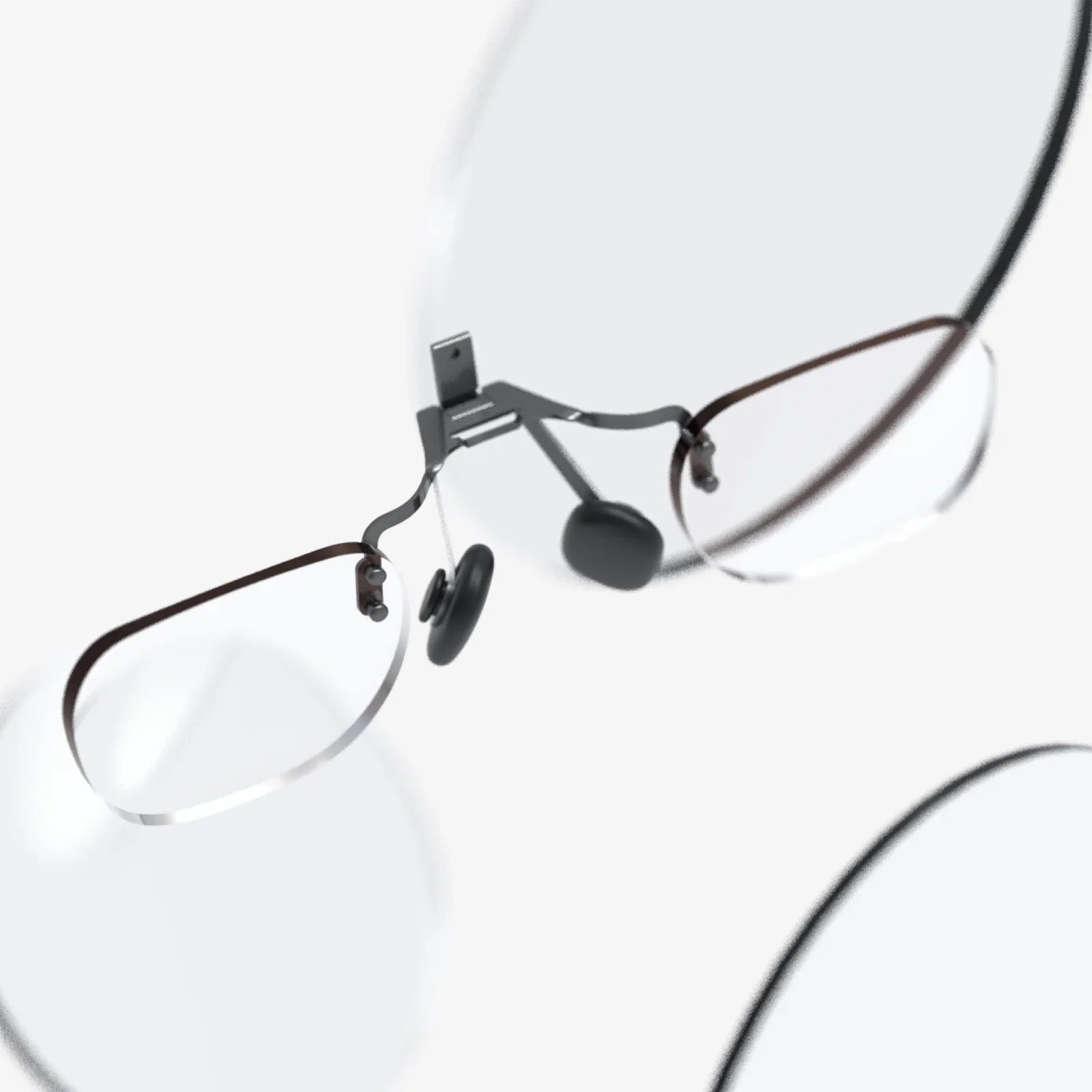
Imagine a world where information flows around you like a sixth sense, where the digital and physical realms are not just connected but seamlessly intertwined. This is the promise, the tantalizing future, that a new category of wearable technology is beginning to unveil. We stand on the precipice of a fundamental shift in how we compute, communicate, and comprehend our surroundings, moving beyond the confines of screens in our pockets to a more natural, integrated experience. The concept, long a staple of science fiction, is finally maturing into a tangible, consumer-ready reality, promising to augment our lives in ways we are only beginning to understand.
The Evolution of Wearable Intelligence: From Screens to Sight
The journey to this point has been a long and iterative one. The dream of augmented reality (AR) – overlaying digital information onto our view of the real world – has captivated technologists for decades. Early attempts were often bulky, expensive, and limited to industrial or military applications. They were powerful tools for specific tasks but far from the sleek, consumer-friendly devices envisioned in popular culture.
The rise of the smartphone laid the crucial groundwork. It miniaturized powerful processors, sensors, and high-resolution displays, all connected to a global network of information. However, the smartphone's limitation is its form factor; it requires us to look down, to disengage from our environment to interact with the digital one. The logical next step was to liberate this intelligence from our hands and place it directly in our line of sight. Early smart glasses focused primarily on capturing photos and videos or displaying basic notifications. They were clever, but not intelligent. They could show data, but not understand context.
The true breakthrough, the catalyst for the current revolution, is the maturation of artificial intelligence. It is the combination of advanced micro-optics, sophisticated sensors, and powerful, on-device AI that transforms simple glasses into a proactive personal assistant. This fusion allows the device to not just see the world, but to comprehend it; not just to hear you, but to understand your intent.
Beyond Augmented Reality: The Power of Contextual Understanding
At the heart of this new paradigm is a concept far more profound than simple augmentation: contextual understanding. Traditional AR might project a floating screen in your vision. The next generation, powered by advanced AI, understands what you are looking at, what you are trying to do, and what information would be most valuable to you at that exact moment.
This is achieved through a sophisticated array of technologies working in concert:
- Computer Vision: High-resolution cameras and sensors continuously scan the environment. AI algorithms process this visual data in real-time to identify objects, people, text, and environments.
- Natural Language Processing (NLP): Advanced microphones capture speech, and on-device NLP allows for natural, conversational interaction without the constant need for wake words. You can simply murmur a question as you would to a person next to you.
- On-Device AI Processing: For true seamlessness and privacy, a significant portion of the AI processing happens directly on the device itself. This eliminates latency, allows functionality without a constant cellular connection, and ensures that personal visual and auditory data does not need to be streamed to the cloud for basic tasks.
- Spatial Audio: Sound is not just heard but placed spatially in the environment around you, making notifications and responses feel like a natural part of your world.
The magic happens when these systems converge. You glance at a complex monument, and a subtle, elegant text overlay appears, offering a brief history. You look at the night sky, and constellations are gently outlined and labeled. You're in a foreign grocery store, and the text on a package instantly translates before your eyes. The device doesn't just provide data; it provides the right data for the right context.
Redefining Human Capability: Applications Across Life
The potential applications for this technology are as vast as human experience itself. It promises to be a transformative tool across numerous domains.
Enhanced Productivity and Work
For professionals, this technology could erase the boundary between the office and the field. A technician repairing complex machinery could see schematics overlaid directly on the equipment, with step-by-step guidance highlighting the next component to check. An architect could walk through a construction site and see their digital blueprint perfectly aligned with the physical structure, identifying discrepancies in real-time. A medical student could practice procedures on a digital overlay, or a surgeon could have vital patient statistics and imaging data visible without ever looking away from the operating table.
Revolutionizing Learning and Exploration
Learning becomes an immersive, interactive experience. A student studying biology could dissect a virtual frog with layers of anatomical information revealed as they "look" deeper. A history class about ancient Rome could take a walk through their modern city, seeing digital reconstructions of the Forum spring up around them. For lifelong learners, the entire world becomes an interactive museum, filled with layers of information waiting to be discovered simply by looking.
Breaking Down Barriers: Accessibility and Communication
Perhaps one of the most profound impacts will be in the realm of accessibility. For individuals with visual impairments, the device could audibly describe people, objects, and text, effectively acting as a highly advanced seeing-eye AI. It could highlight curbs, identify obstacles, and read signs aloud. For those with hearing impairments, it could provide real-time captions for conversations, labeling each speaker in a group discussion. For communication, real-time translation of spoken and written language could finally break down one of humanity's oldest barriers, allowing for fluid conversation between people who speak different languages.
Everyday Convenience and Social Connection
On a more mundane but equally important level, it simplifies daily life. Navigation arrows can be painted directly onto the street, guiding you to your destination. You can check your calendar for the day with a glance, control your smart home devices with a look, or get recipe instructions hovering over your mixing bowl without touching a screen with flour-covered hands. For social connection, it could allow for more present sharing of experiences; instead of holding up a phone to record a concert, you could live-stream your point of view while still being fully engaged in the moment.
The Invisible Elephant in the Room: Privacy and the Social Contract
This incredible power to see, hear, and understand the world around us does not come without profound challenges. The most significant hurdle for widespread adoption is not technological, but societal and ethical. A device that captures video and audio of your surroundings and the people in them raises monumental questions about privacy.
- Constant Recording: How do we prevent a world of constant, surreptitious surveillance? Robust visual and audio indicators that the device is active are a non-negotiable first step.
- Data Ownership and Security: Who owns the data captured by these devices? The user? The manufacturer? How is this incredibly personal data stored, processed, and secured? On-device processing is a critical component of the solution, ensuring that sensitive data never leaves the user's control.
- Social Acceptance: The "glasshole" stigma from early attempts lingers. How will people react to someone wearing a device that could potentially be recording them in a café, on public transit, or in a private meeting? New social norms and etiquettes will need to be established.
- Informed Consent: In a public space, do individuals have a right to not be analyzed by someone else's AI? This is uncharted legal and ethical territory that will require careful navigation and potentially new legislation.
The companies developing this technology must prioritize transparency, user control, and privacy-by-design from the very beginning. Building trust is not a feature; it is the foundation upon which this entire industry must be built.
The Road Ahead: From Novelty to Necessity
The initial wave of these devices will likely be embraced by developers, enthusiasts, and professionals in specific fields. They will be powerful, but may still face limitations in battery life, field of view, and form factor. The true test will be the second and third generations – devices that are lighter, more powerful, longer-lasting, and, crucially, more aesthetically appealing, looking like regular eyewear rather than a piece of tech hardware.
As the technology matures, the focus will shift from what the device can do to how invisibly it can do it. The goal is for the technology to fade into the background, becoming an extension of our own cognition. The interface will become more intuitive, moving beyond voice commands to include subtle gestures, eye-tracking, and even neural interfaces further down the line.
We are at the very beginning of a new computing paradigm. Just as the graphical user interface and the touchscreen revolutionized human-computer interaction, contextual, AI-powered wearable computing promises to be the next great leap. It has the potential to make us more knowledgeable, more capable, and more connected to both the digital and physical worlds.
The future is not about staring at a screen; it's about enhancing your view of the world itself. This isn't just another gadget—it's the first glimpse of a fundamental rewiring of our reality, offering a level of convenience and capability that will soon feel indispensable. The question is no longer if this future will arrive, but how quickly we will adapt to a world where our surroundings are alive with intelligent information, waiting for us to simply look up and see it.
Share:
What Is Augmented Reality and How It Works? The Digital Layer on Our World
What Do XR Glasses Do? Unlocking the Future of Reality