


Imagine a world where digital information doesn’t live trapped behind a screen but flows seamlessly into your physical environment, enhancing everything you see, learn, and do. This is the captivating promise of augmented reality, a technology rapidly transitioning from science fiction to an integral part of our daily lives. It’s not about escaping reality but about making it richer, more informative, and infinitely more interactive. The magic of AR lies in its ability to superimpose computer-generated sensory inputs—be it sound, video, graphics, or GPS data—onto our view of the real world, creating a composite experience that feels both familiar and fantastically new. But how does this digital alchemy actually work? How does a device know where to place a virtual dinosaur in your living room or display turn-by-turn navigation arrows on the very street you’re walking down? Unraveling the answers reveals a fascinating symphony of hardware and software working in perfect concert.
The Core Concept: Blending Realities
At its heart, augmented reality is an experiential technology. Unlike virtual reality, which aims to replace your surroundings with a completely digital environment, AR's goal is additive. It starts with the real world and layers relevant digital content on top of it. This creates a unified, interactive view where the digital and physical coexist. The key differentiator is that the digital content is context-aware; it is tied to and interacts with the real world in real-time. A virtual character can hide behind your real sofa. A repair manual can point an animated arrow directly at a specific engine component. This contextual anchoring is what makes AR so powerful and intuitive.
The Technological Pillars of AR
For AR to function, it must solve three fundamental challenges: sensing the world, processing that information, and projecting the digital overlay back to the user. This process relies on a sophisticated stack of technologies.
Sensors: The Eyes and Ears of the System
An AR device, whether a smartphone, headset, or pair of smart glasses, is packed with an array of sensors whose sole job is to understand the environment. These include:
- Cameras: The primary sensor, used to capture the live video feed of the real world that will form the base layer of the AR experience. Advanced systems may use multiple cameras for depth sensing.
- LiDAR (Light Detection and Ranging): This sensor fires out millions of pulses of invisible laser light and measures how long they take to bounce back. This creates a precise, real-time 3D depth map of the environment, understanding the shape, distance, and contours of objects. This is crucial for accurate occlusion (where digital objects appear behind real ones) and placement.
- Accelerometers and Gyroscopes: These inertial measurement units track the movement, rotation, tilt, and orientation of the device itself. This helps the system understand your perspective and keep the digital content stable as you move your head or hand.
- GPS and Compass: For outdoor, location-based AR experiences (like popular mobile games), these sensors provide coarse positioning data, tying digital content to specific geographic coordinates.
Processing: The Brain Behind the Operation
The raw data from the sensors is meaningless on its own. It must be processed and interpreted. This is handled by powerful processors and sophisticated algorithms.
- Simultaneous Localization and Mapping (SLAM): This is the most critical software algorithm for modern AR. SLAM allows the device to simultaneously map an unknown environment while tracking its own location within that map. As the sensors collect data, SLAM software builds a geometric understanding of the space, identifying feature points—unique details on surfaces—and uses them to anchor the device's position and orientation in real-time. It’s what allows a virtual chair to stay in one place even as you walk around it.
- Computer Vision: This field of artificial intelligence enables computers to derive meaningful information from visual inputs. In AR, computer vision algorithms are used for object recognition (identifying that a specific surface is a table or that a specific object is a human face), plane detection (finding horizontal and vertical surfaces like floors and walls), and gesture tracking (understanding hand movements).
Display: Painting the Digital Layer
Once the world is understood and the digital content is ready, it must be presented to the user’s eyes. There are several primary methods, each with its own advantages.
- Smartphone and Tablet Displays: The most common and accessible form of AR. The device's screen shows the camera feed, and the software superimposes graphics onto that video stream. It's effective but holds the digital world at arm's length, literally.
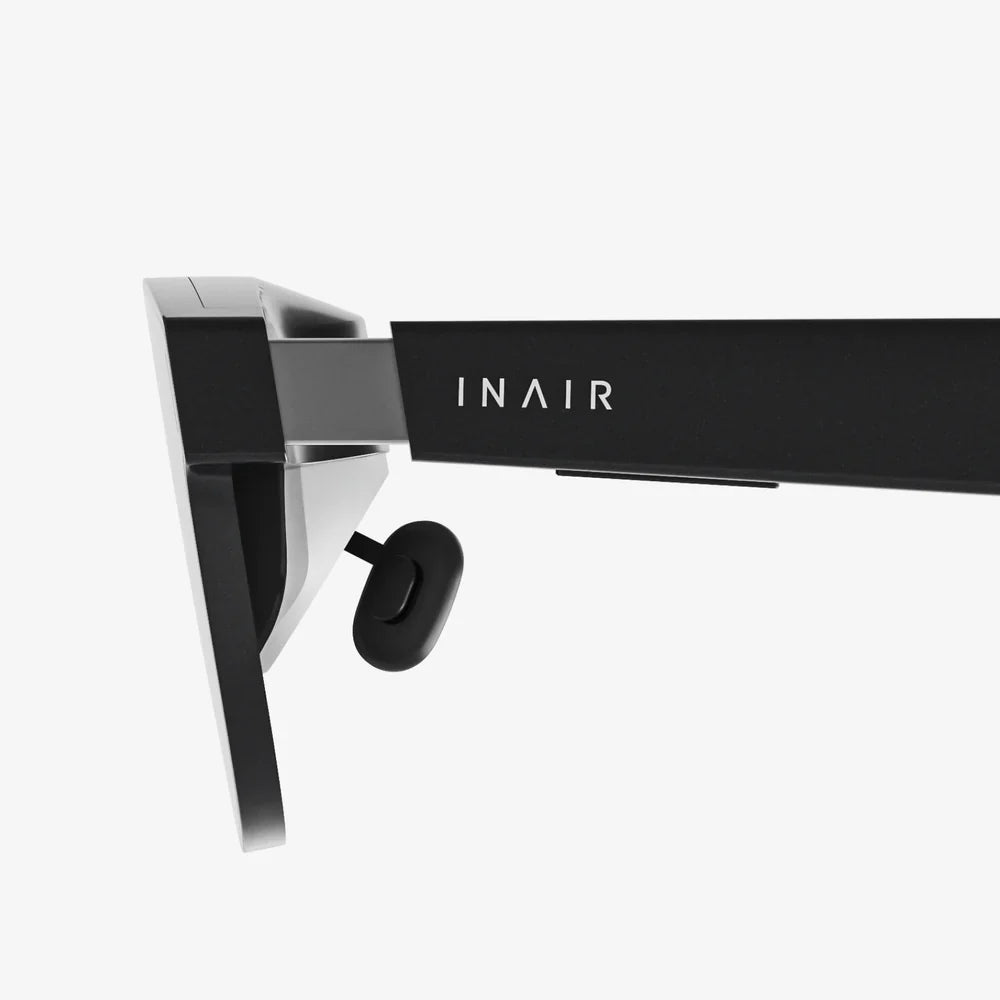
- Smart Glasses and Headsets (Optical See-Through): These devices use clear lenses that act as waveguides. Tiny projectors within the frame of the glasses beam light into these lenses, which then redirect that light into the user’s eye. This optically combines the light from the real world with the light from the digital projection, creating the illusion that the graphics are part of the real environment. This allows for a hands-free, immersive experience.
- Headsets (Video See-Through): Used in more advanced headsets, this method uses outward-facing cameras to capture the real world, which is then combined with digital content on an internal display screen in front of the user's eyes. This allows for more dramatic alterations of reality but can sometimes create a slight latency between real-world movement and the displayed video.
From Theory to Practice: The User Experience
When you launch an AR application, this entire technological symphony plays out in milliseconds, continuously. Let's walk through a typical example: using AR to visualize a new piece of furniture in your home.
- Initialization: You point your device's camera at the room. The accelerometer and gyroscope note the device's starting orientation.
- Mapping and Localization: The SLAM algorithm kicks in, using the camera and LiDAR to scan the room. It identifies feature points on the walls, floor, and furniture, building a sparse 3D mesh of the space. It constantly calculates the device's precise position within this newly created map.
- Plane Detection: Computer vision algorithms analyze the SLAM data to identify flat, stable surfaces—like the floor—and label them as viable anchors for digital content.
- Rendering and Alignment: You select a virtual sofa from an app. The software renders a 3D model of this sofa. Using the device's known position and the map of the room, it projects the image of the sofa onto the detected floor plane in the correct perspective and scale.
- Occlusion: Thanks to the detailed depth map from the LiDAR, if you move the virtual sofa behind your real coffee table, the software knows to hide the parts of the sofa that should be blocked from view, making the illusion perfect.
- Persistence: As you move around the room, the SLAM system continuously updates the device's location. The rendering engine adjusts the sofa's position and perspective in real-time, making it appear locked in place in the real world.
Beyond Novelty: The Transformative Applications
The true value of AR extends far beyond gaming and fun filters. It is a powerful tool for productivity, learning, and connection.
- Education and Training: Medical students can practice surgery on detailed, interactive 3D holograms of human anatomy. Mechanics can see repair instructions overlaid directly on the machinery they are fixing. History students can watch historical events unfold around them at an ancient site.
- Industrial Design and Manufacturing: Engineers and designers can collaborate on 3D prototypes that are visualized at full scale in a shared physical space, identifying design flaws before a single physical part is manufactured. Factory workers can receive guided, hands-free assembly instructions, reducing errors and training time.
- Retail and E-Commerce: Consumers can try on clothes, glasses, or see how a new paint color would look on their wall without ever leaving home. This bridges the gap between online shopping's convenience and the confidence of an in-person purchase.
- Healthcare: Surgeons can use AR headsets to display vital patient statistics, ultrasound data, or 3D surgical guides directly in their field of view during an operation, without looking away at a monitor.
- Navigation and Maintenance: Arrow-based directions can be overlaid onto the road for drivers or pedestrians. Field technicians can see the internal schematics of a complex piece of equipment and receive visual guidance for maintenance tasks.
The Future is Augmented
The journey of AR is just beginning. Current research is focused on overcoming limitations like field of view (the digital overlay often appears in a limited window), improving battery life for wearable devices, and creating more natural user interfaces through advanced gesture and eye-tracking. The ultimate goal is a pair of lightweight, socially acceptable glasses that can seamlessly integrate a useful digital layer into our perception all day long. As the technology becomes more powerful, miniaturized, and affordable, its integration into our daily routines will become as commonplace as the smartphone. It will change how we work, learn, shop, and interact with each other and the world around us, fundamentally blurring the line between the digital and the physical until the two become indistinguishable partners in our experience of reality.
We are standing at the precipice of a new layer of human-computer interaction, one where information is not something we go to find but something that finds us, contextually and elegantly woven into the fabric of our reality. The question is no longer if this future will arrive, but how quickly we will adapt to and embrace a world where our surroundings are alive with data, stories, and possibilities waiting to be unlocked. The next time you look around your room, just imagine what could be added to the view.
Share:
Augmented Reality Apps 2025: The Invisible Revolution Reshaping Our World
Loca AI Glasses: The Dawn of a New, Seamless Reality