


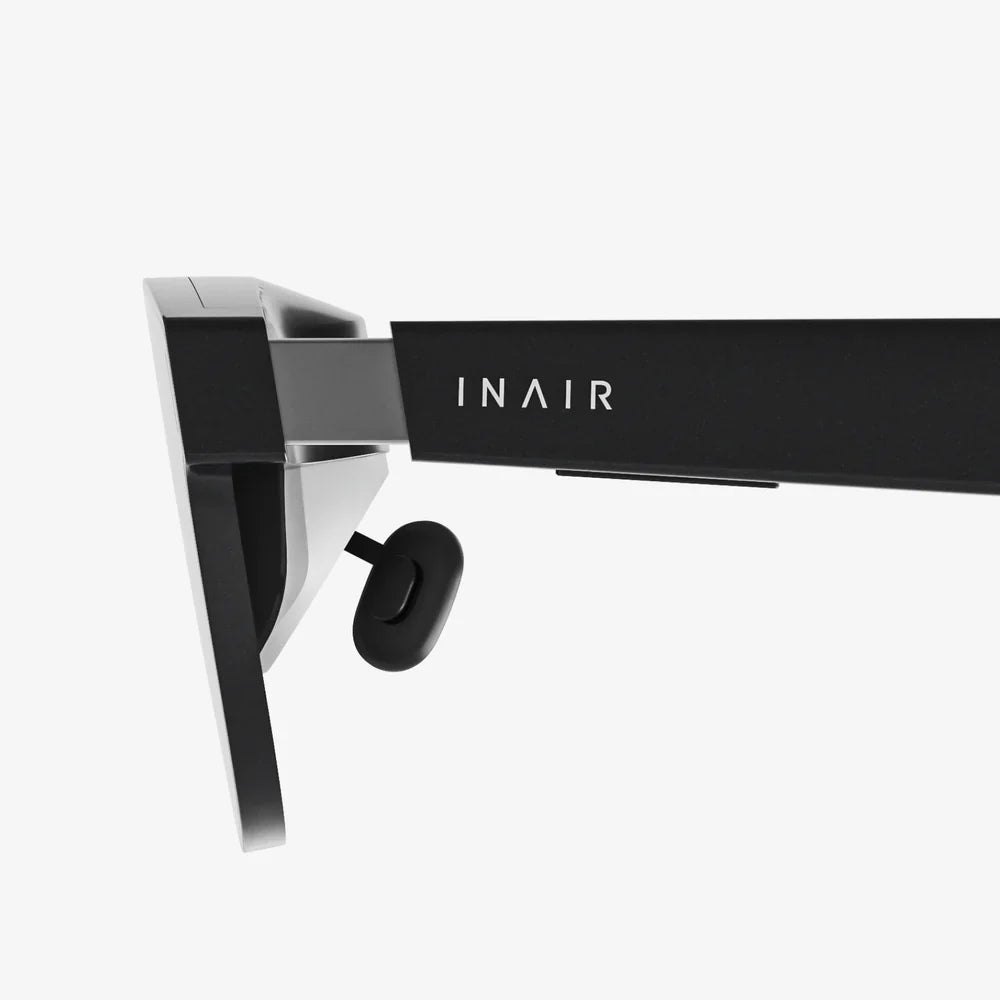
You’ve seen the flashy demos, the futuristic promises, and the viral filters. You’ve held up your device and watched digital dinosaurs stomp through your living room or tried on virtual sunglasses. But beyond the initial novelty, a deeper, more pressing quest begins: you’re not just looking for augmented reality; you’re looking for Mr. Good AR. This isn't a search for a single app or a fleeting trend. It's a pursuit of a seamless, meaningful, and high-quality augmented experience that genuinely enhances your life rather than complicating it. It’s about finding that perfect blend of digital information and physical reality that feels less like a tech demo and more like a natural extension of your world. The journey to find him is the story of modern technology itself.
Beyond the Hype: Defining the "Good" in AR
So, what exactly makes an AR experience "good"? Is it photorealistic graphics? Flawless object tracking? A killer feature? The answer is both simpler and more complex. Mr. Good AR isn't defined by a single spec sheet; he is defined by a harmonious combination of key attributes that together create a sense of effortless utility and wonder.
First and foremost is seamless integration. The technology must be an invisible bridge, not a glaring barrier. When digital content locks onto the physical world with perfect persistence—meaning it doesn't jitter, drift, or float unnaturally—the user's brain is allowed to suspend its disbelief. This requires a sophisticated understanding of the environment through advanced camera systems, sensors, and computer vision algorithms that can understand depth, lighting, and physical geometry in real-time.
Secondly, Mr. Good AR must be intuitively interactive. The user interface shouldn't require a lengthy tutorial. Interaction should feel natural, whether it's through gesture controls, voice commands, or even just your gaze. The goal is to minimize the cognitive load between intention and action. If pinching, zooming, or selecting a virtual object feels as intuitive as picking up a coffee mug, the experience is on the right track.
Third, and perhaps most crucially, is contextual relevance. The worst AR experiences are those that feel gratuitous—adding a digital layer for the sake of it. The best ones provide information or functionality that is directly relevant to the user's immediate context and needs. Directions superimposed on the street itself, historical facts that pop up as you look at a monument, or the internal wiring of a wall revealed before you drill a hole. This relevance is what transforms AR from a party trick into an indispensable tool.
The Technological Foundations: Building the Bridge to Reality
The quest for Mr. Good AR is underpinned by staggering advancements across multiple fields of engineering and computer science. It's a symphony of hardware and software working in perfect concert.
The Hardware Trinity: Seeing, Sensing, and Processing
At the hardware level, three components are critical. Visual sensors, like high-resolution cameras and LiDAR scanners, act as the eyes, constantly capturing the world in intricate detail. Motion sensors—gyroscopes, accelerometers, and magnetometers—act as the inner ear, tracking the precise orientation and movement of the device or headset. Finally, the processing unit is the brain, a powerhouse of silicon capable of fusing these immense data streams in milliseconds to understand the environment and render complex graphics on the fly. The miniaturization and efficiency of these components are what finally make untethered, comfortable AR wearables a possibility, moving the experience away from the smartphone screen and into the world around us.
The Software Soul: Algorithms and Machine Learning
Hardware is nothing without intelligent software. Simultaneous Localization and Mapping technology is the cornerstone. It allows a device to not only map an unknown environment but also to understand its own position within that map in real-time. This is what allows a virtual character to hide behind your real sofa. Furthermore, machine learning models are trained to recognize specific objects—is that a chair, a table, or a human face? This recognition allows for interactions that are context-aware, placing a virtual television on your wall, not floating in the middle of it.
The Human Factor: Designing for People, Not Just Pixels
Technology alone cannot summon Mr. Good AR. The most critical element in the search is human-centered design. This philosophy places the user's needs, comfort, and psychology at the forefront of the development process.
The Comfort Conundrum
p>For wearable AR, comfort is king. This spans both physical and visual comfort. A device must be lightweight, well-balanced, and not generate excessive heat. Visually, a phenomenon known as vergence-accommodation conflict has been a historic hurdle. Our eyes are used to focusing (accommodating) on the real distance of an object while converging to look at it. In many AR displays, the digital image is projected at a fixed focal plane, forcing our eyes to converge on a virtual object while staying focused at a different distance, causing strain and fatigue. True Mr. Good AR will solve this, offering varifocal or light-field displays that mimic natural vision.The Social Contract
How does AR integrate into social spaces? Walking down the street with a headset on or constantly holding up a phone can feel isolating or even rude. The search for a quality experience must include thoughtful design for social coexistence. This could involve clear indicators when someone is recording, designs that allow for eye contact to be maintained, and experiences that encourage shared, collaborative AR rather than solitary consumption. Mr. Good AR should connect us to the world and each other, not disconnect us.
The Invisible Marketplace: How to Separate the Gold from the Glitter
For the average person embarking on their own search, the landscape can be confusing. How do you identify a high-quality AR experience amidst a sea of shallow apps? The signs are often subtle but telling.
Look for experiences that respect your privacy. A good AR application will often process sensitive spatial data about your home or location on-device, rather than shipping it off to remote servers. Scrutinize permissions carefully. Evaluate the tracking stability; if the digital object wobbles or slides with the slightest movement, the underlying technology is weak. Read reviews that focus on longevity and utility, not just the initial "wow" factor. An experience that you return to again and again for a specific purpose is a strong candidate for Mr. Good AR. Finally, see if it offers true value. Does it solve a problem, teach you something, or bring you genuine joy? Or is it just a branded novelty that you'll use once and forget?
The Ethical Dimension: The Responsibility of Augmenting Reality
The search for Mr. Good AR is not merely a technical or commercial challenge; it is an ethical one. The ability to overlay the world with digital information brings profound questions. Who controls the digital layer you see? Could public spaces become cluttered with virtual advertisements? How do we prevent malicious uses, such as creating convincing but dangerous obstacles on a real road? The quest must be guided by a framework that prioritizes user safety, privacy, and autonomy. The ultimate Mr. Good AR will be an experience that is not only high-quality but also built on a foundation of trust and ethical consideration, ensuring that this powerful technology augments our reality for the betterment of all, not just the benefit of a few.
The Future is Already Here: Where the Search is Leading Us
The trajectory is clear. We are moving from smartphone-based AR, which was a crucial proof-of-concept, towards dedicated eyewear that will become as socially acceptable and functionally essential as a pair of prescription glasses. These future devices will offer all-day battery life, always-on connectivity, and displays indistinguishable from reality. They will be personalized, understanding our preferences and routines to offer proactive assistance. The line between the digital and physical will erode further, giving rise to the spatial web—an internet of places and things, not just pages. In this future, the search for Mr. Good AR will evolve from evaluating individual apps to choosing an entire ecosystem and a digital identity that aligns with our values.
Your search for that perfect, seamless blend of the digital and the real is more than just a consumer activity; it's a vote for the future you want to inhabit. Every time you choose an experience that values precision over pizzazz, utility over novelty, and ethics over exploitation, you accelerate the arrival of a truly augmented world worth living in. The journey to find him is well underway, and with each technological breakthrough and thoughtfully designed application, Mr. Good AR steps closer into view, ready to change everything.
Share:
VR Headset for PC Movies: The Ultimate Guide to a Personal IMAX
An AR Headset Could Cost Consumers More Than Just The Purchase Price