


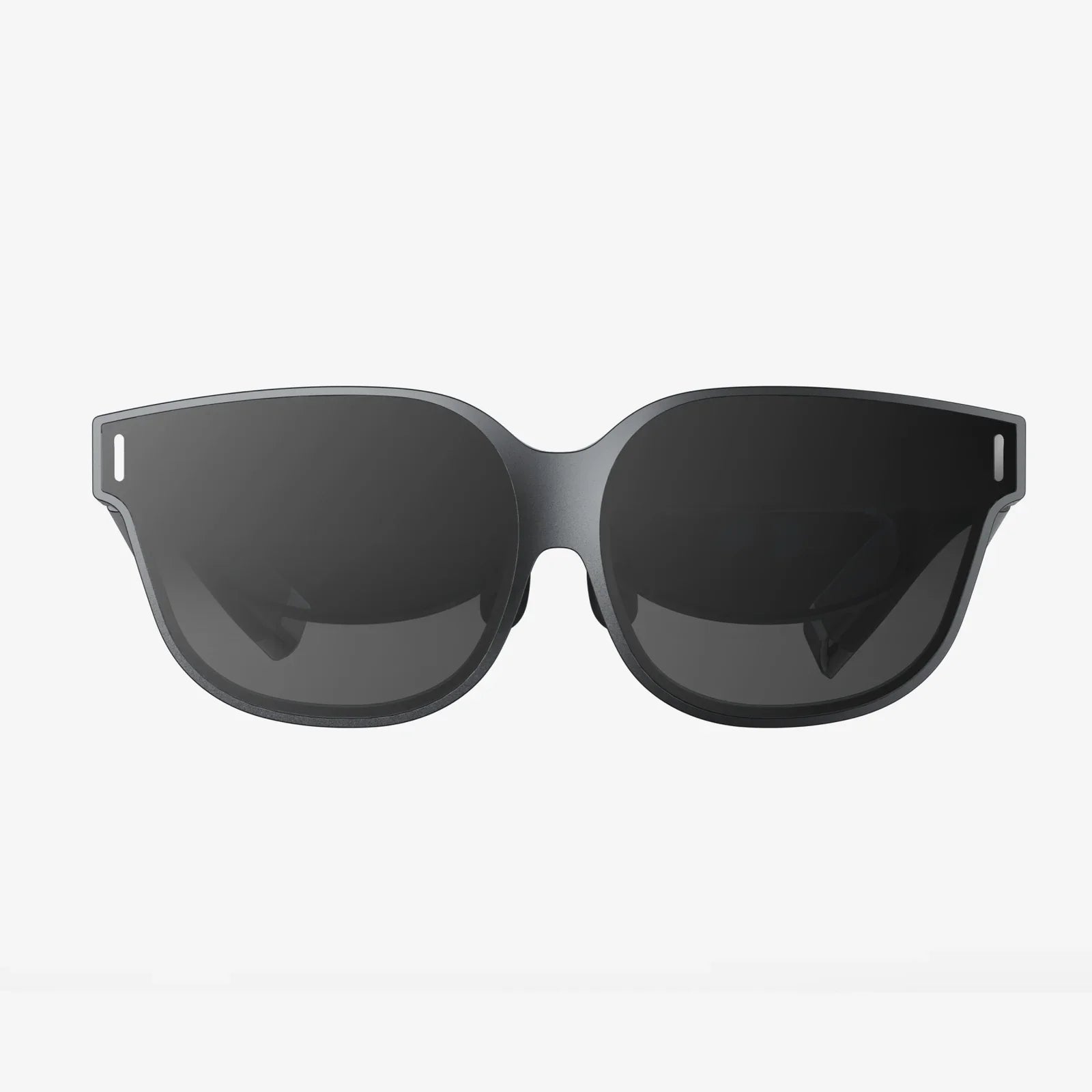
Imagine a window not to a world beyond, but to a world within—a portal where digital creations break free from the flat confines of the screen to float in breathtaking detail right before your eyes. This is the promise, the allure, and the revolutionary reality of the latest frontier in visual technology. It’s a leap beyond the screen, an invitation to step into a future where the line between the digital and the physical not only blurs but disappears entirely, captivating anyone who lays eyes on it.
The Evolution of Visual Fidelity: From Pixels to Presence
For decades, the quest for visual perfection in digital displays has been a linear race. It was a path defined by incremental upgrades: higher resolutions, faster refresh rates, and more vibrant color gamuts. We moved from standard definition to high definition, to 4K, and now to 8K, each step offering a sharper, more detailed image. Yet, these advancements, as impressive as they are, have remained confined to a two-dimensional plane. We have been looking at pictures of things, not feeling as if we are in the presence of the things themselves.
The fundamental limitation of these traditional displays is their nature as a single, flat surface emitting light. No matter how many pixels are packed into that space, the image lacks the depth cues—parallax, occlusion, and perspective shift—that our binocular vision uses to understand the three-dimensional world. This is where immersive display technology makes its monumental departure. It’s not merely an improvement in resolution; it’s a transformation in dimension. It moves from presenting an image to creating a volume, a space that can be occupied by digital objects.
Deconstructing the Magic: How an Immersive Display Works
At its core, an advanced immersive display is a feat of optical engineering designed to trick the human brain into perceiving depth where none physically exists. Unlike virtual reality, which isolates the user in a digital world, or augmented reality, which overlays digital elements onto the real world, this technology is about shared, glasses-free holographic experiences.
The principle often relies on a combination of ultra-high-resolution panels and specially designed optics, like lenticular lens arrays or light field technology. An 8K panel provides the raw pixel density necessary to serve multiple, slightly different images to a viewer's left and right eyes, as well as to different vantage points across the viewing space. A complex algorithm pre-processes the 3D content, slicing it into dozens or even hundreds of discrete perspective views. These views are then interwoven and projected through the optical layer.
The result? As you move around the display, your view of the object shifts naturally, just as it would if you were walking around a physical object on a table. Details are razor-sharp, thanks to the immense 8K resolution, which ensures that even when the image is segmented into multiple views, each one retains stunning clarity. This creates a powerful and convincing illusion of a volumetric object residing within the display, viewable by multiple people simultaneously without any special eyewear.
The Power of 8K: Why Resolution is Everything for Depth
One might ask why 8K resolution is so critical for this technology. The answer lies in the math of immersion. To create a smooth, continuous, and realistic holographic effect, the display must generate a unique image for every fraction of an inch across the viewing angle. For a 45-degree viewing cone, this can require rendering and displaying over 100 distinct viewpoints.
If a standard 4K display (approximately 3840 x 2160 pixels) were used for this task, each individual viewpoint would receive a minuscule portion of the total resolution, resulting in a blocky, low-fidelity, and ultimately unconvincing image. The jump to 8K (7680 x 4320 pixels) provides a canvas four times larger. This vast pixel real estate allows each perspective view to be rendered at a resolution high enough to maintain intricate detail, textural nuance, and visual richness. The 8K canvas is not a luxury; it is the fundamental substrate that makes high-fidelity, multi-view immersive content possible without compromising on quality.
A Canvas for Creators: Revolutionizing Industries
The applications for this technology stretch far beyond mere spectacle. It is poised to become an indispensable tool across numerous creative and technical fields, fundamentally altering workflows and unlocking new forms of expression.
Digital Art and Animation
For sculptors, character artists, and animators, this changes everything. Instead of manipulating a 3D model on a 2D screen, relying on shaded viewports and simulated lighting, artists can see their creation as a tangible object. They can examine the flow of a sculpted cape, the articulation of a character’s joint, or the interplay of light and shadow from every angle in real-time. This direct, intuitive connection to the digital clay dramatically enhances the creative process and reduces the iterative guesswork involved in 3D creation.
Medical Imaging and Scientific Visualization
In medicine, the ability to view a detailed, holographic reconstruction of a patient’s CT or MRI scan provides an unparalleled tool for diagnosis, surgical planning, and education. A surgeon can explore a complex tumor vasculature from all angles, developing a much deeper understanding of the anatomy before making a single incision. Researchers can step inside a molecular model or visualize fluid dynamics simulations in a way that flat graphs and screens simply cannot convey, leading to faster and more profound insights.
Architecture and Product Design
Architects and product designers can place their clients inside a holographic prototype of a building, a car, or a new consumer product. This allows for intuitive design reviews and stakeholder approvals, where the spatial relationships, scale, and design intent are immediately understandable. It bridges the gap between abstract blueprints and physical mock-ups, saving immense time and resources in the development process.
Collaboration and Remote Work
In an increasingly globalized world, this technology offers a new paradigm for remote collaboration. Imagine a team of engineers in different countries all looking at the same holographic prototype of a new engine, able to point, discuss, and annotate in real-time as if it were sitting on a conference table between them. It creates a shared sense of presence and a common reference point that video calls and screen sharing cannot match.
The Future is Here, and It’s Shared
The trajectory of this technology points toward a future where immersive displays become as commonplace as touchscreens are today. We can anticipate resolutions climbing even higher, making the holographic illusion indistinguishable from reality. Form factors will shrink, becoming integrated into everything from personal devices to large-scale installations. Most importantly, the ecosystem of content creation tools will mature, making it easier for creators of all skill levels to build experiences for this new medium.
This represents a significant shift in our relationship with digital information. It moves us from being observers of a digital world to participants within it. It prioritizes shared, social experiences over isolated ones. It values intuitive, spatial understanding over abstracted, symbolic representation.
This isn't just a new way to see; it's a new way to create, to communicate, and to connect. The window is now open, and the future is waiting on the other side, not as a distant promise, but as a vivid, tangible reality ready to reshape our world from the smallest detail to the grandest vision.
Share:
Top AI Hardware Companies Shaping the Future of Computing and Innovation
Difference Between Reality and Virtual Reality: Navigating the Blurring Lines of Human Experience