


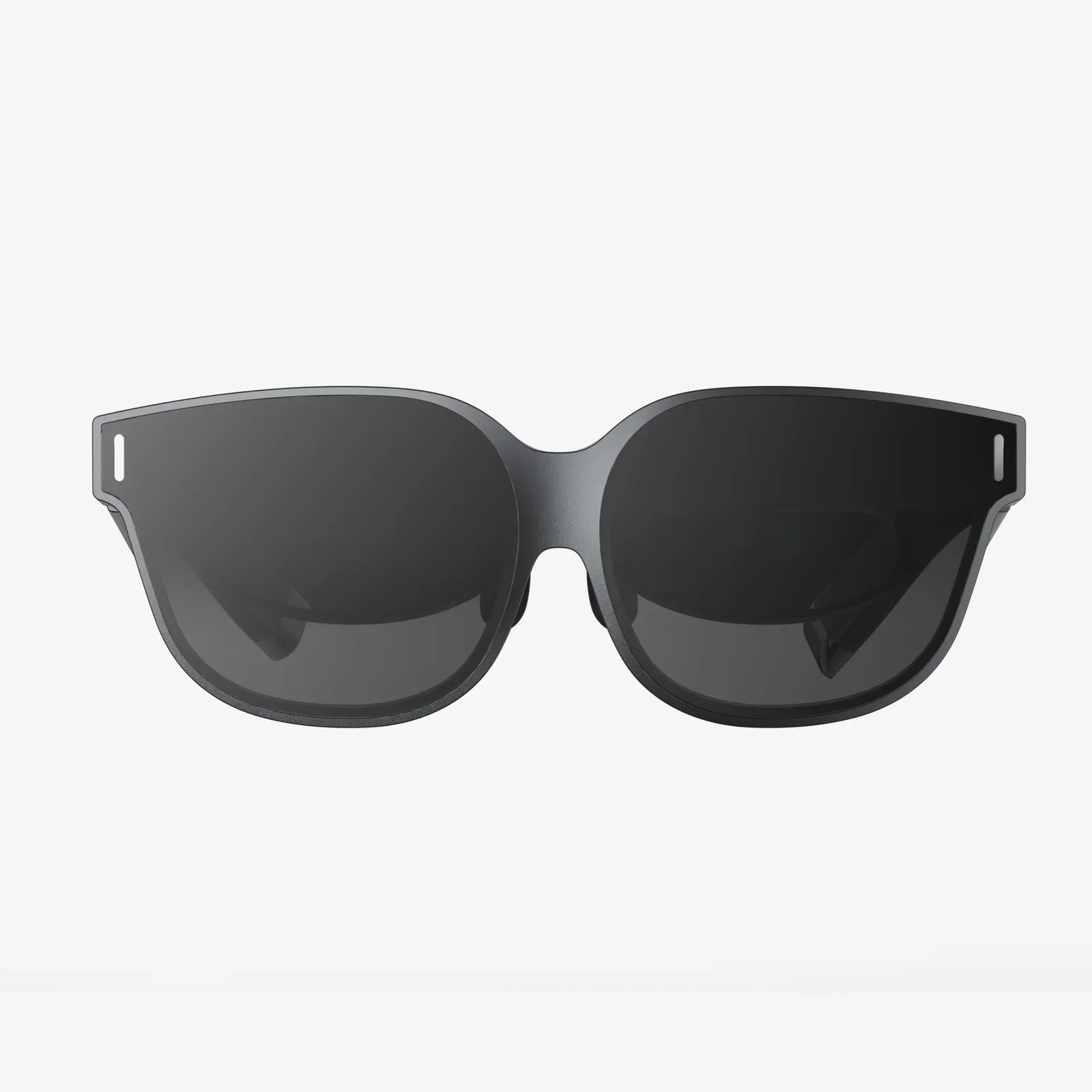
Imagine a future where your digital creations aren’t confined to a flat screen but float in the air before you, where a doctor can hold a beating, three-dimensional human heart in their hands without making a single incision, and where a family can gather around a holographic photo album, reliving memories as if they were there again. This isn’t a scene from a science fiction film; it’s the emerging reality promised by the convergence of holographic display technology, often symbolized by the ‘looking glass’ concept, with the established fields of Augmented Reality (AR) and Virtual Reality (VR). This powerful synthesis is pushing the boundaries of how we perceive and interact with digital information, moving us from simply observing pixels on a 2D plane to intuitively engaging with volumetric data in our 3D world.
Beyond the Flat Screen: Defining the Holographic Frontier
To understand the significance of this convergence, we must first disentangle the core technologies. Virtual Reality (VR) is an immersive, all-encompassing experience. By donning a headset, a user is transported into a completely digital environment, entirely separate from their physical surroundings. It’s a powerful tool for simulation, training, and gaming, but it is, by its nature, isolating. The user is blind to the real world.
Augmented Reality (AR), in contrast, layers digital information onto the real world. Through the lens of a smartphone, tablet, or specialized glasses, users see computer-generated graphics superimposed on their physical environment. This can range from simple navigation arrows on a street to complex machinery schematics overlaid on an engine block. AR enhances reality; it doesn’t replace it.
Holographic display technology, or the ‘looking glass’ interface, represents a third, distinct path. Its goal is to create genuine, glasses-free 3D visuals that can be viewed from multiple angles by multiple people simultaneously. Unlike AR, which requires a personal device to act as a viewport, a holographic display is a shared window into a volumetric world. It’s a collective experience, much like looking through a window together or gathering around a television, but with the added dimension of depth and perspective. The magic lies in its ability to create light fields that replicate how light behaves when reflecting off a physical object, tricking our brains into perceiving a solid, three-dimensional form within a physical box or panel.
The Technical Magic: How Light Fields Create Reality
The core innovation that makes these holographic displays possible is the manipulation of light fields. In simple terms, a light field is a function that describes the amount of light flowing in every direction through every point in space. A traditional 2D display only controls the color and intensity of pixels. A light field display controls the direction of the light rays emanating from each point.
This is achieved through several advanced engineering techniques. Some systems use a series of specially engineered lenses or mirrors to direct light. Others employ a stack of multiple LCD panels, each showing a slightly different perspective of the same object. As you move around the display, these panels work in concert to deliver the correct image to each of your eyes, creating a seamless, stereoscopic 3D effect without the need for glasses. The most advanced systems use algorithms to calculate the precise interference patterns needed to shape a laser beam into a hologram, though this remains largely in the research domain.
The result is a visual experience with all the crucial cues for human depth perception: stereoscopy (each eye sees a slightly different image), motion parallax (the object shifts realistically as you move your head), and convergence and accommodation (your eye muscles focus on the apparent depth of the object). This last point is critical. In traditional VR and AR headsets, a conflict between vergence (where your eyes point) and accommodation (where they focus) can cause eye strain and fatigue, a phenomenon known as the vergence-accommodation conflict. True holographic displays, by accurately representing depth, can potentially eliminate this conflict, making long-term viewing far more comfortable and natural.
A Spectrum of Immersion: From VR Isolation to Shared Holography
The relationship between VR, AR, and holographic displays is not one of replacement, but of symbiosis. Each technology occupies a unique point on a spectrum of immersion and collaboration.
VR is the champion of total immersion. It is the ideal medium for applications where the physical world is a distraction, such as deep-space flight simulators for astronauts, high-risk surgical training for medical students, or fantastical video game worlds. Its strength is its ability to create presence—the undeniable feeling of ‘being there.’
AR is the master of context and utility. It is designed for the real world, enhancing it with relevant, timely information. An architect can walk through a construction site and see the planned plumbing lines inside the bare concrete walls. A factory technician can see maintenance instructions and torque specifications overlaid directly on a malfunctioning machine. Its strength is its seamlessness and practicality.
Holographic displays fill a crucial gap between these two. They offer a high degree of visual immersion with 3D content but do not require isolating headgear. This makes them inherently collaborative. A team of designers can stand around a holographic model of a new car, pointing to features, discussing changes, and understanding the design spatially in a way a 2D screen could never allow. It combines the intuitive understanding of a physical prototype with the flexibility of a digital asset. It’s a bridge between the solitary depth of VR and the contextual overlay of AR, creating a shared, tangible digital space.
Transforming Industries: The Practical Power of Volumetric Vision
The potential applications for this combined ‘looking glass’ AR/VR technology are vast and are already beginning to revolutionize numerous professional fields.
Medicine and Healthcare
In medicine, the ability to visualize complex anatomical structures in 3D is a game-changer. Surgeons can plan intricate procedures by interacting with a precise holographic model of a patient’s organ, derived from CT or MRI scans. They can rotate it, zoom in, and even simulate the operation, leading to better outcomes and reduced time in the operating room. Medical students can move beyond textbooks and cadavers to study detailed, interactive holograms of the human body, understanding the spatial relationships between muscles, nerves, and organs in a profoundly intuitive way.
Engineering and Product Design
The entire product development lifecycle is being accelerated. Engineers can assemble and disassemble complex mechanical prototypes digitally before a single physical part is machined, identifying interference and design flaws early. Designers can evaluate the ergonomics and aesthetics of a product at full scale, seeing how light interacts with its virtual surfaces. This drastically reduces the need for expensive and time-consuming physical prototypes, saving millions and speeding up time-to-market.
Architecture and Construction
For architects and their clients, holographic technology dissolves the gap between blueprints and reality. Instead of trying to interpret a 2D drawing, a client can walk around a holographic rendition of their future home at 1:1 scale. They can see the flow of space, the height of ceilings, and the placement of windows with perfect clarity. Construction teams can use AR overlays derived from the holographic model to ensure precise placement of structural elements, reducing errors and rework.
Education and Research
Education becomes an experience rather than a lecture. Students can explore the solar system with planets orbiting around them, witness the inner workings of a volcano, or walk with dinosaurs. Complex abstract concepts in fields like molecular biology and astrophysics become tangible; a researcher can literally step inside a protein structure or visualize a data set in three dimensions, revealing patterns and connections invisible on a flat monitor.
Art and Storytelling
The art world is being redefined. Sculptors can create in virtual clay, with their work rendered in real-time as a hologram. Filmmakers and game developers are exploring new forms of narrative where the audience is no longer a passive observer but can move around within a scene, experiencing the story from different angles and perspectives. This opens up entirely new languages for creative expression.
Challenges on the Road to Widespread Adoption
Despite its immense promise, the path to making holographic AR/VR a ubiquitous technology is fraught with significant challenges.
The foremost hurdle is technical complexity and cost. Generating accurate light fields requires immense computational power and sophisticated hardware. High-resolution, large-scale holographic displays are currently prohibitively expensive for the average consumer, limiting them to enterprise and institutional applications. There is also a trade-off between resolution, field of view, and the size of the hologram that engineers are still working to optimize.
Content creation presents another major obstacle. The world’s digital content is overwhelmingly built for 2D screens. Creating compelling, high-fidelity 3D volumetric content requires new tools, new pipelines, and new skills. Artists and developers must learn to think and create in full 3D, considering how an object or scene will look from every possible angle, not just from a single, fixed camera view.
Finally, there is the challenge of the user interface (UI) and user experience (UX). How does one intuitively interact with a hologram? While hand-tracking and simple controllers are a start, we have yet to develop a truly natural and precise language for manipulating digital objects in space. Haptic feedback—the sense of touch—is also a critical missing component. Poking a holographic button and feeling it click would be a revolutionary step towards making these interfaces feel real.
Glimpsing the Future: The Long-Term Horizon
Looking decades ahead, the logical endpoint of this technological trajectory is the seamless merger of the digital and physical worlds. The ‘looking glass’ could evolve from a standalone screen into the very surfaces around us—our windows, our desks, our walls. Imagine a world where any surface can become a dynamic, three-dimensional display.
In this future, telepresence will be redefined. Instead of a grid of faces on a video call, you could have holographic avatars of your colleagues sitting around your conference table, able to gesture and interact with shared 3D models as if they were physically present. This could collapse geographical distance in a way that feels profoundly human.
Ultimately, the goal is not to escape reality, as VR sometimes promises, nor merely to annotate it, as AR does. The goal of holographic technology is to enrich our reality with a deeper layer of digital information that feels as tangible and real as the world itself. It’s about expanding human potential—allowing us to see the unseen, to grasp the complex, and to create and share ideas in the most natural dimension we know: three-dimensional space.
The line between the digital and the physical is beginning to blur, not on the screen of a device, but in the very air around us. This isn’t just a new way to see data; it’s a new way to understand our world and connect with each other within it. The next time you look through a window, imagine if the world on the other side could be anything you dreamt it to be—that is the ultimate promise of the looking glass.
Share:
Anti AR Glasses: The Ultimate Guide to Digital Privacy and Visual Clarity
Anti AR Glasses: The Ultimate Guide to Digital Privacy and Visual Clarity