


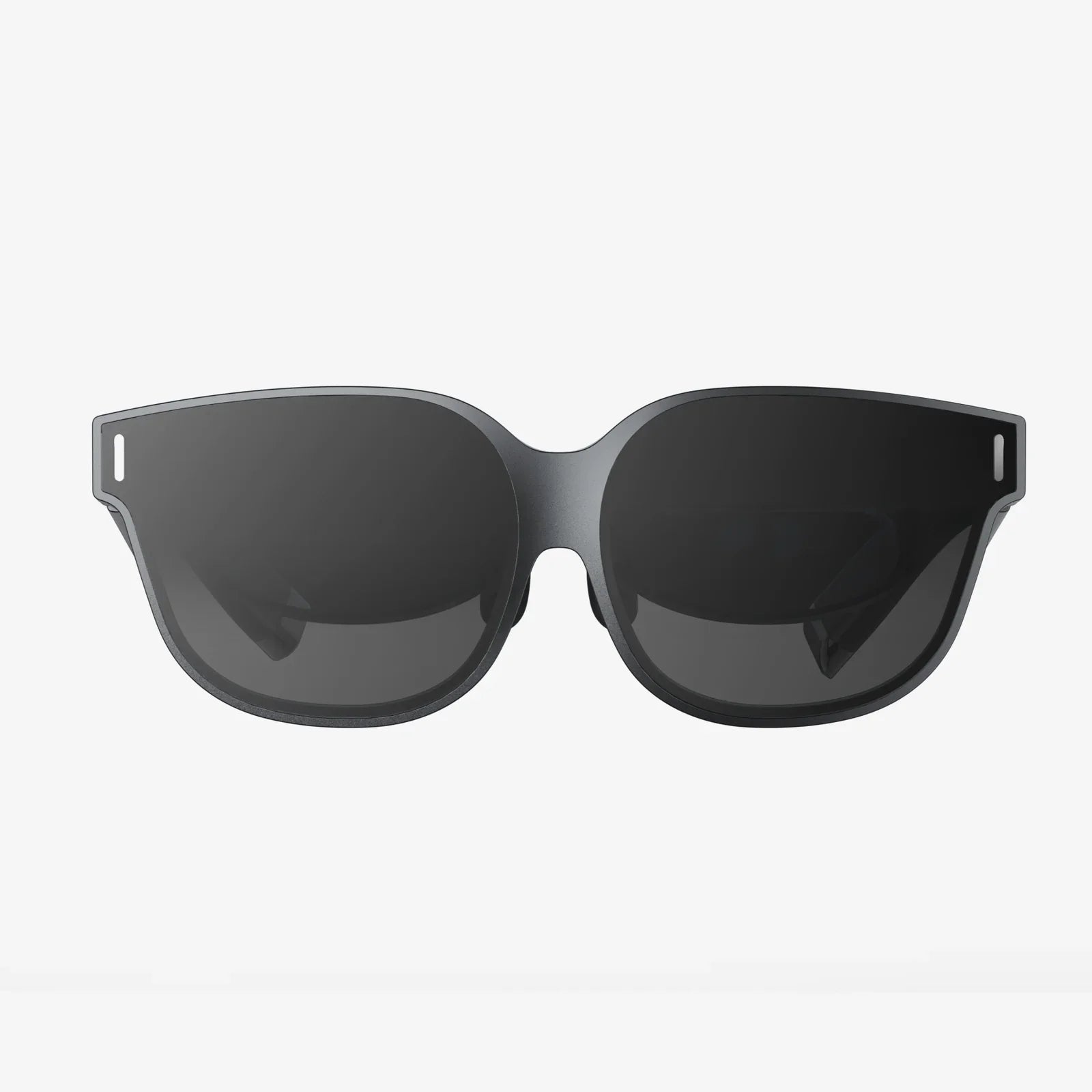
Imagine walking through your city and seeing historical figures reenacting events on the very streets where they occurred, or watching complex engine parts assemble themselves in mid-air above your workbench, or having navigation arrows appear directly on the road as you drive. This isn't science fiction—it's the rapidly approaching future powered by looking glass augmented reality technology, a revolutionary approach that promises to change our fundamental relationship with digital information by making it tangible, contextual, and astonishingly real.
Beyond the Screen: Redefining Our Digital Interface
For decades, our primary interface with the digital world has been the two-dimensional screen. From the bulky monitors of the past to the sleek smartphones of today, we have been confined to peering through a flat window into a vast digital universe. Looking glass augmented reality shatters this window, allowing digital objects to escape their pixel prisons and inhabit our three-dimensional space. This technology represents a paradigm shift from observing information to experiencing it.
The term itself evokes a powerful image. Unlike traditional augmented reality, which often requires users to view the world through the lens of a smartphone or wearable headset, looking glass technology aims to create free-standing, holographic-like visuals that can be seen by multiple people simultaneously without any specialized gear. It transforms any space into an interactive display, turning the world itself into a canvas for digital innovation.
The Architectural Framework: How It Creates the Illusion
At its core, looking glass augmented reality is a sophisticated feat of optical engineering and software wizardry. While various techniques exist, the foundational principle involves using a combination of specialized displays, lenses, and tracking systems to project light in such a way that it creates a volumetric image—an image with true height, width, and depth—that appears to float in space.
One common method utilizes a principle known as volumetric display. These systems can be based on a number of technologies, such as projecting onto a rapidly spinning surface or using multiple layers of LCD panels to scatter light and create a sense of depth. The result is a glowing, three-dimensional form that you can walk around and view from different angles, much like a physical object. Another critical component is precise spatial mapping. The system must understand the physical environment in exquisite detail—the location of walls, tables, and other objects—to convincingly anchor digital content within it. This is often achieved with advanced sensors, cameras, and algorithms that continuously scan and interpret the surroundings.
A World Transformed: Practical Applications Across Industries
The potential applications for this technology are as vast as human imagination itself, poised to disrupt and enhance nearly every professional field and aspect of daily life.
Revolutionizing Education and Training
Imagine a medical student no longer needing to rely solely on textbooks and cadavers to understand human anatomy. With looking glass AR, a life-sized, beating heart can be projected in the middle of the classroom. Students can walk around it, peel back layers to see the ventricles and arteries, and even watch a simulation of a disease's progression. This hands-on, immersive learning accelerates comprehension and retention in a way flat images never could. Similarly, mechanics could see a holographic transmission overlay the real one they are repairing, with animated arrows showing the disassembly sequence. Surgeons could practice complex procedures on virtual patients, and engineers could interact with full-scale 3D models of their designs before a single piece of metal is cut.
The Future of Design and Prototyping
In the worlds of architecture, industrial design, and engineering, prototyping is a costly and time-consuming process. Looking glass AR changes this entirely. An architect can project their entire building design into an empty lot, allowing clients to take a virtual walkthrough at scale. Automotive designers can scrutinize a full-sized hologram of a new car's exterior, examining reflections and contours from every angle in real sunlight. This ability to interact with a design in the real world, to see how light falls on it or how it fits in a space, provides invaluable insights that can save millions of dollars and months of development time.
Reshaping Retail and E-Commerce
The try-before-you-buy dilemma of online shopping could become a relic of the past. Instead of guessing whether a new sofa will fit in your living room or match the color of your walls, you could use an app to place a perfect holographic replica of it right in your space. You could walk around it, see it from your favorite chair, and even change the fabric color with a gesture. For fashion, a virtual mirror could show you wearing clothes you haven't even tried on. This immersive shopping experience bridges the gap between the convenience of online stores and the confidence of physical retail.
Unlocking New Forms of Storytelling and Entertainment
Entertainment will be utterly transformed. Museums could have historical exhibits where famous battles are reenacted right in front of visitors, or ancient civilizations are rebuilt around them. Board games could become living landscapes on your table, with characters that move and fight. At concerts, breathtaking visual effects and performers could appear to share the stage with real musicians, creating a hybrid experience that blends the live and the virtual. The very definition of a "screen" will evolve, as narratives unfold not on a rectangle on the wall, but all around us in our living rooms.
Navigating the Looking Glass: Ethical and Social Considerations
With such transformative power comes significant responsibility. The ability to seamlessly blend the real and the digital raises profound questions that society must grapple with before this technology becomes ubiquitous.
Privacy and Surveillance: The always-on cameras and sensors required to map environments and track user interaction present a potential privacy nightmare. The data collected about our homes, workplaces, and behaviors would be incredibly detailed. Robust regulations and transparent data handling policies will be essential to prevent misuse and protect individual privacy.
The Reality Divide: As with any powerful technology, there is a risk of creating a new socioeconomic divide. Will this be a tool for everyone, or only for those who can afford it? Furthermore, the potential for addiction or for people to retreat into personalized augmented realities could have unforeseen consequences on social cohesion and mental health.
Misinformation and Reality Blurring: If anyone can project anything anywhere, the potential for misuse is staggering. Malicious actors could project false information, dangerous obstacles onto roads, or damaging imagery into public spaces. Establishing a clear and reliable way to distinguish certified digital information from unauthorized fabrications will be one of the greatest challenges of the looking glass age.
The Road Ahead: From Prototype to Everyday Reality
While the promise is extraordinary, looking glass augmented reality is still on its path to maturity. Current challenges include increasing the resolution and brightness of the projections, making the systems more compact and affordable, and solving the complex computational problems of rendering convincing, interactive 3D graphics in real-time. The next decade will be focused on refining the hardware, developing the essential software platforms and creator tools, and establishing the ecosystem that will allow this technology to flourish.
We are standing at the precipice of a new era of computing, often called the spatial computing era. It’s a shift as significant as the move from command-line interfaces to the graphical user interface. Looking glass augmented reality is a cornerstone of this future—a future where digital content is not something we go to see on a device, but something that comes out to enhance our world, our work, and our wonder. The looking glass is not just a window to peer through; it is a doorway, and we are about to step through it.
The line between the atoms of our world and the bits of the digital realm is beginning to dissolve, promising a future where our physical environment is woven together with a layer of interactive, intelligent information. The looking glass isn't just reflecting our reality; it's getting ready to rewrite it, offering a glimpse into a world where every surface can tell a story and every space can become a stage for the impossible.
Share:
Best Virtual Office Tools: The Ultimate Guide to a Seamless Remote Workspace
Best Virtual Office Tools: The Ultimate Guide to a Seamless Remote Workspace