


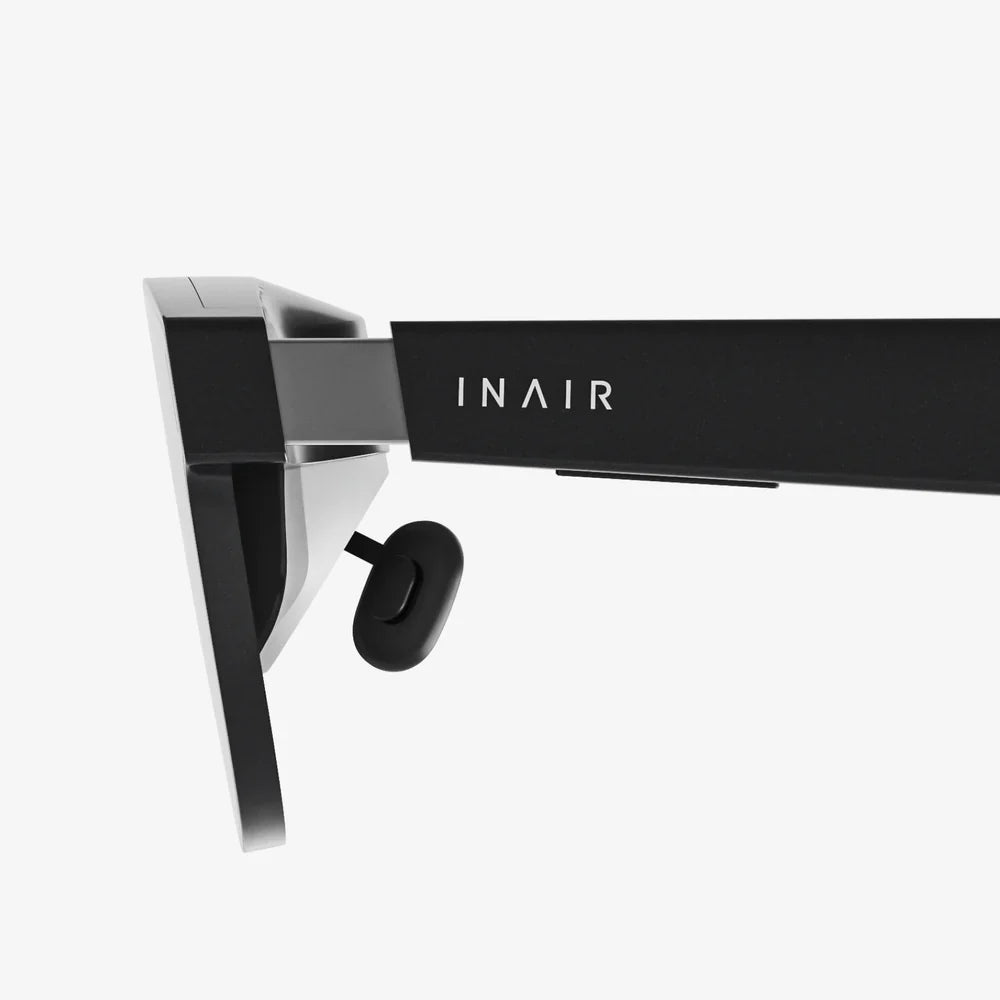
Imagine a world where digital information doesn't live on a screen in your hand, but is seamlessly painted onto the canvas of your reality. Directions float on the sidewalk before you, historical facts pop up as you gaze at a monument, and a recipe hovers conveniently next to your mixing bowl. This is the promise of augmented reality, a vision once confined to science fiction and corporate research labs with multi-million dollar budgets. For years, the path to this future was gated by exorbitant costs, bulky hardware, and limited functionality, making AR glasses a curiosity for developers and a status symbol for early adopters. But a seismic shift is underway. The arrival of truly low cost augmented reality glasses is not just an incremental improvement; it's a democratizing force, poised to unlock the potential of AR for the masses and fundamentally alter our relationship with technology.
The High Cost of Immersion: Why AR Was Stuck in the Lab
To appreciate the revolution of low-cost devices, one must first understand the immense technical challenges that made AR so expensive. Traditional, high-end augmented reality glasses are marvels of micro-engineering, cramming an incredible density of advanced components into a form factor meant to rest on the human face.
The primary cost driver has always been the optical display system. Creating bright, high-resolution, and wide field-of-view images that appear to float in the real world requires complex solutions like waveguide displays, micro-LED projectors, and holographic optical elements. These components require precision manufacturing in sterile, semiconductor-grade cleanrooms, a process that is inherently costly. Furthermore, these systems demand immense processing power to track the user's head and the environment in real-time, necessitating powerful onboard processors or a tether to a high-end computer.
Other expensive components include:
- Spatial Mapping Sensors: Arrays of cameras, LiDAR scanners, and depth sensors to understand the geometry of the surrounding space.
- Precision Tracking: Advanced IMUs (Inertial Measurement Units) and computer vision algorithms for flawless positional tracking.
- Battery Technology: High-density batteries that can deliver enough power for these demanding systems without adding significant weight.
The result was a product that was technologically impressive but commercially unviable for a broad audience. It was a classic innovator's dilemma: the technology needed a large market to drive down costs, but it couldn't achieve a large market because the costs were so high. This cycle kept AR glasses as a niche product for enterprise and specialized industrial applications.
The Catalysts of Affordability: Engineering the Price Breakthrough
The move toward low cost augmented reality glasses did not happen by accident. It is the culmination of several parallel technological and strategic advancements that finally broke the cost barrier.
1. The Smartphone Ecosystem Spillover
The most significant driver of cost reduction is the leveraging of the massive smartphone supply chain. AR glasses manufacturers no longer need to custom-build every component from scratch. They can now integrate miniaturized sensors, processors, and batteries that were developed for and mass-produced for smartphones. This economies-of-scale effect dramatically lowers the bill of materials. A camera module produced for hundreds of millions of phones is orders of magnitude cheaper than a bespoke version developed for a niche AR headset.
2. The "Good Enough" Philosophy
Early AR glasses aimed for perfection: a vast field of view, photorealistic graphics, and all-day battery life. Low-cost models embrace a "good enough" philosophy that prioritizes accessibility and specific use cases. They might use simpler optical systems like birdbath optics, which use a single combiner lens and a small display, sacrificing some field of view for a massive reduction in cost and complexity. The key insight is that for many applications—like viewing a navigation prompt, a text message, or a simple 3D model—a smaller, less immersive display is perfectly functional.
3. The Rise of Assisted and Phone-Centric AR
Many low-cost AR glasses are not standalone devices. They act as a sophisticated display peripheral for a smartphone. The phone handles the heavy lifting—the processing, the internet connection, and often the tracking—while the glasses simply display the information. This architecture, often called "tethered" or "assisted" AR, removes the need for expensive onboard compute, making the glasses themselves simpler, lighter, and far cheaper to produce.
4. Software and Developer Accessibility
Software frameworks and game engines have matured to the point where developing AR experiences is more accessible than ever. Platforms like ARKit and ARCore have standardized many of the complex computer vision tasks, allowing developers to create compelling experiences without building everything from the ground up. This growing ecosystem of apps provides the software justification for the hardware's existence, creating a virtuous cycle where better apps drive hardware demand, which in turn fuels further software development.
Beyond the Price Tag: The Real-World Impact of Accessible AR
The significance of low-cost AR glasses extends far beyond the thrill of a cheap gadget. It unlocks transformative applications across countless sectors, bringing tangible benefits to people's lives.
Revolutionizing Education and Training
Imagine a medical student wearing affordable AR glasses to see a detailed, interactive 3D model of the human heart hovering over their textbook. A mechanic in training could see disassembly instructions and torque specs overlaid directly on the engine they are working on. This type of contextual, hands-free learning is profoundly more effective than watching a video or reading a manual. Low cost is the key that allows schools, training centers, and even individual students to deploy this technology at scale.
Transforming the Frontline Worker
For the millions of people who work with their hands—technicians, warehouse operatives, field service engineers—low-cost AR glasses are a game-changer. They can receive remote expert guidance with annotations drawn directly into their field of view, access digital work orders and schematics without stopping to look at a clipboard or tablet, and perform complex assembly tasks with visual cues ensuring accuracy. By making the technology affordable, companies can equip entire workforces, leading to dramatic improvements in efficiency, safety, and reduced error rates.
Redefining Social Connection and Entertainment
While high-end AR promises fully immersive virtual social spaces, low-cost glasses can offer more subtle but equally powerful social enhancements. Think of watching a sporting event with live stats and player information floating above the field, or sharing a virtual screen with a friend to watch a movie together from miles apart. They enable new forms of lightweight, always-available digital interaction that don't require users to be fully immersed in a virtual world, blending the digital and physical in socially meaningful ways.
Enhancing Daily Navigation and Accessibility
Turn-by-turn navigation becomes intuitive when arrows are painted onto the street in front of you. For individuals with visual impairments, AR glasses could highlight obstacles, recognize faces, and read out text from signs. For tourists, historical information and translations could appear as they explore a new city. These are utility-focused applications that don't require high-fidelity graphics, just the right information at the right time, making them perfect for the capabilities of low-cost devices.
The Challenges and Considerations on the Road to Ubiquity
Despite the exciting progress, the path forward for low cost augmented reality glasses is not without its obstacles.
Battery Life and Thermal Management: Balancing performance with all-day battery life remains a challenge. Processing visual data is power-intensive, and generating heat on a device worn on the face is a significant design constraint.
The Social Acceptance Hurdle: How will society react to people wearing cameras and displays on their faces in public? Issues of privacy, social etiquette, and digital distraction are profound and need to be addressed through thoughtful design and social dialogue.
Defining the "Killer App": While many compelling use cases exist, the one application that will make AR glasses a "must-have" for the average consumer is still evolving. It might be a revolutionary form of communication, a new gaming genre, or an AI assistant that is truly contextual and helpful.
Data Privacy and Security: A device that sees what you see and hears what you hear collects an unprecedented amount of sensitive data. Ensuring this data is handled ethically and securely is paramount to earning public trust.
A Glimpse into the Crystal Ball: The Future Shaped by Affordable AR
The trajectory is clear. Low-cost AR glasses will follow a path similar to the personal computer, the mobile phone, and the smartphone. They will start as simple, purpose-driven tools before evolving into the primary conduit through which we interact with digital information. As the technology matures, we will see a fusion of AI and AR, where an intelligent assistant can understand our context and intentions, proactively providing the information we need before we even ask for it.
The ultimate endpoint may not be a single pair of glasses, but a spectrum of devices tailored to different needs and contexts—from minimalist, audio-focused smart glasses for all-day wear to more immersive visors for specific work and play. The democratization of the hardware is the first and most critical step in this journey. It opens the floodgates for innovation, allowing developers, creators, and billions of users to experiment, iterate, and discover the true potential of blending our physical and digital realities.
We stand at the precipice of this new era, not as passive observers, but as active participants. The story of augmented reality is no longer being written solely in corporate R&D departments; it's being written in classrooms, workshops, and living rooms around the world. The question is no longer if you will own a pair of AR glasses, but how you will use them to enhance your own world. The future is arriving, and it's looking a lot clearer—and far more affordable—than anyone could have predicted.
Share:
Head Mounted Projection Display: The Future of Personal Visual Computing
Explain Digital Interactivity: The Unseen Language of the Modern World