


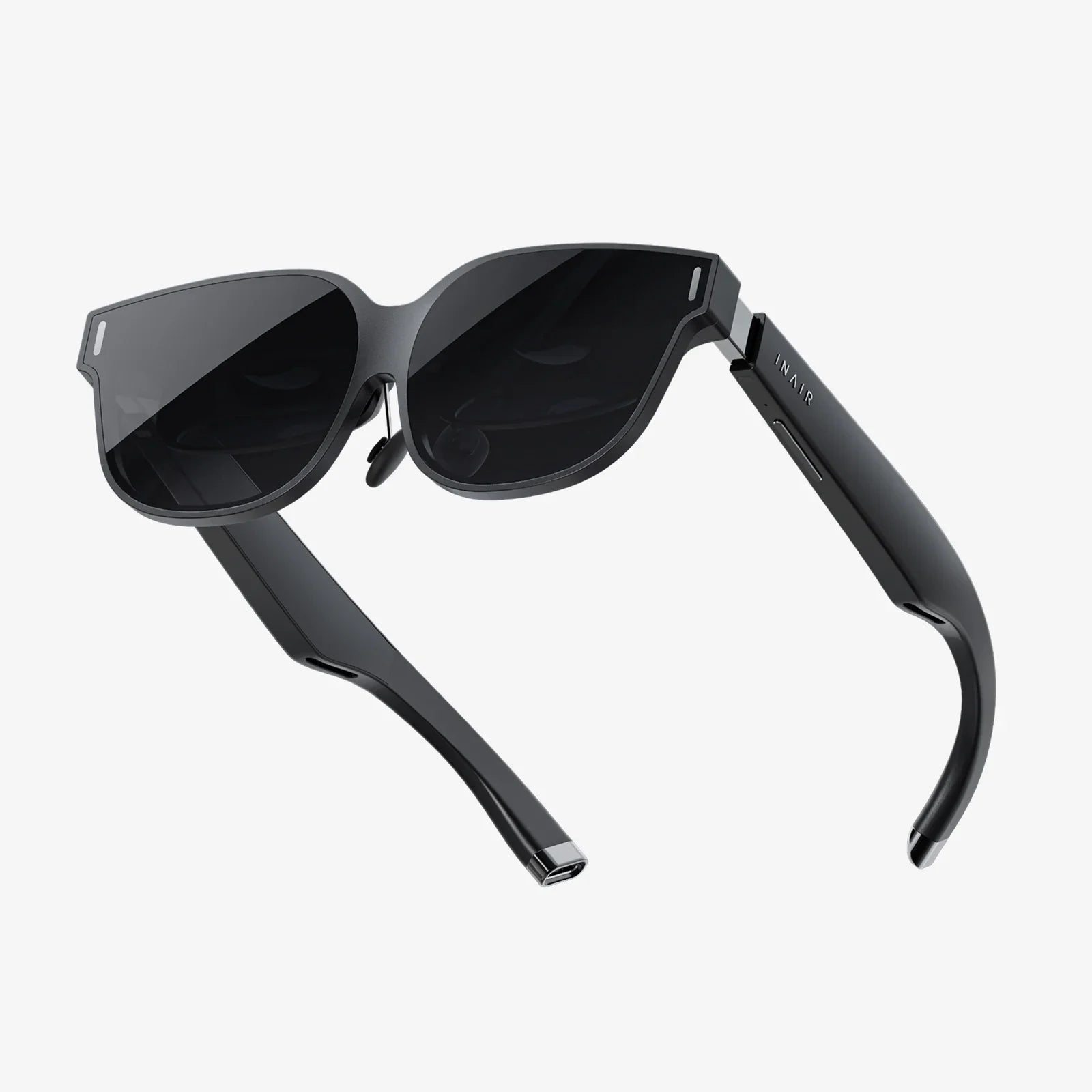
Imagine slipping on a headset and instantly being transported to the surface of Mars, the depths of the ocean, or a bustling ancient marketplace. Until recently, such an experience was a fantasy reserved for well-funded research labs or enthusiasts with deep pockets. The very phrase "virtual reality" conjured images of complex, tethered systems costing thousands, a high-tech playground for the few. But a quiet revolution has been brewing, one that is tearing down the financial barricades around this immersive technology. The advent of low-cost virtual reality is not just a story of cheaper hardware; it's a narrative of democratization, accessibility, and the profound reshaping of how we learn, work, and connect.
The Catalysts of Affordability: How Prices Plummeted
The journey to affordable VR is a tale of parallel innovation and strategic market shifts. Several key factors converged to make this possible. The most significant was the proliferation of powerful smartphones. These pocket-sized computers contained nearly all the necessary components for a basic VR experience: high-resolution displays, precise motion sensors, and powerful processors. By leveraging this ubiquitous technology, manufacturers could create headsets that were essentially sophisticated holders for a phone, bypassing the need for expensive integrated screens and internal computing hardware. This approach dramatically lowered the entry point, bringing a taste of VR to millions almost overnight.
Simultaneously, competition in the standalone VR headset market intensified. As technology matured and manufacturing processes became more efficient, economies of scale kicked in. Companies began to focus on creating more accessible devices, optimizing their designs to hit specific, lower price points without completely sacrificing the quality of the experience. This race to the bottom, in the best sense, has continuously pushed the boundary of what is possible for a minimal investment, making full-featured, untethered VR a reality for the average consumer.
Beyond the Price Tag: Defining True "Low Cost"
Evaluating low-cost VR requires looking beyond the initial purchase price. True affordability encompasses the entire ecosystem. The most accessible tier remains smartphone-based VR. These headsets are incredibly inexpensive, but their experience is entirely dependent on the user's phone, limiting graphical fidelity and interactivity. The next tier is standalone, all-in-one headsets. These represent the sweet spot for cost versus capability, offering a complete, wireless experience with dedicated processors, displays, and motion controllers, all for a fraction of the cost of high-end PC-powered systems.
Finally, there are more affordable tethered headsets that connect to a personal computer. While the headset itself might be moderately priced, the true cost includes a capable gaming computer, which can be a significant hidden expense. Therefore, when we discuss the democratization of VR, the standalone and mobile-based options are the true heroes, offering a self-contained experience with no additional major hardware requirements.
A World in a Headset: The Expanding Universe of Applications
The impact of low-cost VR is most profoundly felt in its application across diverse fields. By removing the financial barrier, it has opened doors that were previously locked.
Revolutionizing Education and Training
In classrooms around the world, students are no longer just reading about history—they are walking through it. A class studying ancient Egypt can take a virtual field trip inside a pyramid, examining hieroglyphics up close. Medical students can practice complex surgical procedures in a risk-free, virtual environment, honing their skills without consequence. Vocational training has also been transformed; aspiring welders, electricians, and mechanics can learn and make mistakes on virtual equipment, saving institutions immense costs on materials and improving safety. This hands-on, experiential learning boosts retention and engagement in ways textbooks never could.
Transforming Enterprise and Remote Work
The corporate world has eagerly adopted low-cost VR for collaboration and design. Architects and engineers can walk clients through virtual 3D models of buildings before a single brick is laid, making changes in real-time. Remote teams can meet in a shared virtual boardroom, feeling a sense of presence and connection that video calls lack. From virtual prototyping to immersive data visualization, businesses are using affordable VR to enhance productivity, reduce travel costs, and foster innovation.
Democratizing Entertainment and Social Connection
Of course, entertainment remains a massive driver. Affordable VR has brought immersive gaming to a mass audience, allowing players to step inside their favorite worlds. But it's more than just games. Platforms exist for watching movies on a giant virtual screen, attending live concerts with friends from across the globe, or simply hanging out in social virtual spaces. This has profound implications for combating loneliness and creating new forms of cultural expression and shared experience that are accessible to all.
Navigating the Trade-Offs: The Challenges of Accessibility
The path to low-cost VR is not without its compromises. To achieve a lower price, manufacturers often make concessions that can affect the user experience. These can include lower-resolution displays that cause a "screen door" effect, less accurate tracking leading to controller drift, and less powerful processors that result in simpler graphics and potential latency, which can contribute to motion sickness for some users.
Furthermore, the content itself can be a mixed bag. While major developers are creating more polished experiences, the low barrier to entry has also led to a flood of lower-quality, simplistic apps that can detract from the medium's potential. Users must navigate these trade-offs, balancing their budget against their desired level of immersion and quality. However, the trajectory is clear: with each generation, the performance gap between budget and premium devices narrows.
The Future is Accessible: Where Low-Cost VR is Headed
The future of low-cost VR is dazzlingly bright. We are moving towards a paradigm where the headset itself may become even less important. Advancements in cloud computing and 5G networks promise a future of cloud-streamed VR, where the immense processing power is handled remotely in data centers, and the headset becomes a sleek, lightweight, and ultra-affordable window into vast virtual worlds. This would eliminate the need for expensive internal hardware altogether.
We can also expect the line between the physical and digital to blur further through improved augmented reality (AR) features, even on primarily VR devices. The ultimate goal is a pair of comfortable, socially acceptable glasses that can seamlessly transition between a fully immersive virtual environment and an augmented one, overlaying digital information onto our physical world. As these technologies converge and mature, the concept of "low cost" will evolve to mean "high value," offering unparalleled experiences for a truly mainstream price.
This isn't just about playing a better game or watching a more engaging movie. The proliferation of low-cost virtual reality represents a fundamental shift in human-computer interaction. It's putting the power of presence into the hands of students, workers, artists, and everyday people, allowing them to create, explore, and connect in ways that were once the stuff of science fiction. The virtual frontier is open for business, and thanks to its newfound affordability, everyone now has an invitation to step inside and shape what comes next.
Share:
Opinions on Virtual Reality: A Deep Dive into the Digital Frontier Reshaping Our World
Augmented and Virtual Reality Go to Work: Reshaping the Modern Workplace