


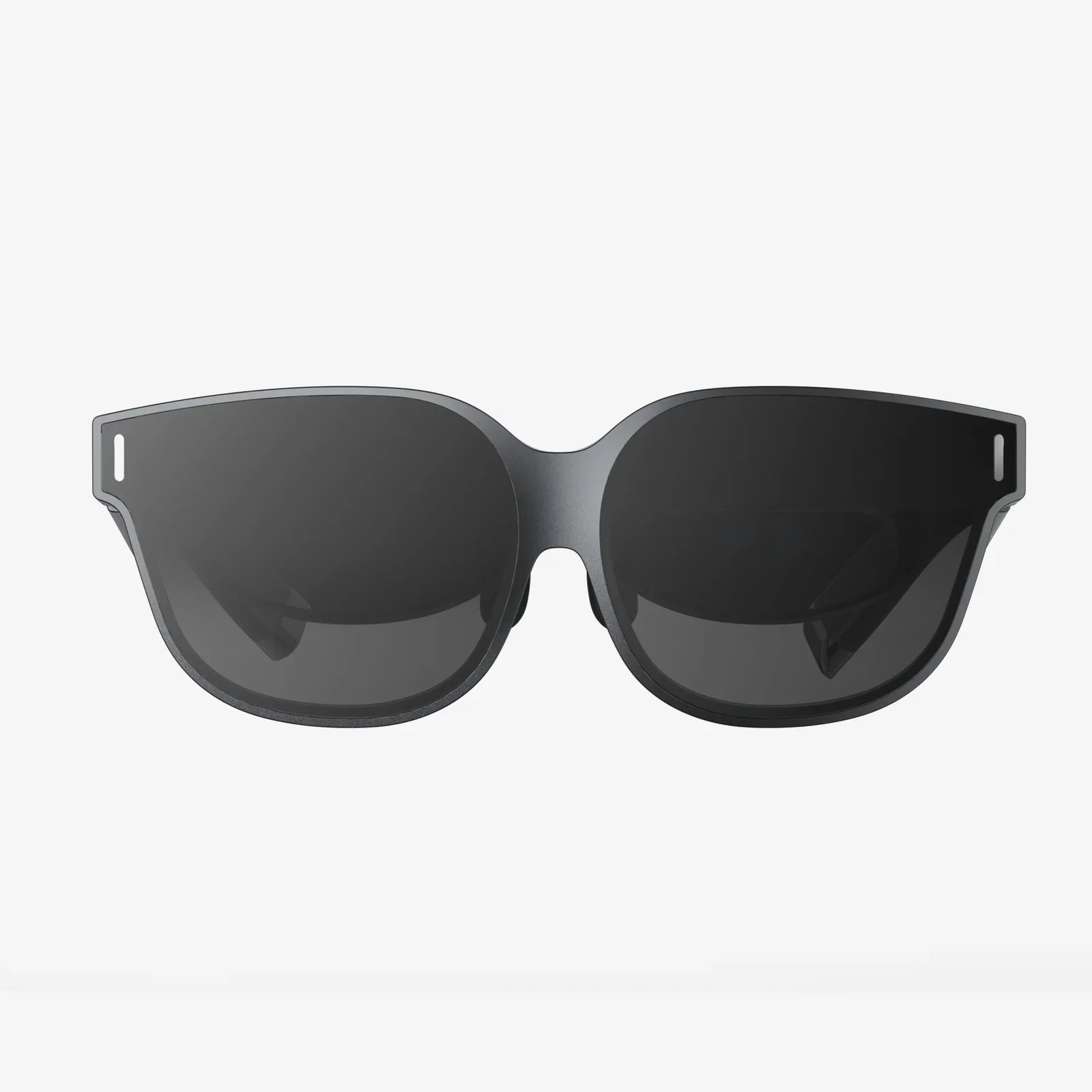
Imagine walking through your city, pointing your device at a historic building, and watching it peel back the layers of time—first as it stands today, then decades prior with newsreel footage of a pivotal protest that happened on its steps, and even further back to its original architectural blueprints materializing in the empty space before you. This isn't a scene from a distant sci-fi future; it is the imminent reality being forged at the intersection of two powerful technological forces: Location-Ready (LR) platforms and Augmented Reality (AR). This convergence is not merely an upgrade to how we consume news; it is a fundamental redefinition of storytelling, context, and our very perception of current events.
The Foundation: Understanding the Core Technologies
Before delving into their powerful synergy, it's crucial to define these terms individually and understand their unique value propositions.
What is Location Ready (LR)?
Location Readiness extends far beyond simple GPS pin-dropping on a map. It represents a comprehensive technological framework where digital content is intrinsically geotagged and contextually aware of its physical surroundings. An LR platform understands not just latitude and longitude, but also altitude, the user's orientation, the geometry of nearby structures, and even the time of day or weather conditions. This creates a rich, dynamic data layer over the physical world, waiting to be unlocked. It's the difference between seeing a dot on a map showing "news happened here" and a system that knows you are standing on the south side of the building, it's 3:00 PM, and the story you are about to experience is best viewed from your current vantage point.
What is Augmented Reality (AR)?
Augmented Reality is the bridge that makes that digital layer perceptible. AR superimposes computer-generated information—be it text, 3D models, video, or audio—onto a user's view of the real world. Unlike Virtual Reality (VR), which creates a completely synthetic environment, AR enhances reality by adding to it. Through the screen of a smartphone or tablet, or more immersively through AR glasses, digital artifacts can appear to coexist with physical objects. This technology transforms a passive screen into a dynamic window, blending the binary world of data with the analog world we inhabit.
The Powerful Convergence: LR Meets AR
Individually, these technologies are impressive. Together, they are transformative. LR provides the deeply contextual data, and AR provides the immersive interface. This fusion creates a new medium for information delivery: spatial, contextual, and experiential news.
When an LR platform feeds precise location and environmental data to an AR application, the result is content that feels anchored to the world. A news report about a new public park isn't just an article you read; it's a 3D model of the proposed park you can walk through on the empty lot where it will be built. A story about archaeological findings can place a virtual, to-scale dig site in your local museum's courtyard. The news breaks free from the flat confines of a screen and spills out into your environment, making you an active participant rather than a passive observer.
Revolutionizing Journalism and Storytelling
The implications for journalism are profound. The classic inverted pyramid structure of news writing is being supplemented, and in some cases supplanted, by spatial storytelling.
Immersive Reporting from the Field
Correspondents in conflict zones or at major events can geotag their reports, videos, and photos. Instead of a disjointed collection of media in an online article, users can later visit that exact location (or a scaled recreation) and experience the event through the AR lens. They can see the reporter's vantage point, witness the scale of a demonstration, or understand the geography of a disaster zone with unparalleled intimacy. This fosters a deeper emotional connection and understanding that text alone cannot achieve.
Data Visualization in Context
Complex data sets become instantly comprehensible when visualized in AR. Imagine covering local election results. A traditional bar graph shows numbers. An LR-AR experience could project voting patterns directly onto the neighborhoods they represent, with different colored streams of light flowing from houses to polling stations, making demographic and geographic trends visually and intuitively obvious. Environmental data, like pollution levels or noise maps, can be overlaid on city streets, transforming abstract statistics into a visceral, understandable experience.
Historical Context and Layered Time
News is often a single point on a timeline. LR-AR allows journalists to show the full arc of a story. Pointing a device at a rebuilt city square could allow users to slide a timeline slider, watching the present fade to reveal layers of the past: footage from a recent celebration, then photos from its reconstruction, and finally, archival images of the destruction that necessitated it. This "phygital" timeline turns every location into a living history book, where the past is not forgotten but integrated into the present landscape.
Transforming the Consumer Experience
For the news consumer, this convergence shifts the paradigm from "reading the news" to "experiencing the news."
Hyper-Local and Personalized Newsfeeds
Your physical location becomes the primary filter for your news feed. Walking down a street, your AR device could highlight stories relevant to your immediate surroundings: a restaurant review for the place you're passing, community board news about an upcoming renovation of the park ahead, or a historical marker about a significant event that happened on that corner. News becomes immediately relevant and actionable, tied to the very world you are navigating.
Active Exploration Over Passive Consumption
Consuming LR-AR news is an active choice to explore. It encourages curiosity and discovery. Users might go for a "news walk" to discover stories hidden in their environment, turning their city into a museum and themselves into curators of their own experience. This gamified element can re-engage audiences, particularly younger demographics who are increasingly disengaged from traditional news formats.
Enhanced Understanding and Empathy
By virtually placing users in the shoes of those in the news, LR-AR fosters a powerful sense of empathy. Reading about a refugee camp's size is one thing; virtually standing within its AR-recreated boundaries, seeing the scale of the tents stretching to the horizon, is another thing entirely. This technology has the unique potential to bridge the empathy gap that often exists between audiences and distant events.
Challenges and Ethical Considerations
This promising future is not without its significant hurdles and serious ethical questions that must be addressed proactively.
The Digital Divide and Access
LR-AR experiences require capable hardware, reliable high-speed data, and digital literacy. There is a tangible risk of creating a two-tiered information society: those who can afford to experience immersive, context-rich news and those who are left with traditional, and potentially less engaging, formats. News organizations must be mindful of this divide and ensure core stories remain accessible to all.
Privacy in the Phygital World
Geotagged news consumption generates incredibly precise data about a user's movements, interests, and behavior. Who owns this data? How is it used? Could walking through an AR news story about a protest later draw unwarranted scrutiny? Robust frameworks for data anonymization and user consent are non-negotiable prerequisites for ethical deployment.
Information Overload and Visual Pollution
The real world could become a cluttered canvas of digital pop-ups and notifications. The elegance of the technology will depend on thoughtful, minimalist design that enhances rather than obscures reality. Users will need tools to curate and filter the digital layer to avoid being overwhelmed by a cacophony of competing AR content.
The Threat of Deepfakes and AR Manipulation
If AR becomes a primary news source, it also becomes a potent vector for misinformation. Malicious actors could create convincing AR overlays that alter reality, showing events that never happened or distorting real ones. The ability to authenticate AR content and verify its source will be one of the greatest challenges for the journalism industry in the coming decade.
The Future is Spatial and Contextual
The trajectory is clear. The next evolution of the internet—the spatial web or元宇宙—will be built upon the foundations of LR and AR. News will be a core component of this immersive digital layer. We are moving towards a world where information is not something we go to a specific app or website to find, but something that is ambiently integrated into our environment, responsive to our context and curiosity.
Future advancements in wearable technology, like lighter and more socially acceptable AR glasses, will make this experience seamless. 5G and later 6G networks will provide the bandwidth for real-time streaming of complex AR data. Artificial Intelligence will act as the intelligent curator, dynamically assembling personalized news experiences based on location, time, and user interest.
The convergence of LR and AR is more than a tech trend; it is a new lens for humanity to understand its past, navigate its present, and envision its future. It promises to make news more real, more relevant, and more powerful than ever before. The responsibility now lies with developers, journalists, and ethicists to guide its development thoughtfully, ensuring it becomes a tool for enlightenment and connection, not division and deception. The world is about to become your newspaper, and every street corner has a story to tell. Are you ready to look up and see it?
Share:
What Is Usability in Human Computer Interaction: The Core of User-Centered Design
What Is Usability in Human Computer Interaction: The Core of User-Centered Design