


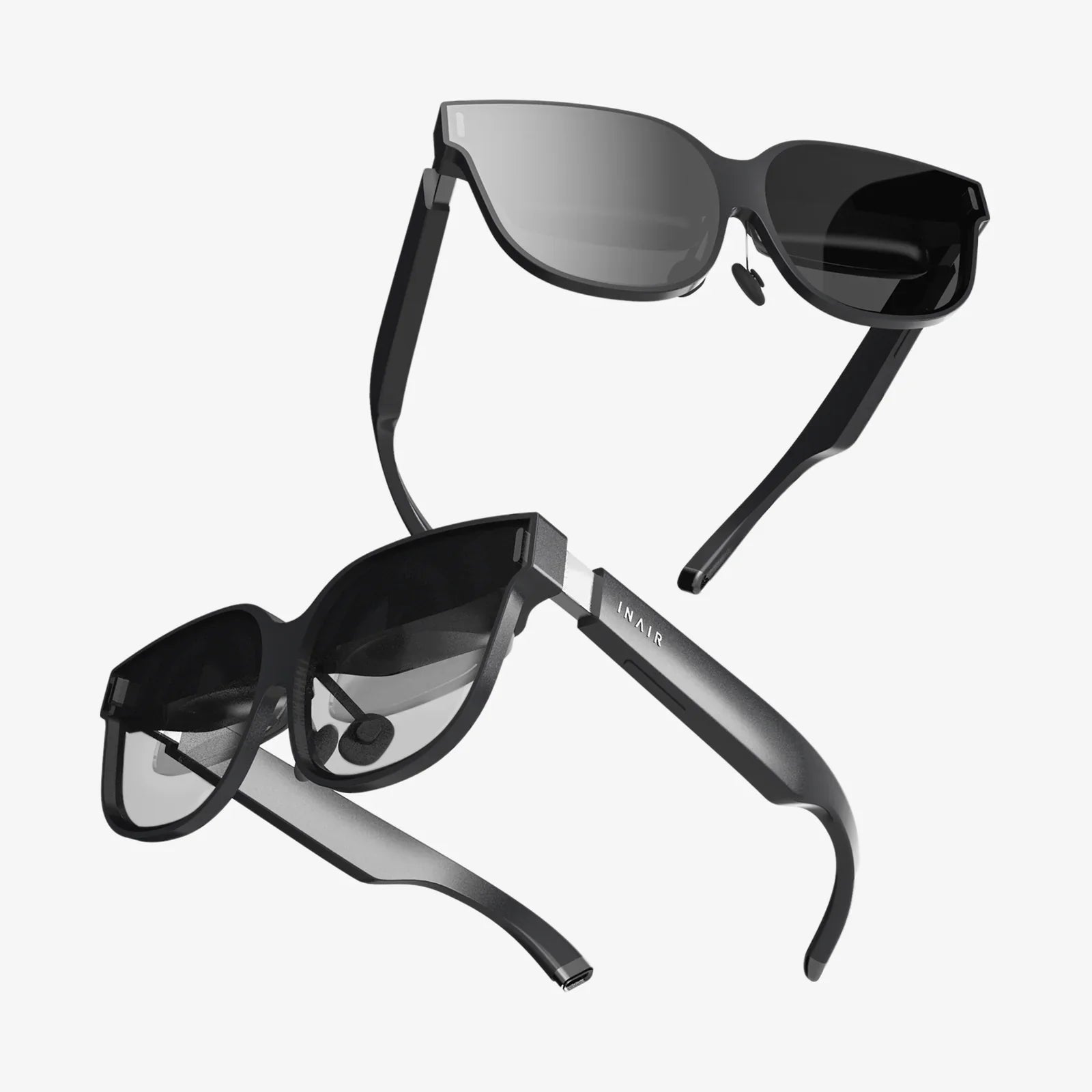
Imagine a world where your workspace is not confined to a desk, your creative canvas is the air around you, and the line between learning and living is beautifully blurred. This is the promise held within the sleek, futuristic frame of a magic AR headset, a device rapidly evolving from a novel gadget into the primary environment we will function in. It’s not just about seeing digital information; it’s about inhabiting it, interacting with it, and letting it enhance your reality in profound, productivity-boosting, and genuinely magical ways. The age of staring into a rectangle is fading, making way for an era where we live and work within a dynamic, responsive, and intelligent digital layer painted over our physical world.
The Architectural Shift: From Screens to Spaces
The fundamental magic of this technology lies in its paradigm shift. For decades, human-computer interaction has been defined by the screen—a flat, two-dimensional portal we peer into. We organize our lives across multiple monitors, constantly switching context, hunting for tabs, and struggling with the physical limitations of our hardware. The AR headset shatters this model. It replaces the concept of a screen with the concept of a space.
Instead of being limited by inches, your digital workspace is now as vast as your physical environment. You can pin a web browser to your wall, have a video call hovering next to your real-world project, let a spreadsheet unfold across your entire desk, and keep your vital notifications and communications subtly orbiting in your periphery. This spatial computing environment allows for an unprecedented level of organizational freedom. Complex projects are no longer a maze of overlapping windows but a thoughtfully arranged architecture of applications and data, each with its own place in your room. This reduces cognitive load, minimizes the constant, jarring switching between tasks, and creates a state of flow that traditional computing hardware simply cannot match.
Revolutionizing the Professional Sphere: The Ultimate Workspace
The professional applications of a headset to function in are perhaps the most immediately transformative. Across industries, the way we work is being reimagined.
Design and Engineering
Architects, engineers, and product designers can now step inside their creations before a single physical resource is spent. A life-size 3D model of a building's interior can be walked through, allowing for design flaws to be spotted and ergonomics to be tested intuitively. A mechanic could see a holographic schematic overlaid directly onto the complex engine they are repairing, with step-by-step instructions highlighting specific components. This seamless blend of instruction and action drastically reduces errors and training time.
Remote Collaboration and Telepresence
The concept of a 'remote meeting' is elevated from a grid of faces on a screen to a feeling of genuine presence. With AR, colleagues from across the globe can appear as photorealistic avatars in your room, or you can be virtually transported into a shared digital space. You can collaboratively manipulate a 3D model, brainstorm on a virtual whiteboard that everyone can see and draw on, and share body language and spatial cues that are lost in traditional video conferencing. It’s the difference between talking about a project and feeling like you are inside it together.
Data Visualization and Analysis
For data scientists, financial analysts, and researchers, complex data sets can be transformed from abstract numbers on a chart into immersive, three-dimensional landscapes. One could literally walk around a visualization of market trends, seeing correlations and outliers in a spatial context that makes patterns more apparent. This tangible interaction with information unlocks deeper insights and a more intuitive understanding of complex systems.
Unleashing Creativity and Unlocking New Forms of Play
Beyond the office, the magic AR headset provides a new medium for artistic expression and entertainment, becoming a canvas and a playground.
The Artist's Studio Reimagined
Artists and sculptors are no longer bound by the physics of clay, paint, or stone. They can create digital sculptures in the center of their living room, scaling them to monumental sizes or shrinking them to minute detail with a gesture. They can paint with light in the air, creating dynamic artworks that interact with their environment. Musicians could have a virtual mixing board and instrument panel arrayed around them, controlling sound in a tactile, spatial way. The headset becomes a limitless studio, toolbox, and gallery all in one.
The Future of Storytelling and Gaming
Entertainment ceases to be a passive experience. Instead of watching a story unfold on a screen, you could find yourself standing within it. Interactive narratives could have digital characters sitting on your couch or hiding behind your door. Gaming transforms your entire home into a level—your hallway becomes a starship corridor, your kitchen table a strategic map table, and your backyard an enchanted forest. This level of immersion creates emotional connections and thrilling experiences that are orders of magnitude more powerful than anything available today.
The Social Fabric: Connecting in a Blended Reality
A common fear is that technology isolates us, but a well-designed AR headset to function in has the potential to do the opposite—it can enhance and deepen our real-world social connections.
Imagine watching a sports game with a friend who lives miles away, but seeing them virtually on your couch, and seeing real-time stats and replays appear on your coffee table as you both cheer. Families could share photos and videos as physical albums placed around the room, creating a digital scrapbook of cherished memories integrated into their home. Guides at museums or historical sites could overlay reconstructions of ancient ruins onto the present-day rubble, making history come alive for everyone in the tour group simultaneously. It becomes a shared lens through which to experience the world, fostering connection through a shared augmented reality.
Navigating the Challenges: The Path to Ubiquity
For this magical future to become our everyday reality, significant hurdles must be overcome. The technology itself must become lighter, more comfortable, and have all-day battery life to be a true platform for functioning. The visual fidelity must be high enough to allow for reading text for hours without eye strain, and the field of view must be expansive to feel truly immersive.
Furthermore, the digital world it creates must be intuitive. User interfaces need to move beyond the traditional menu and develop new interaction paradigms built for gestures, voice, and gaze. Crucially, a robust ethical and privacy framework must be established. When our environment can be tracked and datafied to such an intimate degree, clear rules must govern who has access to that information and how it can be used. We must build this new reality with a focus on human-centered design, ensuring it augments our humanity rather than detracting from it.
The magic is not in the headset itself, but in the invisible layer of intelligence and connection it seamlessly integrates into our perception. It’s the promise of a world where technology understands our environment and serves us within it, contextually and effortlessly. We are standing on the precipice of this new era, not as passive users, but as active inhabitants ready to function, create, and connect within a reality finally worthy of the word—magic.
Share:
What AR Headset Could Look Like: A Glimpse into the Future of Wearable Computing
What AR Headset Could Look Like: A Glimpse into the Future of Wearable Computing