


- by wangfred
Make Own AR Glasses: The Ultimate Guide to Building Your Augmented Reality
- by wangfred
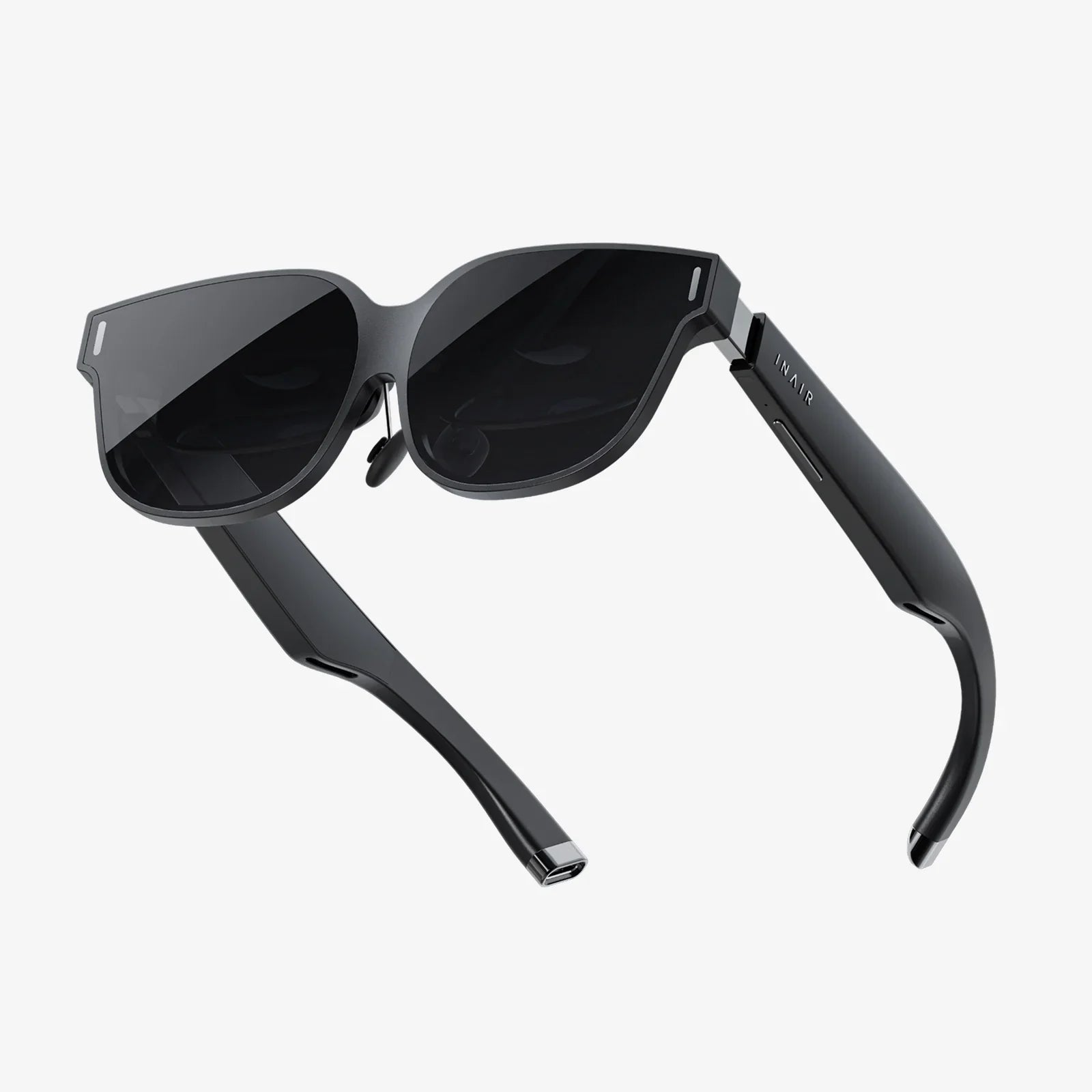
Imagine slipping on a pair of glasses you built with your own hands and seeing a digital universe seamlessly layered over your living room. The ability to make your own AR glasses is no longer a fantasy reserved for tech giants and science fiction; it's an ambitious, complex, but ultimately achievable project for dedicated makers, programmers, and hardware enthusiasts. This journey into personal fabrication represents the bleeding edge of do-it-yourself technology, merging optics, electronics, and software into a wearable portal to augmented worlds. While commercial offerings are becoming more sophisticated, the process of building your own headset offers unparalleled education, customization, and the profound satisfaction of creating a functional window into the augmented future yourself.
Before you can embark on the mission to make your own AR glasses, it's crucial to understand what they are at a fundamental level. At its core, a pair of augmented reality glasses is a wearable computer. Its primary function is to capture the real world through sensors, process that information, and then project or display digital imagery onto transparent lenses, allowing the user to see both the physical environment and the virtual overlay simultaneously. This is a significant distinction from virtual reality (VR) headsets, which completely occlude the user's vision and replace it with a digital environment. The magic of AR is in the blend, and achieving that blend is the central challenge of your build.
To make your own AR glasses, you must become intimately familiar with the hardware building blocks. Each component presents its own set of challenges and choices, directly impacting the final device's capabilities, form factor, and comfort.
This is the heart of the system. The method you choose for projecting images onto your retina is the single most defining aspect of your project. There are several approaches, each with varying levels of difficulty:
For most DIY builders, the most practical starting point is to salvage the optical assembly from an existing developer kit or a pair of discontinued smart glasses. This provides a known-working optical system around which you can design the rest of your hardware.
Your glasses need something to run the software, process sensor data, and render graphics. You have two main options:
A micro-display, often an OLED or LCD screen smaller than a postage stamp, is the source of the image that your optical engine will project. These can be sourced from component suppliers or salvaged from other devices.
Sensors are what make AR interactive and context-aware. At a minimum, you will need:
Power is a constant battle. High-density lithium-polymer batteries are the standard, but their size and weight must be carefully balanced against the desired runtime. A tethered system can offload this problem to an external battery pack.
Hardware is useless without software. The software stack for AR is complex, involving multiple layers that work in concert.
You will not be writing an entire AR operating system from scratch. Thankfully, there are open-source frameworks designed to handle the heavy lifting:
Your primary software tasks will be:
This is where theory meets practice. Assembly is an iterative process of fitting, testing, and refining.
You will need a frame to hold everything together. 3D printing is the DIY builder's best friend here. Using CAD software, you can design a frame that snugly holds your optical modules, displays, PCBs, and battery. Consider using lightweight materials like nylon or resin for printing. Ergonomics are paramount; the center of gravity should be close to your head to avoid neck strain, and the weight must be distributed evenly across your nose and ears. Expect to go through multiple design iterations to get the fit just right.
Carefully solder and connect all your components. This involves creating custom wiring harnesses that are thin, flexible, and durable. Pay close attention to electromagnetic interference (EMI); small, sensitive components placed close together can interfere with each other. Use shielding copper tape or carefully placed grounding to mitigate noise. Secure all boards and batteries firmly to prevent movement that could break solder joints.
Your first power-on will likely be met with a host of problems. The image might be blurry, the tracking jittery, or the headset might overheat in minutes. This is normal. You will spend most of your time in this phase:
Calibration is a continuous process. You will need to develop a software routine to set the interpupillary distance (IPD) and ensure the virtual world is locked firmly to the real one.
The path to make your own AR glasses is fraught with technical hurdles. Acknowledging them upfront is key to perseverance.
The landscape of accessible technology is constantly shifting. New, more powerful micro-computers are released every year. Brighter, smaller micro-displays become available. Open-source software for computer vision and SLAM becomes more robust and easier to implement. The community of makers sharing knowledge and designs grows larger. The project to make your own AR glasses today, while difficult, is infinitely easier than it was five years ago, and it will be easier still five years from now. By embarking on this project, you are not just building a gadget; you are participating in the democratization of a transformative technology, learning skills that span multiple engineering disciplines, and creating a completely personalized platform limited only by your imagination. The future of augmented reality isn't just something you can wait for—it's something you can actively build, test, and wear on your face, one soldered connection and line of code at a time.
Your foray into building custom augmented reality is more than a technical challenge; it's a passport to the front row of the next computing revolution, where the only limit to what you can see and interact with is the code you write and the hardware you design. The knowledge gained from aligning optics, fusing sensor data, and wrestling with latency will transform you from a passive consumer into an active architect of the blended world. This isn't just about assembling components; it's about developing a deep, intuitive understanding of how digital information can coexist with physical reality, a skill set that will only become more valuable. The journey to create a functional pair of AR glasses will be filled with frustration and breakthroughs, each solved problem bringing the seamless fusion of bits and atoms closer to reality on your own terms. Ready to see the world differently? Start building the lens through which you'll view it.
Share:
AI-Powered Communication Tools: The Silent Revolution Reshaping How We Connect
Best AR Glasses Manufacturer: The Ultimate Guide to Identifying Industry Leaders