


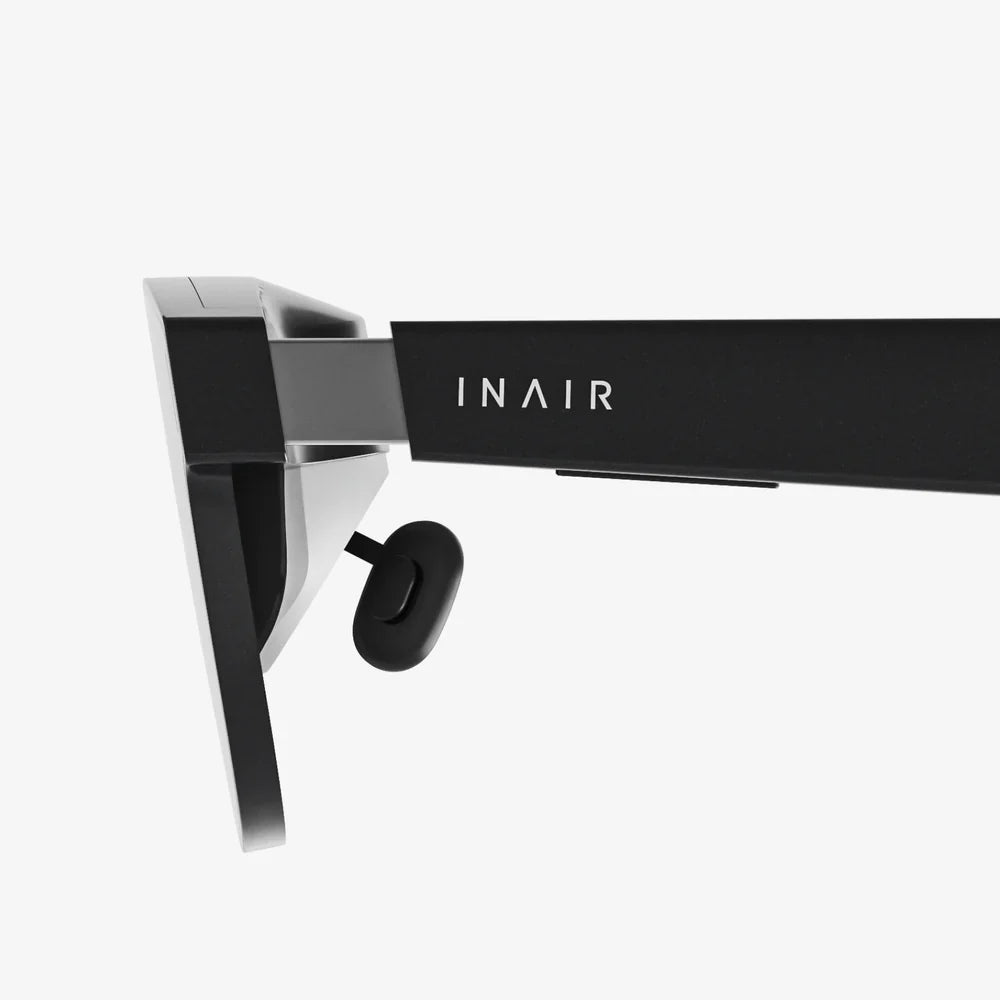
Imagine a world where the digital and the physical don't just coexist but are seamlessly interwoven, where your living room can transform into a prehistoric jungle teeming with life one moment and a sophisticated design studio the next. This isn't a distant sci-fi fantasy; it's the imminent future being unlocked by a new generation of immersive technology. The race to merge VR AR goggles into a single, unified platform represents the most significant leap in computing since the advent of the smartphone, promising to fundamentally alter how we work, learn, play, and connect. The line between what's real and what's virtual is about to become beautifully, brilliantly blurred.
The Historical Divide: A Tale of Two Realities
For decades, virtual reality (VR) and augmented reality (AR) have existed as distinct, parallel paths in the evolution of immersive tech. Virtual reality is an all-encompassing, digital experience. By donning a headset, users are fully transported to a computer-generated world, completely isolated from their physical surroundings. This immersion is perfect for applications requiring total focus, like deep-sea exploration simulators for training marine biologists or intricate virtual prototypes for engineers.
Augmented reality, on the other hand, takes a different approach. Rather than replacing the real world, it enhances it by overlaying digital information—images, data, 3D models—onto the user's view of their actual environment. This technology, popularized by smartphone apps and early smart glasses, is incredibly powerful for contextual tasks. A mechanic might see repair instructions superimposed on a faulty engine, or a tourist could see historical figures reenacting events on the very street they're standing on.
Despite their individual strengths, this separation created a technological schism. Developers had to choose a camp, consumers faced a purchasing dilemma, and the full potential of spatial computing remained fragmented. The true power lies not in isolation, but in integration.
The Technological Symphony: How Merging is Achieved
Creating a single device that can fluidly transition between fully virtual and richly augmented experiences is a monumental engineering challenge. It requires a symphony of advanced technologies working in perfect harmony.
At the heart of these merged devices are sophisticated sensor arrays. High-resolution cameras perform simultaneous localization and mapping (SLAM), constantly scanning the environment to understand its geometry and the user's position within it. This precise tracking is what allows digital objects to appear anchored to the real world—a virtual pet that convincingly hides under your actual couch, or a navigation arrow painted onto the sidewalk ahead of you.
The visual experience is delivered through a combination of cutting-edge display technologies. Many emerging devices use high-transparency microLED displays or advanced pancake lenses paired with video pass-through. This means the user sees the real world through cameras, and the headset then augments that video feed with digital content. This method allows for incredibly convincing mixed reality, as the device can dynamically alter the opacity of digital objects, making them appear solid or semi-transparent, and can even occlude real-world objects behind virtual ones for a perfect blend.
Beyond Novelty: The Transformative Applications
The value of merged reality goggles extends far beyond flashy demos and gaming. It is poised to revolutionize entire industries.
Education and Training
Imagine a medical student practicing a complex surgical procedure on a hyper-realistic, virtual patient. With a gesture, they can peel back layers of tissue, but then seamlessly switch their view to see the procedure overlaid onto a physical medical mannequin, blending tactile feedback with visual information. History lessons transform from reading about ancient Rome to walking through a digitally reconstructed Forum, with classmates appearing as avatars beside you. This blended learning model enhances retention, understanding, and engagement in ways textbooks never could.
Remote Collaboration and the Future of Work
The concept of remote work will be redefined. Instead of a grid of faces on a video call, colleagues from across the globe can appear as life-like avatars in your office or home. You can collaboratively interact with a 3D model of a new product design, making adjustments in real-time as if you were all gathered around the same physical prototype. A factory expert stationed in another country can see what a local technician sees and annotate the machinery with arrows, instructions, and warnings, effectively guiding their hands from thousands of miles away. This dissolves geographical barriers and creates a palpable sense of shared presence.
Design and Retail
Architects and interior designers can project their full-scale models into an empty building lot or a client's living room. Clients can walk through the proposed design, change wall colors with a voice command, or rearrange virtual furniture to see how it fits and looks before a single physical resource is expended. Similarly, shoppers could try on clothes virtually, see how a new sofa fits their décor, or even test-drive a car, all from their home, drastically reducing return rates and enhancing consumer confidence.
Navigating the Ethical and Social Landscape
With such profound power comes significant responsibility. The ability to seamlessly alter our perception of reality introduces a host of ethical questions that society must grapple with.
Data Privacy and Security: These devices are data collection powerhouses. They see what we see, map our homes and workplaces, and track our movements and interactions. Who owns this incredibly intimate data? How is it stored, secured, and used? Robust regulations and transparent data policies will be critical to prevent misuse and protect user privacy.
The Reality Divide: As with any transformative technology, there is a risk of exacerbating social and economic inequalities. Will access to these powerful tools for education and professional advancement be widespread, or will they create a new class of haves and have-nots? Ensuring equitable access will be a key challenge.
Psychological Impact: When the line between real and virtual becomes so thin, what are the long-term effects on our psychology and social behaviors? Will we become desensitized to physical interactions? Could these technologies be used for manipulative advertising or even more nefarious forms of persuasion? Continuous research and open dialogue are essential to navigate this uncharted territory safely.
The Future is Phygital: What Lies Ahead
The current generation of devices is just the beginning. The trajectory points towards increasingly smaller, lighter, and more powerful form factors, eventually evolving towards sleek glasses that look no different from standard eyewear. Advances in artificial intelligence will make interactions more intuitive, allowing us to control these worlds with our thoughts or subtle gestures. The concept of the "phygital"—a true fusion of physical and digital—will become the norm, giving rise to new art forms, social platforms, and economic models we can only begin to imagine.
The journey to merge VR AR goggles is about more than just convenience; it's about creating a more intuitive and powerful extension of human capability. It’s the final piece in the puzzle of spatial computing, offering a single lens through which to view, interact with, and learn from a universe of information. The devices now entering the market are the primitive ancestors of what will become our primary portal to the digital universe. The boundary between the world we are born into and the worlds we can create is dissolving, and on the other side awaits a new, limitless dimension of human experience. The door is opening; are you ready to step through?
Share:
Cheap Augmented Reality Device: Democratizing the Digital Overlay for the Masses
Hologram Virtual Meeting The Future of Remote Collaboration is Here