Imagine a world where the digital and physical seamlessly merge, where your morning meeting is held on a virtual Martian landscape, and your afternoon museum tour features dinosaurs roaring in your living room. This is the promise of the metaverse, a persistent, interconnected network of virtual spaces. But the gateway to this brave new world is being built on two distinct technological pillars: Augmented Reality (AR) and Virtual Reality (VR). While often mentioned in the same breath, they represent fundamentally different philosophies for blending reality with computation. The battle for the soul of our digital future isn't just about hardware; it's a philosophical clash between enhancing our world and replacing it entirely.
Defining the Realms: AR and VR Under the Microscope
To understand their roles in the metaverse, we must first strip away the marketing hype and define these technologies at their core.
Virtual Reality (VR) is the technology of immersion. It operates on a simple premise: to block out the physical world entirely and transport the user's senses into a fully digital, computer-generated environment. This is achieved through a head-mounted display (HMD) that encompasses the user's field of view, paired with headphones for spatial audio and controllers for interaction. The goal is presence—the convincing and often breathtaking sensation of actually "being there" in the virtual space. From soaring through fantasy landscapes to performing intricate surgical simulations, VR is about creating entirely new realities from scratch.
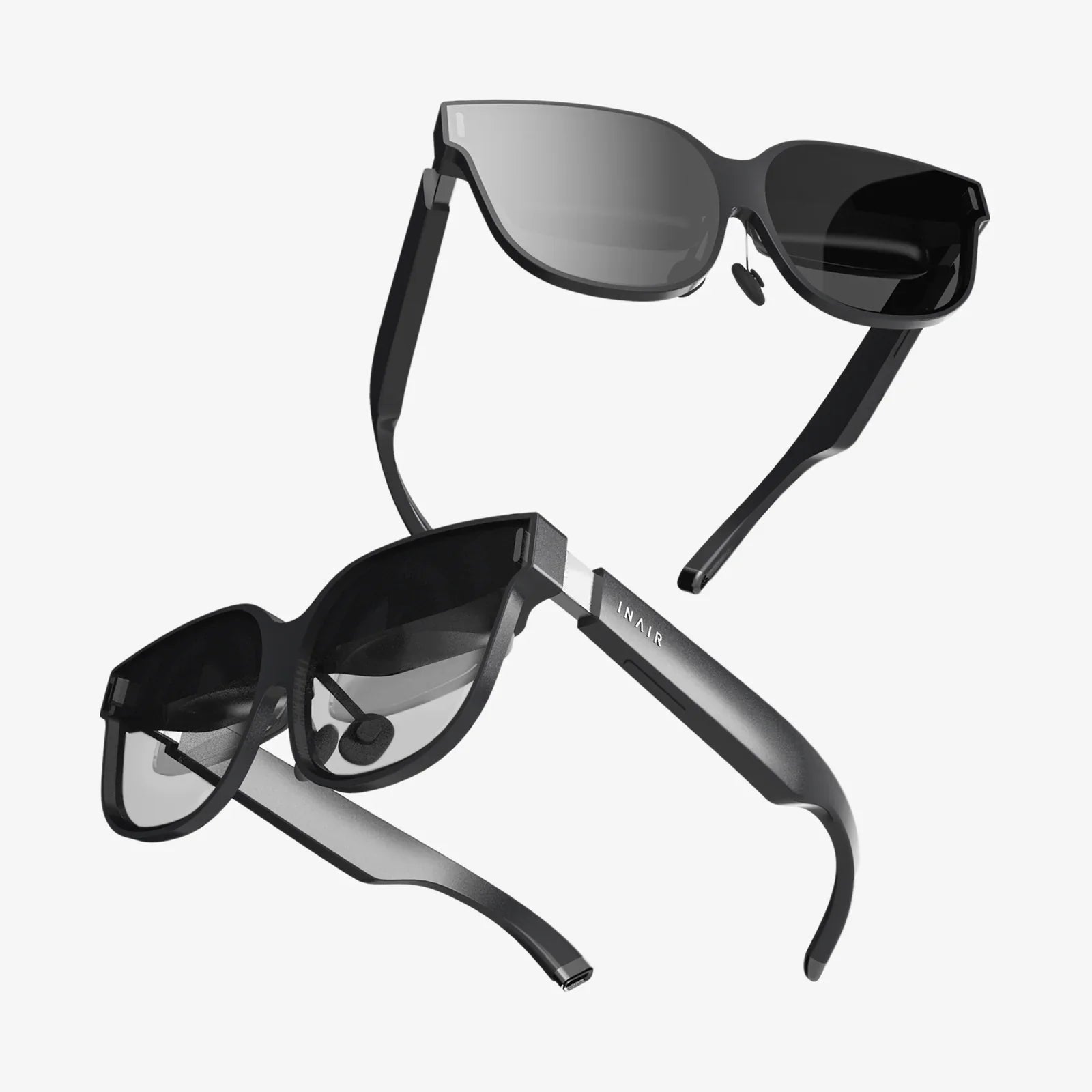
Augmented Reality (AR), in contrast, is the technology of augmentation. Instead of replacing the real world, AR overlays digital information—images, data, 3D models—onto the user's view of their physical surroundings. The real world remains the foundation, enhanced and annotated by a layer of interactive computation. This can be experienced through transparent glasses, smartphone cameras, or even heads-up displays in car windshields. AR's power lies in context; it delivers information and experiences precisely where and when they are most relevant, turning the entire world into a potential interface.
The Philosophical Divide: Replacement vs. Enhancement
This technical distinction reveals a deeper philosophical schism. VR is fundamentally escapist. It offers a clean break from the constraints, mundanity, and limitations of physical reality. It is a digital retreat, a blank canvas for ultimate creativity and experiences impossible in the real world. Its value proposition is total control over an environment.
AR, however, is utilitarian and integrative. It seeks not to help us escape our world but to make us more powerful, informed, and efficient within it. It aims to bridge the gap between the vast digital cloud of information and our immediate physical context. Its value proposition is relevance, connecting data to the objects and places right in front of us.
This core difference dictates their ideal applications. VR excels in gaming, immersive training simulations for high-risk jobs (like piloting or surgery), virtual tourism, and deep, focused storytelling. AR, on the other hand, is revolutionizing fields like architecture (visualizing buildings on empty plots), remote assistance (where an expert can guide your hands with virtual annotations), navigation (with arrows painted onto the street), and retail (trying on clothes or placing furniture in your home virtually).
The Technical Hurdles: Different Paths, Different Challenges
Both paths to the metaverse are fraught with immense technical challenges, though they differ in nature.
VR's Grand Challenges:
-
The Comfort Paradox: Achieving true immersion requires bulky hardware with high-resolution displays, powerful processors, and precise tracking systems. This often leads to headsets that are heavy, tethered, and cause fatigue or motion sickness—the absolute antithesis of comfort and long-term use.
-
The Isolation Problem: By its very nature, VR severs the user from their physical environment and the people in it. This creates social isolation and makes it difficult to use for extended periods in a home or office setting.
-
The Realism Gap: While graphics are improving, achieving photorealistic avatars and environments in real-time, alongside convincing physics and haptic feedback, remains a monumental task. The "uncanny valley" is still a significant barrier.
AR's Daunting Obstacles:
-
The Holy Grail: Socially Acceptable Glasses: For AR to become ubiquitous, it must be packaged into a form factor people will actually wear all day: something akin to regular eyeglasses. This requires overcoming colossal miniaturization challenges, packing batteries, processors, projectors, and sensors into a lightweight frame.
-
Perception is Everything: AR must understand the world at a deep level. This requires persistent, real-time mapping and understanding of geometry, surfaces, lighting, and occlusion (ensuring digital objects are correctly hidden by real ones). A digital dragon must not float in front of your couch; it must seem to stand behind it.
-
The Context Conundrum: AR's greatest strength is also its biggest challenge. Filtering the vast digital universe to deliver only the most relevant, useful information without creating a overwhelming, spam-filled nightmare of visual noise is a profound software and AI problem.
The Metaverse: A Symphony, Not a Solo
The popular narrative often pits AR and VR against each other in a winner-take-all battle for the metaverse. This is a profound misconception. The metaverse is unlikely to be a single, monolithic platform defined by one technology. Instead, it will be a spectrum of experiences, and both AR and VR will be essential, complementary gateways.
Think of it not as AR vs. VR for the metaverse, but rather AR and VR for the metaverse.
There will be times for deep immersion. You will use a powerful, all-encompassing VR headset to attend a concert with friends from across the globe, to train on a virtual machine, or to explore a fantasy game world. You are choosing to leave your physical reality behind for a specific purpose.
And there will be times for augmentation. You will wear sleek AR glasses throughout your day. They will help you navigate a new city, translate street signs instantly, display a recipe while you cook, and allow a 3D model of an engine to appear on your garage workbench for repair. Later, a friend might appear as a photorealistic hologram sitting on your sofa for a chat, their digital presence anchored perfectly in your real world.
Critically, these experiences will be connected. Your avatar, identity, digital assets, and currency will be persistent whether you access the metaverse through AR or VR. You might design a virtual sculpture in VR, then place it in your physical living room using AR for guests to admire. You might review a virtual architectural model in VR with colleagues before using AR to walk the future construction site and see the model overlaid on the empty lot. The boundaries between the two will blur into a continuum of mixed reality (MR).
The Social and Ethical Frontier
Converging these technologies into a single, persistent metaverse raises profound questions that extend far beyond processing power.
With AR, who gets to decide what digital information is overlaid on our shared physical reality? Will public spaces become a contested battleground for digital advertising? Could we see a world of information haves and have-nots, where those who can afford premium AR filters see a radically different—and more advantageous—world than those who cannot? The potential for both incredible utility and pervasive surveillance is immense.
With VR, as experiences become more immersive and compelling, what is the risk of mass-scale addiction and withdrawal from physical society? If you can be anyone and do anything in a virtual world, what happens to the motivation to improve our tangible, shared reality? The implications for mental health, relationships, and even our sense of self are uncharted territory.
Both technologies will generate unprecedented amounts of biometric and behavioral data—where we look, how we react, even our pupil dilation and brainwaves. The ownership and security of this intimate data will be one of the defining ethical battles of the next decade.
The Future is a Spectrum
The journey ahead is not a straight line but an expanding spectrum of experiences. On one end, pure physical reality. On the other, pure virtual reality. In between exists a vast space of mixed reality, where digital and physical objects coexist and interact in real time. Our movement across this spectrum will be fluid, dictated by our needs, desires, and context in each moment.
The ultimate endpoint may not be a choice between augmented reality and virtual reality, but the emergence of a single device—perhaps neural in nature—that can seamlessly shift between full immersion and subtle augmentation, giving us ultimate agency over our perception of reality itself. We will not just access the metaverse; we will curate our own blend of real and virtual, crafting a personalized reality that enhances our humanity rather than diminishing it. The future isn't about leaving the real world behind or merely annotating it; it's about mastering the art of blending them into a reality richer than either could be alone.
The door to the next digital revolution is opening, and it has two handles: one that brings the digital into your world, and another that takes you entirely into the digital. Which will you reach for first? The most powerful experiences may lie not at the extremes, but in the fluid, dynamic space right between them.


Share:
Can AI Choose My Glasses? The Future of Eyewear Selection is Here
Augmented Reality Market: Reshaping Reality and Redefining Industries