


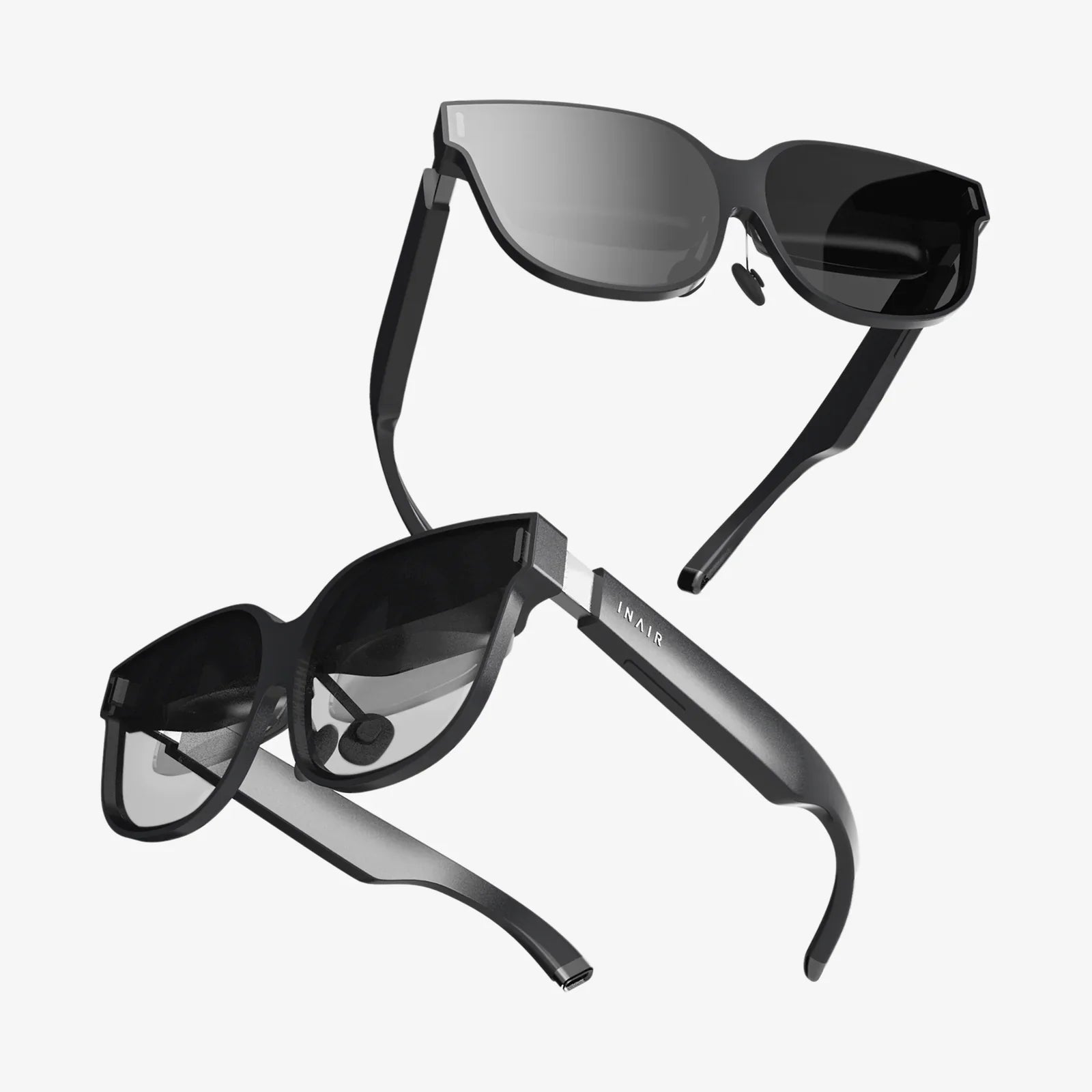
- by wangfred
Methodologies Used in Augmented Reality: A Deep Dive into the Digital Overlay
- by wangfred
Imagine a world where digital information doesn't just live on a screen but is seamlessly woven into the fabric of your physical reality, enhancing everything from how you navigate a city to how you learn a new skill. This is the promise of augmented reality (AR), a technology that has evolved from a science fiction fantasy into a powerful tool reshaping industries. But this magic doesn't happen by chance; it is the product of a complex symphony of sophisticated methodologies working in concert to perceive, understand, and augment our world. The journey from a blank slate of reality to an information-rich overlay is a fascinating technical ballet, and understanding the core methodologies used in augmented reality is key to appreciating its present capabilities and future potential.
Before delving into specific techniques, it's crucial to understand the three fundamental pillars that underpin all AR methodologies. These processes happen in a continuous, real-time loop, creating the illusion of a stable and integrated augmented experience.
Tracking: This is the AR system's way of answering the questions: "Where am I?" and "What am I looking at?" Tracking involves precisely determining the user's position and orientation (collectively known as pose) in relation to their environment, as well as identifying specific objects or surfaces. It is the most critical step, as any error here leads to digital content that appears to jitter, drift, or misalign with the real world, instantly breaking the sense of immersion.
Registration: Once the environment is understood, registration is the process of aligning and anchoring the virtual content to a specific point in the real world. This ensures that a virtual character sits correctly on a real chair or that an information panel stays fixed to a machine part, even as the user moves around.
Rendering: This is the final step where the virtual objects are generated and composited into the user's view. Rendering must account for lighting, occlusion (where real objects block virtual ones and vice-versa), and perspective to create a photorealistic and believable blend of the two worlds.
No single methodology operates in isolation. Modern AR systems employ a technique called sensor fusion, which combines data from multiple sources to create a more accurate and robust understanding of the environment than any single sensor could achieve alone. The primary sensors include:
An algorithm fuses the high-frequency IMU data with the accurate but slower visual data from the camera, ensuring smooth and stable tracking even during rapid movements.
One of the earliest and most straightforward methodologies is marker-based tracking, also known as image target or fiducial marker tracking. This method relies on predefined, high-contrast visual patterns (like a QR code or a custom symbol) that are placed in the physical environment.
How it Works: The device's camera continuously scans the field of view. When it detects a known marker, it analyzes the marker's unique pattern and its apparent size and deformation in the camera's view. By interpreting this deformation, the system can calculate the precise 3D position and orientation of the camera relative to the marker. Virtual content is then registered to the marker's location.
Advantages: It is highly accurate, reliable, and computationally inexpensive. It provides a stable anchor point, making it ideal for controlled environments like museums, trade shows, or for industrial assembly instructions.
Disadvantages: It requires forethought and the physical placement of markers, which can be intrusive. The experience is limited to the marker's immediate vicinity and fails if the marker is obscured, damaged, or out of view.
To move beyond the constraints of markers, the industry developed markerless tracking methodologies, which allow digital content to be placed anywhere in the environment without prior setup. This is a broad category encompassing several techniques.
SLAM is arguably the most revolutionary methodology in modern AR. It enables a device to simultaneously map an unknown environment while tracking its own location within that map in real-time.
How it Works: As the user moves through a space, the SLAM algorithm extracts distinctive visual features (like corners, edges, or unique patterns) from the camera feed. It tracks how these features move between frames to estimate the camera's motion. Concurrently, it uses this motion data to triangulate the 3D position of these features, gradually building a sparse point cloud map of the environment. This map is constantly refined and used to localize the device within it on subsequent visits. This allows virtual objects to be persistently placed in a specific spot, as the device always knows its position relative to the stored map.
Applications: SLAM is the backbone of most modern mobile AR experiences, from furniture placement apps that remember where you put a virtual sofa to immersive games that turn your living room into a digital playground.
For content to interact realistically with the world, it needs to be placed on surfaces. Plane finding algorithms analyze the spatial data (from SLAM or a depth sensor) to identify flat, horizontal, and vertical surfaces like floors, tables, and walls.
How it Works: By processing the 3D point cloud, the algorithm clusters points that lie on the same geometric plane. It then defines a bounded area (a detected plane) onto which virtual objects can be anchored. This is why you can tap on your floor in an AR app and have a virtual character appear to stand on it stably.
This is the next frontier of AR methodology: moving from understanding geometry to understanding meaning. Instead of just seeing a flat surface, the AR system can recognize, "This is a television," or "This is a car engine."
How it Works: This is primarily driven by convolutional neural networks (CNNs), a type of deep learning model trained on vast datasets of labeled images. The CNN analyzes the camera feed to identify specific objects or classes of objects. Once an object is recognized, relevant information can be attached to it. For example, pointing your device at a printer could overlay step-by-step instructions for clearing a paper jam, directly onto the printer's components.
While most consumer AR is experienced through screens (smartphones, tablets, headsets), another methodology bypasses screens altogether: projection-based AR. This technique uses digital projectors to cast light directly onto physical surfaces, altering their appearance.
How it Works: A projector, often coupled with a depth sensor and camera, is calibrated to a specific space. It can then project images, interfaces, or instructions onto surfaces. Advanced systems can even compensate for the geometry and color of the surface to make the projection appear correct (a technique called projection mapping). Some systems can even project interactive interfaces that respond to touch or gesture.
Applications: This is widely used in industrial settings for assembly guidance, where hands-free operation is critical. It can project wiring diagrams directly onto an assembly panel or highlight exactly where a worker should install a part. It is also popular in immersive art installations and stage performances.
This methodology involves replacing the original view of an object with a newly augmented view of that same object. This requires not just recognizing the object but also understanding its geometry to perfectly replace it.
How it Works: Using object recognition, the system identifies a target object. It then uses a detailed 3D model of that object to render a replacement—for instance, a new virtual upholstery pattern on a real couch or a different virtual color for a real car. A critical sub-methodology here is occlusion handling, where the AR system understands the depth ordering of real and virtual objects. This ensures that a real coffee cup on a virtual table correctly obscures the part of the table it sits on, a vital detail for realism.
A simpler but highly effective methodology is to augment the real world by outlining or highlighting specific elements within it. This is less about adding new 3D objects and more about annotating existing ones.
How it Works: Using object recognition or semantic segmentation (where each pixel in an image is classified, e.g., 'person', 'car', 'road'), the system identifies the boundaries of a specific object. It then draws a glowing outline, a halo of light, or a highlighted overlay around or on top of that object. This is extremely useful for drawing attention, such as highlighting a specific tool in a cluttered workshop or outlining a species of bird in a nature app.
This methodology ties digital content to specific geographic coordinates. It uses a device's GPS, compass, accelerometer, and gyroscope to determine the user's precise location and heading.
How it Works: Digital content is geotagged to a specific longitude and latitude. As the user moves through the world, their device calculates its position and orientation. When the user points their device in the direction of the geotagged content, it appears superimposed on the live camera view. The content's size and distance are based on its predefined location, not on visual features in the immediate environment.
Applications: This is the technology behind apps that show historical information when you point your phone at a landmark, or gaming apps that scatter virtual creatures throughout a city park for players to find.
The most powerful AR experiences are not built on a single methodology but on a fusion of them. A single app might use SLAM to map a room, plane detection to find a table, object recognition to identify a specific product on that table, and then superimposition to show that product's internal components. Artificial intelligence, particularly machine learning and computer vision, is the glue that binds these methodologies together, making them faster, more accurate, and more context-aware.
AI models are now used to improve SLAM's robustness, to recognize a wider array of objects with greater speed, and to predict user intent. The future of AR methodology lies in developing even more advanced AI-driven spatial understanding—systems that don't just see surfaces but understand the physics, semantics, and affordances of an entire scene, enabling truly intelligent and contextually relevant augmentation.
The invisible frameworks of tracking, mapping, and rendering are what transform a simple device into a window to an enhanced world. As these methodologies continue to evolve, becoming more precise, efficient, and intelligent, the line between our digital and physical lives will not just blur—it will fundamentally disappear, creating a new layer of reality limited only by our imagination.
Share:
Can AI Glasses Translate? The Future of Real-Time Communication is Here
AI Smart Glasses Wearable Technology is Redefining Human Interaction with the Digital World