


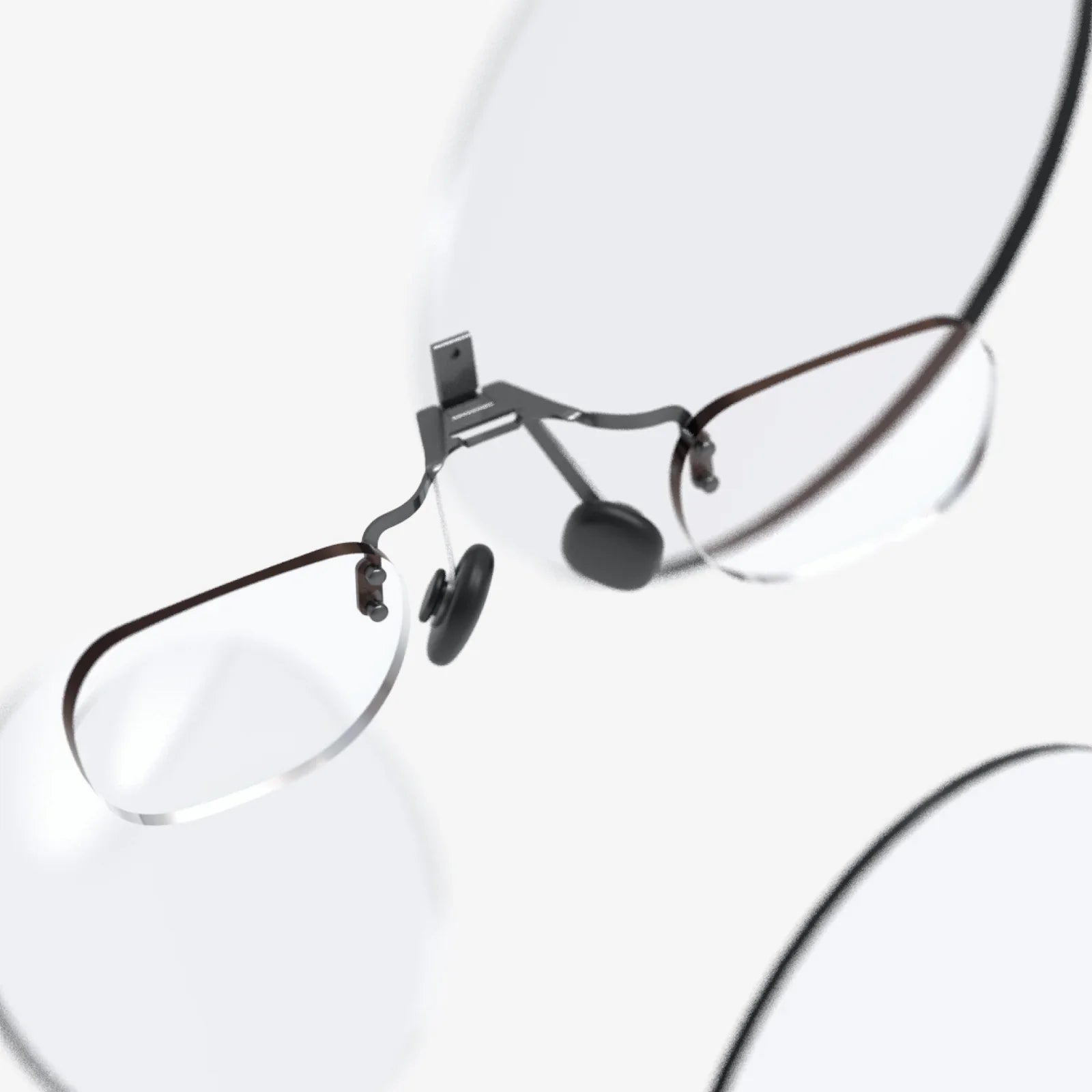
Imagine a world where digital information is seamlessly woven into the fabric of our reality, where surgeons see vital statistics overlaid on their field of view, where engineers manipulate 3D blueprints with a wave of their hand, and where the screens we stare at all day vanish, replaced by lightweight glasses that project a cinema-sized display directly onto our retinas. This is not a distant science fiction fantasy; it is the imminent future being built today, pixel by microscopic pixel, by the rapidly advancing and explosively growing microdisplay technology market. This market represents the critical frontier in our visual evolution, pushing the boundaries of how we interact with information, entertainment, and each other.
The Engine of Innovation: What is a Microdisplay?
At its core, a microdisplay is a miniature screen, typically measuring less than two inches diagonally. But to call it merely a 'small screen' is a profound understatement. It is an incredibly dense array of pixels, often packed with a resolution that far surpasses that of large-format televisions. These are not displays designed for direct viewing in the traditional sense. Instead, they are the essential light engines at the heart of an entire class of modern visual systems. Their function is to generate a high-quality image that is then magnified and presented to the user through sophisticated optics, creating the illusion of a much larger screen floating in space. The creation of these devices involves some of the most precise and advanced manufacturing processes on the planet, leveraging semiconductor fabrication techniques to build circuits and light-emitting or light-modulating elements at a microscopic scale.
Deconstructing the Market: Core Technologies and Their Proponents
The microdisplay technology market is not a monolith; it is a vibrant and competitive ecosystem segmented by the underlying technology that brings the pixels to life. Each technology offers a distinct set of advantages, trade-offs, and ideal applications, creating a diverse landscape of solutions.
Liquid Crystal on Silicon (LCoS)
LCoS is a reflective technology that combines the principles of traditional liquid crystals with the reflective power of a silicon backplane. In an LCoS microdisplay, a layer of liquid crystal is applied directly to a reflective silicon mirror substrate. Electrical signals applied to this substrate manipulate the liquid crystals, controlling the polarization of light reflected from the mirror. When combined with polarizing filters, this manipulation translates into precise control over the intensity of each pixel. LCoS is renowned for its ability to produce exceptionally high-resolution images with excellent color fidelity and deep black levels. It has been a long-standing favorite for high-end projectors and is making significant inroads into head-mounted displays for enterprise and military applications where image quality is paramount.
Organic Light-Emitting Diode on Silicon (OLEDoS)
OLEDoS represents a direct emissive technology. It integrates tiny, self-illuminating OLED pixels directly onto a single-crystal silicon wafer. This approach eliminates the need for a separate backlight or complex light modulation, as each individual pixel generates its own light. The result is a microdisplay with unparalleled contrast ratios, as pixels can be turned completely off to achieve true black. OLEDoS microdisplays are known for their vibrant colors, high brightness, and fast response times, which are critical for avoiding motion blur. Their primary challenge has historically been lifespan and susceptibility to burn-in, but material science advancements are steadily overcoming these hurdles. This technology is a leading contender for consumer-grade augmented reality and virtual reality headsets, where its compact form factor and stunning image quality are highly valued.
Micro-Light Emitting Diode (MicroLED)
Widely considered the next frontier in display technology, MicroLED is an emissive technology that uses microscopic inorganic light-emitting diodes to form each pixel. Like OLEDoS, it requires no backlight, but it uses traditional LED materials that are inherently more stable and efficient. MicroLED promises the best of all worlds: the perfect blacks and fast response times of OLED, combined with极高的亮度水平, exceptional energy efficiency, and a long operational lifespan with no risk of burn-in. The monumental challenge, and the reason it is not yet ubiquitous, lies in the manufacturing process. Mass transferring millions of microscopic LEDs from a growth wafer to a silicon backplane with perfect yield is an immense technical hurdle. However, the industry is investing billions to solve this, as the payoff is a display technology that could dominate the next decade.
The Unstoppable Surge: Key Market Drivers and Growth Catalysts
The microdisplay technology market is experiencing a compound annual growth rate that significantly outpaces most other technology sectors. This explosive growth is not happening in a vacuum; it is being fueled by a powerful convergence of technological readiness, consumer demand, and industrial necessity.
The single largest catalyst is the relentless pursuit of Augmented Reality (AR) and Virtual Reality (VR). Once confined to gaming and niche prototypes, these technologies are now being deployed across every major industry. AR smart glasses, in particular, require microdisplays that are bright enough to overlay digital information onto the real world, efficient enough to run on a small battery, and sharp enough to render text and graphics clearly. The entire enterprise sector—from manufacturing and logistics to healthcare and field service—is adopting AR for remote expert guidance, digital work instructions, and hands-free data access, creating an insatiable demand for advanced microdisplays.
Beyond AR/VR, the market is propelled by advancements in other established sectors. Military and Aerospace applications continue to be a bedrock customer. Heads-up displays (HUDs) in fighter jets and helmet-mounted displays for pilots and soldiers rely on rugged, ultra-high-brightness microdisplays to present critical flight and tactical data. The medical field is another critical adopter, using microdisplay-based surgical headgear to provide surgeons with a magnified, high-resolution view of the operative field, often overlayed with patient vitals or pre-operative scans. Furthermore, the market for ultra-portable and laser projectors, including embedded pico projectors in mobile devices, continues to grow, all powered by LCoS and other microdisplay engines.
Navigating the Labyrinth: Challenges and Constraints
Despite its promising trajectory, the path forward for the microdisplay technology market is fraught with significant technical and commercial challenges. The infamous 'resolution, brightness, and power consumption' trilemma remains a central puzzle. It is exceptionally difficult to create a microdisplay that simultaneously offers ultra-high resolution, dazzling brightness for outdoor AR use, and miserly power consumption for all-day wearable use. Innovations often improve one at the expense of another.
Manufacturing complexity and yield rates present another colossal hurdle, especially for technologies like MicroLED. The processes are delicate, the materials are expensive, and achieving high enough yields to make the products commercially viable is a constant battle. This directly impacts the cost of the end-product. High-end microdisplays can be prohibitively expensive, limiting their adoption to premium enterprise and military applications. Bringing this cost down through innovation and economies of scale is essential for achieving mass-market consumer adoption.
Finally, the ecosystem of supporting technologies must keep pace. A perfect microdisplay is useless without equally advanced optics (waveguides for AR), powerful and efficient processing chips (GPUs and dedicated ASICs), and sophisticated tracking sensors. The industry must advance on all these fronts in unison for the user experience to be truly seamless and compelling.
A Glimpse into the Crystal Ball: Future Trends and Innovations
The future of the microdisplay technology market is blindingly bright, shaped by several key trends. We are moving beyond simply making pixels smaller and are now focused on making them smarter and more integrated. The concept of 'display-on-chip' is gaining traction, where the driving electronics and even processing elements are more deeply integrated with the display itself, reducing size, power, and latency.
Research into novel materials, such as quantum dots and perovskites, promises to unlock new levels of color gamut and light efficiency. Furthermore, the industry is exploring new architectures like meta-surface optics to control light more effectively, potentially leading to thinner and lighter optical systems for AR glasses. As these technologies mature, we will see the emergence of truly ubiquitous computing, where intelligent visual interfaces are seamlessly integrated into our eyeglasses, vehicle windshields, and even contact lenses, forever changing our relationship with the digital world.
The race is on, and the stakes are nothing less than control over the next major computing platform. The companies and technologies that succeed in solving the immense challenges of resolution, brightness, efficiency, and cost will not only dominate the microdisplay technology market but will also illuminate the path for the next generation of human-machine interaction. The tiny screen is destined to have a massive impact, projecting a new reality onto our world and fundamentally reshaping how we see everything.
Share:
Cons of Human Computer Interaction: The Hidden Costs of Our Digital Dependence
AR Supply Chain: The Invisible Revolution Reshaping Global Logistics