


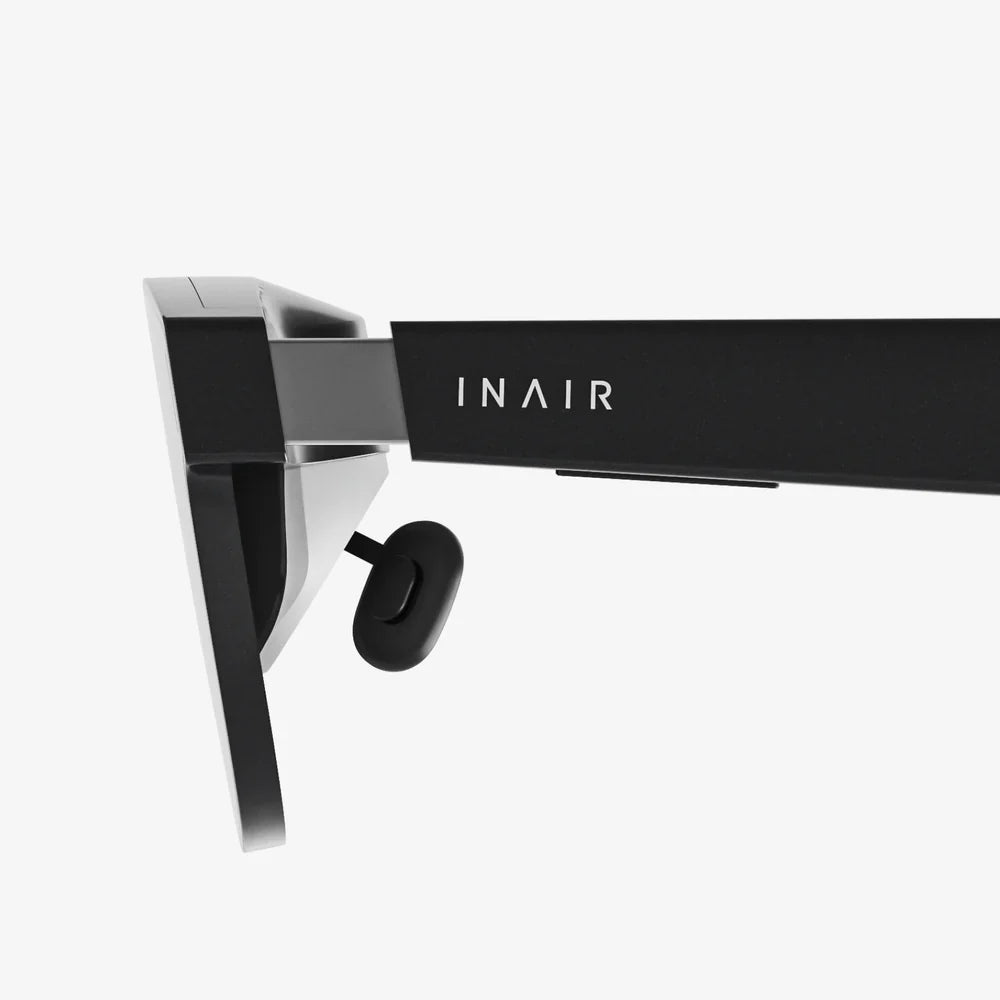
Imagine slipping on a sleek, lightweight visor and being instantly transported to a concert front row, a virtual boardroom, or a fantastical game world with crystal-clear realism that tricks your mind into believing it's all truly there. This isn't a distant sci-fi fantasy; it's the imminent future of virtual reality, and it's being built upon a technological cornerstone so tiny, you could easily mistake it for a speck of dust. The revolution in immersive computing is being powered not by the large, flashy exteriors of headsets, but by the minuscule, intricate marvels hidden within: the microdisplay. This is the story of the unseen engine that is quietly pushing the boundaries of perception and redefining what's possible in digital immersion.
The Heart of the Machine: Deconstructing the Microdisplay
At its simplest, a microdisplay is exactly what its name implies: an exceptionally small, high-resolution screen. But to call it merely a 'small screen' is a profound understatement. It is a feat of micro-engineering, a complex semiconductor device that packs millions of individual pixels into an area often smaller than a postage stamp. Unlike the display on a smartphone or monitor, a microdisplay in a VR headset is not viewed directly. Instead, its microscopic image is magnified through a sophisticated optical system—a series of lenses—that projects a vast, panoramic field of view directly onto the user's retinas.
The core challenge these devices solve is one of density and efficiency. To achieve a convincing, 'retina-quality' VR experience that eliminates the unsightly 'screen-door effect' (where users can see the gaps between pixels), a staggering number of pixels must be crammed into a tiny space. We're talking about resolutions that dwarf 4K televisions, but delivered on a canvas that is orders of magnitude smaller. This incredible pixel density, measured in pixels per inch (PPI), is the primary benchmark for microdisplay quality and is fundamental to achieving visual fidelity in VR.
A Spectrum of Light: The Technologies Behind the Pixels
Not all microdisplays are created equal. The race for visual supremacy in VR has spurred the development of several competing technologies, each with its own strengths, trade-offs, and fervent proponents.
LCD (Liquid Crystal Display)
For years, the workhorse of the VR industry has been LCD technology. Adapted from the television and monitor markets, LCD microdisplays function by using liquid crystals to modulate a bright backlight, filtering it to create colored pixels. Their primary advantage has been cost-effectiveness and the ability to achieve high resolutions at a reasonable price point. However, they suffer from slower response times, which can lead to motion blur in fast-paced scenes, and inferior contrast ratios because they cannot achieve true black—the backlight is always on, leading to a more washed-out, greyish appearance in dark environments.
OLED (Organic Light-Emitting Diode)
OLED technology represents a significant step forward. Here, each pixel is its own microscopic light source, emitting its own light and color independently. This allows OLED microdisplays to achieve perfect blacks by simply turning off individual pixels, resulting in breathtaking contrast ratios and incredibly vibrant colors. They also boast exceptionally fast response times, virtually eliminating motion blur. The trade-offs have traditionally been higher cost and the risk of 'burn-in' over very long periods, though manufacturing techniques are continually improving.
The New Challengers: MicroLED and Beyond
The next frontier is widely considered to be MicroLED. This technology takes the self-emissive principle of OLED—where each pixel generates its own light—but uses inorganic materials that are more durable, brighter, and even faster. MicroLED promises the perfect blacks and vibrant colors of OLED but with higher peak brightness (crucial for High Dynamic Range content), superior energy efficiency, and no risk of burn-in. The immense manufacturing complexity and cost of mass-producing defect-free MicroLED arrays on a micro scale is the final hurdle, but it is universally seen as the future king of display tech.
Another notable technology is LCoS (Liquid Crystal on Silicon), which uses a reflective method where liquid crystals modulate a light beam reflected off a silicon chip. It's renowned for achieving incredibly high fill ratios (minimizing gaps between pixels) and high resolutions, though it often requires a separate light source.
Why Small is Everything: The Tangible Benefits for the User
The shift from larger display panels to true microdisplays isn't just an engineering flex; it unlocks a cascade of benefits that directly transform the user experience from clunky novelty to seamless immersion.
The Pursuit of Visual Fidelity
The most obvious impact is on image quality. Higher pixel density directly annihilates the screen-door effect, replacing a grid-like view with a smooth, continuous image. This is the single most important factor in achieving the visual clarity needed for prolonged use, whether for detailed CAD design work, reading text in a virtual office, or simply believing in the reality of a virtual world. Furthermore, advancements in microdisplays enable High Dynamic Range (HDR), providing a much wider range of brightness and color, from the deep, inky shadows of a dungeon to the brilliant glare of a virtual sun.
The Form Factor Revolution
Smaller displays necessitate smaller, simpler optics. This is the key to breaking free from the bulky, front-heavy design of early VR headsets. Microdisplays enable sleek, visor-like designs that can be more comfortably worn for extended periods. Some ambitious future designs even aim for a form factor resembling everyday eyeglasses, a goal that is entirely dependent on the continued miniaturization of display technology. This shift from a 'box on your face' to a 'window on the world' is critical for mainstream adoption.
Power Efficiency and Performance
Driving a small, high-resolution microdisplay requires significantly less power than illuminating a large smartphone-style panel. This reduces heat generation inside the headset—a major contributor to user discomfort—and extends battery life for untethered and standalone devices. For PC-powered headsets, it allows gamers and professionals to push rendering fidelity higher, as the display itself is no longer the primary bottleneck it once was.
Beyond Gaming: The Expansive Universe of Applications
While immersive gaming is the most famous application, the implications of high-fidelity microdisplay-based VR stretch far beyond entertainment, poised to transform entire industries.
- Enterprise and Design: Architects walk clients through unbuilt structures. Automotive designers examine full-scale 3D models of new cars. Surgeons train on virtual organs with life-like accuracy. All of these scenarios demand the precise, unambiguous visualization that only high-PPD microdisplays can provide.
- Medicine and Therapy: VR is used for exposure therapy, treating PTSD, phobias, and anxiety disorders. The effectiveness of this treatment is deeply tied to the patient's sense of 'presence,' which is shattered by low visual fidelity. Realistic, comfortable microdisplays are crucial for convincing the brain that the therapeutic environment is real.
- Social Connection and Remote Collaboration: The vision of the 'metaverse' as a persistent virtual space for work and socializing hinges on comfortable, long-duration use and the ability to read subtle facial expressions and body language. This requires lightweight hardware and flawless visuals to avoid fatigue and foster genuine connection.
- Education and Training: From history students exploring ancient Rome to mechanics learning to repair a complex engine, microdisplay VR can create deeply engaging and memorable educational experiences that are both safe and incredibly effective.
Peering into the Crystal Ball: The Future of Microdisplay VR
The evolution is far from over. The trajectory points towards even more astonishing capabilities on the horizon. We are moving towards varifocal and light field displays that dynamically adjust focus to mimic how human eyes work naturally, potentially solving the vergence-accommodation conflict that causes eye strain. Resolution will continue its march toward 'retinal' level and beyond, making virtual scenes indistinguishable from reality.
Perhaps the most exciting frontier is the integration of these displays with augmented reality (AR). The same microdisplay technology, coupled with advanced passthrough cameras, can power stunning mixed reality experiences, seamlessly blending digital content with the physical world. The ultimate goal is a single, lightweight device that can toggle between a fully immersive virtual environment and an augmented reality overlay on the real world, all powered by a chip-sized panel of millions of luminous pixels.
The journey of the microdisplay is a classic tale of a tiny component driving a massive revolution. It is the unsung hero, the minute masterpiece of physics and engineering that makes the grand illusion of virtual reality possible. As these technologies continue to shrink in size and grow in capability, they are quietly building the lenses through which we will learn, work, play, and connect in the decades to come. The next time you witness a breathtaking virtual vista, remember to thank the tiny, brilliant engine that made it all possible.
This invisible leap in miniaturization is what will finally make VR transcend its bulky origins, transforming it from a niche gadget into an indispensable portal to new experiences, unlocking worlds of detail and comfort we've only just begun to imagine.
Share:
Early Wearable Computers: The Pioneering Tech That Shaped Our Digital Lives
AI Definitie - Unraveling the Core Concepts and Future of Artificial Intelligence