


Imagine a world where digital information doesn't just live on a screen but is seamlessly woven into the fabric of your physical reality, where you can manipulate holographic data with your bare hands, train for complex surgeries on virtual patients, or walk through a building that hasn't been built yet. This is no longer the realm of science fiction; it is the burgeoning promise of Mixed Reality (MR), a technology poised to fundamentally reshape our interaction with the digital universe. The advantages of MR extend far beyond novelty, offering tangible, transformative benefits that are already beginning to disrupt and enhance countless aspects of our professional and personal lives.
The Blurred Line: Defining the Reality-Virtuality Continuum
To fully appreciate the advantages of Mixed Reality, one must first understand its place within the broader spectrum of immersive technologies. Often confused with its cousins, Virtual Reality (VR) and Augmented Reality (AR), MR represents a significant evolutionary step.
Virtual Reality (VR) immerses users in a completely digital environment, entirely replacing their real-world surroundings. It's a closed system, typically experienced through a headset that blocks out the physical world.
Augmented Reality (AR) overlays digital information—such as images, text, or simple animations—onto the user's view of the real world. Think of navigation arrows superimposed on a road through your smartphone camera or a digital character placed in your living room. The digital and physical elements coexist but do not interact in a complex, spatial way.
Mixed Reality (MR) is the pinnacle of this fusion. It goes beyond simple overlay to create environments where physical and digital objects co-exist and interact in real-time. MR understands the geometry of the physical world, allowing digital content to be anchored to a specific point in space. A virtual ball can bounce off your real-world table; a digital heart model can appear to sit on a real hospital gurney, and you can walk around it to view it from all angles. This ability to blend and interact is the core differentiator that unlocks its most powerful advantages.
Unprecedented Visualization and Spatial Understanding
One of the most immediate and powerful advantages of Mixed Reality is its capacity to visualize the invisible and contextualize the complex. Humans are spatial, visual creatures; we learn and understand best when we can see and manipulate objects in three dimensions.
In fields like medicine, MR allows surgeons to project 3D holograms of a patient's anatomy—derived from CT or MRI scans—directly onto the patient's body before making an incision. This provides an unparalleled level of situational awareness, transforming abstract data into a tangible, interactive guide. Medical students can practice procedures on hyper-realistic holographic patients, making mistakes without consequence and building muscle memory in a risk-free environment.
In architecture, engineering, and construction (AEC), stakeholders can walk through a full-scale, holographic model of a building design. They can see how piping runs through walls, assess sightlines, and identify potential design clashes long before ground is broken. This not only saves immense amounts of time and money but also fosters better collaboration and a deeper understanding of the project for everyone involved, from the architect to the client.
For scientific research, complex data sets—from molecular structures to astrophysical phenomena—can be brought out of the computer screen and into the room. Researchers can literally walk around a data visualization, gaining insights from perspectives that were previously impossible, fostering new hypotheses and breakthroughs.
Revolutionizing Training and Skill Development
Mixed Reality is dismantling the traditional barriers to effective training. It offers a safe, scalable, and profoundly effective platform for skill development across a vast range of industries.
Safety and Risk Mitigation: Training for high-risk professions—such as aircraft mechanics, electrical linemen, or emergency responders—has always been dangerous and expensive. MR creates perfectly simulated, high-fidelity training scenarios that are physically safe. A technician can practice repairing a complex, live electrical panel with zero risk of electrocution. A firefighter can navigate a virtual burning building, learning to make critical decisions under pressure.
Procedural Muscle Memory: The interactive nature of MR allows users to perform tasks with their hands, building crucial procedural memory. This is far more effective than reading a manual or watching a video. An employee on a manufacturing line can be guided through a complex assembly process with holographic arrows and instructions overlaid on the actual machinery, reducing errors and accelerating proficiency.
Remote Expert Guidance: Perhaps one of the most practical advantages, MR enables a paradigm shift in remote collaboration. A seasoned expert located thousands of miles away can see what a field technician sees through a shared MR view. The expert can then annotate the technician's real-world field of view with arrows, circles, and notes, literally drawing the solution onto the problem. This drastically reduces downtime, travel costs, and ensures that critical knowledge is transferred instantly and effectively.
The New Frontier of Collaboration and Remote Work
The global shift toward remote and hybrid work models has exposed the limitations of traditional video conferencing. Mixed Reality offers a compelling alternative, creating a sense of presence that flat screens cannot replicate.
Imagine a design team spread across different continents meeting in a shared virtual workspace. Instead of looking at a 3D model on a shared screen, they are all standing around the same life-sized hologram, examining it from different angles, making adjustments with gestures, and interacting with it as if it were physically present. This shared spatial context fosters a deeper, more intuitive level of collaboration and creativity.
This technology moves beyond simple avatars to potentially include realistic holographic representations of people, making a meeting feel like a true face-to-face interaction. The advantage here is a fundamental enhancement of human connection and teamwork, breaking down geographical barriers and creating a more cohesive and productive distributed workforce.
Enhancing Consumer Experiences and Retail
The commercial and consumer applications of Mixed Reality are vast and transformative, primarily by allowing users to try before they buy in an entirely new dimension.
In retail, customers can use MR to see how a piece of furniture would look and fit in their living room, how a new shade of paint would transform their walls, or how a pair of glasses would look on their face—all from the comfort of their home. This reduces purchase hesitation and product returns while providing a engaging and personalized shopping experience.
In tourism and culture, museums can use MR to bring exhibits to life. Instead of reading a placard about a dinosaur, visitors could see a holographic creature roaring and moving within the exhibition hall. Historical sites could be overlaid with digital reconstructions, allowing tourists to see ancient ruins restored to their former glory through their device. This creates deeply memorable and educational experiences that bridge the past and present.
Boosting Efficiency and Productivity in Enterprise
On the enterprise level, the advantages of Mixed Reality translate directly to the bottom line through significant gains in efficiency and productivity.
Digital Twins: MR is the perfect interface for interacting with digital twins—virtual replicas of physical assets, processes, or systems. An engineer can stand in front of a massive industrial turbine and see a real-time overlay of performance data, maintenance history, and operational metrics. They can simulate stress tests or identify potential points of failure without interrupting the physical asset's operation, enabling predictive maintenance and minimizing costly downtime.
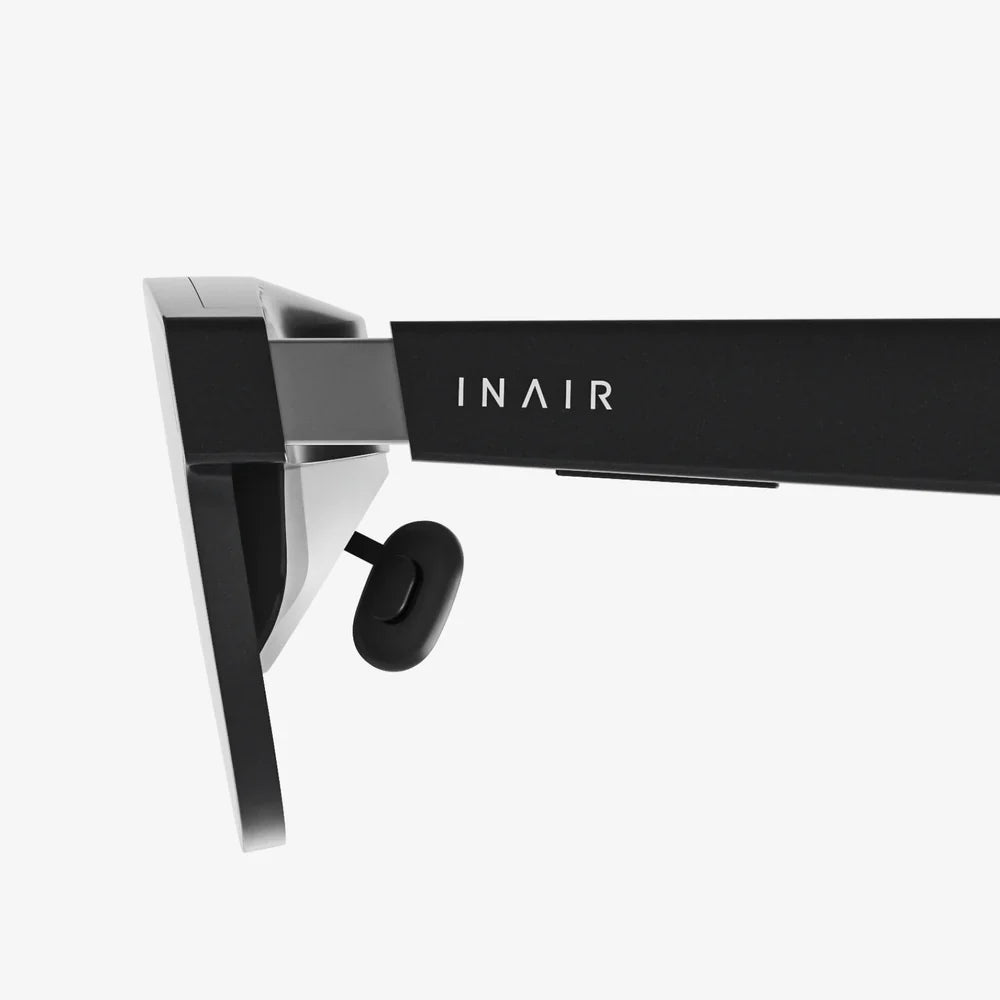
Hands-Free Information Access: In warehouses, on factory floors, and in field service, workers often need information but have their hands full. MR, often delivered through smart glasses, provides a heads-up, hands-free display of crucial information—inventory lists, assembly instructions, or shipping details—allowing workers to complete tasks more quickly and without breaking their workflow to consult a clipboard, tablet, or manual.
Challenges and the Path Forward
Despite its immense potential, the widespread adoption of Mixed Reality faces hurdles. The technology can be expensive, both in terms of hardware and the development of robust software applications. Form factor and user comfort remain a challenge, though devices are becoming lighter, more powerful, and less obtrusive. Perhaps the most significant challenge is the creation of a intuitive and natural user interface—moving beyond controllers to seamless hand-tracking, eye-tracking, and voice control is critical for mainstream acceptance.
Furthermore, societal and ethical questions regarding data privacy, digital addiction, and the long-term effects of blending realities must be thoughtfully addressed as the technology evolves.
Yet, the trajectory is clear. As processing power increases, hardware miniaturizes, and developers continue to innovate, these barriers will steadily fall. The advantages are simply too compelling to ignore. We are moving toward a future where the digital and physical are not separate realms but a continuous, integrated spectrum of experience.
The true power of Mixed Reality lies not in replacing our world, but in augmenting our human potential within it. It offers a new lens through which to see, understand, and interact with the complex layers of information that define our modern existence, promising to unlock new levels of creativity, connection, and capability that we are only just beginning to imagine.
Share:
How to Turn on Spatial Audio: The Ultimate Immersive Sound Guide
AI Gesture Control The Future of Human-Computer Interaction is at Your Fingertips