


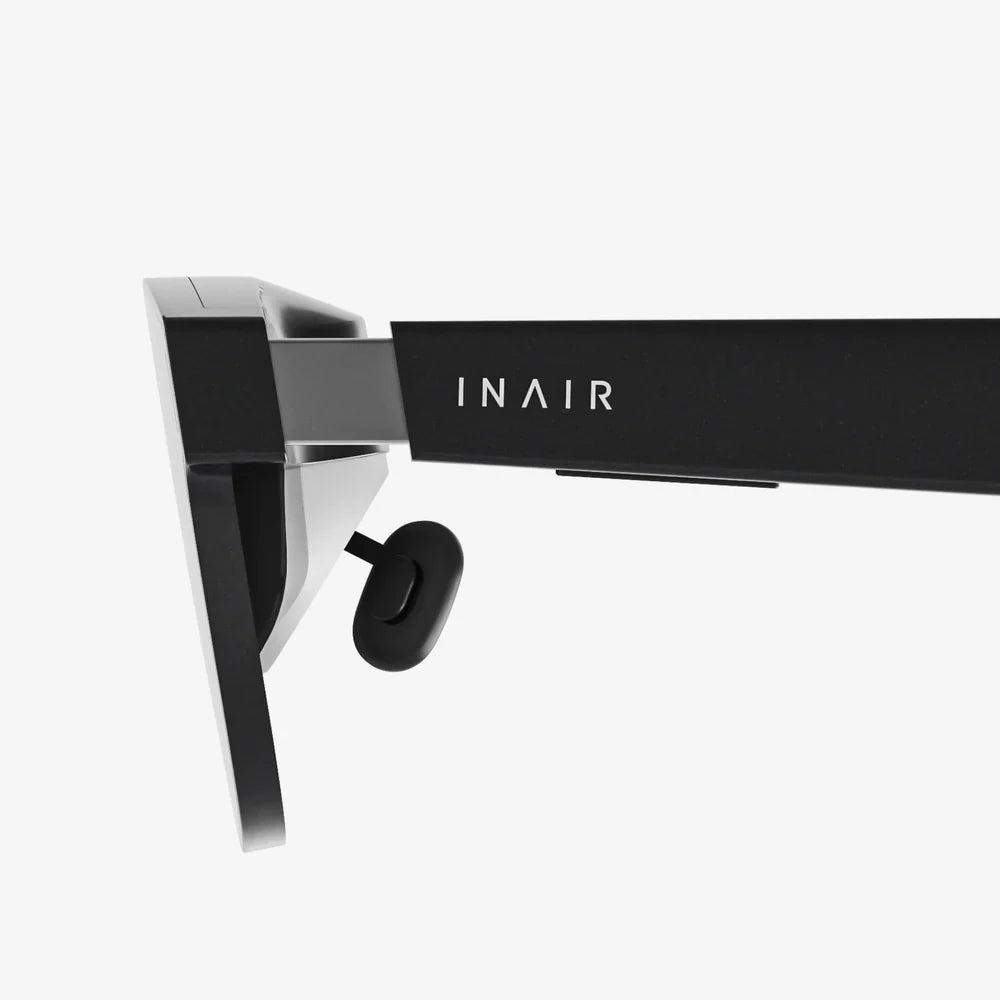
The corporate world is on the cusp of a visual computing revolution, and the catalyst is a new generation of sophisticated mixed reality headsets. No longer confined to the realms of gaming and consumer novelty, this technology is rapidly infiltrating boardrooms, factory floors, and design studios, promising to redefine how businesses operate, collaborate, and innovate. The latest enterprise news isn't about a simple hardware refresh; it's about a fundamental reimagining of workflow, training, and spatial data interaction. This isn't a glimpse into a distant future—it's the new reality taking root in enterprises today, and its implications are nothing short of transformative.
The Evolution from Novelty to Necessity
The journey of immersive technology in the enterprise has been a story of gradual, then sudden, adoption. Initial forays often involved cumbersome hardware, limited software ecosystems, and a high barrier to entry that relegated use to high-value, niche applications. Early adopters in aerospace, automotive, and heavy engineering used primitive versions for digital prototyping and complex assembly guidance, but these were isolated cases. The technology was a solution in search of widespread problems.
Today, that dynamic has flipped. The convergence of several critical technological advancements has propelled mixed reality into the mainstream enterprise conversation. The miniaturization of sensors, exponential increases in computing power, breakthroughs in display technology, and the proliferation of high-speed, low-latency connectivity like 5G have collectively solved the core limitations of the past. Modern mixed reality headsets are lighter, more powerful, and offer a seamless blend of the digital and physical worlds that feels intuitive rather than intrusive. This maturation has shifted the question for Chief Information Officers from "Why would we use this?" to "How fast can we implement it?"
Defining the Enterprise-Grade Mixed Reality Experience
What separates an enterprise-grade mixed reality headset from its consumer-oriented counterparts? The distinction lies in a suite of features designed for durability, security, and integration within complex corporate IT infrastructures.
- Robustness and Safety: Industrial environments are harsh. Devices are built to withstand dust, moisture, and accidental impacts. They often feature hot-swappable batteries for all-day operation and are certified for use in potentially hazardous locations.
- Enterprise-Grade Security: In a world where visualizing proprietary CAD designs or sensitive operational data is the norm, security is paramount. This includes hardware-level security chips, secure boot processes, and deep integration with existing identity management and mobile device management (MDM) platforms, ensuring data never leaves a protected ecosystem.
- Software Ecosystem and Manageability: It’s not just about the hardware. Enterprise solutions come with robust software platforms that allow IT departments to deploy, manage, update, and monitor a fleet of devices remotely. This includes configuring settings, pushing applications, and analyzing usage data to measure return on investment.
- User Experience for Productivity: Comfort for extended wear is critical. Enterprise devices prioritize ergonomics, often offering multiple mounting options (hard hats, safety glasses) and designed for use with prescription lenses. The user interface is built for task completion, not entertainment.
Revolutionizing Training and Skill Development
Perhaps the most immediate and impactful application of mixed reality in the enterprise is in the realm of training and onboarding. Companies across manufacturing, energy, healthcare, and field services are using these headsets to create immersive, hands-on learning experiences that are safer, faster, and more effective than traditional methods.
Imagine a new technician learning to service a complex piece of machinery. Instead of shadowing a senior engineer for weeks or relying on static PDF manuals, they don a headset. Instantly, digital instructions and arrows are overlaid onto the actual equipment, guiding them through each step. They can see animated sequences showing the disassembly of a component or a warning highlight pointing out a potential safety hazard. This "see-what-I-see" capability allows a remote expert to guide their hands, drawing circles and arrows directly into their field of view.
The benefits are profound. Training time is slashed by up to 50% in some documented cases. Knowledge retention skyrockets because learning is kinetic and visual. Mistakes become learning opportunities rather than costly errors, and training can be conducted on actual equipment without the risk of downtime or damage. Furthermore, this creates a powerful tool for capturing the tacit knowledge of a retiring workforce, preserving it in an interactive digital format for future generations.
Transforming Design, Prototyping, and Visualization
In the world of design and engineering, mixed reality is collapsing the distance between concept and reality. Architects, industrial designers, and engineers are using headsets to step inside their creations long before a single physical prototype is built.
A team of automotive designers can place a full-scale, photorealistic 3D model of a new car into an empty room. They can walk around it, peer inside, and make real-time adjustments to the curvature of a panel or the texture of a material. In architecture and construction, stakeholders can take a virtual walkthrough of a building at 1:1 scale, experiencing the flow of space and identifying potential design clashes with structural elements or HVAC systems long before ground is broken. This ability to visualize and iterate in context saves millions of dollars in prototyping costs and prevents expensive change orders during construction.
Beyond design, this capability is crucial for sales and marketing. A medical device company can show surgeons a new piece of equipment in their actual operating room, demonstrating its functionality and fit within their existing workflow. This level of immersive demonstration is far more compelling than any brochure or video, accelerating sales cycles and building customer confidence.
The Future of Remote Collaboration and the "Spatial Office"
The global shift to remote and hybrid work models has exposed the limitations of traditional video conferencing. A flat screen with talking heads is a poor substitute for the nuanced collaboration of a shared physical space. Mixed reality headsets are poised to solve this by creating a true "spatial office."
Colleagues from across the globe can meet as lifelike, volumetric avatars or holograms within a shared digital space. Instead of sharing a screen, they can interact with 3D models, data visualizations, and virtual whiteboards as if they were physically present. A product development team in Germany can inspect a prototype being held by a colleague in Japan, discussing minute details as if they were standing side-by-side. This presence-enabled collaboration fosters a deeper level of understanding and creativity that flat screens cannot replicate.
For field service, this is a game-changer. A lone field engineer facing a novel problem can stream their view to a central team of experts. Those experts can then annotate the engineer's reality, placing pins, arrows, and instructions directly onto the machinery in front of them. They can pull up schematics and historical data, floating beside the equipment for quick reference. This dramatically reduces mean time to repair, eliminates unnecessary truck rolls, and empowers a less experienced workforce to perform at an expert level.
Overcoming Barriers to Widespread Adoption
Despite the clear potential, the path to enterprise-wide adoption is not without its challenges. The initial investment in hardware and software development can be significant. Developing a compelling business case requires identifying high-value use cases with a clear return on investment, whether through reduced training time, lower operational costs, or increased sales.
Cultural adoption is another critical hurdle. Employees may be hesitant to wear headsets for extended periods or may need convincing of their utility beyond a gimmick. A successful rollout requires strong change management, executive sponsorship, and a focus on user comfort and intuitive design. Furthermore, the industry must continue to address concerns around data privacy, user safety in shared environments, and the potential for digital fatigue.
Finally, the technology itself, while advanced, is still evolving. The field of view, battery life, and processing power will continue to improve with each generation, making the devices even more comfortable and capable. The development of a richer ecosystem of off-the-shelf enterprise applications will also lower the barrier to entry for many companies.
The Road Ahead: An Integrated Digital Fabric
The future of mixed reality in the enterprise is not as a standalone island of technology but as an integral thread in a larger digital fabric. It will connect seamlessly with other core technologies like the Internet of Things (IoT), artificial intelligence (AI), and digital twins.
An engineer wearing a headset will not only see instructions but will also see real-time IoT data streams overlaid on equipment—temperature readings, pressure levels, performance metrics—allowing for predictive maintenance. AI algorithms will analyze their actions, offering proactive guidance or flagging potential errors. They will be interacting with a living, breathing digital twin of the entire operation, where a change in the virtual world can be simulated and validated before being executed in the physical one.
This convergence will create a truly intelligent and responsive enterprise, where workers are augmented with superhuman perception and knowledge, decision-making is accelerated by contextual data, and physical distance is no longer a barrier to expertise and collaboration.
The headlines may focus on the sleek new devices hitting the market, but the real enterprise news is far more profound. It's the quiet, systematic deployment of mixed reality that is fundamentally altering business processes, creating safer and more efficient workplaces, and unlocking new levels of human potential. The companies that embrace this shift today are not just buying hardware; they are investing in the operational paradigm of tomorrow, building a sustainable competitive advantage that is quite literally unseen by their competitors. The fusion of our digital and physical realities has begun, and the enterprise will never be the same.
Share:
AR Report: The Unseen Revolution Reshaping Our World
AR Data: The Invisible Digital Layer Reshaping Our Physical Reality