


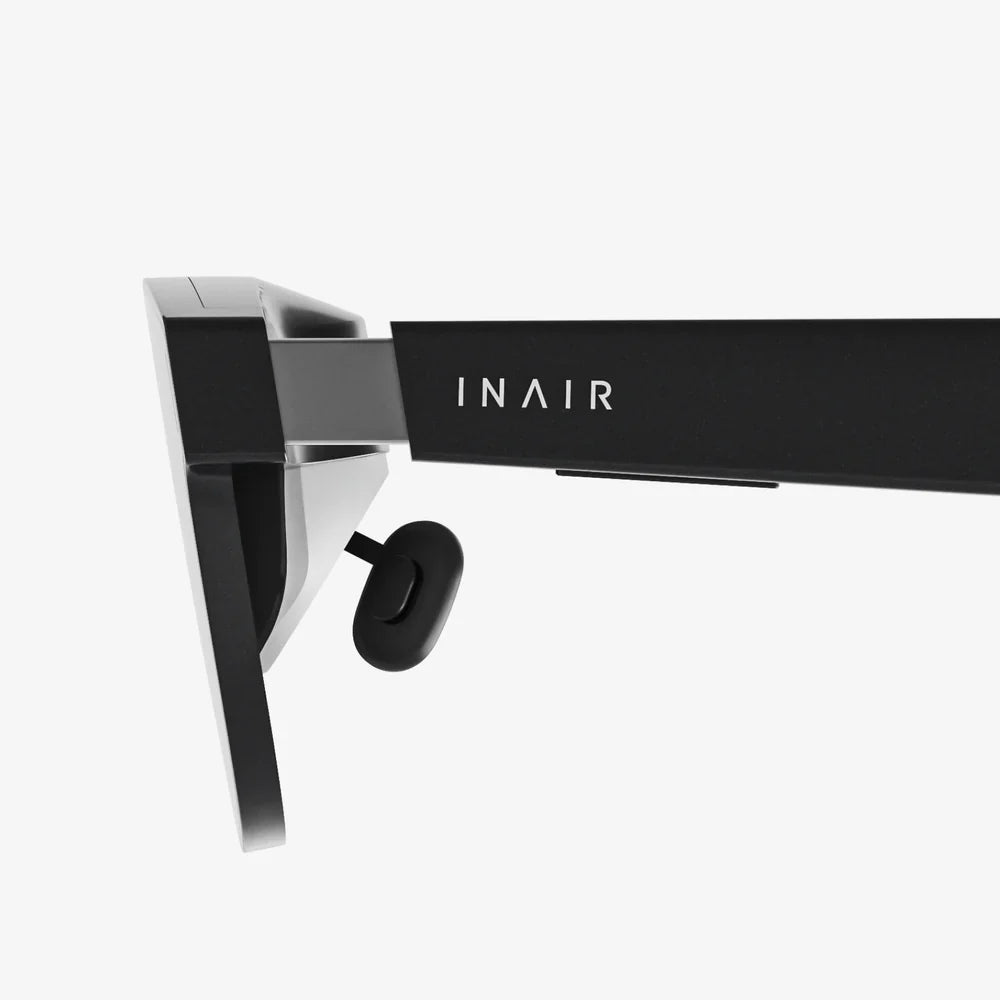
The corporate world is buzzing, and the source of the excitement isn't a stock market surge or a merger announcement—it's the quiet, strategic revolution happening on the faces of engineers, designers, and field technicians. Today's enterprise news is unequivocally dominated by the rapid evolution and deployment of mixed reality (MR) technology. This isn't about futuristic gaming or speculative tech; it's about tangible, bottom-line transformations happening right now in boardrooms, factory floors, and global supply chains. The mixed reality headset has shed its nascent consumer skin and emerged as the most powerful enterprise tool since the advent of the laptop, promising to dissolve the barriers between the digital and physical realms of business.
The Enterprise Shift: From Novelty to Necessity
The conversation around immersive technology has decisively pivoted. Where once the focus was on consumer entertainment and potential applications, today's headlines are filled with concrete case studies and significant investments from Fortune 500 companies. The enterprise sector has recognized that mixed reality offers a unique value proposition: the ability to overlay critical, contextual information onto a user's real-world environment. This capability is solving age-old industrial problems with startling efficiency.
Several key drivers are fueling this enterprise adoption surge. The global push for digital transformation, accelerated by remote work models, has forced companies to seek innovative solutions for collaboration and support. Furthermore, the increasing complexity of machinery and software requires more intuitive, hands-free guidance for a workforce that is often geographically dispersed. The return on investment (ROI) for MR deployments is becoming increasingly clear, with metrics showing dramatic reductions in error rates, travel expenses, and training times, while simultaneously boosting productivity and first-time fix rates for repairs.
Transforming the Frontlines: Remote Assistance and Field Service
One of the most compelling use cases making waves in today's enterprise news is the application of MR in remote assistance and field service. Imagine a technician facing a complex, unfamiliar piece of equipment on an offshore oil rig or a remote wind farm. Instead of lugging out massive paper manuals or squinting at a small tablet, they don a mixed reality headset.
Instantly, an expert engineer located thousands of miles away can see exactly what the technician sees through a shared visual feed. The expert can then annotate the technician's real-world view with holographic arrows, diagrams, and text, literally circling components that need adjustment or highlighting specific wires to check. This see-what-I-see
paradigm not only slashes resolution times but also democratizes expertise, allowing a single senior specialist to guide dozens of junior staff anywhere in the world without leaving their desk. The result is a monumental leap in operational efficiency and a significant reduction in the carbon footprint associated with expert travel.
Revolutionizing Design and Prototyping
In the realms of architecture, engineering, and manufacturing, mixed reality is fundamentally altering the design and prototyping lifecycle. Gone are the days of costly physical prototypes and the limitations of 2D blueprints on a screen. Today, design teams can collaborate within a full-scale, holographic model of a new product or building.
Engineers from different disciplines can stand inside a virtual engine block, examining the interplay of systems in real-time and identifying potential conflicts long before a single piece of metal is cut. Architects and their clients can walk through a photorealistic rendering of a new building, experiencing spatial relationships and lighting conditions in a way that no static rendering could ever provide. This immersive design review process leads to better decisions, fewer costly changes late in the production cycle, and a dramatically accelerated time-to-market for new products.
The Digital Twin: Bridging the Physical and Virtual Divide
Perhaps the most transformative enterprise application featured in today's news is the marriage of mixed reality with digital twin technology. A digital twin is a dynamic, virtual replica of a physical asset, process, or system that uses real-time data to simulate its behavior. When viewed through a mixed reality headset, this abstract concept becomes a powerful, interactive overlay on the real world.
A factory manager wearing a headset can look at a production line and see live performance metrics, maintenance schedules, and throughput data floating above each machine. They can visualize the flow of materials or identify a bottleneck before it causes downtime. For training, a new operator can practice on a digital twin of a million-dollar machine, learning procedures and making mistakes in a consequence-free environment before ever touching the physical equipment. This fusion of real and virtual data is creating a new layer of intelligence for industrial operations, enabling predictive maintenance and optimized workflows that were previously impossible.
Overcoming Adoption Hurdles: Hardware and Software Evolution
Of course, the enterprise journey into mixed reality hasn't been without its challenges. Early hardware was often bulky, uncomfortable for extended wear, and limited by field of view and battery life. Today's enterprise news, however, highlights a new generation of devices designed specifically for the rigors of industrial work.
Modern enterprise-focused headsets are lighter, more ergonomic, and offer improved performance. They are being built with features like thermal and depth sensors, higher-resolution displays, and better tracking capabilities. More importantly, the software ecosystem has matured exponentially. Robust, secure enterprise software platforms now exist to manage devices, distribute content, and integrate MR experiences seamlessly with existing business systems like ERP (Enterprise Resource Planning) and CRM (Customer Relationship Management). This end-to-end approach is critical for moving MR from isolated pilot projects to scaled, company-wide deployments.
The Future of Work: A Blended Reality
The trajectory pointed to by today's developments suggests a future where mixed reality headsets are as commonplace in certain industrial and professional settings as a hard hat or a safety vest. We are moving towards a world of spatially aware computing, where information is not trapped on a screen but is instead contextualized within our environment.
Future enterprise applications will likely include even more advanced AI integration, where the headset itself can recognize objects and procedures, offering proactive guidance. The metaverse, in its enterprise form, will be a series of interconnected digital twins and collaborative spaces where global teams design, build, and manage complex systems together. The lines between headquarters and the field, between the designer and the operator, will continue to blur, creating a more agile, informed, and efficient model of work.
The headlines are clear: the enterprise mixed reality revolution is no longer on the horizon—it's here. From the technician in the field to the designer in the studio, a new tool is empowering a workforce to achieve unprecedented levels of precision, collaboration, and understanding. The businesses that are embracing this wave today are not just investing in new technology; they are investing in a fundamental reimagining of how work gets done, positioning themselves for a future where the physical and digital worlds are no longer separate realms but a single, enhanced canvas for innovation and growth. The question is no longer if mixed reality will become an enterprise staple, but how quickly your organization will adapt to harness its transformative potential.
Share:
Next Generation Wearables: The Invisible Revolution Reshaping Our Lives
Holographic Head Up Display Market: Revolutionizing the Way We See the Road