


Remember when seeing someone gesticulating at thin air in public would earn them strange looks? In 2025, it’s just another Tuesday. This is the year the concept of ‘mixed reality’ stopped being a futuristic buzzword and became the fabric of our new, augmented reality. The headlines are no longer about promises; they are about profound, tangible change. The digital and physical realms have not just collided; they have fused in a symphony of data, interaction, and experience that is redefining human connection, work, and play. The news today isn't just about a new device; it's about a new dimension of existence.
The Tipping Point: Hardware Becomes Invisible, Experience Becomes Everything
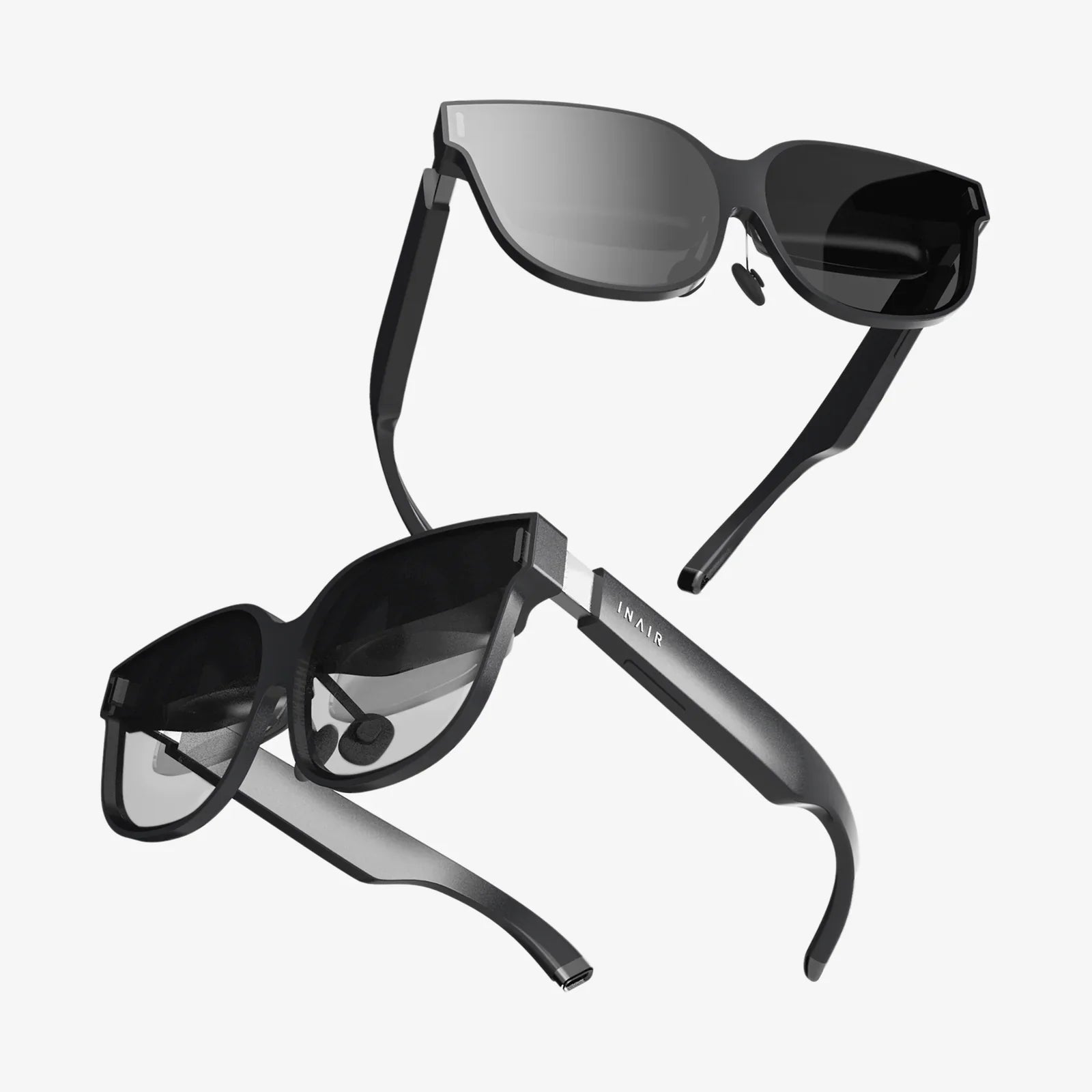
If 2024 was about more powerful processors and higher-resolution displays, 2025 is the year the hardware itself began to recede into the background. The dominant mixed reality news today revolves around the form factor's final evolution towards true wearability. We are seeing the widespread adoption of sleek, lightweight eyewear that is indistinguishable from high-end fashion sunglasses. The clunky, face-encompassing visors of yesteryear are now museum pieces, relics of a time before computational elegance solved the problem of size and power.
The breakthrough has been a combination of micro-OLED displays with astonishing pixel density and advanced waveguide optics that project vivid, full-color holograms directly onto the retina. This, coupled with on-device AI chips capable of real-time spatial mapping and object recognition without draining the battery, has created a seamless experience. The goal is no longer to impress with technology but to empower with invisibility. Users are no longer ‘using a device’; they are simply engaging with an enhanced world.
The Operating System for Reality: Spatial Computing Goes Mainstream
At the heart of this revolution is the maturation of spatial computing platforms. These are no longer closed gardens but open, interoperable ecosystems. The big news in 2025 is the standardization of spatial protocols, allowing digital objects and applications to exist persistently across different environments and devices. A holographic model created in an architect's office can be viewed and manipulated by a client in their home, retaining its fidelity and properties.
These platforms understand context intuitively. Your mixed reality interface doesn’t just float in front of you; it interacts with the physics of your room. A weather app manifests as a gentle, animated cloud hovering near a window. Your messaging app tiles conversations onto the surface of your coffee mug for quick, casual glances. A recipe app projects instructions onto the very ingredients you’re chopping, measuring virtual lines for perfect cuts. This contextual awareness, powered by ambient AI, means the technology serves you instead of you serving the technology.
Remote Work Reimagined: The End of the Video Call Grid
One of the most significant impacts of mixed reality in 2025 is the total transformation of remote collaboration. The video call, a staple of the early 2020s, is now seen as a primitive and limiting form of communication. The news is filled with stories of companies adopting ‘holoportation’ as standard practice. Using advanced volumetric capture technology, colleagues can project photorealistic, life-sized avatars of themselves into each other's physical spaces. They can make eye contact, share body language, and interact with shared 3D models as if they were in the same room.
An engineering team in Berlin can stand around a full-scale, holographic prototype of a new engine with their counterparts in Tokyo, pointing out components and making adjustments in real-time. Designers can pin virtual swatches of fabric onto physical furniture. This has erased the ‘remoteness’ of remote work, fostering a sense of presence and cohesion that was previously impossible, while simultaneously reducing the need for business travel and its associated environmental footprint.
Healthcare's New Vision: Seeing Beneath the Surface
The healthcare sector is experiencing a renaissance driven by mixed reality. Surgeons are now routinely assisted by overlays that project critical patient data—MRI scans, blood pressure, vital signs—directly into their field of view during procedures. More impressively, ‘X-ray vision’ applications allow them to see precisely where a tumor lies beneath layers of tissue, or exactly where to make an incision to avoid major arteries, guided by pre-operative scans.
Medical training has been revolutionized. Students no longer need to crowd around a single cadaver; they can don their eyewear and witness a detailed, interactive holographic anatomy lesson projected onto any table. Physical therapists use mixed reality to guide patients through exercises with perfect form, overlaying digital markers onto their limbs to show correct movement patterns. For patients, complex medical conditions are explained through interactive 3D models of their own bodies, leading to better understanding and adherence to treatment plans.
The New Social Fabric: Shared Experiences Across Continents
Social interaction has leapt forward. The metaverse concepts of the past have evolved into nuanced, shared spatial experiences. The news today highlights how families separated by oceans are holding weekly dinners where they all appear as holograms around the same virtual table, sharing a meal in their respective homes but feeling together. Friends are attending concerts where the performer is holographically projected onto a stage in their living room, with other fans appearing as avatars around them, cheering and dancing.
Museums and historical sites offer immersive tours where visitors can witness historical events unfold around them or see ancient ruins restored to their former glory. This is not about replacing physical social gathering but augmenting it, breaking down geographical and physical barriers to shared experience in a way that feels genuine and emotionally resonant.
Navigating the New Frontier: Privacy, Ethics, and the Digital Divide
Of course, this powerful technology does not arrive without serious questions dominating the news cycle. The constant scanning of our environments necessary for mixed reality to function raises monumental privacy concerns. Who owns the spatial data of your home? How is information about your physical possessions and habits being used? 2025 has seen the first major legislative acts aimed at ‘spatial data rights,’ establishing clear boundaries for what can be captured, stored, and monetized.
Furthermore, the potential for digital litter—abandoned holographic advertisements or graffiti—has created a new push for digital zoning laws. The digital divide is also more pronounced than ever. Access to this seamless mixed reality world requires significant bandwidth and financial means, risking the creation of a two-tiered society: those who can augment their reality and those who cannot. These are not trivial challenges, and addressing them is as crucial to our future as the technology itself.
So, the next time you see someone effortlessly manipulating a complex 3D chart on a park bench or sharing a holographic laugh with a friend who isn't physically there, understand that you are not just witnessing a gadget in use. You are seeing the early, bustling activity of a new human epoch. The boundary between the atoms of our world and the bits of our digital creation has finally dissolved, and the possibilities for how we learn, heal, connect, and create are expanding at a speed that is both breathtaking and, finally, beautifully normal. The future is not something we are heading towards; it is something we are now actively building in the very air around us.
Share:
What Augmented Reality Meaning Truly Is: A Journey Beyond the Hype
What Augmented Reality Meaning Truly Is: A Journey Beyond the Hype