


- by wangfred
Mixed Reality Products Are Blurring the Lines Between Our Digital and Physical Worlds
- by wangfred
Imagine a world where your digital life doesn’t exist trapped behind a screen but flows seamlessly into your living room, your workplace, and your field of vision. This is the promise of mixed reality products, a new class of immersive technology that is poised to revolutionize how we compute, connect, create, and perceive reality itself. They are not just another gadget; they are a portal, a new lens through which to experience and interact with information and with each other. The era of passive screen-staring is ending, and the age of active, spatial interaction is dawning.
To truly grasp mixed reality (MR), it's essential to understand its place within the broader spectrum of extended reality (XR). Often used interchangeably, the terms virtual reality (VR), augmented reality (AR), and mixed reality (MR) represent distinct points on a continuum of immersion.
Virtual Reality (VR) is a fully digital, immersive experience. By wearing a headset, users are completely shut off from their physical environment and transported into a computer-generated world. Whether for gaming, training simulations, or virtual tours, VR's power lies in its ability to create a convincing sense of presence elsewhere.
Augmented Reality (AR) overlays digital information onto the real world. Unlike VR, it does not replace your environment but enhances it. This is most commonly experienced through smartphone screens, where apps can place digital furniture in your room or display navigation arrows on the street in front of you. The digital and physical elements coexist but do not interact in a meaningful way.
Mixed Reality (MR) is the crucial convergence of both. It goes beyond simple overlay to enable genuine interaction between digital objects and the physical world. An MR device understands the environment—it maps the room, recognizes surfaces, and understands depth. This allows a digital character to jump off your real-world table and hide behind your sofa, or for a virtual wind turbine model to cast a shadow onto your desk. The digital content is not just superimposed; it is anchored and responsive to the real world.
The magic of mixed reality is powered by a sophisticated fusion of hardware and software, a symphony of sensors and algorithms working in perfect harmony.
Modern MR headsets are equipped with a complex array of optical sensors. These typically include:
The raw data from the sensors is processed by powerful onboard algorithms to create a semantic understanding of the environment. This process, called spatial mapping, identifies not just shapes but also classifies them. The system learns to distinguish a floor from a wall, a ceiling from a window, and a table from a chair. This allows digital objects to behave realistically—a virtual ball can roll on the floor and bounce off a wall.
For immersion to be maintained, the device must know its exact position in the world at all times. This is achieved through inside-out tracking, where the sensors on the headset itself (as opposed to external base stations) continuously scan the environment for unique visual features. By tracking these features, the device can calculate its own movement through space with millimeter accuracy, a critical requirement for anchoring holograms solidly in the user's reality.
While the potential for entertainment is vast, the most profound immediate impact of mixed reality is being felt across various professional sectors.
In product design, MR is revolutionizing prototyping. Instead of building expensive physical models, engineers can project a full-scale, interactive 3D hologram of a new engine or consumer product into a shared physical space. Teams from around the world can collaborate as if they are standing around the same prototype, examining it from every angle, annotating it in real-time, and making changes that are instantly visible to all. This drastically reduces development time and cost.
The applications in medicine are nothing short of revolutionary. Surgeons can use MR to overlay patient-specific 3D models derived from CT or MRI scans directly onto the patient's body during preoperative planning, providing an X-ray-like vision that guides incisions and improves outcomes. Medical students can practice complex procedures on interactive holographic anatomy models, and remote experts can guide local practitioners through procedures by projecting visual instructions into their field of view.
MR has the potential to dismantle the limitations of distance. Imagine a field technician wearing a headset while repairing a complex piece of machinery. A remote expert, seeing exactly what the technician sees, can draw arrows and diagrams directly into the technician's real-world view, highlighting exactly which bolt to turn or which wire to check. This "see-what-I-see" collaboration is far more intuitive and effective than a phone call or video chat, saving organizations significant time and travel costs.
Learning becomes an experiential adventure with MR. History students can walk through a holographic recreation of ancient Rome. Chemistry students can combine volatile virtual elements without any risk. Mechanics-in-training can practice disassembling a holographic transmission placed perfectly on a real workbench. This hands-on, spatial learning leads to dramatically improved knowledge retention and engagement.
As with any transformative technology, the rise of mixed reality brings a host of complex questions that society must confront.
MR devices are, by their very nature, data collection powerhouses. To function, they must continuously scan, record, and analyze our most intimate spaces—our homes and offices. This data is incredibly sensitive. Who owns this spatial map of your living room? How is it stored and secured? Could it be used for targeted advertising or by insurance companies? Establishing clear, robust, and transparent data privacy frameworks is paramount to earning public trust.
Will MR bring us closer together or drive us further apart? On one hand, it promises hyper-realistic telepresence, making remote interactions feel as natural as being in the same room. On the other, there is a risk of people retreating into personalized, augmented realities, filtering out the unvarnished real world in favor of a curated digital overlay. The etiquette of interacting with people who are partially in another reality is also uncharted territory.
The initial cost of high-end MR hardware risks creating a new digital divide. If these tools become essential for high-level work, education, and social connection, will they only be available to the wealthy? Ensuring the technology becomes affordable and accessible to all, not just a privileged few, is a critical challenge for developers and policymakers alike.
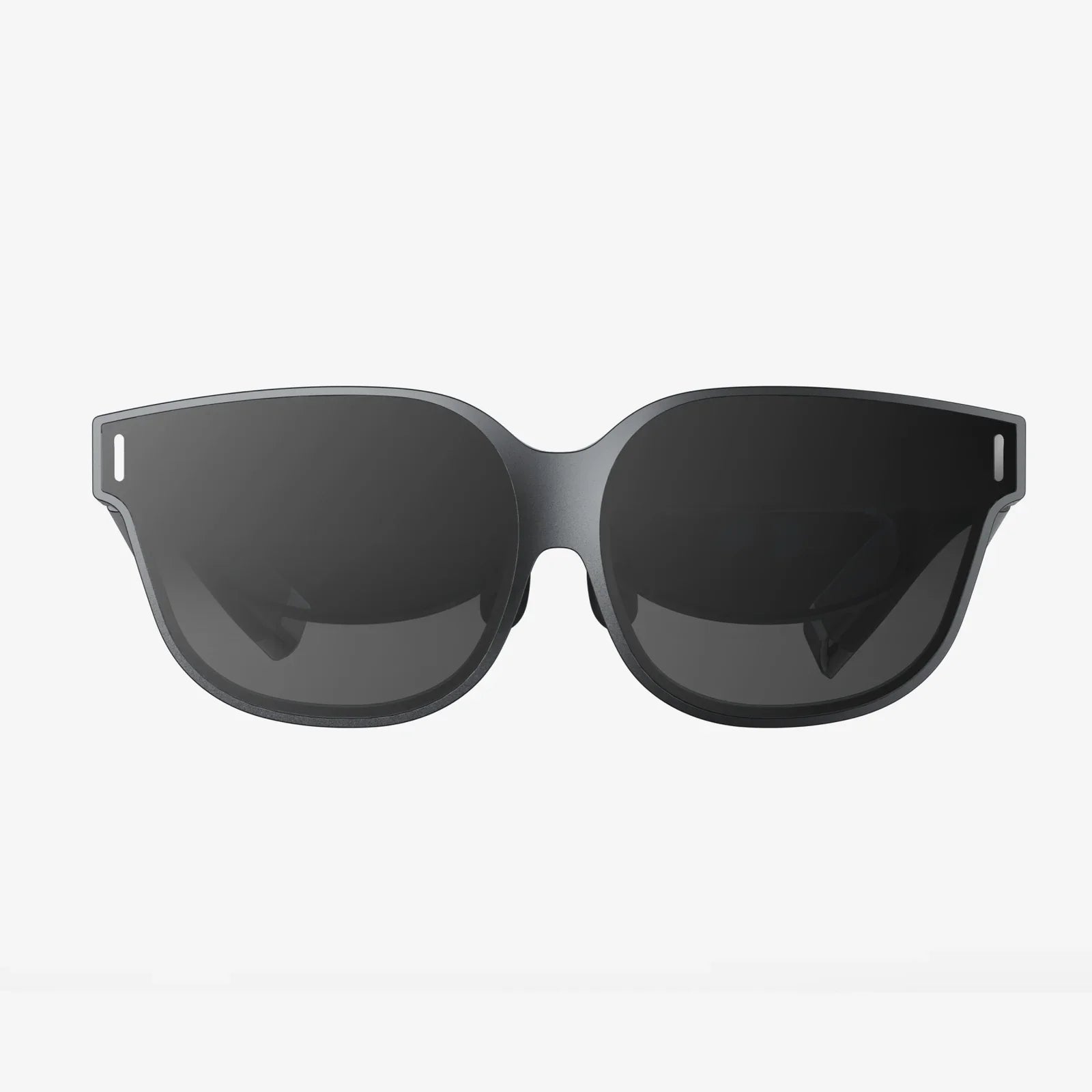
The current generation of mixed reality products is impressive, but they are merely the first step on a long evolutionary path. The future points toward devices that are smaller, lighter, more powerful, and ultimately, socially acceptable to wear all day. We are moving toward sleek glasses that offer all-day battery life and display high-fidelity holograms indistinguishable from real objects.
The key to this future will be the development of a true killer app—the spreadsheet or web browser of MR—that defines its core utility for the masses. Furthermore, the concept of the "metaverse," a persistent network of interconnected shared virtual spaces, is intrinsically linked to MR. It is the hardware that will allow us to step into and navigate this proposed next iteration of the internet not as avatars on a screen, but as embodied participants.
The trajectory is clear: mixed reality is not a niche interest for gamers and tech enthusiasts. It is a foundational shift in the human-computer interface, a new platform that will eventually become as ubiquitous as the smartphone. It will redefine how we work on complex problems, how we learn about our world, how we care for our health, and how we connect with each other across the globe. The boundary between the atoms of our world and the bits of our digital universe is dissolving, and mixed reality products are the catalyst.
We stand at the precipice of a new layer of reality, one where information is unshackled from the glass and pixels of a traditional screen and woven into the very fabric of our daily existence. The potential to enhance human capability, deepen understanding, and solve previously intractable problems is staggering. The journey into this spatially aware future is just beginning, and it promises to be the most transformative technological adventure of our time. The real world is about to get a lot more interesting.
Share:
Is Virtual Reality Bad For You? An In-Depth Look at the Health Impacts
What Are the Applications of Virtual Reality: A Deep Dive Into VR's Impact Across Industries