


Imagine a world where the digital and physical aren't just connected but are seamlessly, intelligently intertwined—where information doesn't live on a screen but is woven into the very fabric of your environment, responsive to your gaze, your voice, and your touch. This is the promise of Mixed Reality (MR), a technology poised to redefine our relationship with computation, information, and each other. We are moving beyond the novelty of overlaying simple graphics to an era of contextual, ambient computing that understands the world as we do. The trends emerging today are not just incremental improvements; they are the foundational shifts heralding the next digital revolution, and it’s happening right before our eyes, blurring the lines of perception itself.
The Convergence of AI and Spatial Computing: The Brain Behind the Eyes
If Mixed Reality hardware provides the eyes to see a blended world, then Artificial Intelligence is the brain that makes sense of it all. The most significant trend propelling MR forward is its deep and symbiotic integration with AI. This isn't just about voice assistants in your ear; it's about creating systems that possess a deep, contextual understanding of physical space.
AI algorithms are now sophisticated enough to perform real-time scene segmentation, meaning a headset can identify and classify objects in a room—a chair, a table, a wall, a window—not as flat surfaces but as distinct entities with properties and potential functions. This enables persistent digital content that interacts intelligently with the physical world. A virtual character can sit on your real sofa. A digital weather widget can appear to cast a shadow on your desk. AI-powered gesture recognition moves beyond simple swipes to interpret complex hand gestures, allowing users to manipulate digital objects as if they were physically present, providing a level of intuitive interaction that controllers cannot match.
Furthermore, generative AI is set to revolutionize content creation within MR environments. Instead of teams of 3D artists manually building every asset, users could simply describe a scene: "Create a medieval castle throne room with burning torches and a stained-glass window," and the AI generates it in real-time, tailored to the dimensions of the user's physical space. This democratization of content creation will unlock unimaginable experiences in education, design, and entertainment, making rich, interactive worlds accessible to all.
The Rise of the Industrial Metaverse and Spatial Enterprise
While consumer applications often grab headlines, the most immediate and impactful adoption of Mixed Reality is occurring within the enterprise and industrial sectors. This trend, often called the "spatial enterprise" or "industrial metaverse," is transforming workflows, boosting efficiency, and reducing costly errors.
Imagine a factory floor technician wearing a lightweight MR headset. As they approach a complex piece of machinery, animated assembly instructions, torque specifications, and safety warnings are overlaid directly onto the equipment, guiding their hands through each step. A remote expert, seeing exactly what the technician sees through a shared visual feed, can draw arrows and diagrams into the technician's field of view to provide guidance from thousands of miles away, eliminating travel time and downtime.
Architects and engineers are walking through full-scale, digital prototypes of buildings and products before a single physical resource is expended, identifying design flaws and making collaborative changes in real-time. In healthcare, surgeons are using MR to visualize complex patient anatomy from CT and MRI scans projected directly onto the patient's body, creating a GPS for surgery that enhances precision and improves outcomes. This enterprise-driven trend is proving the tangible ROI of MR, funding its development, and refining the technology for broader consumer use later.
Avatar Evolution: From Cartoons to Digital Twins
Human presence is the cornerstone of meaningful interaction, and in MR, this is represented through avatars. The trend is moving rapidly away from the cartoonish, legless figures of early VR social platforms towards hyper-realistic, expressive, and full-bodied digital twins. Advanced sensors and machine learning are enabling real-time facial and eye tracking, capturing a user's subtle expressions—a raised eyebrow, a smirk, a glance of concern—and faithfully replicating them on their avatar.
This pursuit of photoreorealistic avatars is about more than just vanity; it's about fostering genuine empathy and connection in digital spaces. In a business meeting, being able to read the room and make eye contact with colleagues’ avatars builds trust and improves communication far beyond what a grid of video feeds can offer. The ultimate goal is a sense of "teleportation," where you feel you are in the room with someone, sharing a space, not just a call.
This technology also opens doors to new forms of identity expression and accessibility. Individuals could choose to represent themselves in a way that transcends physical limitations, or use an avatar that accurately reflects their real-world appearance with stunning fidelity. The line between a person and their digital representation will become increasingly faint, raising profound questions about identity and authenticity.
The Hardware Revolution: Towards Sociability and Comfort
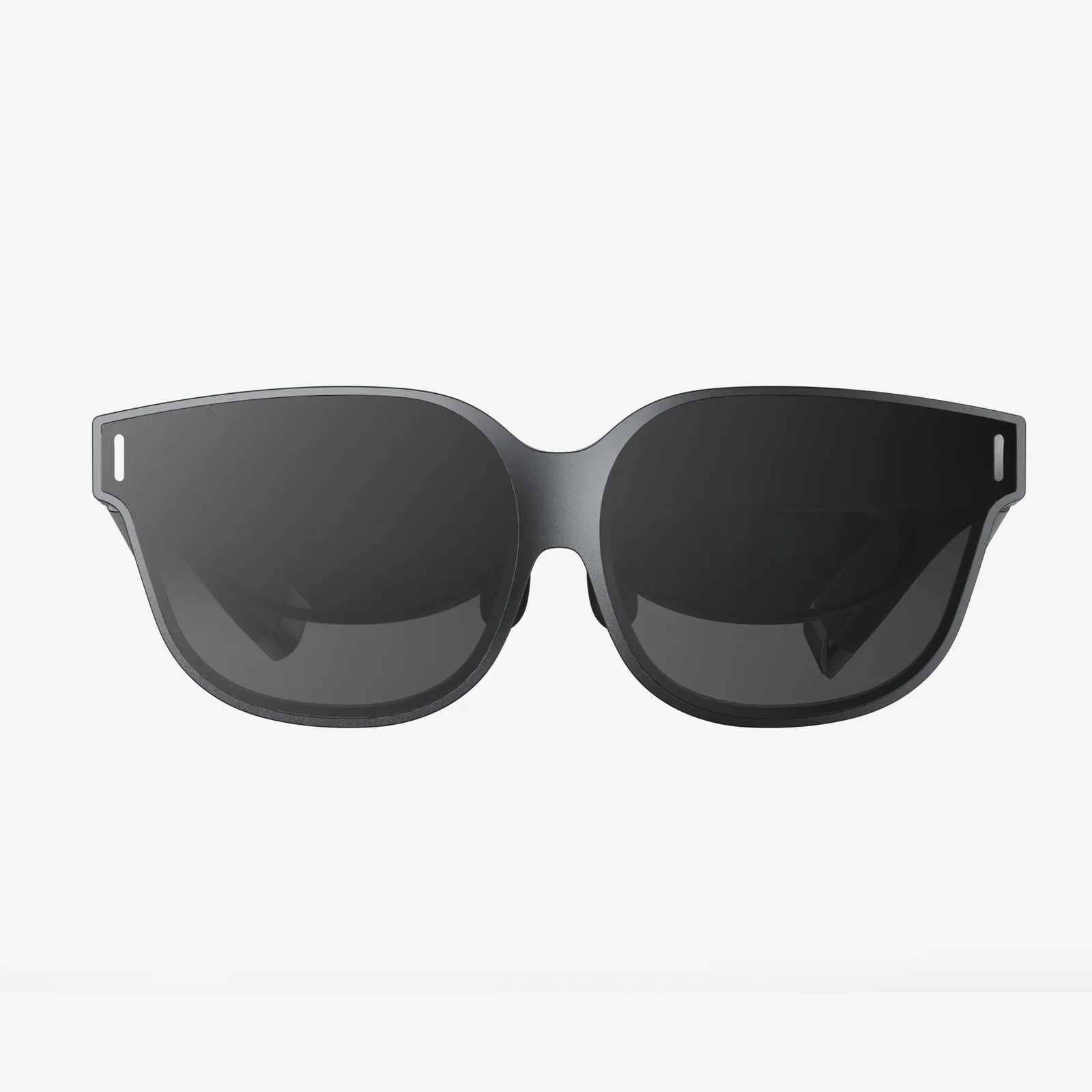
The clunky, tethered, and isolating headsets of the past are giving way to a new generation of hardware designed for all-day comfort and, crucially, sociability. The trend is towards smaller, lighter, more powerful form factors that resemble stylish sunglasses rather than bulky helmets. These devices will leverage advanced pancake lenses and micro-OLED displays to deliver high-resolution visuals in a compact package.
A key innovation driving this trend is the development of passthrough technology. Early VR headsets completely blocked out the real world, while early AR glasses like smart glasses offered a limited digital field of view. Modern MR headsets use high-resolution cameras to digitally reconstruct the real world in real-time and display it inside the headset. This allows for a truly blended experience and, importantly, enables outward-facing cameras to display the user's eyes to people around them. This "socially acceptable" design mitigates the "zombie in a headset" effect, making interactions between users and non-users more natural and engaging.
Furthermore, we are seeing a divergence in hardware strategies. On one end, powerful standalone devices will handle complex processing onboard. On the other, lighter, more comfortable glasses will act as a display portal, offloading heavy computation to a powerful device in your pocket or via cloud streaming. This will give users a choice between maximum immersion and maximum convenience, making MR adaptable to a wider range of daily scenarios.
Spatial Web and Interoperability: Building a Connected Reality
For Mixed Reality to become a platform rather than a series of isolated apps, digital content must be persistent and shared across users and devices. This is the vision of the spatial web—an open standard for anchoring digital information to specific locations in the real world. The trend is moving towards creating a universal coordinate system for the planet.
Imagine walking through a city, and through your glasses, seeing historical facts pinned to buildings, navigation arrows painted on the sidewalk, and reviews floating above restaurant doors—all visible to anyone else using a compatible system. A digital sculpture created by an artist in a public park would remain there for others to discover and interact with, days or years later. This requires a level of interoperability and cloud-based persistence that the industry is actively building towards through initiatives like the Open Metaverse Interoperability Group.
This shift will transform how we think about digital ownership and commerce. A unique digital sneaker you purchase could be designed to be viewed and admired in MR, worn by your avatar, and could even be resold on a spatial web marketplace. The concept of a website could evolve into a "spatial site"—a 3D experience tied to a geo-location or accessible through a portal in your home. This interconnected layer of information over the world will be the next iteration of the internet, and MR is the interface that will make it accessible.
The Ethical Frontier: Privacy, Safety, and the Future of Society
As with any transformative technology, the rapid advancement of Mixed Reality brings a host of ethical considerations that must be addressed proactively. The most pressing trend is the growing conversation around the ethics of data collection, user privacy, and physical safety.
MR headsets are arguably the most intimate computing devices ever conceived. They have the potential to collect an unprecedented amount of sensitive biometric data: eye-tracking, gait analysis, vocal inflection, emotional response, and a detailed 3D map of your home and workplace. Who owns this data? How is it stored and used? Could it be used for targeted advertising or, more worryingly, mass surveillance? The industry must establish clear ethical guidelines and robust "privacy by design" principles before public trust is eroded.
Physical safety is another major concern. Immersive experiences can be so compelling that users may forget their physical surroundings, leading to potential accidents. Digital defacement of property or the creation of distressing virtual content in public spaces are new forms of harassment that society will need to grapple with. Furthermore, the potential for deepfakes to be used in real-time within MR interactions presents a terrifying tool for misinformation and social engineering. Navigating these challenges will be as important as the technological developments themselves, requiring collaboration between technologists, ethicists, policymakers, and the public.
The horizon of Mixed Reality is shimmering with potential, a world not of cold, isolated screens but of warm, integrated, and intelligent experiences that enhance our human capabilities and deepen our connections. The trends are clear: smarter AI, enterprise transformation, authentic avatars, seamless hardware, and an interconnected spatial web are all converging to lift this technology from a niche novelty to a central pillar of our digital lives. The journey ahead is as much about building a responsible framework for this new reality as it is about the code and hardware that power it. The door between our world and a digital one is not just opening; it's dissolving, and we are all about to step through.
Share:
Virtual Reality Benefits and Harmful Effects: A Deep Dive Into the Digital Frontier
Artificial Intelligence vs Virtual Reality: The Architects of Our Digital Tomorrow