


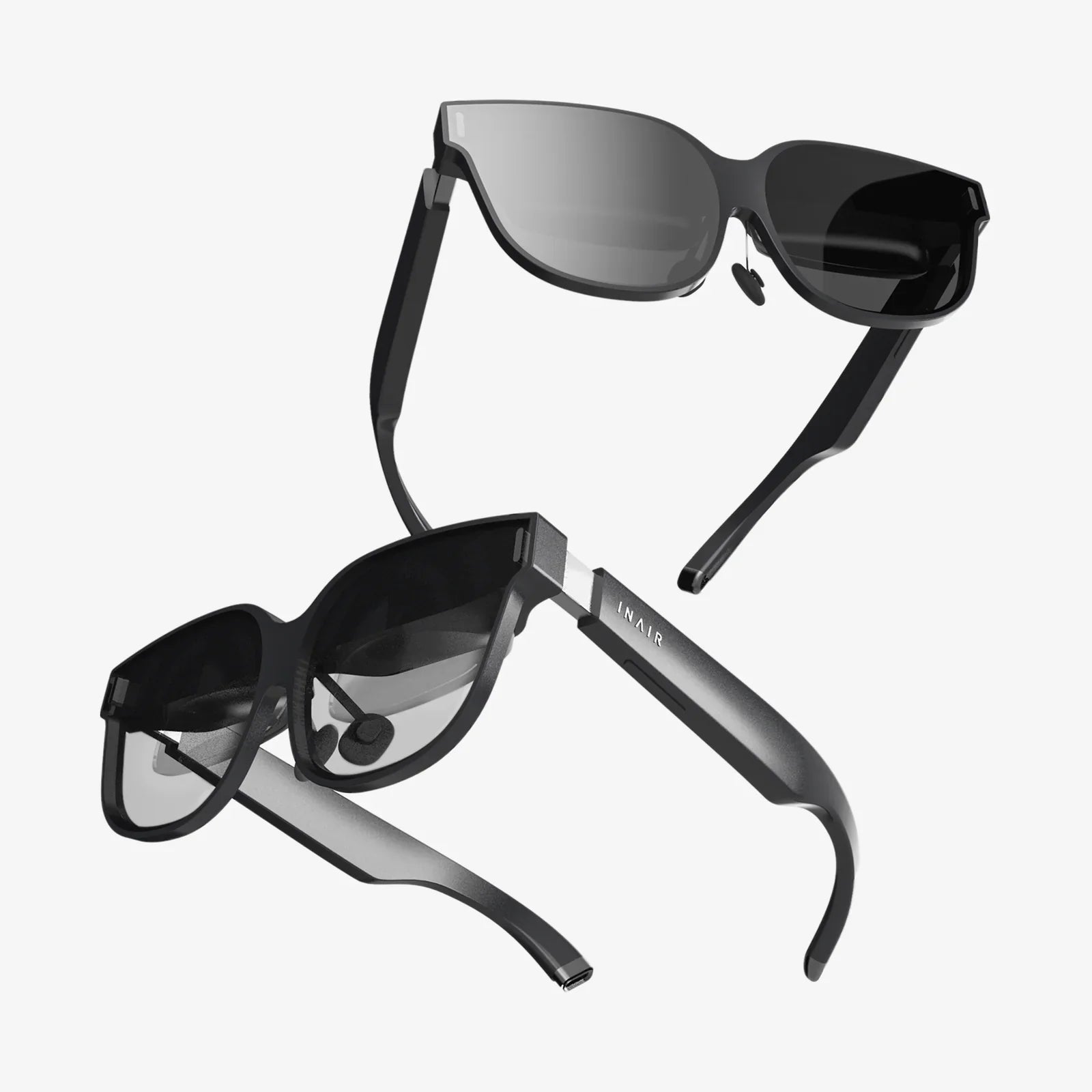
- by wangfred
Mixed Reality VR Headset: The Ultimate Portal to Blending Realities
- by wangfred
Imagine a world where your digital life doesn’t exist trapped behind a screen but flows effortlessly into your physical space, where holographic instructions float over your real-world toolkit, virtual colleagues sit across your actual desk, and fantastical creatures play hide-and-seek in your living room. This is no longer the stuff of science fiction; it’s the immediate promise of the modern mixed reality VR headset, a technological marvel poised to redefine our reality itself. This device is the key to unlocking a new layer of existence, a symbiotic blend of our world and the infinite possibilities of the digital realm, and it’s inviting us to step through.
The journey to this point has been one of rapid and remarkable evolution. The first wave of consumer virtual reality technology was primarily about immersion through isolation. These systems transported users to completely digital environments, disconnecting them from their physical surroundings to create compelling, but enclosed, experiences. The goal was to make the virtual world convincing enough to make you forget the real one.
Augmented Reality (AR) emerged as a parallel path, overlaying simple digital information like graphics or text onto the real world through smartphone cameras or transparent lenses. While powerful, it often lacked depth and persistence, feeling more like a filter than an integrated experience.
The mixed reality VR headset is the synthesis of these two paths. It doesn't seek to replace one with the other but to harmoniously blend them. This is achieved through a suite of advanced technologies that allow the device to understand, interact with, and ultimately augment the user's actual environment in real-time.
The seamless experience of mixed reality is powered by a complex orchestra of hardware and software working in perfect concert. Understanding these components reveals the sheer engineering prowess behind these devices.
This is the foundational technology that makes everything else possible. Unlike AR glasses that use transparent lenses, many mixed reality headsets use high-resolution cameras mounted on the exterior to continuously feed a live video feed of your surroundings to the internal displays. The quality of this passthrough is paramount. Early implementations were grainy and laggy, breaking immersion. Modern systems offer high-resolution, low-latency color video, making the digital view of your real world feel natural and immediate. Advanced algorithms correct for distortion and ensure the perspective feels correct to the human eye.
Simply seeing the world is not enough; the headset must comprehend it. Using a combination of sensors, including depth sensors, LiDAR (Light Detection and Ranging), and infrared projectors, the headset rapidly scans and constructs a detailed 3D map of the room. This isn't just a point cloud; it's a semantic understanding of space. The system can identify floors, walls, ceilings, windows, furniture, and even objects like a table or a sofa. It understands geometry, contours, and occlusions, allowing digital objects to be placed realistically behind real-world furniture or to roll accurately on a physical floor.
To anchor digital content to the real world, the headset must know its own position and orientation within the mapped space with millimeter precision. This is achieved through inside-out tracking. Cameras and sensors on the headset itself track its movement relative to the fixed features of the environment, eliminating the need for external base stations or lighthouses. This makes the system completely self-contained and portable, freeing the user to move anywhere. This tracking also enables precise hand-tracking and controller tracking, allowing users to reach out and manipulate digital objects with their bare hands as if they were really there.
Processing the immense amount of visual and spatial data in real-time requires significant computational power. This is handled by sophisticated processors that integrate traditional CPU and GPU cores with dedicated AI accelerators and neural processing units (NPUs). These specialized chips are designed to efficiently run the machine learning algorithms responsible for scene understanding, hand tracking, and voice recognition, all while maintaining a comfortable form factor and battery life.
The true potential of mixed reality is revealed not in tech demos but in its practical, transformative applications that are already beginning to reshape major sectors.
In product design and architecture, the mixed reality VR headset is a game-changer. Designers and engineers can now visualize and interact with 3D prototypes at full scale within a real-world context. An automotive designer can place a life-size hologram of a new car model in an actual garage to assess its lines and proportions. An architect can walk clients through a holographic rendition of their unfinished home, making changes to the structure or materials in real-time. This drastically reduces the need for physical prototypes, accelerates iteration cycles, and enhances collaborative decision-making.
Mixed reality obliterates the limitations of traditional video conferencing. Instead of looking at a grid of faces on a screen, remote teams can don headsets and meet in a shared virtual space that overlays their physical environments. A team of engineers scattered across the globe can gather around a interactive 3D model of a jet engine, with each person able to point, annotate, and disassemble components collaboratively. For training, this is revolutionary. A novice surgeon can practice complex procedures on a holographic patient overlaid onto a real surgical table. A field technician can receive remote expert guidance, with holographic arrows and instructions appearing directly on the malfunctioning equipment they are repairing.
The healthcare industry stands to benefit enormously. Beyond surgical training, mixed reality can aid in pre-operative planning, allowing surgeons to study a patient’s unique anatomy via a 3D hologram reconstructed from CT or MRI scans. In therapy, it can be used to create controlled, immersive environments for treating phobias, PTSD, or for motor rehabilitation, guiding patients through exercises with engaging holographic cues. It can also transform medical education, letting students explore detailed anatomical models from every angle.
The frustrating guesswork of online shopping—Will this sofa fit? How will this paint color look on my wall?—is eliminated. Consumers can use a mixed reality headset to visualize products in their home at true scale before purchasing. They can try on virtual clothing, place virtual appliances in their kitchen, or see how a new car would look in their driveway. This bridges the confidence gap between online and in-store shopping, reducing return rates and creating a far more engaging customer experience.
For all its promise, the path to widespread adoption of mixed reality is not without significant hurdles and important ethical questions.
The ultimate goal is a device that is as socially acceptable and comfortable to wear as a pair of everyday eyeglasses. Current generations, while incredibly advanced, are still relatively bulky, powered devices that can cause fatigue during extended use. Achieving the necessary compute power, battery life, and display technology in a sleek, lightweight form factor remains the industry's primary engineering challenge.
How will these devices integrate into social norms? Wearing a headset in public effectively signals that you are partially engaged elsewhere, which could be seen as antisocial. New etiquettes will need to emerge. Furthermore, the concept of digital dualism—where two people in the same physical space experience completely different visual realities—raises profound questions about shared experience and common ground.
This is perhaps the most critical challenge. A mixed reality headset is, by its nature, a profound data-collection device. Its cameras and sensors are continuously scanning and digitizing everything about your environment—your home, your office, and the people in it. This data is incredibly sensitive. Who owns this spatial data? How is it stored, processed, and secured? Could it be used for surveillance or advertising? Robust, transparent, and user-centric data policies are not an optional add-on; they are an absolute prerequisite for societal trust and adoption.
As we begin to layer digital information and interactions over our physical world, we must consider the long-term impact on human psychology and social connection. Will enhancing our reality with endless digital stimuli enrich our lives or lead to a new form of distraction, pulling our attention away from the un-augmented world and the people in it? The technology is neutral, but its design and use will determine whether it connects us more deeply or fosters a new kind of isolation.
The current generation of mixed reality headsets is merely the first step on a much longer journey. The trajectory points toward even more seamless and powerful integrations. We can anticipate the development of more advanced haptic feedback systems that allow users to feel digital objects, and photorealistic avatars that can convey nuanced human expression for truly lifelike remote interaction. The line between what is "real" and what is "digital" will continue to blur, eventually becoming irrelevant.
This technology will evolve from a specialized device into a general-purpose computing platform, potentially replacing our laptops, tablets, and phones as our primary portal to information and connection. It will become an invisible layer of intelligence and context over our entire world, accessible through a simple glance or a gesture.
The mixed reality VR headset is far more than a new gadget; it is the harbinger of a fundamental shift in the human experience. It challenges our very definitions of presence, reality, and connection. It presents a canvas limited only by our imagination, offering tools to enhance our creativity, productivity, and understanding of the world around us. While the challenges are real and must be addressed with care and foresight, the opportunity is staggering. We are not just putting on a headset; we are stepping into the next chapter of human-computer interaction, and the real world will never look the same again.