


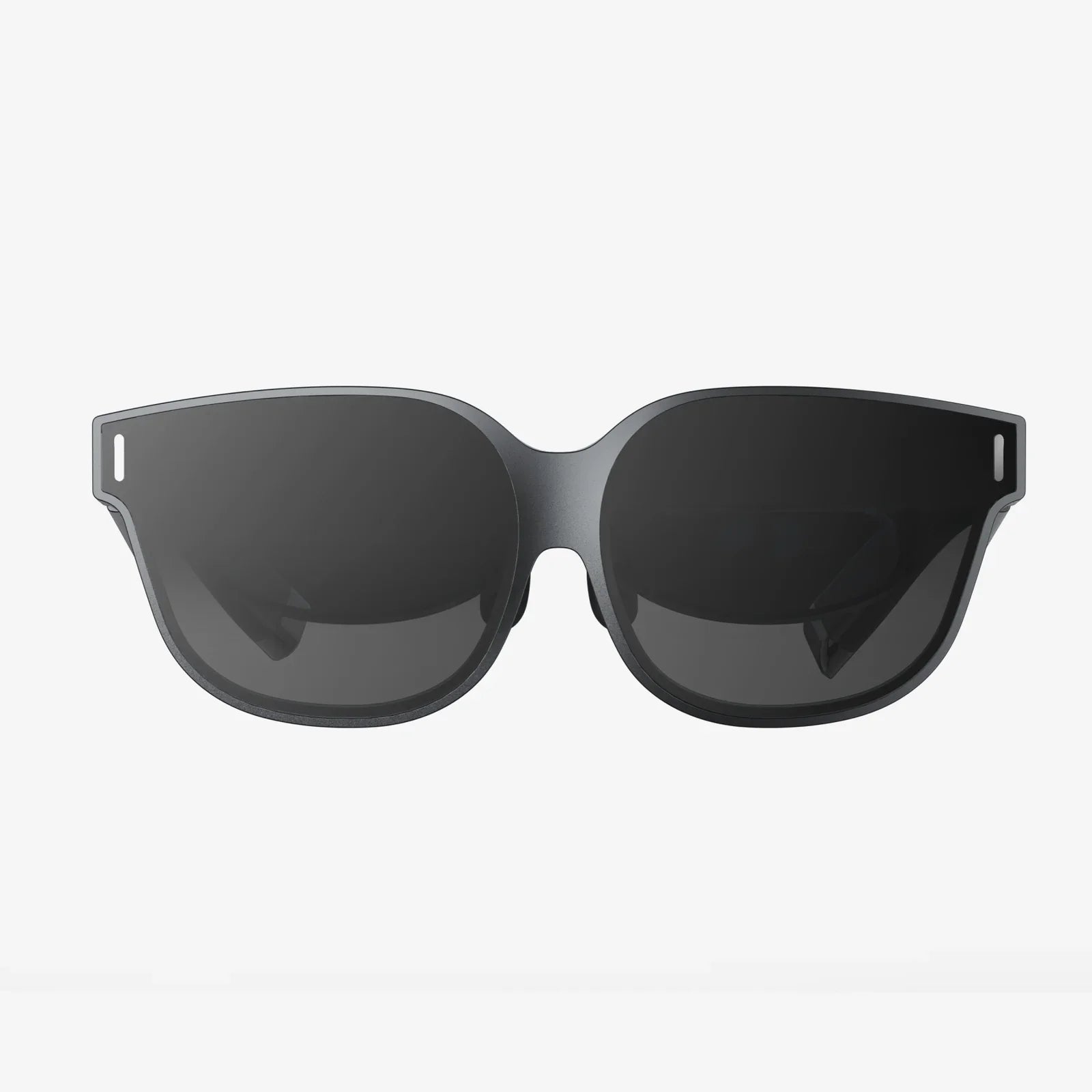
Imagine a world where your living room transforms into a strategic command center for an intergalactic battle, your morning run is guided by a holographic coach, and a complex medical procedure is rehearsed on a perfect digital twin of a human heart before a single incision is made. This isn't a distant sci-fi fantasy; it's the imminent future being built today, brick by digital brick, in the explosive and rapidly evolving field of mixed reality (MR). The headlines are buzzing, the investments are pouring in, and the technology is leaping forward at a breathtaking pace. To ignore the mixed reality XR news today is to ignore the blueprint of our next major computing platform, one that promises to fundamentally alter how we work, learn, play, and connect. The line between what is real and what is digitally rendered is not just thinning—it's actively being erased, and the implications are nothing short of revolutionary.
The Semantic Layer: AI as the Engine of Intelligent Reality
Perhaps the most significant development dominating mixed reality XR news today isn't a new headset, but the intelligence powering it. The raw, immersive potential of MR is being supercharged by artificial intelligence, creating what experts are calling a "semantic layer" over our world. This is the leap from simply seeing digital objects in your space to having the system understand your space.
Early MR experiences required manual mapping. Users had to painstakingly define where walls, floors, and furniture were. Today's AI-driven systems do this automatically and intelligently. Using advanced computer vision and machine learning, they can scan a room and not only identify a table but understand it's a table—a surface upon which you can place a virtual coffee cup, a holographic spreadsheet, or a digital board game. They can recognize a window, a painting on the wall, or even a specific appliance, allowing for context-aware interactions that feel intuitive and magical.
This intelligence is the key to breaking down the interaction barrier. Instead of clunky menus or complex controller schemes, the next wave of mixed reality XR news highlights advancements in natural user interfaces. Eye-tracking, hand-tracking, and voice commands are becoming standard, allowing users to manipulate holograms as effortlessly as they would a physical object. You can resize a 3D model with a pinch of your fingers, select a menu item just by looking at it, or summon an assistant with a spoken word. This shift is crucial for moving MR from a niche enthusiast technology to a mainstream tool, reducing cognitive load and making the technology feel like a natural extension of the user's own body and will.
Enterprise and Industry: The Silent Revolution on the Factory Floor
While consumer applications often grab the flashy headlines, the most profound and immediate impact of MR is happening far from the living room, on factory floors, in operating theaters, and within corporate training rooms. The enterprise sector is quietly undergoing a revolution fueled by practical mixed reality solutions that are delivering tangible returns on investment right now.
Consider the field of remote assistance and collaboration. A field technician facing a complex repair on a wind turbine no longer needs to be alone. By wearing MR glasses, they can share their live point-of-view with a senior engineer thousands of miles away. That expert can then annotate the technician's real-world view with arrows, diagrams, and text instructions, literally drawing the solution onto the faulty machinery. This "see-what-I-see" capability drastically reduces errors, slashes travel costs and downtime, and empowers less experienced workers to perform at an expert level.
Furthermore, the mixed reality XR news today is filled with case studies about digital prototyping and design. Automotive and aerospace engineers are using MR to project full-scale 3D models of new vehicles or aircraft components into an empty hangar. They can walk around the design, inspect it from every angle, and make collaborative changes in real-time before committing to expensive physical prototypes. This accelerates development cycles and fosters a more iterative and creative design process.
In healthcare, the stakes are even higher. Surgeons are using MR to visualize complex patient anatomy, such as CT scans or MRI data, as precise holograms overlaid directly onto the patient's body during preoperative planning and even in the operating room. This provides an X-ray vision-like capability, improving surgical accuracy and patient outcomes. Medical students are also benefiting, practicing procedures on incredibly detailed and interactive holographic patients without any risk.
The Content Conundrum: Building Worlds from Scratch
For all its technological prowess, the ultimate success of any computing platform hinges on one critical factor: content. The mixed reality XR news cycle is acutely aware that hardware and software are meaningless without compelling experiences that keep users engaged. This presents a unique challenge and opportunity for creators.
Unlike traditional media, MR content cannot be passive. It must be dynamic, interactive, and spatially aware. Developers are not just creating games or apps; they are architects of experiences that coexist with reality. This requires a new design language and a new set of tools. The industry is responding with more powerful and accessible game engines and creation suites designed specifically for spatial computing, lowering the barrier to entry for a new generation of developers.
The content landscape is diversifying rapidly. Beyond gaming, which remains a powerful driver, we are seeing a surge in:
- Immersive Training: From safety drills for industrial workers to soft-skills training for corporate employees, MR creates safe, repeatable, and highly realistic training scenarios.
- Data Visualization: Scientists, analysts, and financial traders are using MR to step inside their data, exploring complex networks, 3D graphs, and molecular models in a way that a flat screen could never allow.
- Interactive Storytelling: Filmmakers and artists are experimenting with narrative experiences where the audience is no longer a viewer but a participant within the story, able to move around and explore the scene.
- Social Connection: New platforms are emerging that allow people to meet as stylized avatars in shared virtual spaces, watching movies together on a virtual big screen, playing games, or simply chatting as if they were in the same room, despite being continents apart.
The race to build the defining "killer app" for mixed reality is wide open, and it is this creative ferment that makes following mixed reality XR news so exciting.
Navigating the Uncharted: Ethics, Privacy, and the Future We Build
As with any transformative technology, the rise of mixed reality is not without its profound challenges. The very thing that makes MR so powerful—its deep integration into our personal spaces and lives—also raises critical questions that society must address. The mixed reality XR news today must be scrutinized not just for its technological announcements, but for its ongoing conversation about ethics and responsibility.
The most pressing concern is privacy. MR devices are, by their very nature, data collection machines. To understand the world, they must constantly see it, map it, and analyze it through cameras and sensors. This raises alarming questions: Who has access to the continuous scan of your home? Could this data be used for targeted advertising, surveillance, or worse? The industry is grappling with implementing robust privacy frameworks, such as on-device processing that never sends sensitive spatial data to the cloud, and clear user controls over what is recorded and stored. Establishing trust is paramount for widespread adoption.
Furthermore, the social implications are vast. As we begin to spend more time in blended realities, how will it affect our shared sense of, well, reality? Will it enhance our understanding of the world, or will it lead to further societal fragmentation as people retreat into personalized digital bubbles? The potential for misinformation and deepfakes in an immersive, 3D format is a terrifying prospect. The ethical design of these experiences, promoting positive connection and well-being over addiction and isolation, will be one of the great challenges of the coming decade.
Finally, the issue of access and the digital divide looms large. High-end MR hardware remains expensive. There is a real risk that the benefits of this new technology—in education, job training, and healthcare—could become available only to a privileged few, exacerbating existing inequalities. The long-term goal must be to drive innovation that makes these tools more affordable and accessible to all.
On the Horizon: What's Next for the Blend?
Peering into the near future based on the trends in mixed reality XR news today, several developments seem inevitable. The hardware will continue its relentless march toward smaller, lighter, more powerful, and more socially acceptable form factors. The dream of sleek, everyday eyewear that can seamlessly toggle between AR passthrough and full VR immersion is the industry's holy grail, and progress is being made on all fronts, from micro-OLED displays to advanced waveguide optics.
We are also moving toward a more open and interoperable ecosystem. The vision of a single, persistent digital layer over the world—sometimes called the "metaverse"—will require standards that allow digital objects and experiences to move across different devices and platforms. Imagine creating a virtual sculpture in your living room and being able to send it to a friend's device, where it will appear correctly placed in their entirely different physical space. This level of shared, persistent reality is the next great frontier.
Furthermore, the integration with other technological trends will accelerate. Mixed reality will become the primary interface for the Internet of Things, allowing you to see and control the smart devices in your home with a glance. It will merge with biometrics, providing real-time health and wellness feedback. It will be the canvas upon which generative AI paints its creations, allowing us to conjure and manipulate 3D objects and environments with simple voice commands.
The journey is just beginning. The mixed reality XR news we read today is the first draft of a story that will redefine human experience. It is a narrative of technological audacity, creative explosion, and profound responsibility. We are not merely adopting a new gadget; we are collectively building a new realm of human existence, and every development, every headline, brings us closer to that blurred, brilliant, and bewildering future.
From the AI that gives our world a digital nervous system to the enterprise solutions saving companies millions, the evidence is undeniable—the fusion of our physical and digital realities is no longer a concept waiting in the wings. It's happening in boardrooms, operating rooms, and living rooms across the globe, and its trajectory is pointing straight toward a tomorrow where the very definition of 'real' is up for grabs. The next breakthrough is always just one headline away, promising a world limited only by our imagination.
Share:
Pros and Cons Prescription AI Glasses: A Vision of the Future
How Smart Is Mr. Glass: Deconstructing the Mind of a Supervillain