


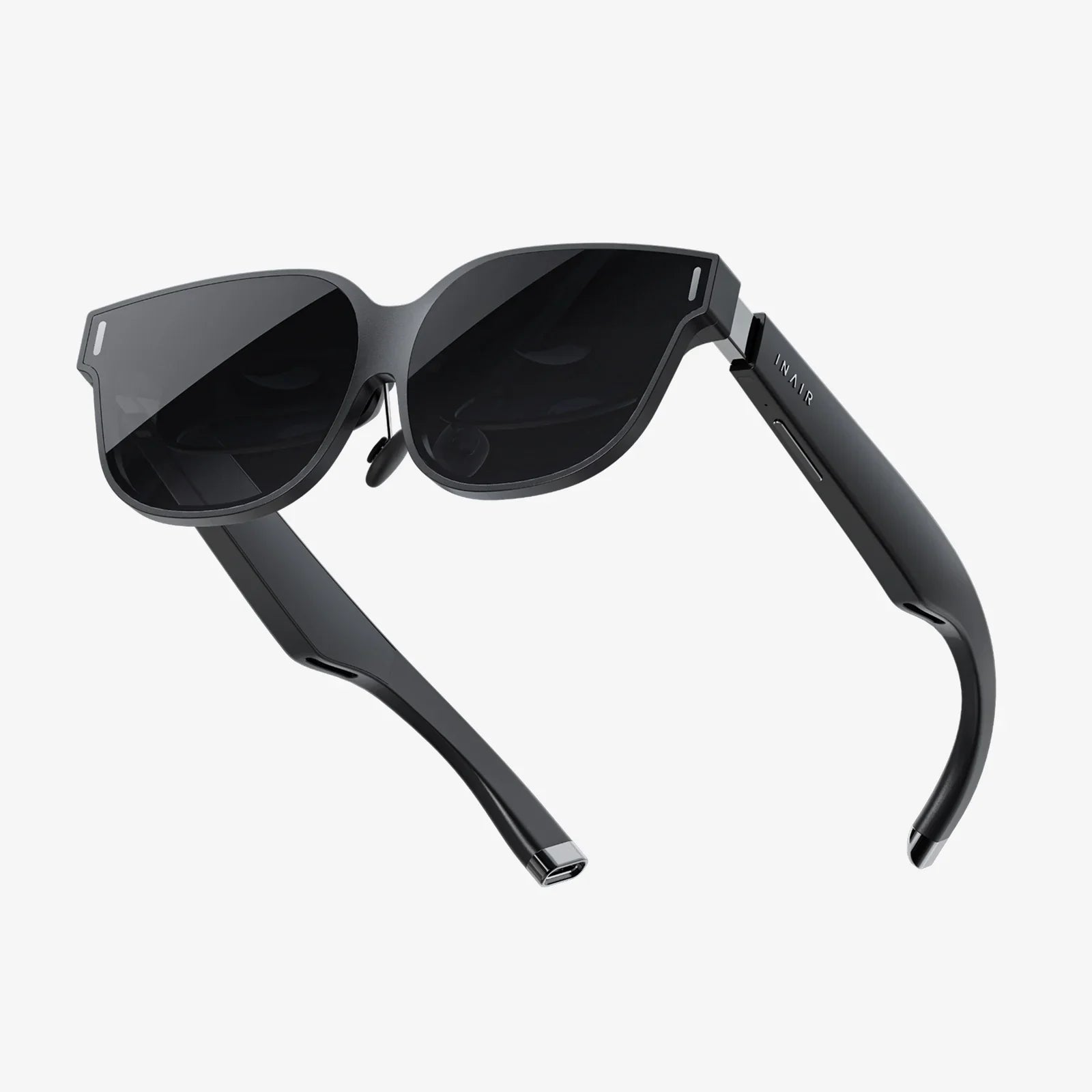
Close your eyes and imagine the sound of rain not just around you, but above you, with individual droplets pattering on a virtual rooftop to your left, while a distant rumble of thunder seems to roll from the far right, behind you, and then slowly fades into the distance ahead. This isn't just listening; it's an experience. This is the power and the promise of mixing spatial audio, a revolutionary approach to sound that is fundamentally changing how we create and consume media. It’s the key to unlocking truly immersive, emotionally resonant, and breathtakingly realistic auditory worlds, pulling audiences out of their living rooms and placing them directly inside the story. For audio engineers and creators, it represents both an exciting new canvas and a formidable technical challenge, demanding a rethinking of everything we know about the mix.
The Sonic Revolution: Understanding the Core Principles
At its heart, mixing spatial audio is the art and science of placing and moving sounds in a three-dimensional sphere around a listener. It moves far beyond the constraints of traditional stereo (left/right) or even surround sound (which uses multiple channels but is still largely channel-based). Instead of assigning a sound to a speaker, spatial audio assigns a sound to a point in space. The audio engine and playback system then work together to render that sound appropriately for the listener's specific setup, whether it's a sophisticated multi-speaker array or a simple pair of headphones.
This shift is monumental. It introduces several core concepts that every engineer must master:
- Object-Based Audio vs. Channel-Based Audio: Traditional mixing is channel-based. A sound is assigned to the Left Front speaker, and it will always come from the Left Front speaker. Spatial audio is predominantly object-based. A sound—a bird, a car, a voice—is treated as an audio object with metadata attached. This metadata includes precise coordinates in a 3D space (X, Y, Z). The playback system, be it a soundbar, home theater, or headphones, interprets these coordinates and renders the sound to best match its capabilities, creating a consistent experience across different devices.
- The Sound Field: This is the virtual 3D environment you are building. It has width, height, and depth. Mixing spatial audio involves strategically placing sounds within this field to create a believable world.
- Binaural Rendering for Headphones: This is the magic trick that makes spatial audio work on standard headphones. It uses Head-Related Transfer Functions (HRTFs)—acoustic filters that mimic how our ears, head, and torso affect a sound coming from a specific point in space. By processing a sound through an HRTF filter for the left and right ear, we can trick the brain into perceiving that sound as coming from outside the head, from a precise location. A sound placed directly to the right will have specific timing and frequency differences between the left and right ear channels that the brain instantly recognizes.
- Ambisonics: This is a full-sphere surround sound format that captures sound from all directions. It’s often used for 360-degree video and VR applications. While not object-based itself, Ambisonics recordings can be decoded and placed within an object-based spatial mix, or used to create convincing ambient beds and reverb effects.
The Toolbox: Essential Technology for the Spatial Audio Engineer
Mixing spatial audio requires a new set of tools and an understanding of the technology that makes it possible. While the fundamental Digital Audio Workstation (DAW) remains the central hub, it must be equipped with specialized software and hardware.
The most significant technological shift is the adoption of spatial audio authoring formats and renderers. These are software systems that manage the audio objects, their metadata, and the complex process of rendering the final output. They act as a bridge between your creative mix and the myriad of consumer playback systems. These renderers are often integrated into DAWs through specialized plugins, allowing engineers to monitor their mix in real-time through binaural rendering on headphones or through connected speaker arrays.
Monitoring is arguably the most critical and challenging aspect. To accurately judge a spatial mix, you need to hear it as the end-user will. This can be achieved in two primary ways:
- Binaural Monitoring on Headphones: This is the most accessible method. Using a dedicated plugin, you can monitor your entire mix through a binaural renderer. The quality of the HRTF used is paramount; a good renderer will provide a selection of HRTF profiles to find one that works best for your perception.
- Dedicated Speaker Arrays:
For the highest level of precision, professional studios employ multi-speaker setups, such as a 7.1.4 Dolby Atmos configuration (seven ear-level speakers, one subwoofer, and four overhead speakers). This allows the engineer to hear the audio objects rendered directly through speakers in their intended physical locations, without the coloration of binaural processing. It's the gold standard for critical listening and final QC.
Beyond the core renderer, other essential tools include:
- Spatial Reverbs: Traditional reverb plugins are often channel-based. Spatial reverbs are designed to place the reverberant sound in the same 3D space as the source, maintaining immersion and depth.
- Precision Panning Interfaces: Instead of a simple left/right knob, spatial audio tools provide 3D panners. These can be interfaces where you drag a dot around a sphere representing the sound field, or you can input precise coordinates for azimuth (horizontal angle), elevation (height), and distance.
- Distance Modeling Tools: These plugins simulate the acoustic changes that occur as a sound moves away from the listener: high-frequency roll-off, volume attenuation, and changes in the direct-to-reverb ratio.
The Art of the Mix: Creative Techniques and Considerations
With the technology in place, the real work of mixing spatial audio begins. This is a creative endeavor that blends technical precision with artistic intuition.
1. Establishing the Bed: Every immersive mix needs a foundation. This is often a bed, which is essentially a traditional channel-based stem (e.g., a 5.1 or 7.1.2 bed) that carries the core elements of the mix—the ambient sound, the music score, or a crowd murmur. The bed anchors the listener in the environment. Objects are then layered on top of this bed to create specific, localized events.
2. Strategic Object Placement: The power of objects is their flexibility. A dialogue object can be placed exactly where the character is on screen (or in a VR scene). A fly buzzing around the room can be animated to move in a perfect circle overhead. The key is to be intentional. Use space to support the narrative. A character's internal monologue might be placed intimately close to the listener's head, while a god-like narrator might be positioned high above and all around.
3. The Power of Height: This is the most novel dimension for most mixers. The Z-axis (height) is not just for helicopters and rain. Subtle use of height can dramatically increase the sense of space and realism. The decay of a cymbal crash can be allowed to drift upward into the ceiling. The hum of fluorescent lights in a scene can be gently placed overhead. Reverb tails from ear-level sounds can be sent to overhead channels to simulate the natural acoustic of a large space.
4. Managing Distance and Perspective: Spatial audio isn't just about direction; it's about depth. Using distance modeling, you can push sounds far into the distance, making them feel truly remote. Conversely, a sound placed very close to the listener can be unnervingly intimate. Automating these parameters allows you to dynamically shift the listener's perspective throughout a scene.
5. Embracing (and Taming) Movement: Automating the movement of audio objects is where spatial mixing truly shines. However, it must be done smoothly and with purpose. Jerky or unnatural movement can break immersion instantly. The movement should feel motivated, whether it's following a character on screen or simulating the Doppler effect of a passing car.
Navigating the Challenges and Common Pitfalls
Mixing spatial audio is not without its hurdles. The learning curve is steep, and there are several common pitfalls to avoid.
- The "Swirling Soup" Effect: The biggest temptation is to overuse the technology, placing every single sound in a different precise location and animating everything. The result is a chaotic, distracting, and fatiguing listening experience. The best spatial mixes are often surprisingly subtle. They use space to enhance reality, not to overwhelm it. The classic mixing principle of "less is more" has never been more applicable.
- Binaural Translation: A mix that sounds perfect and perfectly localized on a 7.1.4 speaker system may not translate perfectly to binaural headphones for every listener. HRTF responses are personal. It is absolutely crucial to check mixes on multiple systems, especially headphones, to ensure compatibility. Some sounds might need slight adjustments or alternative placements to work well across all formats.
- The Center Channel Conundrum: In a traditional mix, the center channel is king for dialogue. In object-based audio, dialogue is often an object placed at the center. However, if that object is not handled correctly, it can become unstable or quiet on systems that downmix to stereo. Understanding how your spatial renderer handles downmixing is essential for ensuring compatibility with non-spatial systems.
- Increased Workflow Complexity: A spatial audio session can have hundreds of audio objects, each with its own automation data. This can become computationally intensive and organizationally daunting. Meticulous session organization, grouping, and naming conventions are not just helpful; they are mandatory for survival.
The Future is Spatially Aware
The trajectory of audio is unmistakably pointed towards immersion. Mixing spatial audio is rapidly moving from a niche specialty to a core skill for audio professionals. The applications are expanding far beyond cinema and high-end music streaming. It is the backbone of the metaverse, virtual reality, and augmented reality, where sound must react and change in real-time with the user's head movements and position. It is revolutionizing gaming, creating competitive advantages and deeper emotional engagement. It's even finding its way into live music and broadcasting.
As the tools become more integrated, more affordable, and more intuitive, the barrier to entry will lower. We will see new creative conventions emerge, and perhaps even new art forms built entirely around three-dimensional sound. The creators and engineers who invest the time to understand the principles, master the tools, and develop their creative instincts for this new medium will be the ones shaping the sound of the future.
Imagine the creative possibilities yet to be explored: interactive music albums where the listener navigates through the instrumentation, audiobooks that place you directly in the scene with the characters, and therapeutic soundscapes that can create a profound sense of calm and presence. The ability to craft these experiences starts with a single, powerful skill—the ability to think and create in three dimensions. The canvas is vast, the rules are still being written, and the only limit is the imagination of those who dare to mix not just what is heard, but where it's experienced. The era of flat sound is over; the future of audio is all around us.
Share:
What Controls Touch: The Neuroscience of Our Most Intimate Sense
What Is Immersive Virtual Reality - A Deep Dive Into Digital Worlds