


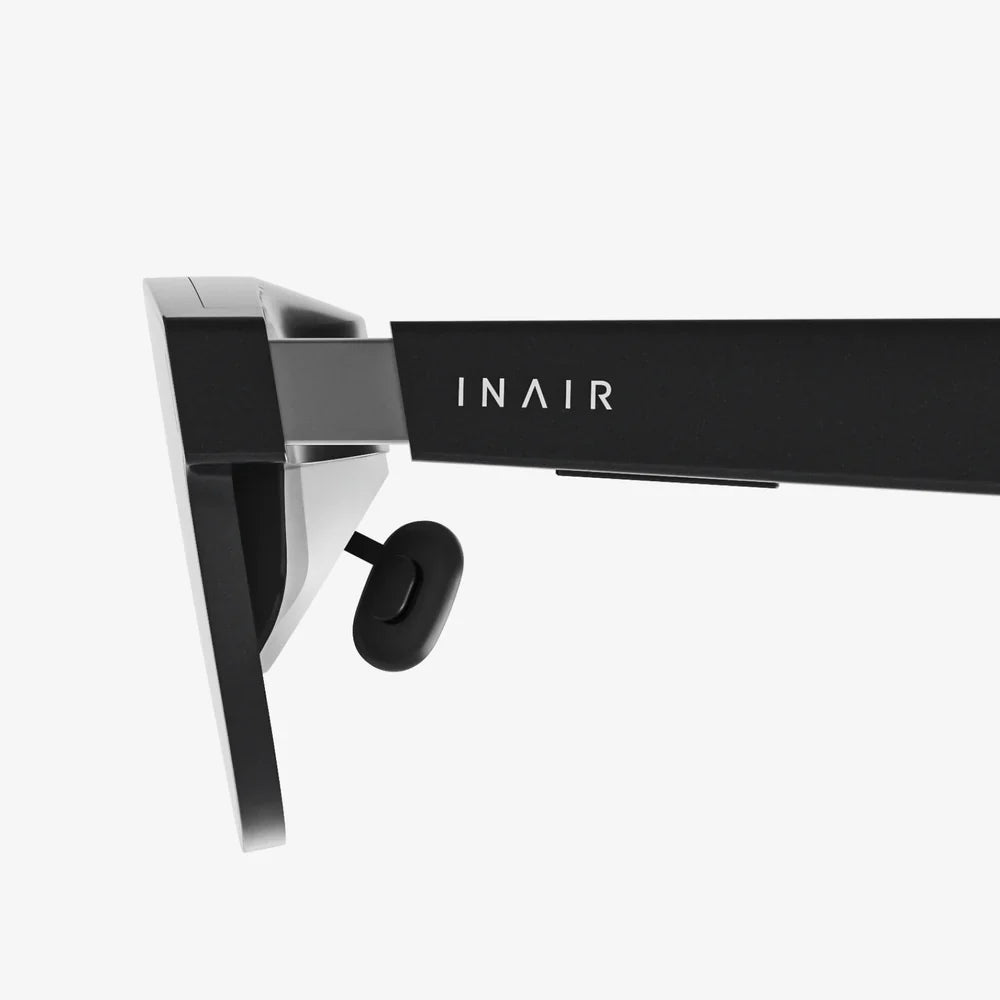
Imagine slipping on a headset and instantly being transported. The familiar walls of your room dissolve, replaced by the craggy surface of Mars, the intricate blueprint of a new heart, or the bustling floor of a stock exchange on the other side of the globe. This is not watching a screen; this is being inside it. This is the promise, the power, and the profound experience of immersive virtual reality—a technology that doesn't just show you a new world but convinces your entire being that you are truly within it.
The Core Principle: The Illusion of Presence
At its heart, immersive virtual reality (IVR) is a simulated digital environment that replaces the user's real-world surroundings convincingly enough to create a sensation known as "presence." Presence is the magic ingredient. It's the unequivocal, subconscious feeling of "being there" inside the digital realm. This is more than just immersion; a gripping book or a movie on a large screen can be immersive. Presence is the psychological state where the user's brain suspends disbelief and accepts the virtual experience as a genuine reality. Achieving this requires a sophisticated orchestration of hardware and software designed to hijack the human senses, primarily sight and sound, and increasingly touch and even smell.
The Technological Pillars of Immersion
Building a convincing virtual world is a monumental technical challenge. It relies on several key pillars working in perfect harmony.
1. The Head-Mounted Display (HMD)
The HMD, or headset, is the most recognizable piece of IVR technology. It's the gateway. Modern HMDs contain two small high-resolution displays (one for each eye), a series of intricate lenses that focus and reshape the image for each eye to create a stereoscopic 3D effect, and a complex array of sensors. These sensors are crucial for tracking the user's head movements—rotations (pitch, yaw, roll) and, in more advanced systems, positional tracking in 3D space (moving forward/back, up/down, left/right). This tracking must be incredibly precise and low-latency; any delay between the user moving their head and the display updating will break the illusion and can cause disorientation or motion sickness.
2. Low-Latency Tracking
Latency is the enemy of presence. It refers to the delay between an action and its corresponding effect in the virtual world. IVR systems strive for latency under 20 milliseconds, a speed faster than the human brain can perceive a lag. This is achieved through a combination of internal measurement units (IMUs like gyroscopes and accelerometers) for rapid rotational tracking and external systems like base stations or inside-out cameras for precise positional data. This ensures that when you turn your head to look at a virtual object, it remains stable and rooted in its place, just as it would in the real world.
3. High-Fidelity Visuals and Audio
Visual fidelity is paramount. This encompasses high resolution to eliminate the "screen door effect" (seeing the gaps between pixels), a high refresh rate (90Hz and above) for smooth motion, and a wide field of view (FOV) that approximates human vision to prevent the feeling of looking through binoculars. Equally important is spatial audio. True immersion is shattered if a sound that should come from your left seems to emanate from inside your own head. Spatial audio uses head-related transfer functions (HRTFs) to simulate how sound waves interact with the human head and ears, allowing sounds to be placed accurately in 3D space. Hearing the subtle rustle of leaves behind you or the echo of footsteps in a virtual hallway is critical for selling the illusion.
4. Interactivity and Haptics
A world you cannot interact with is merely a panorama. True immersion requires agency. This is provided through motion controllers, gloves, and full-body tracking suits. These input devices translate your real-world hand and body movements into the virtual space, allowing you to push, pull, throw, grab, and gesture. Haptic feedback adds the crucial sense of touch, using vibrations, force feedback, and even pneumatic systems to simulate the feeling of touching a rough surface, feeling the recoil of a tool, or experiencing the impact of a virtual object. This multisensory engagement deepens the cognitive investment in the experience.
Applications: Beyond Gaming and Entertainment
While gaming is the most famous application, the potential of IVR stretches far beyond, revolutionizing numerous professional fields.
Education and Training
IVR offers an unparalleled tool for experiential learning. Instead of reading about ancient Rome, history students can walk its streets. Medical students can practice complex surgical procedures on virtual patients, making mistakes without consequences. Trainee pilots can navigate extreme weather scenarios in a safe, virtual cockpit. This "learning by doing" in a controlled, repeatable environment dramatically improves knowledge retention and skill acquisition.
Healthcare and Therapy
The therapeutic applications are vast. IVR is used for exposure therapy, helping patients with phobias (like fear of heights or flying) confront their triggers in a gradual, controlled manner. It's used for physical rehabilitation, turning repetitive exercises into engaging games to motivate patients. Surgeons use VR to plan and rehearse complex operations by interacting with 3D models reconstructed from patient scans. Furthermore, VR is being explored for pain management, using immersive distraction to help burn victims during wound care.
Design and Architecture
Architects and engineers are using IVR to step inside their designs long before the first brick is laid. They can experience the scale of a building, test sightlines, identify potential design flaws, and make client presentations infinitely more impactful. A client can literally walk through their future home and request changes based on a true sense of the space, not just a flat blueprint.
Remote Collaboration and Social Connection
IVR has the potential to redefine remote work and social interaction. Instead of a grid of faces on a video call, colleagues from across the planet can meet as lifelike avatars in a virtual boardroom, interacting with 3D data models as if they were physical objects. This creates a sense of shared space and presence that flat screens cannot replicate, fostering better collaboration and a stronger sense of team cohesion.
The Challenges and Ethical Considerations
The path to perfect virtuality is not without obstacles. Technical challenges like achieving photorealistic graphics in real-time, eliminating motion sickness for all users, and creating affordable, wireless, and comfortable hardware remain. Beyond the tech, there are profound ethical questions. As these worlds become more compelling, issues of data privacy (what is being recorded about your movements and reactions?), psychological effects (how does long-term immersion impact our perception of reality?), and the potential for addiction and escapism must be addressed. Establishing clear "ethically aligned design" principles is crucial for the healthy development of the medium.
The Future Horizon: Towards Full Sensory Reality
The future of IVR is moving beyond sight and sound. Research is fervently underway into haptic suits that can simulate pressure and temperature, omnidirectional treadmills that allow for natural walking in infinite virtual spaces, and even neuroprosthetic interfaces that could one day transmit signals directly to the brain, bypassing hardware entirely. The goal is a seamless, full-body experience where the line between the physical and the digital becomes increasingly blurred.
The journey into immersive virtual reality is more than a technological evolution; it's a fundamental expansion of human experience. It is a tool that allows us to travel to impossible places, heal old wounds, design future cities, and connect with others in profoundly new ways. It is the ultimate canvas for the human imagination, a medium limited not by physics but only by the creativity of its creators and the ethical frameworks we choose to build it upon. The headset is not just a device; it is a portal, and we are only just beginning to step through.
Share:
Mixing Spatial Audio The Ultimate Guide to Immersive 3D Sound Design
4K Virtual Reality Headset: The Ultimate Immersive Experience and What It Means for the Future