


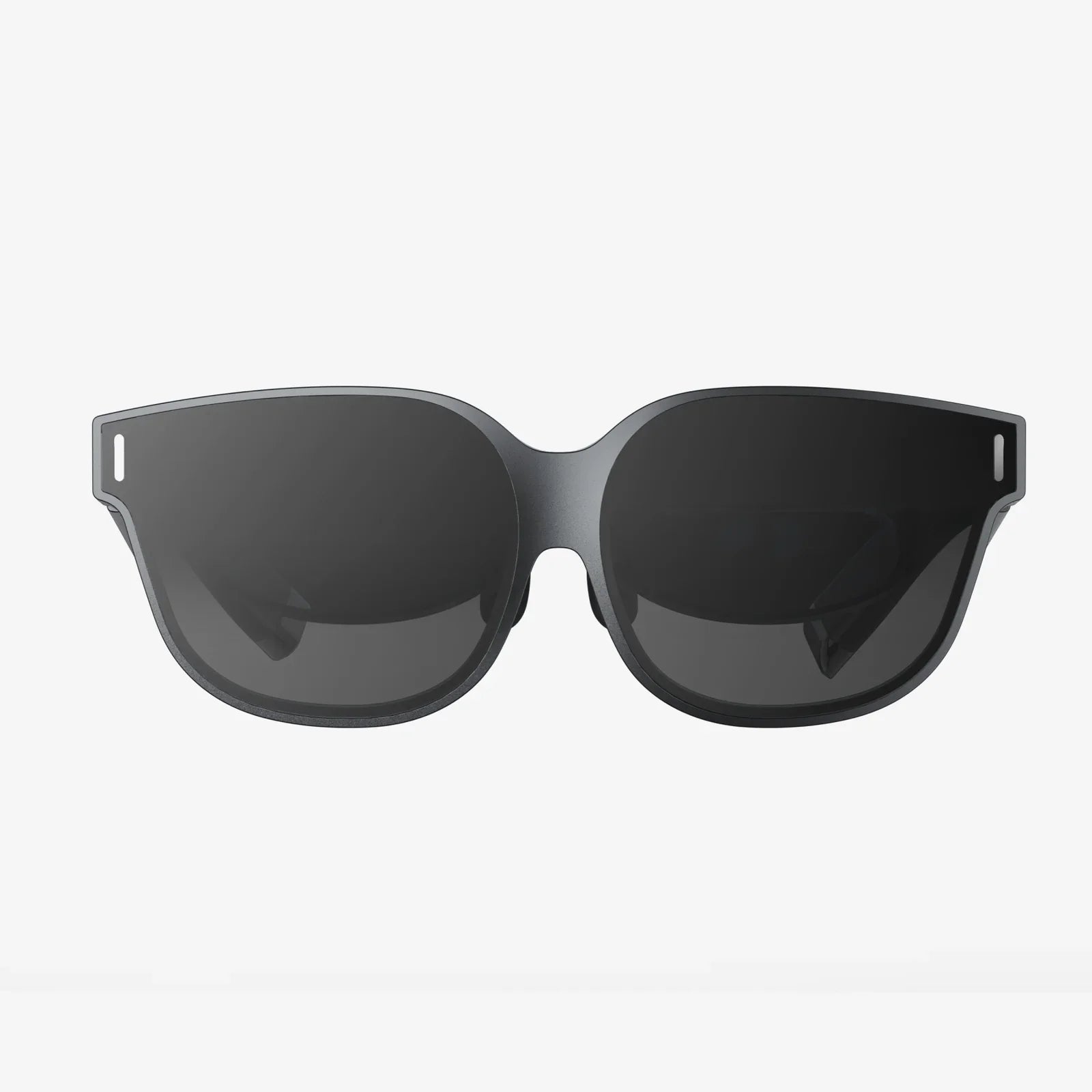
Imagine a world where the line between the digital and the physical not only blurs but vanishes entirely, where your most powerful portal to immersive experiences isn't a bulky headset or a high-powered console, but the sleek, unassuming device resting in your palm. This isn't a glimpse into a distant future; it is the present reality being forged by the silent, rapid evolution of mobile 3D technology. This revolution is transforming our smartphones from flat, two-dimensional windows into dynamic, three-dimensional gateways, fundamentally altering how we play, learn, shop, and connect.
The Pillars of Perception: How Your Phone Sees in Three Dimensions
The magic of rendering a three-dimensional world on a two-dimensional screen is a complex ballet of hardware and software, a technological symphony conducted by your mobile device. It begins with the eyes: advanced sensor systems.
Many modern mobile devices are equipped with sophisticated Time-of-Flight (ToF) sensors. These components work by emitting invisible infrared light pulses and precisely measuring the time it takes for each pulse to bounce back from objects in the environment. By calculating this round-trip time for millions of points, the sensor can build a detailed "depth map" of the scene, accurately gauging the distance to every surface. This depth information is the crucial third data point (adding to the X and Y axes) that flat images lack.
Complementing these dedicated sensors are advanced stereoscopic vision techniques that use software to mimic human binocular vision. By analyzing the slight differences between the images captured by two or more cameras on the device, algorithms can triangulate the position of objects and reconstruct depth information. This is often enhanced by LiDAR (Light Detection and Ranging) scanners, which use laser light to create incredibly precise high-resolution depth maps, particularly effective for mapping larger spaces and objects with fine detail.
But raw data is useless without interpretation. This is where the brain of the operation comes in: on-device AI and machine learning processors. These specialized chips are designed to perform trillions of operations per second, dedicated to tasks like simultaneous localization and mapping (SLAM). SLAM allows the device to understand its own position and orientation in space while simultaneously mapping the environment around it. This is the foundational technology that enables a virtual dinosaur to know it's standing on your actual coffee table or allows virtual furniture to stay locked in place as you walk around your room.
Finally, all this data is synthesized and rendered into a cohesive experience through powerful mobile GPUs (Graphics Processing Units). These chips are engineered for efficiency, capable of generating complex 3D graphics and visual effects without draining the battery, ensuring the illusion is both immersive and sustainable.
Beyond Novelty: The Practical Applications Reshaping Industries
The true power of mobile 3D is revealed not in tech demos, but in its practical, everyday applications that are already solving real-world problems and creating new opportunities across diverse sectors.
Retail and E-Commerce: Try Before You Buy, Anywhere
The days of guessing whether a new sofa will fit in your living room or if a pair of glasses will suit your face are over. Mobile 3D has unlocked the era of virtual try-on and augmented reality shopping. Consumers can now use their phones to see how products look in their homes at true scale, experiment with different paint colors on their walls, or virtually try on clothes, accessories, and makeup. This drastically reduces purchase uncertainty, lowers return rates for retailers, and creates a far more engaging and confident shopping experience, effectively bringing the fitting room and showroom floor directly to the customer.
Education and Training: Learning by Doing, Virtually
Education is being transformed from passive observation to active participation. Imagine medical students practicing complex surgical procedures on detailed 3D anatomical models that they can rotate, dissect, and explore from every angle. Envision history classes where students can hold and examine ancient artifacts in 3D or take virtual field trips to historical sites, walking among digitally reconstructed ruins. For industrial training, employees can learn to operate intricate machinery or practice safety procedures in a risk-free, immersive 3D simulation, all accessible through a tablet or phone. This hands-on, visual approach caters to diverse learning styles and makes complex subjects more intuitive and accessible.
Gaming and Entertainment: The Arcade in Your Pocket
While mobile gaming has long been popular, 3D technology has supercharged it, creating genres that were previously impossible. Location-based games use the real world as a playground, encouraging exploration and physical movement. AR games overlay fantastical creatures and gameplay onto your immediate environment, turning a park or a living room into an interactive board. Furthermore, streaming services and content creators are beginning to experiment with 3D and volumetric video, offering new forms of narrative and experiential storytelling where the viewer can move within the scene, not just observe it from a fixed angle.
Social Connection and Remote Collaboration
Video calls are a poor substitute for sharing a physical space. Mobile 3D paves the way for more meaningful digital interaction. Future social platforms could allow users to share 3D captures of their experiences—a memorable sunset, a child's first steps—not as a flat video, but as a volumetric moment that friends can step into. For remote work, architects, engineers, and designers can collaborate around a 3D model of a project as if it were physically present on the conference table, making annotations and decisions in real-time with a shared understanding that 2D blueprints cannot provide.
Navigating the Uncharted: Challenges and Ethical Considerations
As with any powerful technology, the rise of mobile 3D brings a host of challenges that society must proactively address.
The very sensors that map our world also have the potential to collect unprecedented amounts of personal data. The detailed 3D scans of our homes, offices, and even our bodies represent a profound privacy concern. This biometric and spatial data is incredibly sensitive. Robust regulations and transparent data handling policies are essential to ensure this information is not misused, sold, or hacked. Users must have clear control over what is scanned and how that data is stored and utilized.
Furthermore, as the digital and physical layers become indistinguishable, the potential for misuse grows. Malicious actors could create hyper-realistic 3D deepfakes or fabricate convincing false environments for fraud or misinformation. The ability to seamlessly alter reality also raises questions about authenticity and trust. How will we verify what is real when anyone can generate a perfect 3D replica of a person or place?
There is also a risk of a new digital divide. As these experiences become more central to work, education, and commerce, those without access to the latest devices capable of processing these complex 3D environments could be left at a significant disadvantage, creating a gap not just in connectivity, but in the very perception of reality.
The Future is in Your Hand: What Comes Next for Mobile 3D?
The trajectory of mobile 3D points toward even deeper integration into our daily lives. We are moving towards the concept of the "spatial web," where digital information is not tied to URLs but to specific locations and objects in the real world. Your phone will act as a lens to view this persistent digital layer over reality, offering context-aware information, navigation, and experiences.
Advancements in neural radiance fields (NeRF) and other AI-driven rendering techniques will soon allow us to generate photorealistic 3D environments from a handful of standard photos, making the creation of high-fidelity 3D content as easy as taking a picture. Haptic feedback technology will evolve to provide tactile sensations, letting you feel the texture of a virtual fabric or the resistance of a digital control. And perhaps most significantly, mobile 3D will serve as the primary on-ramp to more immersive experiences like full augmented and virtual reality, with the smartphone remaining the most accessible and powerful compute core for these wearable devices.
The ultimate goal is not to replace reality, but to augment it—to enhance our human capabilities, enrich our understanding, and deepen our connections. It is about making technology more intuitive, more contextual, and more human-centric. The power to scan, create, and interact with 3D dimensions is democratizing, moving from specialized labs and expensive equipment into the hands of billions. This is not just an incremental upgrade; it is a fundamental shift in our relationship with technology, and it is happening right now, silently and powerfully, in the mobile device you already own. The third dimension is no longer a distant frontier; it is an invisible layer waiting to be uncovered, and your phone is the key.
Share:
How Does AI Software Work: A Deep Dive into the Digital Mind
How Does AI Software Work: A Deep Dive into the Digital Mind