


- by wangfred
Mobile AR Immersive Interaction: Bridging 2D Screens and 3D Worlds
- by wangfred
Imagine pointing your device at a static poster and watching it burst into life, a three-dimensional universe unfolding from a two-dimensional surface. This is no longer the stuff of science fiction; it is the reality being forged today at the intersection of mobile technology, augmented reality, and innovative design. The journey from the flat, tactile world of our screens to a spatially-aware, interactive digital layer atop our physical reality represents one of the most significant shifts in human-computer interaction. This evolution promises to fundamentally alter how we learn, shop, play, and connect, making our digital experiences more intuitive, contextual, and profoundly engaging.
The history of personal computing has been a steady march towards more natural and immersive interfaces. We moved from command lines to graphical user interfaces (GUIs), which introduced the now-ubiquitous windows, icons, and pointers manipulated by a mouse. The advent of mobile computing brought the touchscreen, a direct manipulation system that felt more intuitive. We tapped, swiped, and pinched our way through applications, but we were still confined to the 2D plane of the glass.
Mobile Augmented Reality (AR) represents the next logical step in this progression. It doesn't seek to replace the 2D screen but to augment it, to use it as a viewport or a lens into a blended reality. The core magic of mobile AR lies in its ability to understand the environment through its camera and sensors. Simultaneous Localization and Mapping (SLAM) algorithms allow the device to map a room in real-time, understanding surfaces, depth, and spatial geometry. This environmental understanding is the canvas upon which immersive interactions are painted.
"Immersive interaction" is more than a buzzword; it describes a paradigm where the user feels present within a digitally augmented space, and their actions feel directly tied to the outcomes within that space. On a mobile device, this is achieved through a sophisticated blend of technologies and design principles.
Spatial Awareness and Occlusion: True immersion begins when digital objects respect the physical world. A virtual character doesn't just float in front of a table; it walks behind it, obscured from view. This occlusion, the understanding that real-world objects exist in front of digital ones, is a cornerstone of believable AR. It tricks our brain into accepting the digital object as part of our environment.
Gesture and Touch in 3D Space: Interaction moves beyond the simple tap. Users can now reach "into" the screen to manipulate a 3D model, rotating it with a finger drag, scaling it with a pinch, or even using complex hand gestures tracked by the front-facing camera to issue commands. This direct manipulation of 3D objects creates a powerful sense of agency and connection.
Contextual and Environmental Anchoring: Immersive AR experiences are often triggered by or tied to specific locations or objects—a marker. This can be a QR code, a branded logo, or even a complex image. More advanced markerless AR uses the entire environment as a trigger, allowing users to place furniture anywhere in their room or view navigation arrows painted onto the street itself. This anchoring creates a seamless link between the digital action and its physical context.
While the 3D experience is dazzling, the 2D interface remains the critical workhorse of mobile AR applications. It is the control panel, the guide, and the information hub that makes the immersive experience usable. Attempting to build an app with only a 3D interface would be like building a car without a dashboard.
Orchestrating the Experience: Before a user ever points their camera, they are navigating a traditional 2D menu. They browse a catalog of available AR experiences, read descriptions, and select what they want to see. This onboarding process is entirely reliant on clear, familiar 2D design principles.
Providing Controls and Feedback: During the AR session, transparent UI elements often overlay the camera view. A slider might control the color of a virtual piece of furniture. A button confirms a placement. Text boxes provide instructions or product information. These 2D elements are non-diegetic UI—they exist as an overlay, not within the 3D world itself—but they are essential for user control and comprehension.
Bridging the Gap: The most elegant mobile AR designs create a fluid dialogue between the 2D and 3D realms. A user might tap a 2D thumbnail of a product, causing its full 3D model to erupt from the screen and anchor on their floor. After viewing it from all angles, they might tap a persistent 2D "Buy Now" button that appears at the bottom of the screen. The 2D interface initiates, supports, and concludes the 3D immersive journey.
The theoretical potential of mobile AR is vast, but its practical applications are already delivering tangible value across numerous sectors.
Retail and E-Commerce: This is perhaps the most visible application. The "try before you buy" paradigm has been revolutionized. Customers can see how a new sofa fits and looks in their living room, try on watches or glasses virtually, or visualize a new coat of paint on their walls. This immersive interaction drastically reduces purchase uncertainty and product returns, while providing a engaging shopping experience that blends the best of online and in-store retail.
Education and Training: Textbooks and diagrams become dynamic. Students can point their device at a 2D image of the human heart and watch a beating, interactive 3D model appear, which they can dissect and explore. Mechanics in training can practice complex procedures on virtual engines overlaid onto real workbenches. This kinesthetic, visual learning leads to dramatically improved retention and understanding.
Industrial Design and Manufacturing: Engineers and designers use mobile AR to visualize prototypes at 1:1 scale on the factory floor, identifying potential design clashes with existing equipment before a single physical part is manufactured. Instruction manuals are replaced by AR guides that overlay animated assembly instructions directly onto the equipment, reducing errors and training time.
Navigation and Wayfinding: Instead of staring at a blue dot on a 2D map, users can hold up their phone and see digital arrows and pathways superimposed onto the street in front of them, guiding them through a complex airport terminal or a sprawling university campus with intuitive, real-world context.
Despite its promise, widespread adoption of sophisticated mobile AR still faces significant challenges that developers and designers must overcome.
Technical Limitations: AR is computationally intensive. Continuous environmental tracking, 3D rendering, and image processing drain batteries rapidly and can cause devices to heat up. Creating smooth, high-fidelity experiences that perform consistently across a fragmented ecosystem of mobile hardware remains a formidable technical challenge.
The Interaction Paradox: Designing intuitive interactions for 3D space using a 2D touchscreen is not a solved problem. How does a user easily select an object that is far away in the AR scene? How are complex actions best communicated? There are no established standards, leading to a Wild West of interaction models that can confuse users.
User Experience and Onboarding: If a user doesn't understand how to initiate the AR experience or what to point their camera at, they will quickly disengage. Designing clear, frictionless onboarding that guides the user from the 2D app into the immersive 3D experience is critical and often difficult to get right.
The "Gimmick" Factor: For AR to have lasting power, it must provide genuine utility, not just a momentary "wow." Experiences must be designed to solve real problems and add tangible value, moving beyond novelty to become an indispensable tool.
The trajectory of mobile AR is pointing towards an increasingly seamless and powerful future. We are moving towards a world where the line between the 2D interface and the 3D world will blur into irrelevance.
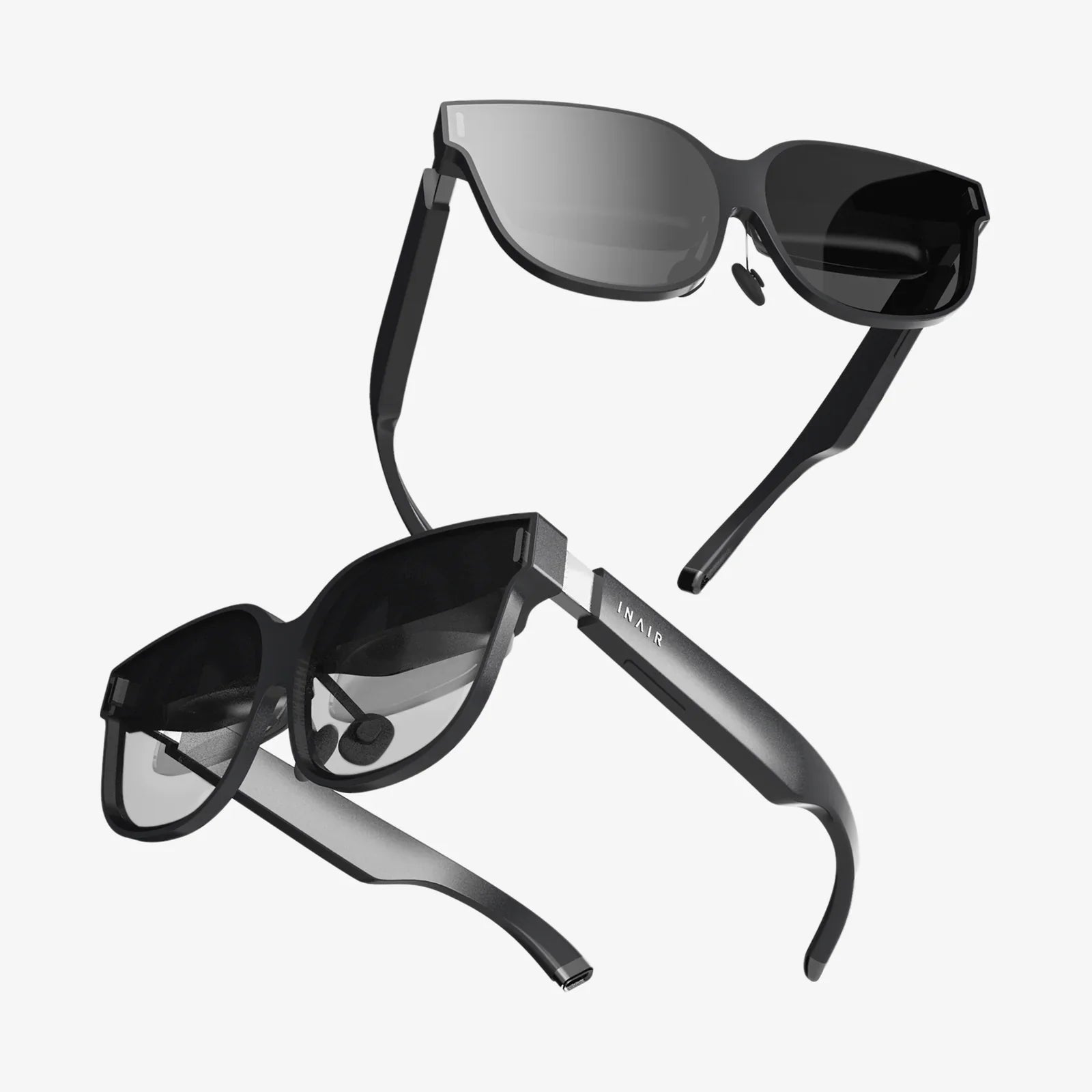
Advancements in hardware, particularly in dedicated AR wearables, will eventually alleviate many current battery and processing constraints. 5G and edge computing will offload heavy processing to the cloud, enabling more complex and persistent AR worlds. Artificial Intelligence will play a larger role, allowing devices to not just see surfaces, but to understand the objects in a room—recognizing a chair, a table, a television—and allowing digital content to interact with them intelligently.
The future of mobile AR immersive interaction is a contextual and ambient one. Your device will understand what you're looking at and offer relevant information and interactions automatically. The 2D screen will not disappear; it will evolve into the most convenient portal for accessing a digital layer that is forever intertwined with our physical existence, making every surface a potential interface and every space a canvas for imagination.
The device in your pocket is no longer just a window to the internet; it is a lens for a new reality, waiting for you to look through it and discover the extraordinary hidden within the ordinary. The next time you see a flat image, a product box, or a street corner, remember—there's a whole new dimension just waiting to be unlocked.