


Imagine pointing your phone at a city street and seeing its history layered over the present, watching a virtual dinosaur stomp through your local park, or visualizing a new piece of furniture perfectly scaled in your living room before you buy it. This is no longer the stuff of science fiction; it is the rapidly evolving, accessible reality powered by mobile augmented reality. This technology, residing in the pockets of billions, is quietly orchestrating a fundamental shift in how we interact with information, with each other, and with the space around us, promising a future where the digital and physical are inextricably and usefully linked.
The Core Mechanics: How Mobile AR Weaves the Digital Tapestry
At its essence, mobile augmented reality is the real-time, interactive overlay of computer-generated perceptual information onto our view of the physical world. Unlike its cousin, virtual reality, which seeks to replace reality entirely, AR aims to supplement and enhance it. The magic happens through a sophisticated symphony of hardware and software components within a modern smartphone.
The process begins with the camera, which acts as the device's eyes, continuously capturing the live video feed of the user's environment. This raw visual data is then processed by powerful computer vision algorithms. These algorithms perform critical tasks like simultaneous localization and mapping (SLAM), which allows the device to understand its position in space and create a rough 3D map of its surroundings in real-time. It identifies planes (like floors and tables), detects edges, and tracks feature points to maintain a stable digital anchor in the real world.
This spatial understanding is complemented by a suite of inertial measurement unit (IMU) sensors—the accelerometer, gyroscope, and magnetometer—which provide precise data on the device's movement, orientation, and tilt. By fusing the visual data from the camera with the motion data from the IMUs, the phone can place a digital object on a physical surface and have it remain there convincingly, even as the user walks around it.
Finally, the display—the phone screen—renders the digital content, compositing it perfectly with the live camera feed. Advanced rendering techniques, including realistic lighting and shadow casting, are employed to make the virtual object appear as if it truly belongs in the real environment, breaking down the barrier between what is real and what is digital.
A Journey Through Time: The Evolution of a Revolution
The concept of augmented reality has been around for decades, with early experiments conducted in university and military labs. However, it was the proliferation of powerful, sensor-rich smartphones that truly democratized the technology. The journey can be broken into distinct phases of maturity.
The first wave was marker-based AR. This required a predefined visual trigger, often a black-and-white square pattern, to be placed in the environment. The phone's camera would recognize this specific pattern and use it as a stable anchor to overlay a simple digital model, like a 3D character. While revolutionary at the time, it was limited and required prepared environments.
The next significant leap was the advent of markerless AR, powered by SLAM and improved computational photography. This eliminated the need for physical markers, allowing digital content to be placed on any horizontal surface the camera could detect. This opened the floodgates for practical applications, from games where the entire world became the playground to utility apps that could measure objects using just the camera.
We are now in the era of context-aware and AI-driven AR. Modern systems no longer just see surfaces; they understand the context of the environment. Machine learning models can identify and segment specific objects—is that a chair, a lamp, or a person?—allowing for more intelligent and persistent interactions. Cloud-based AR anchors enable multiple users to share the same augmented experience simultaneously from different devices, paving the way for collaborative AR, while advancements in wearable technology hint at a future where smartphones are not the primary AR interface.
Transforming Industries: The Practical Power of AR
While entertainment often grabs headlines, the most profound impact of mobile AR is being felt across a wide spectrum of industries, solving real-world problems and creating new paradigms for work and commerce.
Retail and E-Commerce
Mobile AR is fundamentally changing the way we shop. The dreaded "will it fit?" question for furniture is being answered by apps that allow users to place true-to-scale 3D models of sofas, tables, and decor directly in their homes. The fashion industry is leveraging AR for virtual try-ons, enabling customers to see how sunglasses, makeup, or even sneakers will look on them before making a purchase. This "try before you buy" digital experience drastically reduces purchase hesitation and product return rates, bridging the gap between online convenience and in-store confidence.
Education and Training
Textbooks and static diagrams are being transformed into interactive, immersive learning experiences. A student studying anatomy can explore a beating heart hologram from every angle. A history class can walk through a reconstructed ancient Roman settlement superimposed on their school grounds. For industrial and medical training, AR provides safe, repeatable, and cost-effective simulations. A trainee mechanic can see repair instructions and part names overlaid directly on an engine block, while a medical student can practice complex procedures on a virtual patient. This learning-by-doing in a contextualized environment dramatically improves knowledge retention and skill acquisition.
Industrial Design and Manufacturing
In factories and on construction sites, mobile AR is becoming an indispensable tool. Designers and engineers can visualize and interact with full-scale 3D prototypes long before physical models are built, facilitating collaboration and identifying design flaws early. On the factory floor, assembly line workers can receive step-by-step instructions overlaid directly on the machinery they are assembling, reducing errors and improving efficiency. For maintenance and repair, technicians can use AR to see hidden systems, like wiring or plumbing, through walls and access interactive manuals hands-free.
Navigation and Tourism
The days of holding out a paper map or constantly glancing down at a blue dot on a 2D screen are numbered. AR navigation apps project large, intuitive arrows and directions onto the live view of the street, making it effortless to navigate complex intersections or find the entrance to a subway station. For tourists, pointing a phone at a monument can reveal historical facts, restaurant reviews, or even show what the structure looked like centuries ago. This contextual layer of information turns every city into a living, interactive museum.
The Human and Societal Implications: A Double-Edged Sword
As with any transformative technology, the widespread adoption of mobile AR brings with it a host of ethical, social, and psychological considerations that society must grapple with.
Privacy is perhaps the most pressing concern. AR devices, by their very nature, are constantly scanning and interpreting their environment. This raises profound questions: Who has access to this visual data? How is it stored and used? The potential for persistent surveillance, facial recognition in public spaces, and the unauthorized collection of environmental data presents a significant challenge to existing privacy norms. Clear regulations and transparent data policies will be crucial to building public trust.
The concept of digital vandalism and spatial spam is another novel issue. If everyone can leave persistent digital content in a location, what prevents public spaces from becoming cluttered with offensive graffiti or intrusive advertisements? Establishing digital etiquette and potentially even governance models for our shared augmented spaces will be necessary to prevent a dystopian overload of unwanted digital content.
On a psychological level, there is the risk of the atomization of experience. As two people in the same physical location can be experiencing entirely different augmented realities, shared common experiences could become fractured. Will AR enhance our reality or cause us to retreat further into personalized digital bubbles, eroding our sense of shared physical space and serendipitous interaction?
Gazing into the Crystal Ball: The Future is Augmented
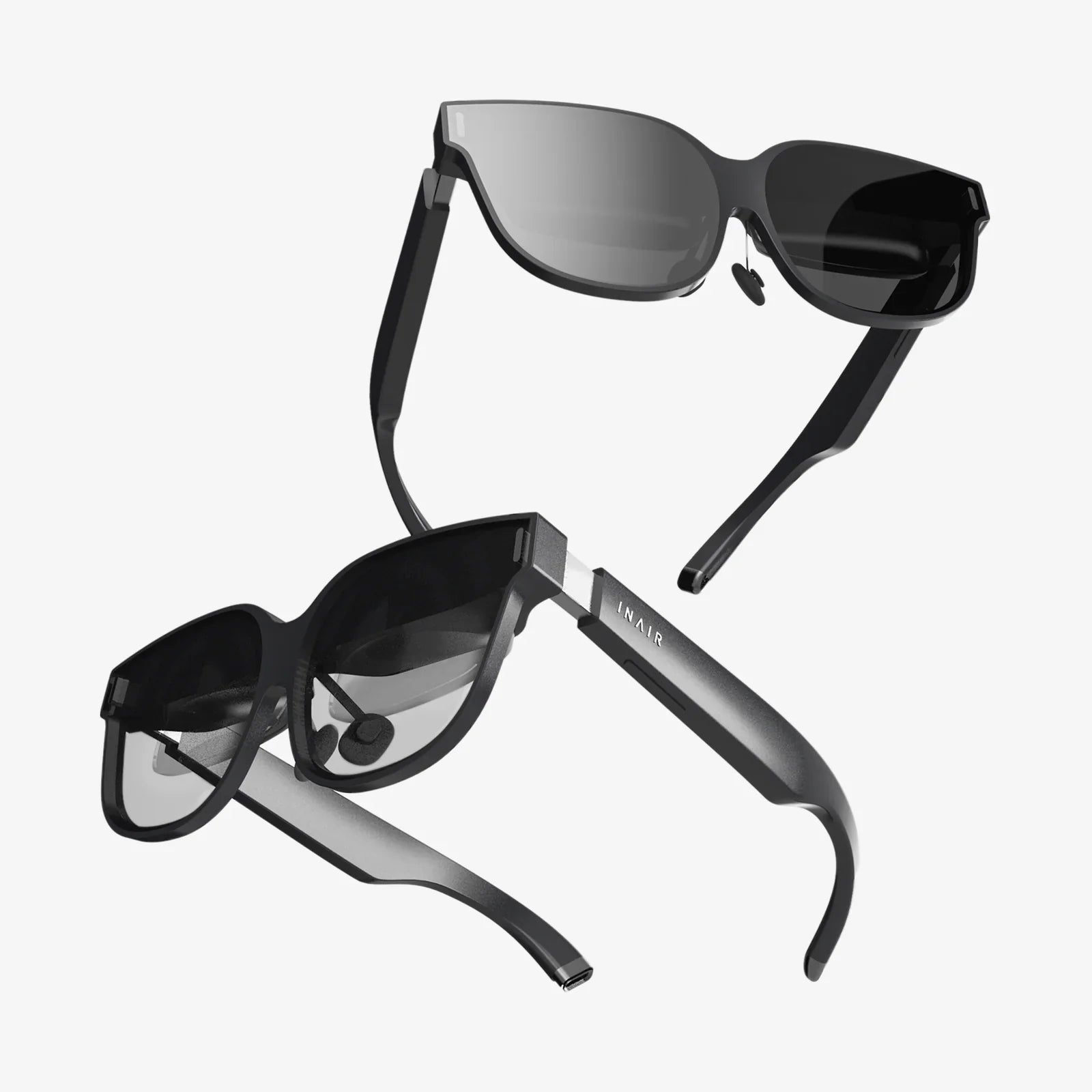
The current state of mobile AR, impressive as it is, is merely a stepping stone. The future points towards a more seamless, integrated, and powerful experience. The next evolutionary step is the move from hand-held to head-worn—towards stylish, socially acceptable AR glasses that will free our hands and provide a truly persistent augmented layer over our entire field of view. This will require massive leaps in battery life, display technology, and miniaturization.
Furthermore, the AR of tomorrow will be inextricably linked to the development of the spatial web or WebXR. This envisions a world where digital information is not tied to screens but to locations and objects themselves. Your favorite coffee shop's menu, a friend's social media post, or historical data about a building would exist as a digital layer in space, accessible to anyone with AR-enabled devices, creating a universally accessible and interactive digital twin of our world.
Finally, the convergence of AR with other transformative technologies like 5G/6G (for near-instant data streaming and cloud processing) and Artificial Intelligence will unlock capabilities we can only begin to imagine. An AI-powered AR assistant could not only translate a foreign language sign in real-time but also provide cultural context. It could analyze a plant and immediately tell you its species and care instructions, or look at a complex mechanical assembly and guide you through its repair.
The smartphone in your hand is the keyhole through which we are all first glimpsing this augmented future. It has successfully proven the concept and demonstrated the utility of blending our realities. As the technology continues to mature, becoming more intuitive, powerful, and woven into the fabric of our daily lives, it holds the potential to enhance human cognition, bridge cultural and physical divides, and unlock new forms of creativity and collaboration. The boundary between the digital and the physical is dissolving, and on the other side awaits a world infinitely richer, more informed, and more magical than we ever thought possible.
Share:
Augmented Reality Design: The Invisible Layer Reshaping Our World
Best AR VR Glasses: A Comprehensive Guide to Immersive Technology in 2024