


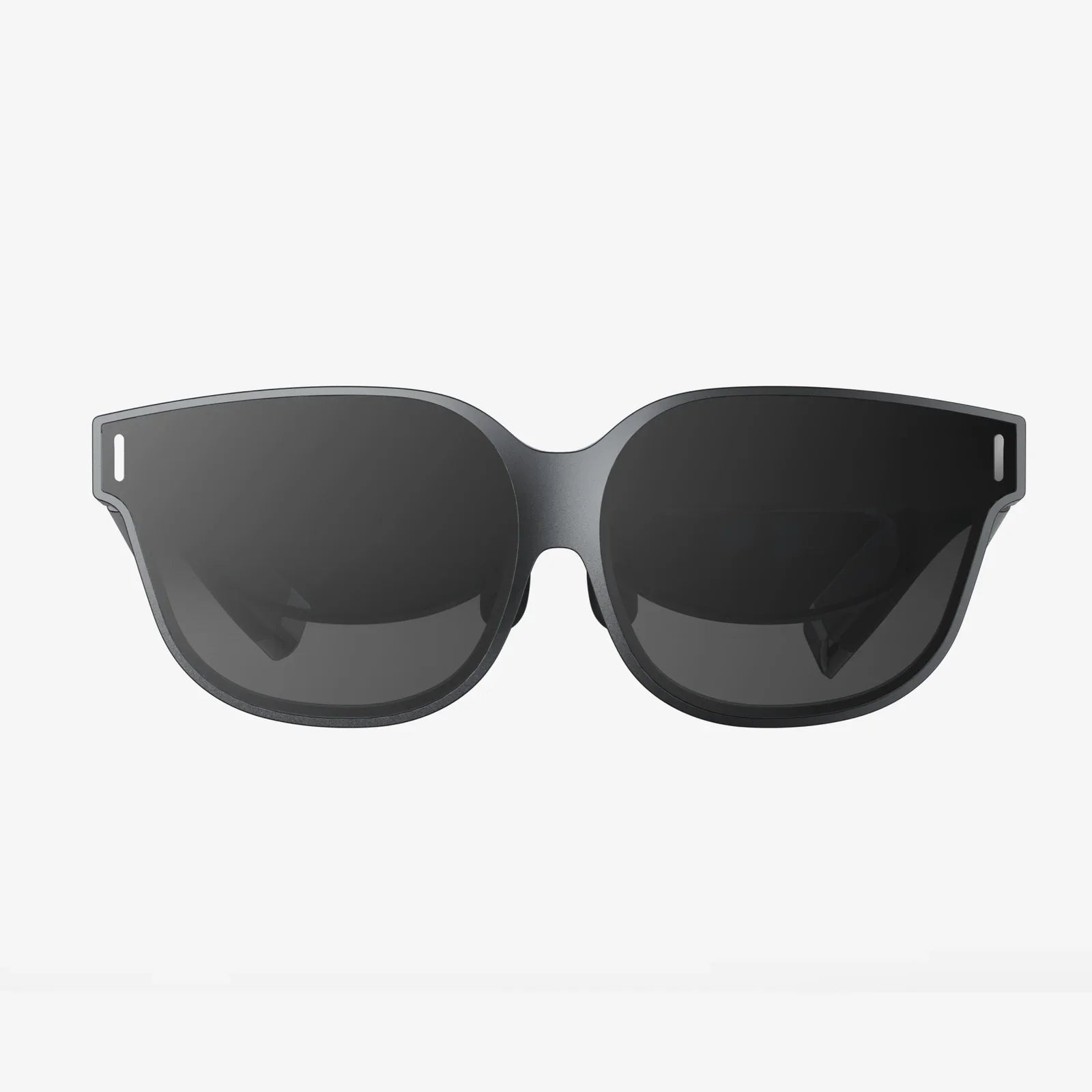
Imagine slipping a sleek, powerful computer into a simple holder, strapping it to your face, and instantly being transported to the peak of Mount Everest, the front row of a concert thousands of miles away, or the bridge of a starship hurtling through the cosmos. This is the promise, the magic, and the profound accessibility of the mobile VR headset smartphone combination—a technological synergy that has democratized virtual reality and placed a universe of experiences directly into the pockets of millions.
The Genesis of a Revolution: From Prototype to Mainstream
The concept of using a smartphone as the heart of a virtual reality system is an elegant solution to one of VR's most significant historical barriers: cost. Early dedicated VR systems were the domain of well-funded laboratories and hardcore enthusiasts, requiring high-end personal computers with powerful, expensive graphics cards. The mobile VR headset smartphone paradigm flipped this model on its head. Instead of building a completely self-contained system with its own display, processor, and sensors, why not leverage the supercomputer almost everyone already carries? The smartphone provided a high-resolution display, a robust gyroscope and accelerometer for head tracking, a powerful processor, and a built-in battery. The headset itself could then be a relatively inexpensive piece of hardware, often made from plastic, cardboard, or foam, acting primarily as a holder, a lens system to warp the image for each eye, and a means of blocking out external light.
Deconstructing the Magic: How It All Works Together
The seamless experience of virtual reality belies the complex orchestration of hardware and software happening in real-time. Understanding the components reveals the ingenious simplicity of the design.
The Hardware Symphony
At its core, the system is a partnership. The smartphone is the brains and the eyes. Its high-density screen is split into two halves, one for each eye. The internal Inertial Measurement Unit (IMU), a combination of the gyroscope and accelerometer, tracks the precise orientation of your head—every tilt, turn, and nod—at a remarkably high frequency to maintain immersion and prevent the latency that can cause discomfort. The processor and graphics chip render the dual-perspective 3D environments or videos, while the onboard speakers or headphone jack provide spatial audio cues.
The mobile VR headset is the body. Its primary function is to house the smartphone securely. But its most critical components are the lenses. These are not simple magnifying glasses; they are specially designed aspherical lenses that perform a crucial optical trick. They take the warped, pre-distorted image rendered by the smartphone's software and correct it, making it appear normal and filling a wide field of view for the user. They also allow your eyes to focus on the image, which is physically very close to your face, as if it were much farther away. Additional features on more advanced headsets include adjustable focus dials for users with glasses, capacitive touch buttons or controllers for input, and built-in headphones for a more integrated audio experience.
The Software Ecosystem: The Invisible Conductor
None of this hardware would function without sophisticated software. The smartphone's operating system provides the foundational support for low-level sensor access. On top of this, the VR platform software (often distributed through a dedicated app store) creates the environment. This software manages the critical process of low-persistence display mode, where the screen only illuminates for a fraction of a second per frame. This reduces motion blur when you turn your head, a key factor in preventing simulator sickness. It also handles asynchronous timewarp, a clever technique that subtly adjusts the rendered image at the very last millisecond before it's displayed based on the latest head position data, compensating for any dropped frames and ensuring a smooth experience.
A Universe in Your Pocket: The Transformative Applications
The true value of any technology lies in its application. The mobile VR headset smartphone duo has unlocked a vast array of use cases that extend far beyond simple novelty.
Entertainment Reimagined
This is the most obvious and widely adopted application. Users are no longer just watching a movie; they are inside the movie theater, on the battlefield, or in the animated world itself. 360-degree videos allow for immersive travel documentaries, live sports events from the best seat in the house, and music concerts where you can stand next to the drummer. Gaming is revolutionized, offering experiences from serene puzzle games set in beautiful landscapes to heart-pounding horror games where you must physically turn your head to see what's behind you.
Education and Training: Learning by Being There
Imagine a history class where students can take a virtual tour of ancient Rome, walking through the Forum and looking up at the towering temples. Medical students can practice complex surgical procedures in a risk-free virtual environment. Corporate trainees can navigate safety protocols in a virtual factory. This experiential learning boosts retention and engagement, making abstract concepts tangible and memorable.
Social Connection and Virtual Tourism
Social VR platforms allow users to meet, interact, play games, and watch videos together in shared virtual spaces, represented by avatars. It creates a sense of presence and connection that video calls cannot match. Furthermore, for those with physical or financial limitations, it offers the unparalleled gift of travel—swimming with whales, walking on Mars, or visiting world heritage sites that they might otherwise never see.
Navigating the Limitations: The Challenges of Mobile VR
Despite its incredible accessibility, the mobile-based approach to VR has inherent constraints dictated by its core component: the smartphone.
Performance and Fidelity Ceiling
A smartphone, while powerful, is ultimately a thermally constrained device. It cannot compete with the raw graphical processing power of a high-end desktop computer tethered to a premium VR headset. This results in less complex visuals, simpler textures, and worlds that are less physically interactive. Pushing the graphical boundaries risks overheating the device, triggering performance throttling, and breaking immersion.
The Comfort Conundrum
Strapping a 6-ounce smartphone to your face presents a fundamental ergonomic challenge. The weight distribution is often front-heavy, leading to neck strain during longer sessions. While headset designs have improved with better padding and straps, the core issue of balancing a heavy processing unit on the front of the skull remains. Furthermore, screen door effects (seeing the gaps between pixels) and lower refresh rates on some devices can remind users they are looking at a screen, not a reality.
Input and Interaction Hurdles
Early mobile VR relied on gaze-based controls or a single button on the headset, which was limiting. The introduction of simple Bluetooth controllers improved the situation, but they still lack the sophisticated finger-tracking and haptic feedback of dedicated VR controllers, limiting the depth of interaction within virtual worlds.
The Future is Hybrid: The Legacy and Evolution of Mobile VR
The era of the simple plastic headset holding a smartphone has peaked, but its legacy is immense and directly shapes the future of immersive technology. It served as the crucial on-ramp for an entire generation, introducing them to VR with a low barrier to entry and proving there was a mass-market appetite for these experiences.
This technology has evolved into modern standalone VR and augmented reality (AR) headsets. These devices are, in essence, the spiritual successors to the mobile VR headset smartphone. They take the all-in-one concept further by integrating a purpose-built display, optimized sensors, and a processing system designed specifically for sustained spatial computing, all without the need for an external phone or computer. They represent the natural progression: learning from the limitations of mobile-based VR to create more powerful, comfortable, and interactive devices.
Yet, the core philosophy remains the same: to make immersive technology accessible. The journey that started with a piece of cardboard and a personal phone demonstrated that the gateway to other worlds didn't require a massive investment—it simply required curiosity. It proved that the most powerful VR tool wasn't just the hardware you bought, but the hardware you already owned, waiting to be unlocked. This democratizing spirit continues to drive innovation, ensuring that the wonders of virtual reality are never more than an arm's reach away, ready to transform your living room into a launchpad for infinite adventures.
Share:
Black And White VR Headset: The Monochrome Revolution Reshaping Virtual Reality
Black And White VR Headset: The Monochrome Revolution Reshaping Virtual Reality