


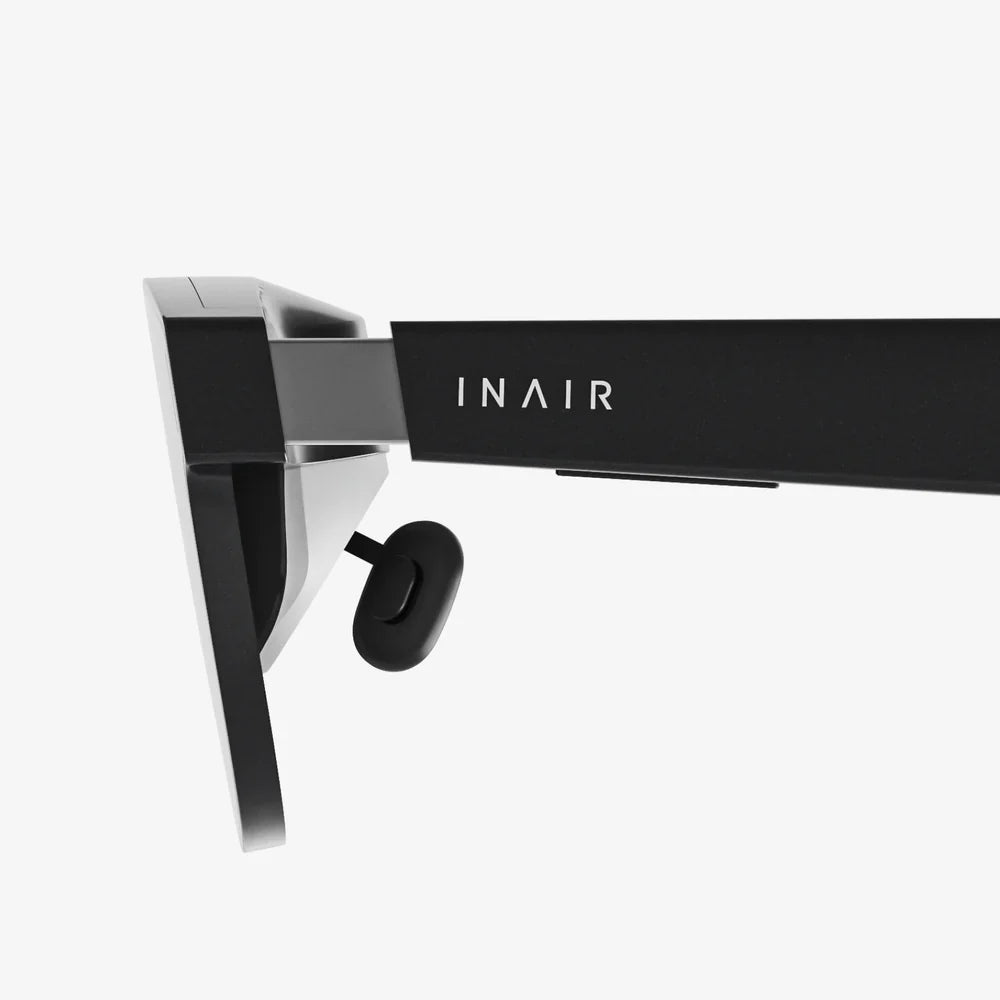
Imagine slipping on a device and instantly being transported to a front-row seat at a concert on the other side of the world, a meticulously recreated historical battlefield, or a collaborative design meeting in a virtual boardroom. This is no longer the stuff of science fiction; it is the palpable reality offered by modern VR headset technology. The clunky, low-fidelity prototypes of yesteryear have undergone a metamorphosis, emerging as sleek, powerful portals to immersive digital dimensions. This technological revolution is not just about better games; it's about redefining how we work, learn, connect, and experience reality itself. The journey from novelty to necessity is being written now, and it begins with understanding the incredible engineering packed into today's headsets.
The Visual Leap: Seeing is Believing
The single most critical factor in achieving immersion is the quality of the visual experience. Early VR was plagued by the "screen door effect"—a visible grid of lines between pixels that constantly reminded users they were looking at a screen. Modern VR headset technology has all but eradicated this through two key advancements: significantly higher-resolution displays and advanced optical systems.
Today's flagship devices employ fast-switching LCD or vibrant OLED panels that boast resolutions exceeding 4K per eye. This pixel density is crucial for creating crisp, believable worlds where text is readable and distant objects are sharp. However, raw resolution is only part of the story. The optics—the lenses through which you view these screens—are equally important. Traditional Fresnel lenses, while compact, introduced visual artifacts like glare and god rays. The latest generation is increasingly moving towards pancake lenses, a compact design that uses polarized light folding to create a much shorter distance between the screen and the eye. This allows for dramatically slimmer and lighter headset designs without sacrificing optical clarity or field of view.
Another frontier is the pursuit of a wider field of view (FoV). Human vision is approximately 210 degrees horizontally; most consumer headsets currently offer between 90 and 110 degrees. While this is sufficient for immersion, expanding the FoV is a key research area for making the virtual world feel truly seamless with our natural perception. Furthermore, addressing the vergence-accommodation conflict—the discomfort caused by the eyes focusing on a fixed screen while converging on objects at different virtual distances—is being tackled with experimental varifocal and light field displays that dynamically adjust focus, promising a new level of visual comfort and realism.
The Freedom of Movement: Untethered and Unbound
A tangled cable trailing from the headset to a powerful computer was long the Achilles' heel of high-fidelity VR. It was a constant reminder of the physical world and a literal trip hazard. The shift to standalone, untethered operation represents one of the most user-friendly evolutions in modern VR headset technology.
These all-in-one devices contain a complete computer system—processor, memory, and battery—within the headset itself. Powered by increasingly powerful and efficient mobile chipsets, they offer the freedom to experience VR anywhere, from the middle of your living room to a large empty hall. This liberation has been instrumental in making VR more accessible and social. For those who demand the absolute highest graphical fidelity, the option for PCVR streaming via Wi-Fi 6E provides a best-of-both-worlds solution: the untethered freedom of a standalone device with the rendering power of a high-end gaming computer, all without a physical cable.
Knowing Where You Are: The Tracking Revolution
To sell the illusion of presence, the virtual world must react to your movements with imperceptible latency and perfect precision. This is the domain of tracking technology, which has seen a paradigm shift from outside-in to inside-out tracking.
Outside-in tracking, the original method, relied on external sensors or base stations placed around the room to precisely triangulate the position of the headset and controllers. While highly accurate, it was a cumbersome setup process that limited play space and portability.
Modern VR headset technology has overwhelmingly adopted inside-out tracking. Here, a array of wide-angle cameras embedded on the headset itself constantly scans the surrounding environment. By tracking the movement of static features in the room (a sofa, a painting, a window frame), the headset's internal processor can calculate its own position and orientation in real-time, all without external hardware. This not only simplifies setup to mere minutes but also makes VR truly portable. Advanced algorithms can now even understand the geometry of a space, allowing users to set up permanent boundary systems and even see a grayscale passthrough view of their real-world obstacles, ensuring safety while immersed.
Bridging the Digital and Physical: The Rise of Haptics and Input
Visuals and movement are foundational, but true immersion engages the sense of touch. This is where haptic feedback and intuitive input come into play. Modern controllers are far more than simple wands; they are sophisticated input devices designed to map to the human hand.
They feature an array of sensors, including capacitive touch that can detect individual finger placement, allowing for natural gestures like pointing, thumbs-up, and making a fist. This enables nuanced interactions, from playing a virtual piano to communicating silently with other users. Pair this with advanced haptic feedback engines that use precise LRA (Linear Resonant Actuators) or more advanced voice coil actuators, and you can feel the subtle vibration of a virtual bowstring, the recoil of a weapon, or the texture of a digital object.
The next frontier is moving beyond controllers entirely. Hand tracking technology, which uses the headset's cameras to track all 26 degrees of freedom of the user's bare hands, is now a standard feature. This allows for the most intuitive interaction possible—using your own hands to push, pull, grab, and manipulate the virtual environment. Furthermore, the development of haptic gloves and full-body tracking suits promises to deepen this physical connection, allowing users to feel the shape and resistance of virtual objects and see their entire body represented accurately in the digital space.
The Software That Breathes Life: Building Persistent Worlds
The most advanced hardware is meaningless without software to give it purpose. The ecosystem supporting modern VR has exploded in sophistication. At the core of the user experience is the operating environment or "home space." This is no longer a simple menu; it's a customizable, social, and persistent personal environment where users can launch apps, watch media, decorate their virtual apartment, and meet with friends before jumping into an experience together.
Social VR platforms have become digital town squares, hosting live events, conferences, and casual hangouts. The concept of the metaverse—a collective virtual shared space—is being built upon this very technology. It envisions a future where we have a continuous digital identity and can move seamlessly between different virtual experiences, from work meetings to concerts, carrying our avatar and digital assets with us. This persistent, interconnected world is the ultimate software goal that drives hardware innovation forward.
Beyond Entertainment: The Practical Applications
While gaming remains a massive driver, the value of modern VR headset technology extends far into practical and professional fields. In enterprise and design, architects and engineers use VR to walk clients through unbuilt structures, identifying design flaws and making changes in real-time long before ground is broken. Medical students practice complex surgical procedures on virtual patients, making mistakes without consequence and honing their skills in a risk-free environment.
In education, students can take field trips to ancient Rome, the depths of the ocean, or the surface of Mars, experiencing lessons rather than just reading about them. For remote work, VR offers the potential for a sense of "co-presence" that video calls cannot match, with teams collaborating on 3D models in a shared virtual space as if they were in the same physical room. Therapists are using VR for exposure therapy to treat phobias and PTSD, and for physical rehabilitation to make repetitive exercises more engaging. The potential for positive impact is staggering.
Challenges and the Road Ahead
Despite the incredible progress, modern VR headset technology is not without its challenges. Achieving true visual photorealism in real-time remains a computational hurdle years away. The form factor, while improved, still needs to shrink towards the ultimate goal of something resembling everyday eyeglasses to achieve mass adoption. Battery life for standalone devices is still a limitation for long sessions, and generating enough processing power without creating uncomfortable heat remains an engineering puzzle.
Perhaps the most significant hurdle is the concept of the killer app—the single application so compelling that it drives everyone to adopt the technology. While many excellent experiences exist, a universally recognized killer app for the broader population, beyond gaming, is still emerging. Furthermore, important questions around data privacy, social interaction norms, and prolonged use in virtual environments are societal challenges that will need to be addressed as the technology becomes more pervasive.
The path forward is incredibly exciting. Research into brain-computer interfaces (BCI) suggests a future where we might control VR with our thoughts. Eye-tracking, already used for foveated rendering to boost performance, will enable more expressive avatars and new forms of interaction. The integration of artificial intelligence will create dynamic, responsive worlds that adapt to the user. The line between the physical and the digital will continue to blur, not through a replacement of reality, but through its augmentation.
The headset on your face is no longer just a viewing device; it's a sophisticated sensor package, a mobile computer, and a social portal, all working in concert to challenge your perception of what is real. This isn't just the next step in gaming; it's the foundational technology for a new platform of human experience, and its story is only just beginning. The door to these new realities is now open, waiting for you to take the step through.
Share:
Dynamic VR Headset: The Next Evolutionary Leap in Immersive Technology
Cool Things to Do with a VR Headset: An Explorer's Guide to Virtual Realms