


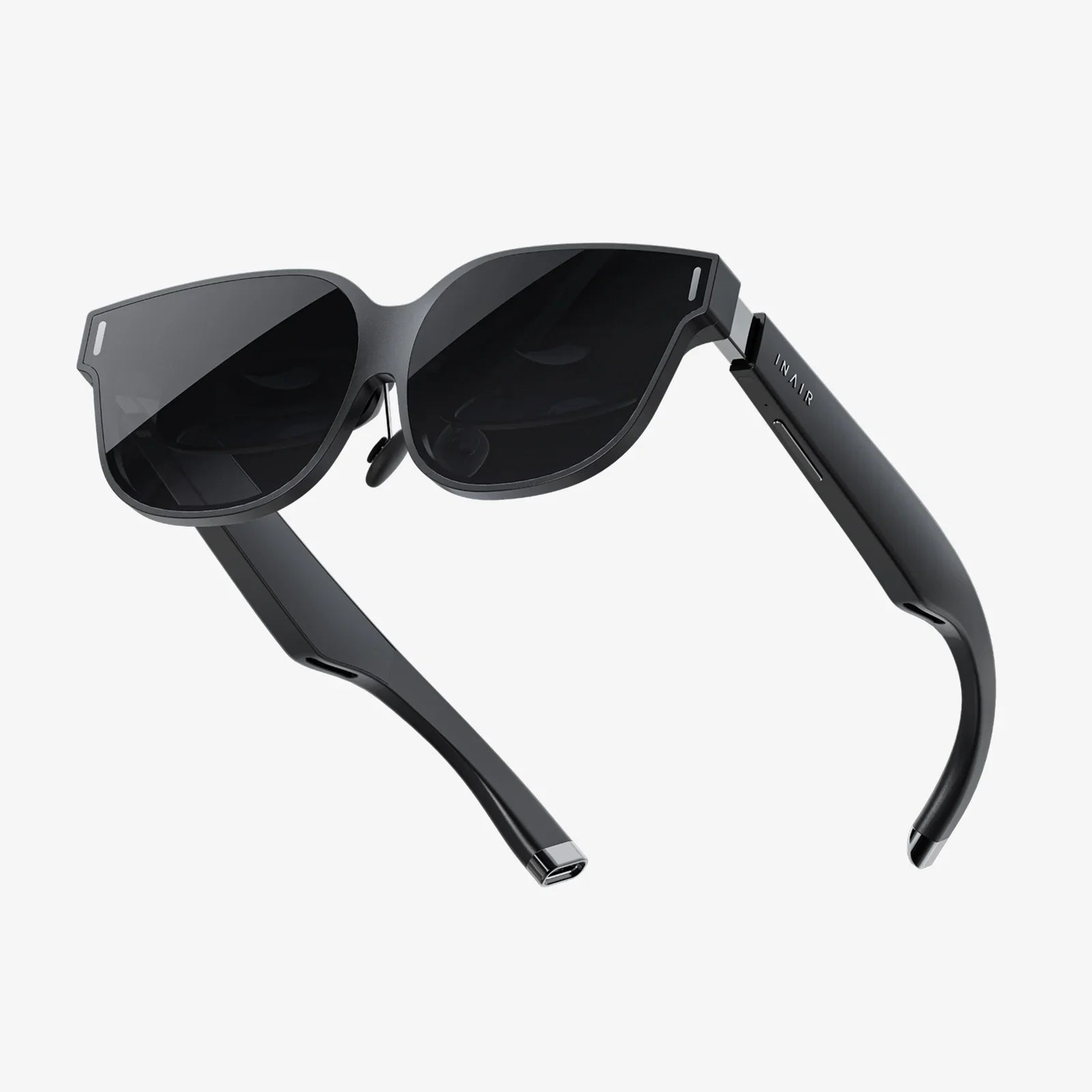
Imagine a world where information doesn't live on a screen in your hand, but is seamlessly woven into the fabric of your reality. A world where a whispered question to empty air yields an immediate, intelligent answer, where language barriers dissolve before your eyes, and where the digital and physical realms coalesce into a single, enhanced experience. This is no longer the stuff of science fiction; it is the promise held within the sleek, minimalist frames of the most advanced AI glasses available today. These devices represent not just an incremental step in wearable technology, but a fundamental leap toward a new paradigm of human-computer interaction, and it’s a future that is arriving faster than anyone anticipated.
The Architectural Marvel: Hardware Powering the Invisible
To understand the magic of these devices, one must first appreciate the engineering marvel they represent. The most advanced AI glasses are a masterclass in miniaturization and power efficiency, packing a staggering amount of technology into a form factor designed to be worn all day without discomfort.
At their core is a sophisticated System-on-a-Chip (SoC), a powerhouse processor specifically designed for on-device artificial intelligence tasks. This is the brain of the operation, capable of handling complex neural network computations without the constant need for a cloud connection. This on-device processing is crucial for two reasons: latency and privacy. Actions like real-time translation or object recognition happen instantaneously, and sensitive data like video feeds can be processed locally without ever being sent to a remote server.
The eyes of these glasses are an array of high-resolution cameras. Unlike the bulky cameras of previous attempts, these are tiny, discreet sensors seamlessly integrated into the frame. They are engineered not for capturing traditional photos, but for computer vision—understanding the world in a way a computer can interpret. They map depth, track movement, and identify objects, people, and text with remarkable accuracy.
Perhaps the most iconic feature is the display technology. The goal is to project digital information onto the user's field of view without obstructing it. The most sophisticated systems use technologies like holographic waveguides or microLED projectors that beam light onto a transparent combiner lens. The result is a crisp, bright overlay of text, graphics, and icons that appears to float in the world ahead, visible only to the wearer. It’s a full-color, high-contrast display that remains visible even in bright sunlight.
Surrounding this are a host of other sensors: microphones arrayed for beamforming to pick up voice commands clearly in a noisy room, inertial measurement units (IMUs) to track head movement and orientation, and sophisticated speakers that deliver audio directly into the wearer's ears without blocking ambient sound. All of this is powered by a battery that is both long-lasting and strategically distributed throughout the frame to maintain balance and comfort, often supplemented by a sleek charging case for all-day power.
The Intelligent Core: The AI That Sees, Hears, and Thinks
Hardware is nothing without the intelligence to wield it. The true genius of these glasses lies in their software and the multimodal AI models that power them. This is where the device transforms from a fancy camera with a display into a true contextual companion.
The AI is multimodal by design, meaning it can process and cross-reference multiple streams of data simultaneously—primarily sight and sound. When you look at a landmark, the cameras identify it while the AI pulls up relevant historical data. When you are in a conversation with someone speaking another language, the microphones capture the speech, the AI translates it, and the display shows the translated text in near real-time, all while allowing you to maintain eye contact.
This contextual awareness is its most powerful feature. The AI isn't just waiting for a command; it's constantly working to understand your environment and your intentions. Look at a restaurant menu, and it might highlight popular dishes or show health ratings. Glance at a complex document, and it can summarize key points. Struggle to remember a name at a networking event, and a discreet cue might appear next to the person's face (with appropriate privacy safeguards and consent, of course). This is a shift from search to assistance—the AI proactively offering useful information based on what it perceives you might need.
Furthermore, these systems are built upon large language models, giving them a profound ability to understand and generate natural language. You can ask complex, contextual questions like, "Based on the ingredients list I'm looking at, is this product suitable for someone with a nut allergy?" or "Summarize the key arguments from the presentation slides on the wall behind me." The AI comprehends the query in the context of what you are seeing and provides a synthesized, intelligent response.
Transforming Everyday Life: Use Cases Beyond the Hype
The potential applications for this technology are vast and extend far beyond novelty. They are poised to revolutionize numerous aspects of daily life and professional fields.
Productivity and Work: For professionals, these glasses are a game-changer. Field technicians can have schematics and instruction manuals overlaid onto the machinery they are repairing, keeping their hands free and their focus intact. Surgeons could access vital patient statistics and imaging data without looking away from the operating table. Architects and interior designers can visualize 3D models superimposed onto physical spaces. The concept of a "hands-free workflow" is finally realized, dramatically increasing efficiency and safety.
Accessibility and Inclusion: This is perhaps the most profound and immediately impactful arena. For the visually impaired, AI glasses can act as a powerful visual interpreter, describing scenes, reading text aloud from signs and documents, identifying currency, and even recognizing familiar faces. For those who are deaf or hard of hearing, real-time transcription of conversations can be displayed directly in their vision, making group discussions infinitely more accessible. This technology has the potential to dismantle significant barriers for millions of people.
Navigation and Exploration: Imagine walking through a foreign city where directions are painted onto the sidewalk ahead of you, historical building details pop up as you glance at them, and restaurant reviews hover near their entrances. Tourism and urban exploration become deeply immersive and informative experiences. Indoors, large complex venues like airports, hospitals, and conference centers become easy to navigate with arrow-based guidance systems.
Connection and Communication: The ability to break down language barriers in real-time, while maintaining the natural flow of conversation and non-verbal cues, is a powerful tool for human connection. It enables more meaningful interactions between people from different cultures and backgrounds, fostering greater understanding in both personal and business contexts.
The Inevitable Challenges: Privacy, Social Norms, and the Future
Such a powerful tool does not arrive without significant challenges and ethical considerations. The most pressing issue is privacy. A device that can record audio and video so discreetly raises legitimate concerns about consent and surveillance. The developers of the most advanced AI glasses are acutely aware of this and have implemented strong safeguards. These often include hardware indicators like LED lights that clearly signal when recording is active, strict data handling policies that favor on-device processing, and clear user controls. The societal conversation about the norms and laws governing such technology is just beginning and is critical to its responsible adoption.
Furthermore, there is the challenge of social acceptance. The concept of someone wearing glasses that could potentially record a conversation or take a picture without others knowing is disconcerting to many. Overcoming the "creep factor" and the stigma associated with earlier, clumsier versions of smart glasses will require not only transparent design and clear ethical guidelines but also a demonstrated value proposition so great that it outweighs these concerns.
Looking ahead, the trajectory is clear. Future iterations will feature even more discreet designs, longer battery life, expanded field of view for the displays, and ever more powerful and intuitive AI capabilities. We are moving toward a future where such augmented interfaces could become as ubiquitous as smartphones are today, fundamentally changing how we learn, work, and interact with our environment.
The bridge between our minds and the digital universe is being built, and it’s being forged not in a clunky headset, but in a pair of elegant frames you’d hardly look at twice. The age of ambient computing is here, and it’s waiting for you to put it on.
Share:
Augmented Reality Future Scope: Beyond the Screen and Into Our World
Augmented Reality Future Scope: Beyond the Screen and Into Our World