


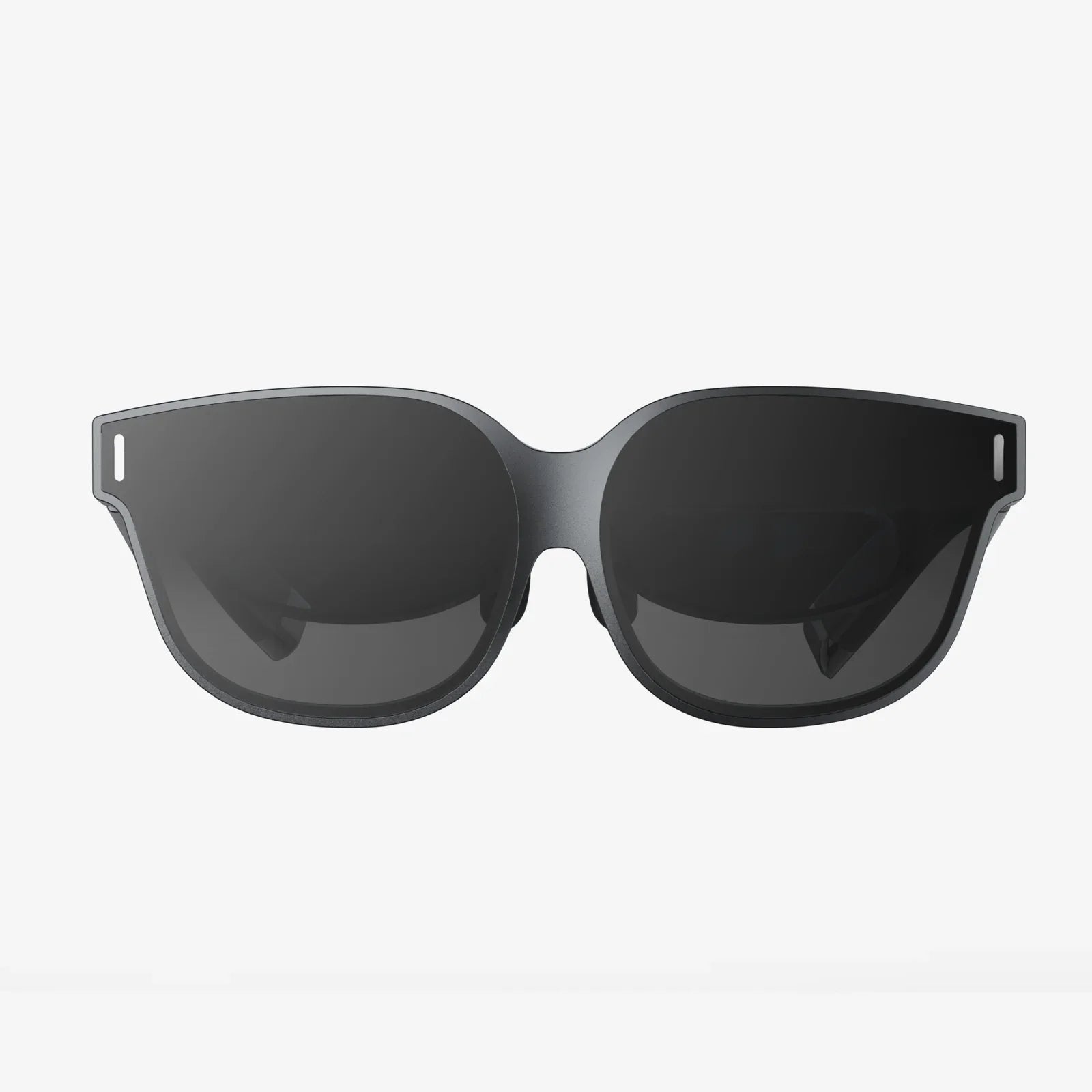
Imagine a world where digital information doesn’t live on a screen in your hand, but is woven seamlessly into the fabric of your reality. This is no longer the stuff of science fiction; it is the promise being delivered by the most advanced augmented reality glasses available today. These devices are not mere gadgets; they are portals to a new layer of existence, poised to revolutionize everything from how we work and learn to how we connect and play. The future is not just arriving; it’s being superimposed right before our eyes, and it is more immersive and intelligent than we ever dreamed possible.
The Architectural Pillars of Modern Augmented Reality
The leap from clunky prototypes to sophisticated, wearable computers on our faces is a story of several technological revolutions happening in concert. The most advanced AR glasses are marvels of miniaturization and optical engineering, each component pushing the boundaries of physics and computer science.
The Window to the Digital World: Advanced Optical Systems
At the heart of any AR experience is the display system. The goal is to project crisp, bright, and believable digital images onto the real world without obscuring the user's natural vision. Early systems often suffered from a narrow field of view, making digital objects feel small and distant, or poor resolution that broke the illusion. The latest generation employs cutting-edge waveguide technology. These are essentially transparent lenses etched with microscopic patterns that pipe light from projectors at the temples directly into the eyes. This allows for a much wider field of view, creating a more immersive and expansive canvas for digital content. Furthermore, advancements in laser beam scanning and microLED displays are enabling unprecedented levels of brightness and contrast, ensuring virtual objects remain visible even in direct sunlight.
Perceiving the World: The Sensor Suite and Spatial Mapping
For digital content to interact convincingly with the physical world, the glasses must understand their environment in real-time. This is achieved through a sophisticated array of sensors. High-resolution cameras, depth sensors (like LiDAR), and inertial measurement units (IMUs) work in tandem to constantly scan and map the surroundings. This process, known as simultaneous localization and mapping (SLAM), allows the device to create a precise 3D model of the room you're in. It can identify surfaces like floors, walls, and tables, understand their geometry, and track its own position within that space with millimeter accuracy. This enables digital objects to sit convincingly on a physical table, occlude correctly behind real-world objects, and remain stable as you move your head.
The Brain Behind the Lenses: On-Device AI and Processing Power
Processing the immense amount of visual and spatial data from these sensors requires immense computational power. The most advanced AR glasses are moving beyond mere relays to a connected smartphone or computer; they are becoming powerful edge-computing devices in their own right. Custom-built processors, often referred to as AR-specific Systems-on-a-Chip (SoCs), are designed to handle the unique workloads of spatial computing with extreme efficiency. They integrate dedicated cores for computer vision, machine learning, and graphics rendering. This on-device intelligence is crucial for low-latency interactions. When you reach out to touch a virtual button, the system must respond instantly. Offloading this processing to the cloud would introduce a delay that shatters the illusion. Furthermore, this enables sophisticated AI-driven features like real-time object recognition, gesture tracking, and voice command processing, all without needing a constant, high-bandwidth connection.
Transforming Industries: The Practical Power of Augmented Reality
While consumer applications capture the imagination, it is in enterprise and specialized fields where the most advanced AR glasses are currently delivering the most profound and measurable impact.
Revolutionizing the Factory Floor and Remote Assistance
In manufacturing and complex machinery maintenance, these glasses are becoming indispensable tools. A technician wearing a pair can see schematics, animated repair instructions, and vital statistics overlaid directly onto the equipment they are servicing. This provides hands-free access to information, drastically reducing errors and training time. Experts located anywhere in the world can see through the technician's eyes and annotate their field of view with arrows, circles, and notes, guiding them through complex procedures in real-time. This "see-what-I-see" remote collaboration slashes travel costs and downtime, getting critical systems back online faster.
The Future of Medicine is in the Surgeon's View
The medical field is embracing AR with incredible potential. Surgeons can use AR glasses to visualize a patient’s anatomy, such as CT scans or MRI data, projected directly onto the patient's body before making an incision, improving precision and safety. Medical students can learn anatomy through detailed 3D holograms of the human body, dissecting virtual cadavers without the need for a physical lab. Furthermore, during procedures, vital signs and patient data can be displayed in the surgeon's periphery, allowing them to maintain focus without looking away from the operating table.
Design, Architecture, and Prototyping in a Shared Space
For architects and engineers, AR glasses are transforming the design review process. Instead of looking at a 3D model on a 2D screen, teams can don glasses and walk through a life-sized holographic rendering of a building before a single brick is laid. They can assess spatial relationships, test lighting conditions, and identify design flaws in a way that was previously impossible. Similarly, automotive designers can place a full-scale hologram of a new car model in a real-world showroom, examining its lines and features from every angle and making iterative changes on the fly.
Navigating the New Reality: Challenges and Considerations
Despite the breathtaking progress, the path to ubiquitous AR adoption is not without its significant hurdles. The quest for the perfect pair of AR glasses is often described as a battle against the laws of physics itself.
The Form Factor Conundrum: Style vs. Substance
The ultimate goal is a device that is indistinguishable from a regular pair of eyeglasses—lightweight, comfortable, and socially acceptable to wear all day. Current high-end technology often requires a trade-off. Powerful processors generate heat, advanced optics require space, and all-day battery life demands sizable batteries. Balancing this performance in a sleek, fashionable form factor remains the industry's holy grail. Innovations in materials science and battery technology are steadily chipping away at this problem, but it is a persistent challenge.
The Digital Divide and the Privacy Paradigm
As with any transformative technology, AR glasses raise important societal questions. The constant recording and analysis of the environment by built-in cameras is a privacy minefield. How do we prevent unauthorized recording in private spaces? What does informed consent look like when someone wearing glasses can potentially identify you and pull up your public social profile on demand? Furthermore, the cost of this advanced technology could create a new digital divide, separating those who can afford this enhanced layer of reality from those who cannot. Establishing clear ethical guidelines and robust digital rights frameworks will be essential before these devices become mainstream.
The Invisible Interface: A Glimpse into the Future
The trajectory of AR glasses points toward a future where the device itself fades into the background, becoming an unobtrusive part of our daily wear. The interface will evolve from clunky menus to intuitive, context-aware interactions driven by eye-tracking, subtle voice commands, and even neural interfaces. The digital layer will become so seamlessly integrated that we will stop thinking about it as technology and start accepting it as a natural extension of our own cognition and perception.
We are standing at the precipice of a fundamental shift in human-computer interaction. The most advanced AR glasses are the key that unlocks this new dimension, moving us beyond the confines of the screen and into a world where our reality is limited only by our imagination. The potential to enhance human capability, democratize expertise, and connect us with information in profoundly new ways is staggering. The next era of personal computing won't be in your pocket; it will be right in front of your eyes, quietly, brilliantly, changing everything.
Share:
What Is Space Engineering: The Ultimate Guide to Humanity's Final Frontier
Smallest AR Glasses: The Invisible Revolution Reshaping Reality