


- by wangfred
Smallest AR Glasses: The Invisible Revolution Reshaping Reality
- by wangfred
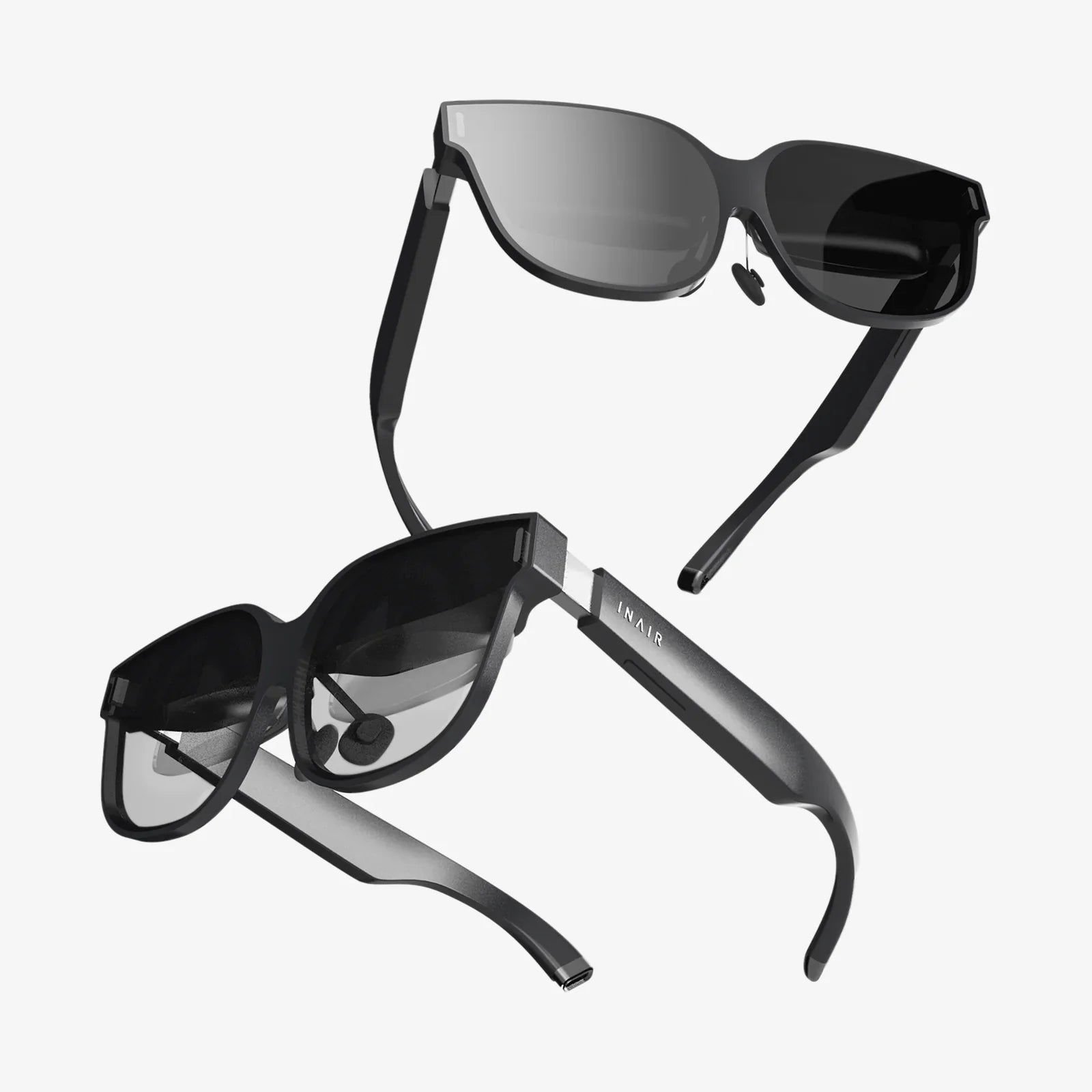
Imagine a world where digital information doesn’t live on a screen in your hand, but floats seamlessly in your field of vision, enhancing your reality without obstructing it. This isn’t a distant sci-fi fantasy; it’s the promise being delivered today by the latest generation of augmented reality eyewear, specifically the relentless pursuit of the smallest AR glasses. This race toward miniaturization isn’t just about aesthetics; it’s the fundamental key to unlocking mainstream adoption. For augmented reality to transition from a niche gadget to an indispensable part of our daily lives, the technology must become socially acceptable, comfortable for all-day wear, and ultimately, invisible. The quest for the smallest form factor is, therefore, the most critical battleground in the AR arena, pushing the boundaries of physics, material science, and optical engineering to create a device that feels less like a computer and more like a natural extension of ourselves.
Creating truly small AR glasses is a monumental technical challenge, a complex puzzle where every piece must be miniaturized without sacrificing performance. The core components—optics, processing, battery, and displays—all demand space and power, creating a constant tug-of-war between size, capability, and battery life.
The most significant hurdle lies in the optical engine. Traditional methods of projecting images into the eye often require bulky waveguide combiners or complex relay systems. However, advancements in micro-LED technology and holographic waveguides are revolutionizing this space. These waveguides are incredibly thin glass substrates etched with nano-scale patterns that can pipe light from a tiny micro-display on the temple directly into the eye. This eliminates the need for large projection systems sitting directly in front of the user, allowing the lens to remain remarkably slim and lightweight, often resembling standard eyeglasses.
Then there's the issue of processing power. Early AR headsets relied on a wired connection to a powerful external computer or a bulky onboard unit. The smallest AR glasses integrate a sophisticated System-on-Chip (SoC) capable of handling spatial tracking, gesture recognition, and rendering digital content, all while sipping power to preserve battery life. This miniaturization of computational prowess is directly borrowed from the smartphone industry, but pushed to even greater extremes of thermal and power efficiency.
Finally, the battery presents a classic dilemma: capacity versus size. The smallest glasses often employ a hybrid approach. A tiny, discreet battery cell is housed within the frame itself, providing enough power for short sessions, while a more substantial external battery pack—easily stored in a pocket—extends usage to multiple hours. This design philosophy prioritizes the comfort and social acceptability of the glasses themselves, offloading the bulk to a separate, concealable component.
Using the smallest AR glasses is a fundamentally different experience from their bulkier predecessors. The primary difference is immediate and profound: comfort. Weighing often less than 100 grams, they eliminate the neck strain and facial pressure associated with heavier devices, making it conceivable to wear them for an entire workday or during a long commute.
This comfort directly enables the second major benefit: social acceptance. When AR glasses look almost identical to a fashionable pair of standard spectacles, the barrier to wearing them in public evaporates. There’s no self-consciousness or awkward stares. You can make eye contact in a conversation without a large plastic barrier obscuring your face, and they can be worn comfortably with a VR headset for a seamless transition between fully virtual and augmented experiences. This normalization is critical for AR to become a contextual tool rather than a distracting spectacle.
The user interface also evolves. Without large areas to tap or swipe, interaction relies on subtle, intuitive methods. This includes:
The display itself, while small, is designed for contextual awareness. Rather than a large, immersive canvas, information is presented as a discreet, floating screen that feels pinned to your environment—a persistent note, a navigation arrow on the sidewalk, or a video call window hovering beside a colleague. It’s information that is glanceable and relevant, not overwhelming.
The practical applications for small-form-factor AR glasses stretch far beyond consumer novelty. Their discreet nature and all-day comfort make them a powerful tool for enterprise and specialized professions.
In each of these cases, the technology succeeds because it is unobtrusive. It empowers the user with information without isolating them from their physical environment or their colleagues.
The journey toward the perfect pair of AR glasses is far from over. The current generation, while impressive, is still a stepping stone. The next frontier involves overcoming the final barriers to true invisibility and seamless integration.
Future iterations will likely see the complete integration of the battery within the frame, enabled by revolutionary new power sources like solid-state battery technology which offers higher energy density in a safer package. Advancements in nanomaterials like graphene could lead to frames that are stronger, lighter, and even flexible.
The most exciting evolution will be in adaptive optics. Glasses that can automatically adjust their focal plane, allowing digital content to appear at different depths, will solve the vergence-accommodation conflict that can cause eye strain. Furthermore, we are moving toward displays with a much wider field of view and higher resolution, making digital objects indistinguishable from real ones.
Ultimately, the goal is to move beyond a separate device entirely. The endgame may be smart contact lenses with embedded AR capabilities, rendering any form of eyewear obsolete. While this technology is still in its infancy, it represents the logical conclusion of the miniaturization path we are currently on: technology that enhances our human capabilities so seamlessly that it effectively disappears.
We stand on the precipice of a paradigm shift, not in what technology can do, but in how we interact with it. The smallest AR glasses are the vanguard of this change, quietly bridging our digital and physical worlds until the line between them simply fades away, leaving only a richer, more informed, and effortlessly enhanced reality.
Share:
Most Advanced AR Glasses Are Redefining Reality and How We Interact With It
Fully Immersive Virtual Reality Games: The Final Frontier of Digital Experience