


- by wangfred
Most Advanced Virtual Reality Headset 2025: A Glimpse into the Future of Immersion
- by wangfred
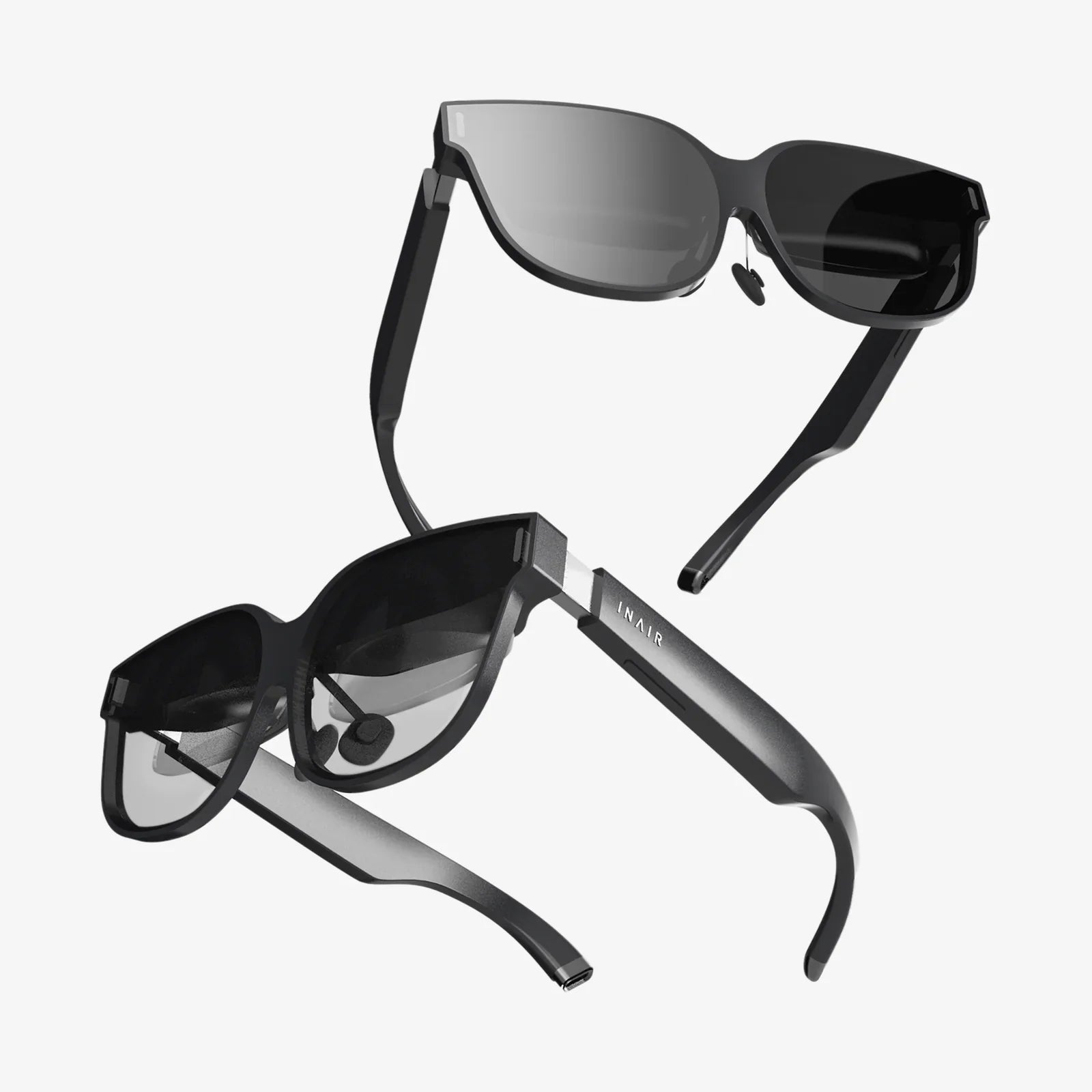
Imagine slipping on a device, no heavier than a pair of sunglasses, and being instantly transported to a world limited only by the imagination—a world indistinguishable from our own physical reality. This is no longer the stuff of science fiction; it is the promise held by the most advanced virtual reality headset of 2025. The relentless pace of innovation has catapulted us into a new era of computing, one where the digital and physical realms converge seamlessly. This isn't just an incremental upgrade; it represents a fundamental leap in how we perceive, interact with, and ultimately shape our reality. The journey to this point has been extraordinary, but the destination is nothing short of revolutionary, redefining everything from entertainment and work to human connection itself.
The core of any immersive experience lies in its visual fidelity, and the 2025 headset represents a monumental achievement in display technology. We have moved far beyond simply chasing higher resolutions. The defining feature is the integration of micro-OLED panels with pixel densities exceeding 3,000 pixels per inch (PPI). This incredible density pushes us past the infamous "screen door effect," achieving a level of sharpness where individual pixels are utterly imperceptible to the human eye. The result is text as crisp as printed paper and imagery with flawless clarity.
Complementing this is an expansive field of view (FoV) that reaches a human-like 150 degrees horizontally and 120 degrees vertically. This near-peripheral vision eliminates the distracting "binocular" or scuba-mask effect that plagued earlier devices, making the virtual environment feel truly encompassing. However, the real magic lies in the marriage of these displays with advanced varifocal lenses. Unlike the fixed-focus lenses of the past, these dynamic lenses use eye-tracking to physically adjust their shape, simulating how our eyes naturally focus on objects at different distances. This solves the longstanding vergence-accommodation conflict, a major source of eye strain and a barrier to deep immersion, making prolonged sessions remarkably comfortable.
Pushing pixels is one thing; rendering believable worlds is another. The 2025 headset is powered by a revolutionary on-board neural processing unit (NPU) specifically designed for real-time ray tracing and AI-driven supersampling. This dedicated hardware calculates the path of light with physical accuracy, producing stunningly realistic shadows, reflections, and global illumination. Materials like polished metal, frosted glass, and flowing water behave and react to light exactly as they would in the real world.
Furthermore, this processing power is harnessed by sophisticated machine learning algorithms. These systems can upscale content on the fly, generate highly detailed textures, and even animate digital humans with an unprecedented level of realism. The uncanny valley—that unsettling feeling when a digital character is almost, but not quite, human—is finally being crossed. Avatars and NPCs exhibit subtle micro-expressions, eye movements that convey genuine emotion, and lip-syncing that is perfectly synchronized with speech, enabling a depth of social interaction previously unimaginable in virtual spaces.
Perhaps the most profound advancement is the move beyond handheld controllers. The 2025 headset incorporates a non-invasive high-density electroencephalogram (EEG) array built into the headstrap. This sophisticated sensor network can read faint neural signals from the scalp, allowing for rudimentary but powerful thought-based commands. Imagine wanting to open a menu and simply thinking of the word "menu" to have it appear, or selecting an object by focusing your attention on it.
This neural input is seamlessly fused with hyper-precise inside-out tracking and advanced hand-tracking algorithms. The headset uses a distributed array of miniature cameras and LiDAR sensors to map your environment in real-time with millimeter accuracy, all while tracking the intricate movement of all 26 bones in each of your hands. The result is an interaction paradigm that feels utterly natural. You reach out and grab a virtual object, your fingers conforming to its shape with haptic feedback delivered via ultrasonic emitters in the headset that create a convincing sensation of touch and resistance in mid-air. The boundary between intention and action dissolves.
The ultimate goal of this technology is not to escape reality, but to augment and enhance it. The 2025 headset is a master of mixed reality (MR). Its high-resolution passthrough cameras provide a flawless, zero-latency video feed of your physical surroundings, effectively turning the device into a pair of magical windows. Digital objects can be placed and persistently anchored in your real-world space, interacting with physical geometry—a virtual screen pinned to your wall, a digital pet sleeping on your real couch, or a holographic schematic overlaid on a physical engine you are repairing.
The system's environmental understanding is so advanced that it can dynamically occlude digital objects behind real-world furniture and understand the material properties of surfaces. This creates a cohesive and believable blend where the virtual and real not only coexist but interact meaningfully. The experience is further enhanced by spatial audio that perfectly mimics how sound behaves in a physical space, completing the illusion of a unified reality.
The implications of such a device extend far beyond entertainment. We are witnessing the birth of a new platform, a spatial internet that will redefine countless industries.
With great power comes great responsibility. The advent of such persuasive technology raises critical questions that society must address. The collection of neural data, even in its rudimentary form, introduces profound privacy and security concerns. How is this most personal of data stored, used, and protected? The potential for addiction is also significant, as these hyper-realistic worlds could become preferable to an individual's physical reality. Furthermore, the blurring of lines between real and virtual could have psychological impacts that we are only beginning to understand.
There is also the risk of a digital divide. If these devices become essential tools for work, education, and socializing, ensuring equitable access will be paramount to prevent a new form of technological stratification. Establishing robust ethical frameworks, transparent data policies, and fostering digital literacy will be essential to navigating this new frontier responsibly and ensuring the technology serves to uplift humanity rather than fracture it.
The headset of 2025 is more than a piece of hardware; it is a portal. It is the key that unlocks a universe of human potential, creative expression, and global collaboration. It challenges our very definitions of presence, reality, and connection. While the path forward is not without its obstacles, the vision is clear: a future where our digital and physical lives are not separate realms, but a beautifully integrated continuum, limited only by the breadth of our collective imagination. The next great adventure isn't out in the stars; it's waiting for you, right here, ready to be worn.