


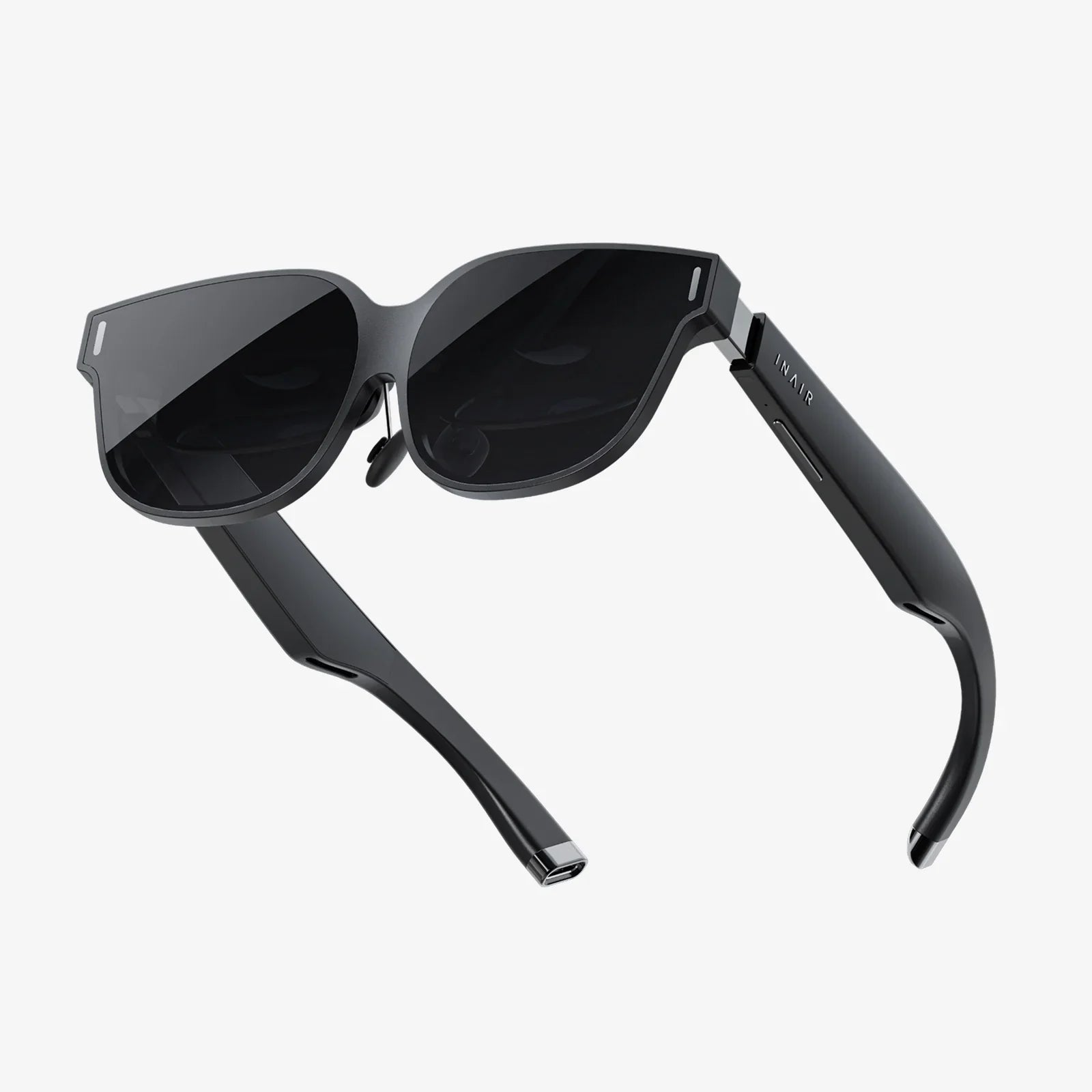
- by wangfred
Most Clear VR Headset - A Visionary Leap Into Unprecedented Realism
- by wangfred
Imagine slipping on a headset and having the digital world snap into focus with a clarity so profound, so lifelike, that the boundary between the virtual and the real begins to genuinely blur. This is no longer a distant sci-fi fantasy but the driving ambition behind the most significant hardware race in the virtual reality industry. The quest for the most clear VR headset is about more than just sharper games; it’s about creating a window to other realities, professional design platforms, and social spaces that feel authentically present. The pursuit of this visual perfection is redefining what's possible, pulling us ever closer to the ultimate goal: total immersion without compromise.
To understand what makes one headset stand out as the most clear, we must dissect the very pillars of visual fidelity. It's a common misconception that resolution alone dictates clarity. In reality, it is a delicate and intricate dance between several core technologies.
Naturally, display resolution is the starting point. Measured in pixels per eye, higher numbers mean a denser packing of the tiny points of light that form an image. Early consumer headsets offered resolutions akin to standard definition televisions, where the individual pixels, or 'screen door effect,' were easily visible. Today, we are in the era of 4K+ per eye. This massive leap in pixel count is the primary driver behind the disappearance of the screen door effect and the emergence of crisp text and fine details. However, raw resolution is only part of the story. Pixel density, or Pixels Per Inch (PPI), is equally critical. A high-resolution screen crammed into a small panel will always appear sharper than the same resolution stretched over a larger surface.
Even the highest-resolution display in the world would look blurry and distorted if viewed through poor-quality lenses. This is where optics play a transformative role. Traditional Fresnel lenses, while cost-effective, introduced artifacts like god rays (glare around high-contrast elements) and had a notoriously small 'sweet spot'—a narrow area where the image was perfectly in focus.
The advent of pancake lenses and advanced aspherical lenses represents a quantum leap. Pancake lenses use a folded optics path, allowing for a much thinner and lighter headset design while simultaneously providing a significantly larger sweet spot. This means users don't have to constantly readjust the headset to maintain clarity. These advanced lens systems drastically reduce visual artifacts, delivering a clean, uniform image edge-to-edge, which is a hallmark of the most clear VR headsets available.
Clarity isn't just about what you see directly in front of you; it's about the entire panorama. Field of View (FoV) measures the angular extent of the observable world seen at any given moment, typically in degrees. A narrow FoV feels like looking through a pair of binoculars or a scuba mask, constantly reminding you that you are in a headset. A wider FoV expands that window, increasing the sense of presence and immersion. The challenge for engineers is to increase the FoV without compromising on the other pillars of clarity, such as resolution and pixel density, which must be maintained across a larger visual area. The most advanced headsets are now pushing FoV boundaries beyond 110 degrees, creating a far more natural and encompassing view.
Visual clarity is not just a matter of sharpness; it's also about contrast and color. Real-world vision has an incredible range between the darkest darks and the brightest brights—a quality known as dynamic range. Standard VR displays have historically struggled with this, often rendering blacks as murky grays, which shatters immersion.
The integration of Mini-LED and OLED displays with HDR and local dimming capabilities is changing the game. HDR allows for a much broader spectrum of luminance and color, meaning dazzling highlights and deep, inky shadows can coexist in the same scene. Local dimming, where thousands of individual zones on the backlight can be independently controlled, allows for true blacks right next to searing bright lights. This incredible contrast ratio adds a depth and realism that makes virtual scenes feel tangible and alive, moving beyond simple resolution into the realm of luminous quality.
The most sophisticated hardware is useless if it doesn't adapt to the person using it. Human physiology plays a massive role in perceived clarity.
Everyone's eyes are set a unique distance apart, known as IPD. If a headset's lenses are not aligned with the user's pupils, the image will be blurry and can cause eye strain and headaches. The most clear VR headsets offer not just software-based IPD adjustment, but physical, motorized or manual slider-based IPD adjustment. This allows users to physically move the lenses to perfectly match their specific eye separation, ensuring the optical sweet spot is positioned correctly for maximum sharpness and comfort.
Perhaps the most revolutionary technology contributing to clarity is eye-tracked foveated rendering. The human eye itself only sees a small central area (the fovea) in high detail; our peripheral vision is much lower resolution. Advanced headsets now incorporate infrared sensors to track exactly where a user is looking in real-time.
This data allows the system to employ foveated rendering: it renders the area you are directly looking at in full, ultra-high resolution, while intelligently reducing the rendering load in your peripheral vision. This is imperceptible to the user but is a monumental achievement. It drastically reduces the computational horsepower required to run these incredibly high-resolution displays, making clarity sustainable without requiring a supercomputer. It paves the way for even higher resolutions in the future, as it makes the pursuit of clarity computationally efficient.
The impact of crystal-clear VR extends far beyond gaming and entertainment. This leap in fidelity is unlocking entirely new use cases.
In architecture and engineering, designers can step into full-scale, photorealistic models of their creations, examining minute details and making precise adjustments in a way a 2D screen could never allow. In medicine, medical students can practice complex procedures on virtual patients with astonishing anatomical accuracy. For remote work and collaboration, high-fidelity avatars in clear VR environments can replicate the nuance of in-person meetings, capturing facial expressions and body language, making remote interaction feel genuinely human. This level of clarity transforms VR from a novelty into a legitimate professional tool.
The trajectory is clear: VR visuals will only get sharper, brighter, and more realistic. We are already seeing the emergence of micro-OLED displays, which offer exceptional pixel density, perfect blacks, and fast response times in an incredibly compact form factor. Further out, technologies like varifocal displays, which dynamically adjust focus based on where you are looking in a virtual space, promise to solve the vergence-accommodation conflict—a key source of eye strain and a barrier to perfect realism. Light field technology, which replicates the way light behaves in the real world, could eventually eliminate the need for traditional lenses altogether.
The journey toward the perfect visual experience is ongoing. Each iteration brings us closer to that ideal, breaking down the last remaining barriers between our reality and the ones we create. The most clear VR headset of today is not an endpoint but a breathtaking milestone on the path to a future where virtual experiences are indistinguishable from memory.
This relentless march toward perfect pixels and flawless optics is quietly building a new reality, one where the only limit to exploration, creation, and connection is the imagination itself. The headset that delivers this unparalleled window into other worlds isn't just a piece of hardware; it's a passport to experiences waiting to be lived, and the next generation is already putting it on.