


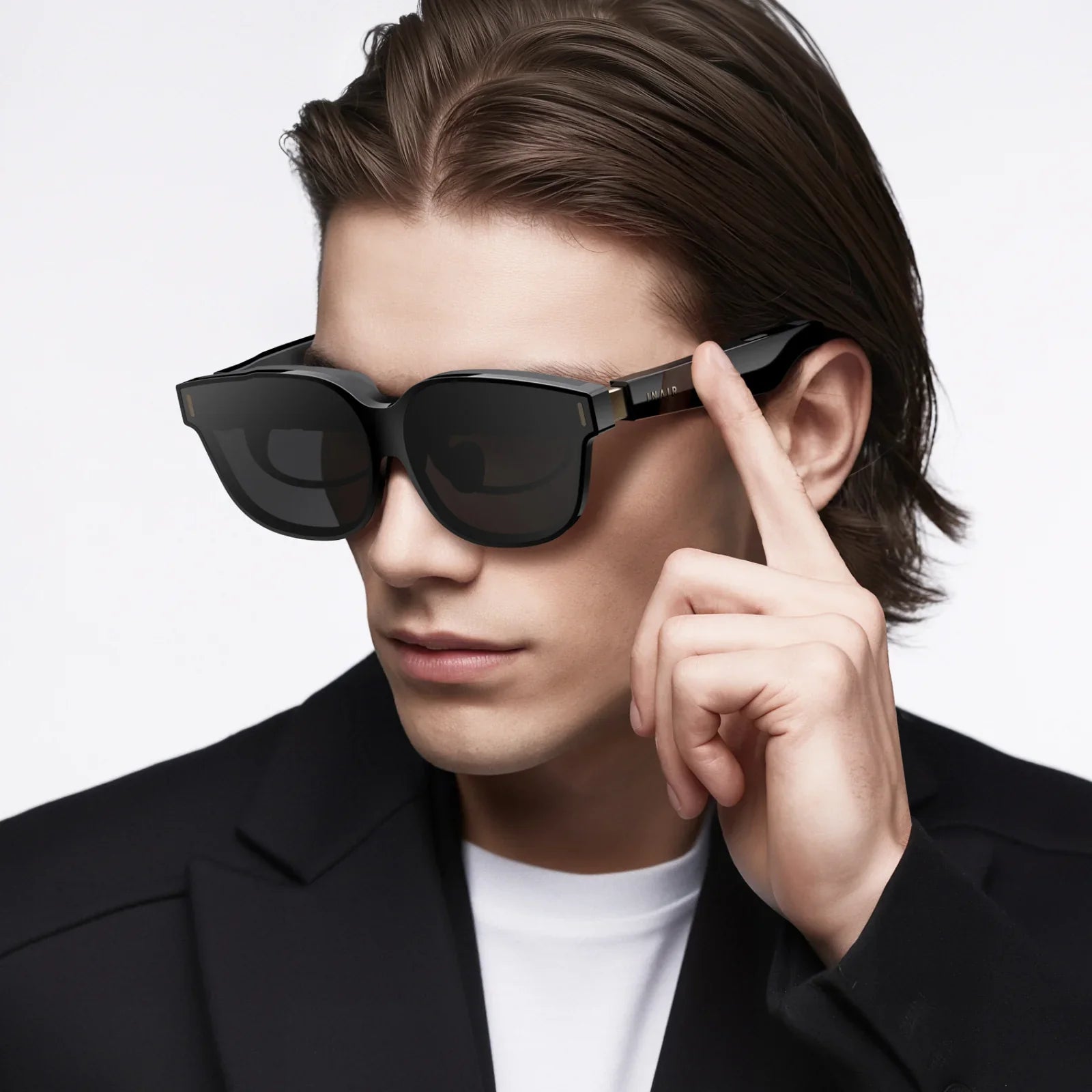
Imagine a world where the digital and physical coalesce so effortlessly that you forget you're wearing a portal to another dimension on your face. This is the promise of augmented reality, a promise finally being fulfilled not through raw power alone, but through an almost ethereal comfort. The year 2025 marks a pivotal turning point, not just in what AR headsets can do, but in how they feel. The relentless pursuit of the most comfortable augmented reality headsets has culminated in devices that are less like hardware and more like a natural extension of the self, inviting you to step into the future and stay there all day.
The Evolution of Comfort: From Bulky Prototypes to Feather-Light Frames
To appreciate the marvels of 2025, one must glance back at the arduous path of AR development. Early iterations were often criticized for their front-heavy design, causing a phenomenon unaffectionately dubbed "face fatigue." The weight of displays, sensors, and batteries concentrated at the front created an uncomfortable lever arm, pressing into the bridge of the nose and the top of the cheeks. Users were constantly aware of the device's presence, a stark reminder that they were tethered to a machine.
The journey toward comfort has been a multi-front war fought by engineers and designers. It involved a fundamental rethinking of material science, optical engineering, and human physiology. The breakthrough wasn't a single innovation but a symphony of them, working in concert to distribute weight, dissipate heat, and conform to the beautiful diversity of human anatomy. The goal shifted from merely being wearable to being forgettably comfortable.
Anatomy of Comfort: Deconstructing the 2025 Headset
The most comfortable augmented reality headsets of 2025 are masterclasses in ergonomic design. Their comfort stems from several key architectural innovations.
1. Advanced Material Science: The Foundation of Lightness
Gone are the days of cold, rigid plastics and heavy metals. The new generation of headsets leverages advanced aerospace-grade polymers and magnesium alloys, achieving unprecedented strength-to-weight ratios. These materials are not only incredibly light but also possess a slight flexibility, allowing them to adapt to subtle facial movements without stress. Furthermore, the widespread adoption of bio-based and sustainable composites has resulted in surfaces that feel warm to the touch and are hypoallergenic, eliminating the irritation that plagued earlier models.
2. Revolutionary Weight Distribution
The single most important factor in all-day comfort is how weight is managed. The classic mistake of front-loading all components has been solved through a balanced approach. The battery, often the heaviest single component, has been strategically moved. In some 2025 designs, it is housed in a separate, pocketable puck, connected via a slim, lightweight cable. In others, the battery mass is split and integrated into the headband arms behind the ears, perfectly counterbalancing the front display module. This creates a neutral center of gravity that eliminates pressure points and neck strain.
3. The Headband Revolution: Beyond the "One-Strap-Fits-All"
The humble headband has undergone a radical transformation. The standard overhead strap has evolved into a system of support that mimics high-end audio headphones. We now see:
- Dual-Strap Systems: A top strap stabilizes the device vertically, while a rear cupped strap cradles the occipital lobe, providing horizontal security without a vice-like grip.
- Customizable Fit Systems: Many 2025 flagships offer dial-based or motorized fit systems that allow users to achieve a perfect, personalized tension with a simple twist, ensuring a secure yet pressure-free fit.
- Magnetic Attachments: Interchangeable comfort pads for the forehead and rear of the head use magnetic interfaces, allowing users to swap in different materials (e.g., sporty silicone, plush memory foam) based on their activity and preference.
4. Optical Breakthroughs: Slimmer, Lighter, Brighter
Comfort is not just physical; it is visual. Eyestrain and a limited field of view were significant barriers to prolonged use. The optical stacks in 2025 are dramatically thinner and more efficient. The adoption of freeform optics and holographic waveguide technology has allowed manufacturers to shrink the physical profile of the displays, bringing them closer to the face and reducing the overall bulk of the headset. This also enables a wider, more immersive field of view without a corresponding increase in size and weight. Combined with advanced, flicker-free eye-tracking that automatically adjusts focus and alignment, these optical advances make the digital world easy and comfortable to look at for hours on end.
5. Thermal Management: Keeping Your Cool
A hot, whirring device on your face is a fast track to discomfort. Sophisticated passive and active cooling systems are now standard. Vapor chambers and graphene-based heat dissipation layers silently draw heat away from the user's forehead and temples, directing it toward areas with greater airflow. This ensures the skin-contact points remain at a neutral temperature, a critical detail for long-term wearability.
Prioritizing Comfort: Why It Matters More Than Ever
The industry's intense focus on comfort is not merely a luxury; it is a necessity for the technology's evolution. Discomfort is a barrier to adoption. A headset that causes pain or fatigue within minutes will be relegated to a novelty item, used briefly and stored away. For AR to fulfill its destiny as the next major computing platform—seamlessly integrated into our work, education, social lives, and entertainment—it must be as comfortable as a pair of eyeglasses. The most comfortable augmented reality headsets of 2025 are the ones that enable this always-on, all-day utility. They are the gateways through which digital content ceases to be something we look at and becomes something we simply experience as part of our reality.
Finding Your Perfect Fit: A User's Guide to 2025
With such a variety of ergonomic approaches, choosing the right headset is a deeply personal journey. It's less about a single "best" model and more about the best model for you. Consider these factors:
- Face Shape: Do you need a wide or narrow facial interface? Are the nose bridges adjustable?
- Use Case: Will you be primarily stationary or highly active? This may dictate your preference for a tethered battery pack versus an integrated, balanced design.
- IPD Adjustment: Ensure the headset has a physical, not just software-based, inter-pupillary distance adjustment to guarantee visual clarity and comfort.
- Try Before You Buy: Whenever possible, experience the headset firsthand. The subjective feeling of weight distribution and pressure is the ultimate test.
The conversation around augmented reality has fundamentally changed. We are no longer just asking, "What can it do?" We are now asking, "How does it feel?" The most comfortable augmented reality headsets of 2025 answer that question not with specs on a sheet, but with an absence of sensation—the sublime feeling of wearing nothing at all while being connected to everything. This invisible, comfortable technology is the key that unlocks a future limited only by our imagination, not by our tolerance for discomfort.
Share:
Digital Interaction Intelligence: The Unseen Engine Powering Modern Customer Experience
Digital Interaction Intelligence: The Unseen Engine Powering Modern Customer Experience