


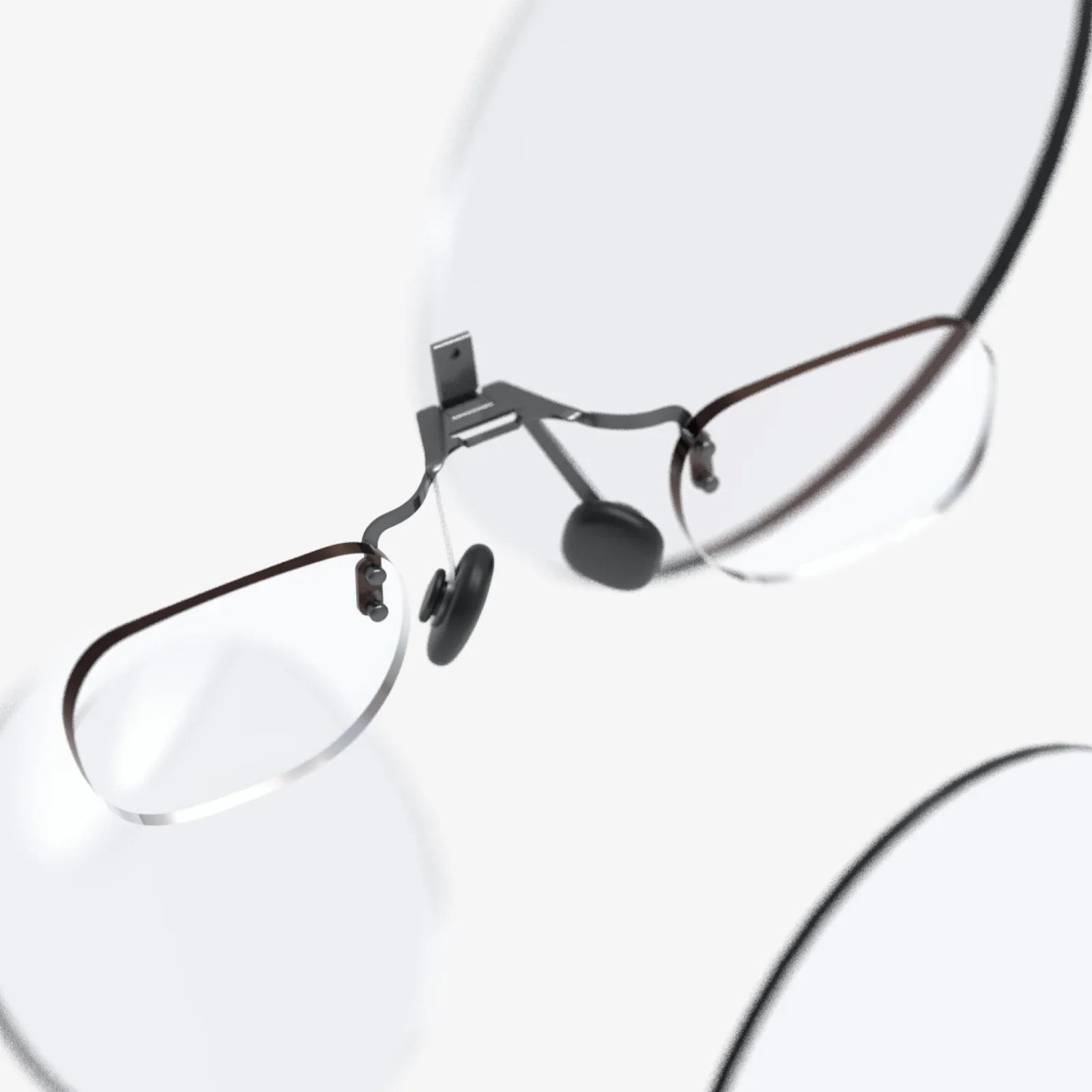
Imagine slipping on a visor and dissolving into another reality so crisp, so palpable, that the very notion of a 'screen' becomes an antiquated concept. This isn't the clunky, pixelated dream of yesteryear; this is the bleeding-edge reality promised by the most expensive VR headset of 2025, a device so advanced it redefines the boundaries of perception itself. For enthusiasts and professionals alike, its name is whispered with a mix of awe and aspiration, representing not just a product, but a portal to the future.
The Price of Pioneering: Justifying the Astronomical Cost
To the uninitiated, the price tag attached to 2025's premier VR headset is nothing short of shocking. It eclipses the cost of high-end gaming systems, professional workstations, and even some luxury goods. However, this figure is not arbitrary. It is the direct result of incorporating a suite of technologies so new and so complex that they reside at the very frontier of consumer electronics. This isn't a mass-market device; it's a statement of what is technically possible, a halo product designed to pull the entire industry forward. The cost is a reflection of extreme research and development, exotic materials, and low-yield manufacturing processes that prioritize performance above all else.
A Deep Dive into the Hardware: Where the Money Resides
Peering inside the sleek, ergonomically sculpted housing of this headset reveals a technological marvel. Every component has been engineered to its absolute limit.
Micro-OLED and Light Field Display Fusion
Gone are the days of the 'screen door effect.' The 2025 flagship utilizes next-generation micro-OLED panels with staggering resolutions that push into the realm of 8K per eye, combined with a nascent light field technology. This fusion doesn't just create an incredibly sharp image; it solves the longstanding vergence-accommodation conflict. Your eyes naturally focus on objects at different distances within the virtual space, just as they do in the real world. This leap in visual fidelity is one of the single largest contributors to the cost, requiring custom silicon and incredibly precise, microscopic components.
Photorealistic Eye and Face Tracking
Built-in high-fidelity eye-tracking cameras operate at an astonishingly high frequency, capturing the minutiae of your pupil dilation and gaze direction. This serves a dual purpose: enabling foveated rendering—where only the area you are directly looking at is rendered in full detail, drastically reducing the computational load—and powering unprecedented social interaction. Paired with sophisticated facial expression tracking via internal sensors, your avatar in the virtual world can now display a full range of nuanced, human emotion, blinking, smiling, and frowning in perfect sync with your real face.
Neural Interface Haptics and Haptic Feedback Suits
The immersion extends far beyond your head. The system includes high-fidelity gloves that not only track every finger articulation but also provide precise haptic feedback, simulating the texture, weight, and resistance of virtual objects. The pinnacle of this sensory expansion is a optional integrated haptic suit. This suit employs a network of ultra-precise actuators and, in some prosumer models, experimental non-invasive neural interface technology that can simulate sensations like temperature change, pressure, and even a light breeze, blurring the line between virtual sensation and physical reality.
Inside-Out Tracking and Mixed Reality Capabilities
External base stations are a relic of the past. This headset employs a sophisticated array of high-resolution cameras and LiDAR scanners for flawless inside-out tracking. It maps your physical environment in real-time with centimeter accuracy, allowing for perfect occlusion and interaction between real and virtual objects. The mixed reality capabilities are not an afterthought but a core feature, enabling developers to create experiences that seamlessly blend the physical and digital worlds.
The Software Ecosystem: Exclusive Worlds and Professional Tools
A hardware platform is nothing without software. The ecosystem for this premium device is carefully curated. It grants access to exclusive, graphically intensive experiences and games built specifically to leverage its unique capabilities—titles that simply cannot run on any other system. More significantly, it has become the undisputed tool for enterprise and professional applications. Architects walk clients through photorealistic, life-size renderings of unbuilt structures. Medical professionals practice complex surgical procedures on hyper-realistic virtual anatomies. Automotive designers sculpt 3D models in mid-air with intuitive hand controls. The software for these applications is often as expensive as the hardware itself, further cementing its status as a professional investment rather than a consumer toy.
The Target Audience: Who Actually Buys This?
The market for such an expensive piece of technology is predictably narrow but well-defined. It consists of three primary segments:
1. The Enterprise and Research Sector
This is the largest customer base. For major corporations, research institutions, and military contractors, the cost of the headset is a justifiable business expense. The ROI is measured in saved prototyping costs, improved training outcomes, and groundbreaking research into human-computer interaction.
2. The Professional Creator
High-end studios and freelance developers working on cutting-edge VR/AR projects require the best tools to create the best products. For them, this headset is the equivalent of a director's high-end cinema camera—an essential tool of their trade.
3. The Ultrasonic Enthusiast
A small but passionate group of consumers with significant disposable income for whom having the absolute best, most immersive experience is the primary goal. They are early adopters in the truest sense, funding the R&D that will eventually trickle down to more affordable devices for the mass market.
The Ripple Effect: How the Pinnacle Lifts the Entire Industry
While few will own this specific headset, its impact will be felt by every VR user in the years to come. It acts as a testbed for new technologies. The eye-tracking algorithms, the haptic feedback systems, the display innovations—all are being proven in this extreme environment. The lessons learned, and the manufacturing processes refined, will inevitably be simplified, scaled, and incorporated into the mainstream headsets of 2026, 2027, and beyond. This trickle-down effect is the true purpose of such a halo product: to define the roadmap for the entire industry.
So, is the most expensive VR headset of 2025 worth it? For the vast majority, the answer is a resounding no. But its value isn't measured in units sold to consumers. It's a beacon, a proof-of-concept that demonstrates a future where the digital and physical are inextricably linked in a seamless dance of light, sound, and sensation. It’s a tantalizing preview of a world where the only limit is imagination, and for those who can access it today, the future has already arrived.
Share:
Set Up VR Headset: Your Ultimate Guide to a Flawless Virtual Reality Experience
Immersed VR Headset: The Ultimate Portal to a Limitless Digital Reality