


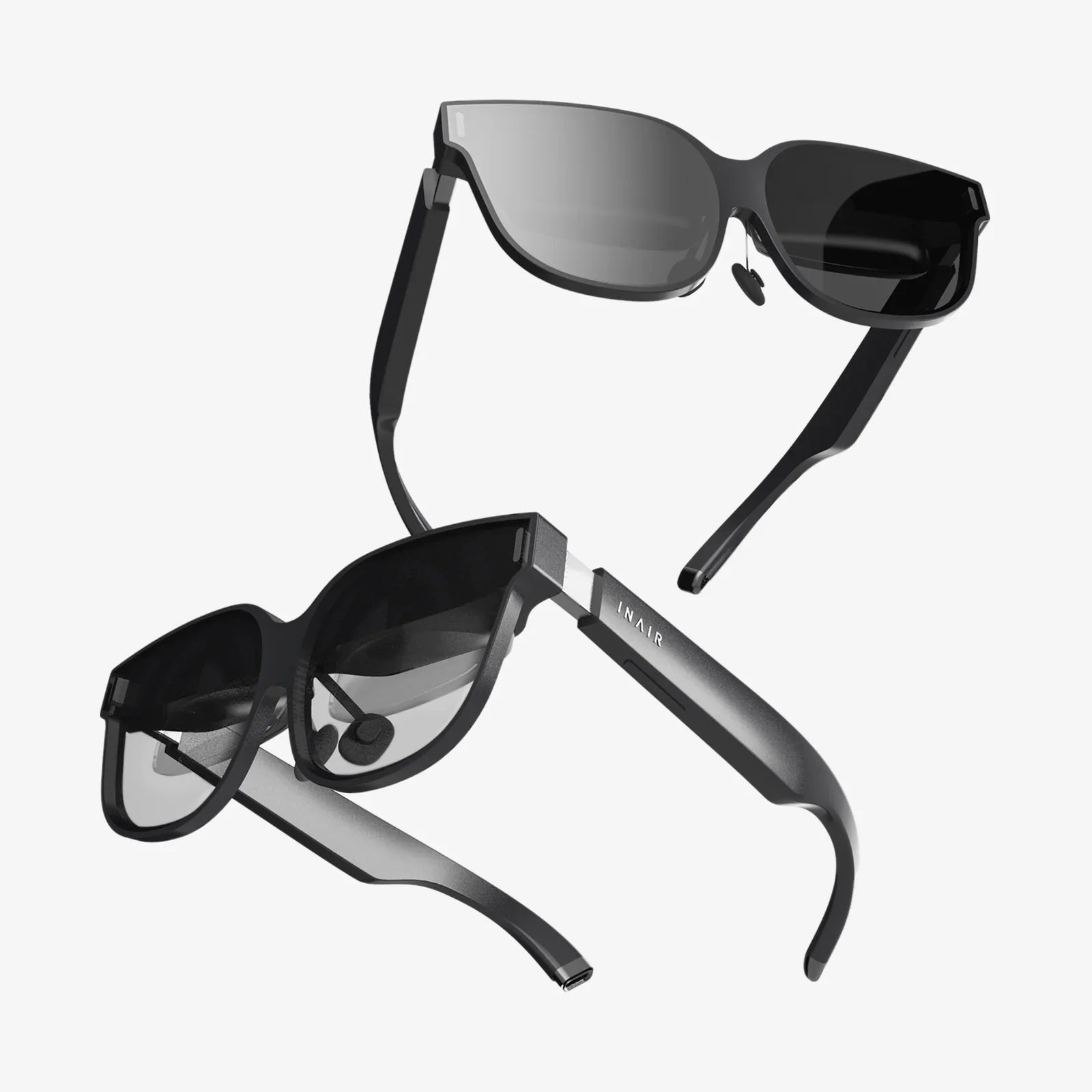
Imagine a workspace that expands infinitely in every direction, limited only by the breadth of your imagination. Picture collaborating with colleagues from across the globe as if they are sitting right next to you, or learning a complex skill through lifelike simulation. This is no longer the stuff of science fiction; it is the tangible, breathtaking reality offered by the modern immersed VR headset. This technology represents a fundamental shift in how we interact with digital information, promising to dissolve the barriers between the physical and virtual worlds and unlock unprecedented levels of productivity, creativity, and connection. The journey into this expansive digital frontier begins with a single device, a portal to a universe of possibilities waiting to be explored.
The Architectural Leap: Inside the Modern Immersed VR Headset
The evolution of the immersed VR headset is a story of relentless innovation across several critical technological domains. Unlike its predecessors, which were often bulky, low-resolution, and tethered to immense computing power, today's devices are marvels of miniaturization and optical engineering.
At its core, the experience of true immersion is built upon two pillars: visual fidelity and intuitive interaction.
High-Resolution Displays and Advanced Optics
The window to the virtual world is the display. Modern headsets utilize ultra-high-resolution Micro-OLED or fast-switch LCD panels, packed with pixels to such a density that the infamous "screen door effect"—where users could see the gaps between pixels—is all but eliminated. This creates a crystal-clear image that is crucial for reading text and viewing intricate details.
These displays are paired with sophisticated pancake lenses. Unlike the simpler Fresnel lenses of the past, these multi-element designs fold the light path, allowing for a much slimmer and lighter headset form factor. They also provide a larger "sweet spot" of clarity and significantly reduce visual artifacts like god rays, resulting in a more comfortable and visually accurate experience for prolonged use.
Inside-Out Tracking and Spatial Awareness
Early VR systems required external sensors or base stations placed around a room to track the user's movement. The contemporary immersed VR headset has internalized this capability. Using a constellation of wide-angle cameras and inertial measurement units (IMUs), the headset performs what is known as "inside-out tracking." It constantly scans the environment, creating a real-time 3D map of the room. This allows users to move freely and safely, as the headset understands its position in physical space and can seamlessly blend virtual content with the real world when desired.
Intuitive Controllers and Hand Tracking
While handheld controllers remain a precise method for input, a significant leap forward is the adoption of advanced hand tracking. The onboard cameras can now accurately render a user's hands and fingers within the virtual environment, tracking gestures and movements. This allows for incredibly natural interactions—pointing, grabbing, typing, and gesturing—without the need to hold any hardware. This shift is pivotal for productivity, making the transition from a physical keyboard and mouse to a virtual workspace feel fluid and intuitive.
Beyond Entertainment: The Productivity Powerhouse
While gaming was the initial driver of consumer VR, the most profound application of the immersed VR headset may well be in revolutionizing the way we work. It creates the ultimate virtual office, unbounded by physical monitors, desk space, or location.
The Infinite Workspace
The primary superpower of these devices is virtual monitor creation. Users can spawn multiple high-resolution virtual screens of immense size, arranging them in a curved wraparound format, placing them high on a virtual wall, or even having them float in a serene, distraction-free environment like a virtual beach or a space station. This effectively means your digital workspace is limited only by your needs, not by your wallet or desk size. Developers can code across several monitors, financial analysts can track vast arrays of live data, and writers can have their research and manuscript open side-by-side in an expansive, focused void.
Enhanced Focus and Deep Work
By donning a headset, users can effectively create a sensory deprivation chamber for their mind. The outside world—with its visual clutter, audible distractions, and interruptions—fades away. This forced focus is a powerful tool for achieving a state of "deep work," enabling individuals to tackle complex tasks with unprecedented concentration. The ability to choose a virtual environment that suits one's mental state, from a minimalist library to a calming nature scene, further enhances cognitive performance and reduces mental fatigue.
Remote Collaboration Reimagined
Video conferencing, while useful, is a poor substitute for physical presence. The immersed VR headset transforms remote collaboration into a shared experience. Colleagues can join a persistent virtual office as lifelike avatars. They can stand around a 3D model of a new product design, brainstorm on a virtual whiteboard that feels tangible, share and manipulate 3D data sets, or simply have a conversation by the virtual water cooler. This sense of shared presence fosters stronger team cohesion, improves communication through body language, and makes collaborative work significantly more effective and engaging than a grid of faces on a flat screen.
The Social and Experiential Dimension
The implications of this technology extend far beyond the solitary worker or the corporate team. It is forging new paths for social connection and experiential learning.
Virtual Social Spaces and Events
Platforms are emerging that function as virtual town squares, concert halls, and classrooms. People can attend live concerts with friends from around the world, feeling as though they are in the front row. They can visit virtual museums and guided tours, exploring ancient ruins or famous galleries with others. For those separated by distance, it offers a powerful way to share experiences, watch movies together on a giant screen, or simply hang out in a meaningful way that transcends a phone or video call.
Training and Simulation
In fields where training is expensive, dangerous, or difficult to replicate, the immersed VR headset is a game-changer. Surgeons can practice complex procedures on virtual patients, mechanics can learn to repair engines without physical parts, and public safety personnel can run through high-stress emergency scenarios in a perfectly simulated environment. This "learning by doing" in a risk-free, yet highly realistic, space accelerates skill acquisition and enhances muscle memory in a way that textbooks or videos never could.
Navigating the Current Horizon: Challenges and Considerations
Despite its incredible potential, the technology is not without its hurdles. Acknowledging these is key to understanding its current state and future trajectory.
- Comfort and Form Factor: While lighter than ever, wearing a headset for an entire workday requires a comfortable design. Battery life for wireless models and managing heat generation are ongoing engineering challenges.
- The Friction of Adoption: There is a learning curve associated with navigating virtual menus and typing with either hand tracking or floating keyboards. Becoming proficient requires a short but real period of adaptation.
- Visual Fatigue: Extended use can still cause eye strain for some users, though advancements in lens technology and adjustable IPD (Interpupillary Distance) are mitigating this issue.
- The Digital Divide: High-end headsets and the powerful computers needed to drive them represent a significant financial investment, potentially limiting early access.
The Future is Immersive
The trajectory of the immersed VR headset points toward even greater integration into our daily lives. We are moving toward devices that are indistinguishable from regular eyeglasses, offering full-color passthrough so seamless that the virtual and real become indistinguishable. The development of advanced haptic feedback gloves and suits will add the crucial sense of touch, making virtual objects feel real. Furthermore, the integration of artificial intelligence will create dynamic and responsive virtual environments and assistants that can anticipate our needs within these digital spaces.
We stand at the precipice of a new computing paradigm. The familiar rectangle of the screen, which has dominated our interaction with technology for decades, is beginning to dissolve. In its place, the immersed VR headset is emerging as the key to a spatial, three-dimensional internet—a world where information is not just on a device, but all around us, interactive, malleable, and shared. It is a shift as profound as the move from the command line to the graphical user interface.
The door to your new office, classroom, design studio, and social space is not down the hall or across town; it’s waiting for you, right behind the visor of an immersed VR headset. This isn't just about seeing a new world; it's about stepping into it, reshaping your reality, and discovering what you can achieve when the only limit is your own creativity. The future of work, play, and human connection is being written not on a page, but in an infinite, immersive dimension, and it’s inviting you to log in.
Share:
AR Headset Updates: The Next Evolution in Digital Interaction and Perception
AR Headset Updates: The Next Evolution in Digital Interaction and Perception