


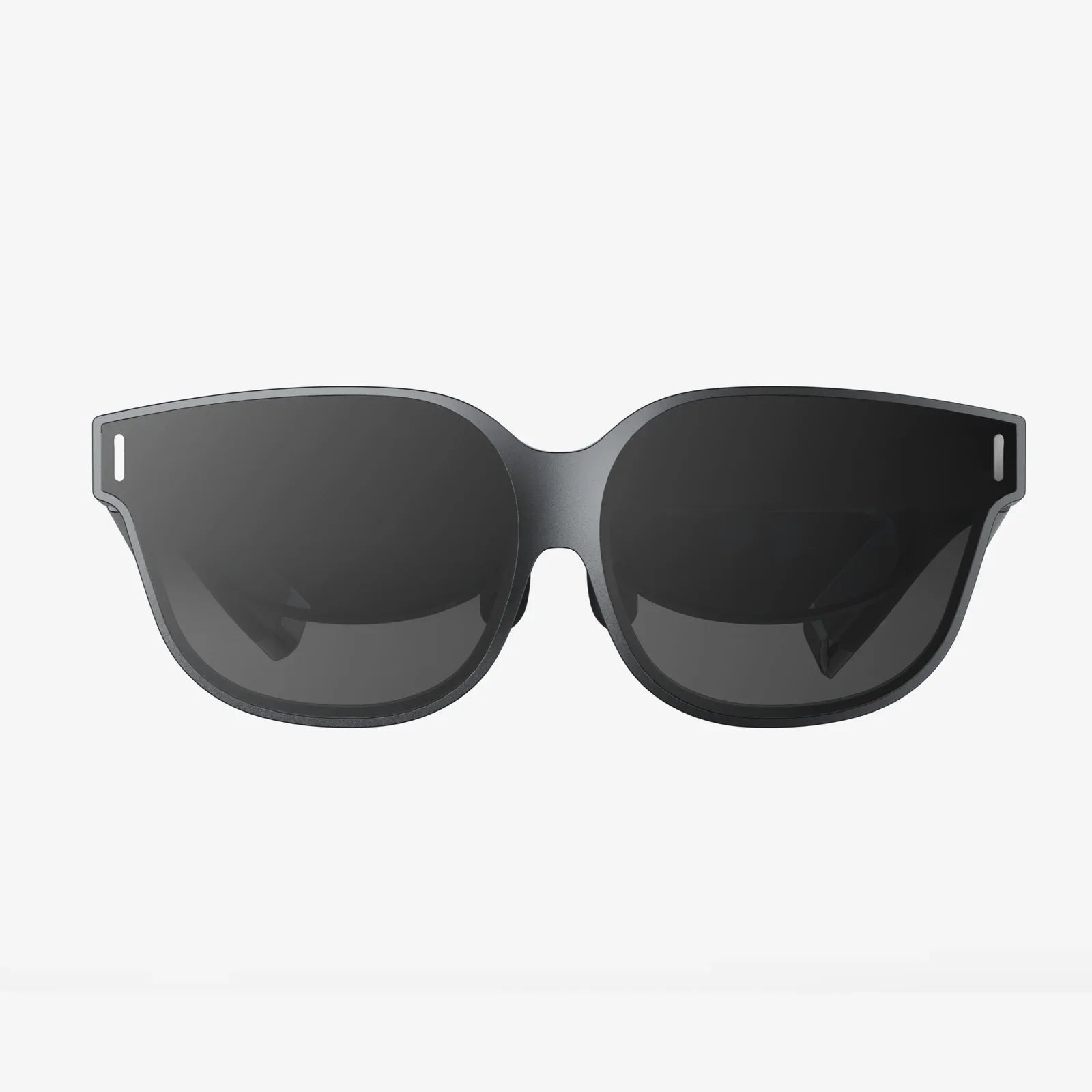
Imagine a world where digital information doesn’t just live on a screen but is seamlessly woven into the fabric of your reality, enhancing everything from how you work and learn to how you play and connect. This is the promise of augmented reality, a promise that is finally, after years of anticipation and incremental progress, hurtling toward mainstream adoption. The pace of innovation is breathtaking, with each new iteration of hardware and software bringing us closer to a fundamental shift in our relationship with technology. The latest wave of AR headset updates isn't just about incremental tweaks; it's about redefining the very boundaries of what's possible, setting the stage for a future where the physical and digital worlds are one.
The Core Hardware Revolution: Seeing and Sensing the World Anew
At the heart of every AR experience is the hardware, and recent updates have focused on solving the most persistent challenges that have plagued earlier generations. The goal is clear: create a device that is powerful, perceptive, and, crucially, comfortable enough for all-day use.
Breakthroughs in Display Technology and Optics
The window to your augmented world is the display. The quest for bright, high-resolution, and visually comfortable imagery has led to significant innovations. We are moving beyond traditional LCDs into more advanced micro-OLED displays, which offer exceptional contrast, true blacks, and high pixel density in a much smaller form factor. This allows for sharper text and more realistic virtual objects that can hold up even in brightly lit environments.
Equally important are the waveguides and optics that project this imagery onto the user's eyes. Updates in this area have focused on increasing the field of view (FOV)—the size of the digital canvas—while simultaneously making the optical stacks thinner and lighter. New manufacturing techniques and materials are enabling larger eyeboxes (the sweet spot where the image is clear), reducing the need for perfect alignment and making the experience more natural and less finicky for the user.
The Rise of Spatial Computing and Environmental Understanding
For AR to feel truly magical, it must understand the world it’s being used in. This is where a suite of sophisticated sensors comes into play. Modern AR headsets are equipped with a sophisticated array of cameras, LiDAR scanners, depth sensors, and inertial measurement units (IMUs).
The software that processes this sensor data has seen monumental updates. Simultaneous Localization and Mapping (SLAM) algorithms are now faster and more accurate than ever, allowing a device to create a detailed 3D map of a room in seconds. This enables persistent digital content that stays locked in place—a virtual screen remains on your wall even if you leave the room and return, and a digital character can convincingly hide behind your real-world sofa. This deep environmental understanding also allows for advanced occlusion, where real-world objects can pass in front of digital ones, creating a believable illusion of coexistence.
Form Factor and Comfort: The Pursuit of Wearability
The classic sci-fi vision of AR often involved bulky, obtrusive goggles. Today's updates are fiercely combating this stereotype. The industry is diverging into two distinct paths: all-in-one devices that prioritize performance and standalone functionality, and more minimalist glasses-like forms that prioritize style and all-day wearability for specific tasks.
For the former, advancements in battery technology (including innovative hot-swappable options) and distributed computing—where some processing is handled by a companion device—are helping to reduce weight and improve balance. For the latter, new ultra-compact optics and the offloading of compute to a smartphone or dedicated processing puck are making it possible to create AR glasses that look nearly indistinguishable from standard eyewear. The universal challenge remains dissipating heat effectively, but new passive and active cooling solutions are making quiet, comfortable devices a reality.
The Software Ecosystem: Building the Augmented World
Powerful hardware is nothing without intuitive software and compelling applications. The software landscape for AR is maturing rapidly, moving from isolated tech demos to robust platforms for creation and productivity.
Operating Systems and Development Platforms
The battle for the operating system of the augmented world is intensifying. Major tech players have recently updated their core platforms to be more “spatial-first.” These platforms provide developers with the essential toolsets: robust game engines with enhanced AR capabilities, cloud services for anchoring digital content across devices, and standardized APIs for hand-tracking, scene meshing, and spatial anchors.
These updates significantly lower the barrier to entry for developers, allowing them to create rich, cross-platform AR experiences without needing to solve complex computer vision problems from scratch. The result is a rapidly expanding and diversifying app ecosystem.
The Metaverse and Interoperability
A key theme in recent platform updates is the push toward interoperability—the idea that digital assets and identities should be able to move across different applications and devices. While the concept of a single, unified “metaverse” remains a distant prospect, steps are being taken to create open standards for avatars, file formats, and shared social spaces. This means a virtual object created in one app could potentially be brought into a completely different experience, and your digital representation remains consistent, making the AR world feel more cohesive and user-owned.
Enterprise and Industrial Applications: Where AR is Thriving Today
While consumer adoption grows, the most impactful and immediate applications of recent AR headset updates are happening in the enterprise and industrial sectors. Here, the ROI is clear and dramatic.
Revolutionizing Manufacturing and Field Service
Technicians on factory floors and in the field are using updated AR glasses to access hands-free information. Through object recognition and spatial annotation, a worker can look at a complex machine and see step-by-step repair instructions overlaid directly onto the components they need to touch. Remote expert applications allow a senior engineer located anywhere in the world to see what the on-site technician sees and draw annotations into their field of view, guiding them through procedures and drastically reducing downtime and errors. Updates in connectivity, like support for private 5G networks, ensure these complex data streams are reliable and low-latency in demanding industrial environments.
Transforming Design, Prototyping, and Training
In design and architecture, AR updates are revolutionizing prototyping. Designers can place full-scale 3D models of new products or buildings into a real-world space long before any physical prototype is built. They can walk around it, assess its proportions, and make changes in real-time. For training, AR creates immersive and safe simulations. Medical students can practice procedures on virtual anatomy, and warehouse employees can learn complex picking routes without disrupting actual operations, all guided by contextual information presented through their headset.
Consumer and Social Horizons: The Future in Your Living Room
The consumer journey for AR is longer but filling with potential. Updates are making these devices more appealing and useful for everyday life.
Gaming and Immersive Entertainment
AR gaming is evolving beyond catching virtual creatures in your park. New updates enable persistent, location-based games that turn entire cities into game boards, with narratives and gameplay that evolve over time. In the home, AR transforms the living room into a immersive theater with screens of any size, or a interactive gaming arena where the game environment interacts with your physical furniture.
Enhanced Communication and Social Connection
One of the most profound updates is in social spatial computing. Instead of flat video calls, new applications allow for life-sized, volumetric avatars or holographic representations of people to appear in your room. You can make eye contact, see body language, and feel as if you are truly sharing a space with someone thousands of miles away. This sense of “telepresence” promises to redefine remote work and personal connection, making digital interactions feel significantly more human.
Challenges and Considerations on the Road Ahead
Despite the exciting progress, significant hurdles remain. The path to ubiquity is not without its obstacles.
Battery Life and Thermal Management
The computational demands of high-fidelity AR are immense, and this translates into high power consumption and heat generation. While updates have improved efficiency, achieving all-day battery life in a sleek form factor remains a holy grail. Innovations in low-power displays, dedicated AI processors for sensor data, and perhaps even fuel cell technology are needed to cross this final threshold.
The Social and Ethical Dimension
As this technology becomes more pervasive, it raises critical questions. How do we manage privacy when devices with always-on cameras are worn in public? What are the etiquette rules for interacting with people who are partially in a digital world? Furthermore, the potential for pervasive advertising and data collection in AR is unprecedented. The industry must proactively update its ethical frameworks and engage in a broad societal dialogue to establish norms and regulations that protect individual rights without stifling innovation.
Accessibility and the Digital Divide
Early AR headsets are premium devices. A key challenge for the industry will be to drive down costs through economies of scale and technological innovation to ensure this transformative technology does not exacerbate the digital divide. Furthermore, software and interaction models must be designed inclusively from the start, ensuring people with different abilities can fully participate in the augmented future.
The stream of AR headset updates is no longer a trickle but a steady flow, each wave bringing us closer to a paradigm shift in computing. The pieces of the puzzle—powerful silicon, intelligent sensors, intuitive interfaces, and a growing software ecosystem—are rapidly falling into place. We are moving beyond the novelty of digital overlays and toward a future where augmented reality becomes an indispensable, invisible layer that enhances human capability and connection. The revolution won't be televised; it will be overlayed, right before our eyes, changing our perception of reality itself.
Share:
Immersed VR Headset: The Ultimate Portal to a Limitless Digital Reality
Immersed VR Headset: The Ultimate Portal to a Limitless Digital Reality