


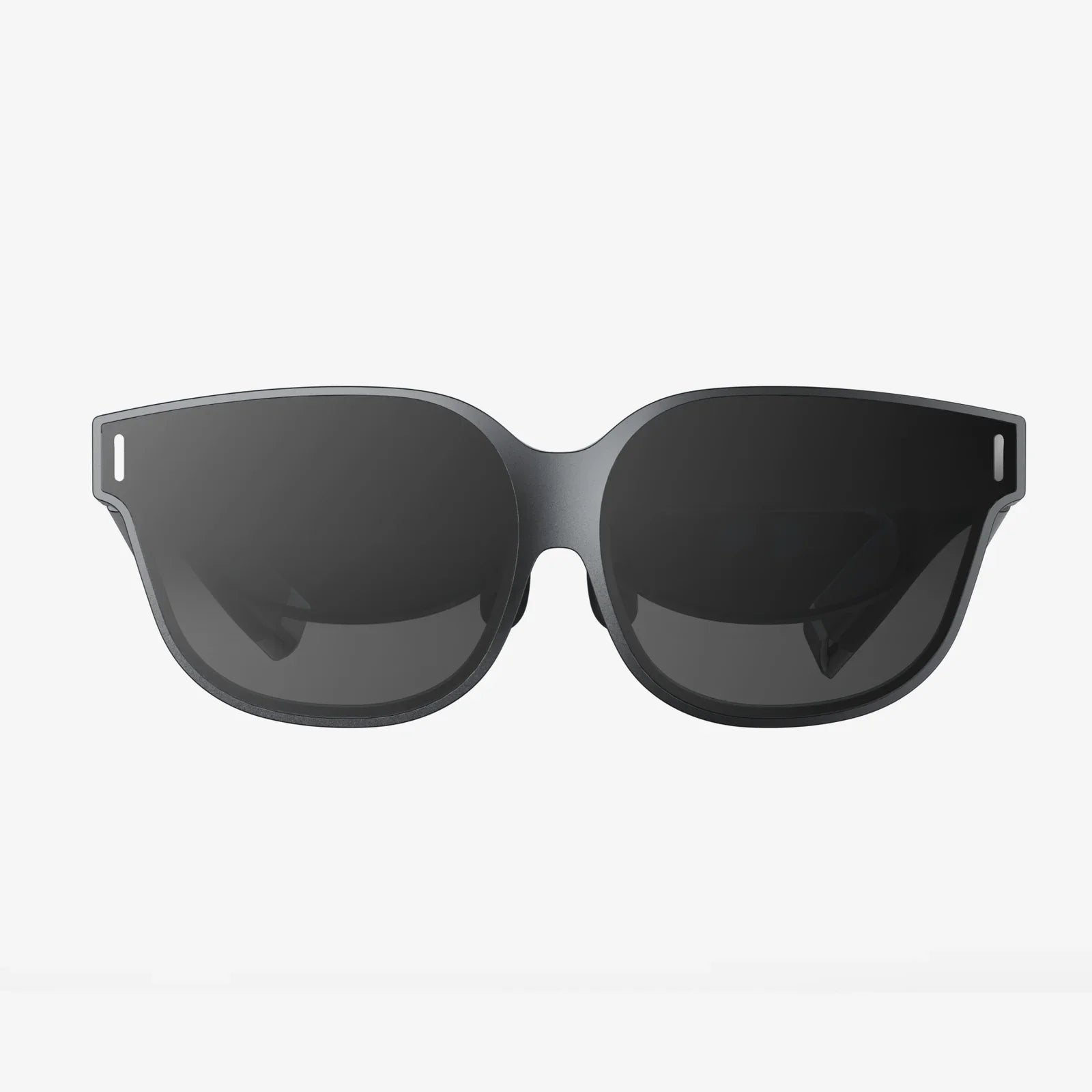
Imagine slipping on a visor and not just seeing a new world, but feeling its every detail, its absolute reality, where the line between the digital and the physical doesn't just blur—it vanishes. This isn't the promise of a distant future; it's the tangible, breathtaking experience offered by the most expensive VR headsets available today. These aren't mere gaming peripherals; they are portals, precision scientific instruments, and the ultimate expression of immersive technology, commanding price tags that can eclipse a luxury car. But what could possibly justify such a staggering investment? The answer lies in a realm where compromise is not an option and the pinnacle of experience is everything.
The Anatomy of an Astronomical Price Tag
When a piece of consumer technology reaches a cost typically associated with high-end industrial equipment, it's natural to question its value. The price of the most advanced virtual reality systems isn't derived from a single magical component but is the sum of a symphony of cutting-edge, often proprietary, technologies working in perfect harmony.
Unmatched Visual Fidelity: Beyond 8K and Into Clarity
The core of any VR experience is what you see. While consumer-grade headsets have made incredible strides, the most expensive systems operate on another level entirely. We're talking about dual micro-OLED or mini-LED displays, each offering resolutions that exceed 4K per eye. This results in a combined resolution that ventures into 8K and beyond territory, creating a pixel density so high that the dreaded 'screen door effect'—where users can perceive the gaps between pixels—becomes utterly nonexistent.
Furthermore, these displays boast exceptional dynamic range, incredible color gamut, and refresh rates that can push past 120Hz, even approaching 200Hz for specific professional applications. This combination ensures that virtual environments are not only incredibly sharp but also stunningly vibrant and buttery smooth, eliminating any potential for motion-induced discomfort and creating a powerful, believable illusion.
The Imperative of Precise, Low-Latency Tracking
Visuals are only half the battle. True immersion shatters the moment your virtual hands stutter, drift, or fail to align perfectly with your real-world movements. Premium systems often abandon inside-out tracking (where cameras on the headset track the environment) in favor of superior outside-in or advanced inside-out systems with a vastly higher number of sensors and cameras.
These systems utilize external laser emitters or high-fidelity cameras placed around a room to create a precise volumetric map. They track the headset and controllers with sub-millimeter accuracy and latency so low it's measured in single-digit milliseconds. This flawless tracking is non-negotiable for the enterprise and research applications these devices are built for, where a misaligned virtual scalpel or a jittery architectural model is simply unacceptable.
Unparalleled Ergonomics and Customization
Comfort is critical for prolonged use, and these headsets are designed for marathons, not sprints. This means premium materials like magnesium alloy frameworks, genuine leather and foam facial interfaces, and meticulously engineered weight distribution. Unlike one-size-fits-all consumer models, the most expensive headsets often feature extensive customization: interchangeable lenses for users with specific prescriptions, modular face gaskets of different sizes and shapes, and even automated inter-pupillary distance (IPD) adjustment to ensure a perfect optical alignment for every user.
The Hidden Cost of Specialized Computing
It's crucial to remember that the headset itself is often just the tip of the financial iceberg. Driving these monstrous displays and complex tracking systems requires a computational beast far beyond a typical gaming PC. We're talking about professional-grade workstations with the most powerful CPUs and multiple top-tier GPUs working in tandem, not to mention the high-fidelity headphones, haptic suits, and motion platforms that often complete these ultra-immersive setups. The supporting hardware can easily double or triple the total system cost.
Who Actually Buys a Fifty-Thousand-Dollar VR Headset?
The market for these technological marvels is not the average gamer. The clientele consists of organizations and professionals for whom the headset is not an expense, but a critical investment that saves money, accelerates workflows, and enables the impossible.
The Medical and Surgical Arena
In medicine, the stakes are the highest imaginable. Surgeons are now using ultra-high-fidelity VR to plan for incredibly complex operations. They can upload a patient's MRI or CT scan data into a virtual model and, with stunning clarity, practice a procedure countless times before making a single incision. This rehearsal leads to shorter actual surgery times, reduced risk, and better patient outcomes. The cost of the headset is dwarfed by the value of a single successful life-saving operation it helped facilitate.
Engineering, Architecture, and Automotive Design
For architects and engineers, being able to step inside a full-scale, photorealistic model of a building or a prototype vehicle is revolutionary. Design flaws that are invisible on a 2D screen become immediately apparent in immersive 3D. Teams spread across the globe can meet inside a virtual prototype, examining every conduit, beam, and aesthetic detail as if it were physically constructed. This collaborative design review process identifies problems early, saving millions in costly rework and construction changes down the line.
Academic and Scientific Research
Researchers in fields like astrophysics, molecular biology, and psychology are using these tools to visualize and interact with data in profound new ways. Imagine a team of scientists 'walking' through a detailed simulation of a neuron's activity or exploring a volumetric map of the cosmic web. This immersive data interaction can lead to breakthroughs and insights that are difficult to achieve with traditional graphs and models.
The Ultimate Entertainment: Beyond Gaming
While not the primary market, there exists a niche of ultra-wealthy enthusiasts and high-end location-based entertainment venues that deploy these systems. For them, it's about offering an experience that is categorically unavailable at home. Think of a luxury VR arcade where customers can experience a perfect simulation of driving a Formula 1 car or walking on Mars, with a level of realism that is utterly convincing.
The Intangibles: Support, Software, and Ecosystem
The purchase price of the headset hardware invariably includes elements that are rarely considered but are vital for professional use. This includes enterprise-grade customer support with direct technical lines, extensive warranties, and on-site service agreements. Furthermore, these companies often develop and provide specialized, proprietary software development kits (SDKs) and professional-grade applications tailored for their hardware, ensuring stability and performance that consumer software cannot guarantee. You're not just buying a device; you're buying into a reliable, supported ecosystem.
The Philosophical Divide: Luxury Good or Essential Tool?
This brings us to a fundamental question: are these headsets simply luxury items for the tech-elite? For the vast majority of their users, the answer is a resounding no. The value proposition is not based on exclusivity but on capability and return on investment. A $500 headset is for entertainment; a $50,000 headset is for designing safer cars, training better surgeons, and constructing more efficient buildings. The price is a direct reflection of the R&D, low-volume production of specialized components, and the critical need for absolute reliability and precision. It is, in every sense, a professional tool.
The Future Trickle-Down Effect
The technology pioneered and proven in these exorbitant systems will not remain exclusive forever. The high-resolution micro-OLED displays, advanced inside-out tracking algorithms, and sophisticated lens technology developed for these professional headsets will inevitably trickle down to consumer devices in the coming years. The massive investment required to create the 'most expensive VR headset' today is, in many ways, funding the development of the 'most advanced consumer VR headset' of tomorrow. These devices are the testbeds, the proving grounds for the future of immersive computing that we will all one day experience.
So, the next time you hear about a VR headset with a price tag that seems absurd, look beyond the number. See it for what it truly represents: a glimpse into the absolute forefront of human-computer interaction, a tool that is pushing the boundaries of what's possible in medicine, science, and design. While it may reside far outside the realm of consumer affordability, its very existence charts the course for the immersive future we are all steadily moving toward, a future where the virtual will be indistinguishable from reality itself.
Share:
What Is Extended Reality (XR) - The Ultimate Guide to Our Blended Future
The Most Cheapest VR Headset: A Deep Dive into Affordable Virtual Reality