


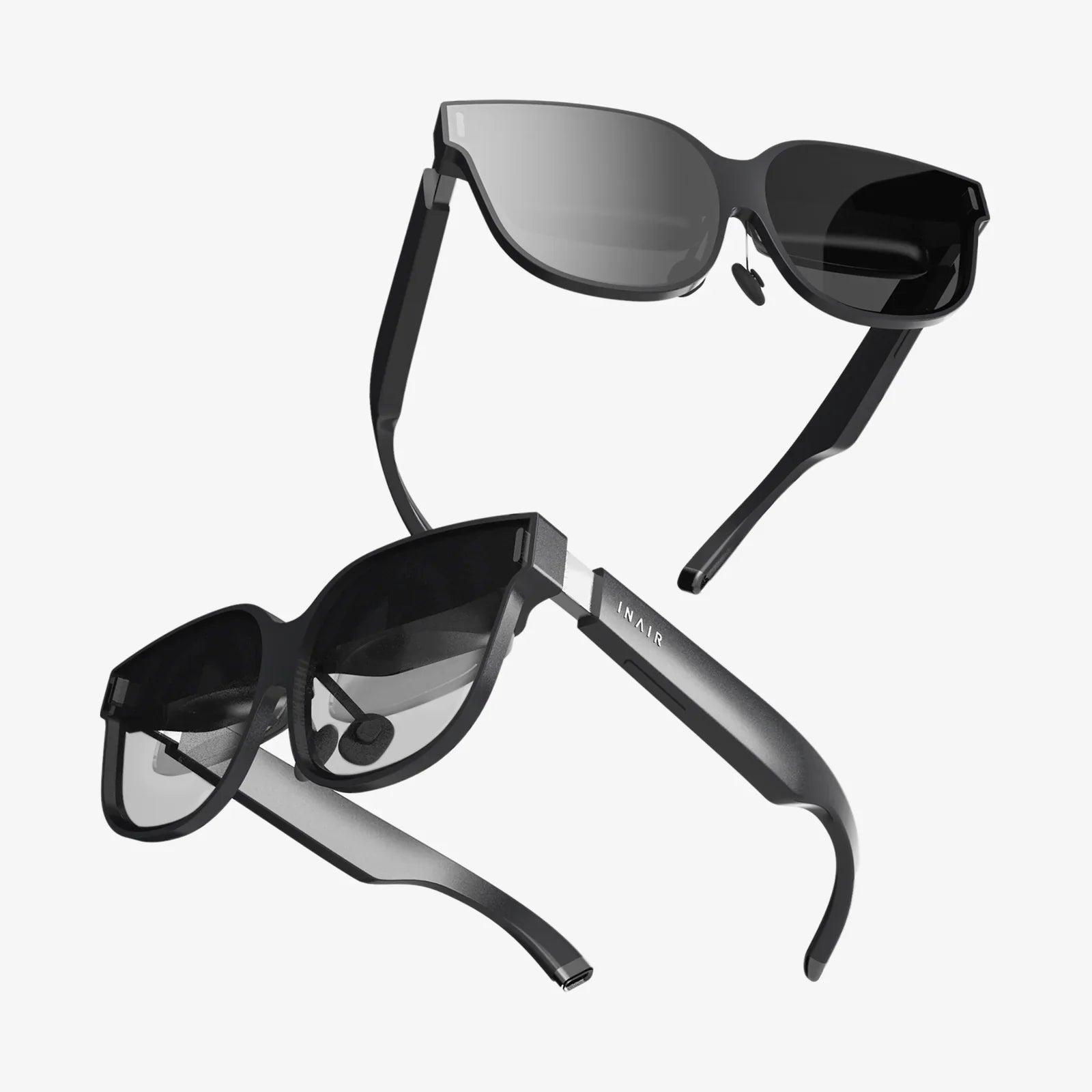
Imagine slipping on a device, not unlike a pair of sunglasses, and within milliseconds, the world around you dissolves. The hum of your computer fades, the walls of your room evaporate, and you are no longer just a spectator but an active participant in a reality entirely of your own choosing. This is the promise held by the relentless march of technology, a promise that finds its most potent expression in the pursuit of the most immersive VR headset 2025 has to offer. This isn't just about better graphics or higher resolutions; it's about a fundamental shift in the human-computer interface, a leap towards erasing the line between the digital and the physical. The journey to this pinnacle of immersion is not a single innovation but a symphony of technological breakthroughs converging to create an experience so convincing, so utterly captivating, that returning to the real world feels like waking from a vivid dream.
The Visual Frontier: Beyond Resolution to Reality
For years, the quest for immersion has been dominated by the pixel race. But by 2025, the conversation has dramatically evolved. The most immersive VR headset of this era understands that true visual fidelity is about more than just numbers on a spec sheet; it's about replicating the complex way human vision interacts with the world.
The cornerstone of this visual revolution is Micro-OLED and Micro-LED pancake lenses. These technologies work in tandem to deliver unprecedented pixel densities, pushing well beyond the elusive threshold of 60 pixels-per-degree (PPD)—the point at which the human eye can no longer discern individual pixels, effectively creating a "retina" display for VR. This eliminates the dreaded "screen-door effect" once and for all. More importantly, these advanced lens systems are incredibly compact, allowing for sleek, lightweight form factors that bear little resemblance to the bulky headsets of the past.
However, raw resolution is meaningless without the light to give it life. This is where High Dynamic Range (HDR) and local dimming come into play. The best headsets of 2025 can achieve peak brightness levels measured in thousands of nits, enabling them to display dazzling highlights, deep, inky blacks, and a contrast ratio that mirrors real life. Imagine the searing glare of a virtual sun on a snowy landscape or the subtle, flickering glow of a candle in a dark dungeon—these experiences are not just seen but felt, adding a crucial layer of visceral realism.
Finally, visual immersion is sealed with varifocal displays and advanced eye-tracking. Early VR suffered from a fixed focal plane, forcing your eyes to converge on a single distance regardless of whether an object was near or far, leading to strain and a subconscious sense of falseness. Varifocal technology dynamically adjusts the focal distance based on precisely where your eyes are looking, creating a natural and comfortable depth of field. This eye-tracking isn't just for focus; it powers foveated rendering, a technique that renders the center of your gaze in ultra-high detail while subtly reducing the quality in your peripheral vision. This massive computational saving allows for breathtakingly complex and realistic environments without requiring impossibly powerful hardware, making high-fidelity immersion more accessible than ever.
The Sound of Presence: Audio That Surrounds and Convinces
Immersion is a multi-sensory experience, and audio is its silent partner. The most advanced headsets have moved far beyond basic stereo sound. High-fidelity spatial audio is now table stakes. Using advanced head-related transfer functions (HRTF), these systems simulate sound waves interacting with the unique shape of your head and ears. The result is not just sound that comes from the left or right, but from above, behind, below, and at any point in a full 360-degree sphere. You can hear the faint rustle of leaves specifically from the tree behind you or pinpoint the footsteps of another player creeping up on your blind spot. This auditory precision is critical for presence—the undeniable feeling of actually being in the virtual space.
Feeling the Digital: The Haptic Revolution
What good is seeing and hearing a virtual world if you cannot touch it? This is where immersion truly transcends the audiovisual and becomes physical. The frontier for 2025 is haptic feedback, and it extends far beyond simple controller rumble.
Advanced haptic controllers now feature an array of actuators capable of simulating a stunning range of textures and sensations. Through precise vibrations and force feedback, you can feel the gritty resistance of pulling back a bowstring, the satisfying click of a virtual button, or the smooth, cold surface of a marble table. This tactile connection to the digital world grounds the experience in a powerful way.
Even more revolutionary is the development of haptic gloves and full-body suits. While still emerging, the most immersive systems are beginning to integrate this technology to provide feedback across the entire body. Imagine feeling the pressure of a virtual hand on your shoulder, the impact of rain on your skin, or the recoil of a weapon in your hands. This level of physical interaction represents the final piece of the sensory puzzle, making the virtual tangible and closing the loop on true embodiment.
The Invisible Interface: Neural Input and Biometric Integration
The ultimate goal of immersion is to make the technology itself disappear. The most sophisticated headsets of 2025 are taking significant strides toward this by reading the user's intent directly, moving beyond controllers to a more intuitive interface.
Sophisticated inside-out tracking and body tracking via onboard cameras is now so advanced that it can map your entire skeletal structure and facial expressions in real-time. Your avatar can smile, frown, and gesture exactly as you do, conveying nuance and emotion in social VR spaces that was previously impossible. This fosters a profound sense of connection with other users, as you are communicating with your whole body, not just a voice and a pair of floating hands.
The next frontier, already in its nascent stages, is neural input. Non-invasive sensors, often integrated into the headset's strap, can read faint electromyographic (EMG) signals from the muscles and nerves in your face and neck. This allows for incredibly subtle interactions—a raised eyebrow to select a menu, a clenched jaw to activate a power-up, or a smile to trigger an emote. This technology begins to blur the line between thought and action, reducing the cognitive load and making navigation feel effortless and magical.
Furthermore, biometric feedback is being used to make experiences adaptive. The headset can monitor your heart rate, pupil dilation, and perspiration. A horror game could sense your rising fear and respond by making the environment even more tense, or a fitness application could dynamically adjust its intensity based on your physiological state. The virtual world is no longer a static place; it is a reactive environment that responds to your very being.
Ergonomics and Comfort: The Freedom to Explore
All the technological marvels are meaningless if the headset is uncomfortable to wear. The pursuit of immersion in 5 is fiercely focused on ergonomics. The goal is all-day wearability.
Through the use of lightweight polymers, carbon fiber, and a perfected weight distribution, the latest headsets feel like a natural extension of the user. They are balanced, secure, and devoid of the front-heavy pressure that plagued earlier designs. Breathable materials and active ventilation systems prevent lens fogging and keep the user cool during extended sessions. The quest for a wider field of view (FoV), approaching the human peripheral vision of nearly 210 degrees, further enhances the feeling of being surrounded rather than looking into a window. Comfort is the unsung hero of immersion, as physical discomfort is the fastest way to break the sense of presence.
The Ecosystem: A World Worth Inhabiting
A headset is merely a portal; its value is defined by the worlds it can access. The software and ecosystem surrounding the most immersive VR headset 2025 will be richer and more diverse than ever. We are moving beyond isolated games and experiences into persistent, interconnected platforms often referred to as the metaverse.
These are vast social and experiential spaces where the lines between work, play, and socialization blur. Imagine attending a business meeting in a photorealistic virtual boardroom, then moments later, joining friends from across the globe to explore an ancient ruin or attend a live concert. The applications extend far beyond entertainment: immersive training simulations for surgeons and pilots, virtual tourism that allows you to walk the streets of ancient Rome, and therapeutic environments for treating phobias and PTSD. The headset becomes a universal tool for human connection and experience.
The Ethical Dimension: Navigating the New Reality
With such profound power comes significant responsibility. The ability to create perfectly convincing alternate realities raises critical questions about data privacy (with devices tracking your eyes, face, and potentially neural signals), psychological effects, and the potential for addiction. The industry's greatest challenge will be to establish robust ethical frameworks and safety guidelines to ensure this powerful technology is used to enhance our reality, not escape from it. The goal must be augmentation, not replacement, of the human experience.
The horizon of 2025 glimmers with the potential for a technological renaissance in personal computing. The most immersive VR headset will not be defined by a single feature but by its holistic mastery of sight, sound, touch, and intuitive interaction. It promises a future where our digital and physical lives are not separate realms but a seamless continuum, limited only by the breadth of our imagination. The gateway to countless new realities is almost here, and it’s waiting for you to take the first step through.
Share:
Does VR Headset Affect Eyes? The Complete Guide to Virtual Reality and Eye Health
Does VR Headset Affect Eyes? The Complete Guide to Virtual Reality and Eye Health